Automatic Digital Viscometer
Viscosity stands as one of the most fundamental physical properties of fluid substances, reflecting the internal friction and flow resistance generated between molecular layers when a fluid undergoes relative motion. It serves as a critical indicator for evaluating fluid consistency, stability, and processing adaptability, exerting a profound influence on product quality, production efficiency, and application performance across diverse industrial and scientific fields. Traditional viscosity detection methods rely heavily on manual operation, which involves cumbersome steps, long testing cycles, and susceptibility to human operational errors, environmental interference, and subjective judgment deviations. With the continuous advancement of industrial automation and precision testing technology, automatic digital viscometers have gradually replaced conventional manual testing equipment, becoming essential testing instruments in modern material research, industrial production quality control, and academic experimental research. These instruments integrate precision mechanical transmission, digital signal processing, intelligent sensing technology, and automatic control systems, realizing fully automated processes from sample detection, data collection, and operational adjustment to result output, effectively optimizing the stability and consistency of viscosity testing work in complex application scenarios.
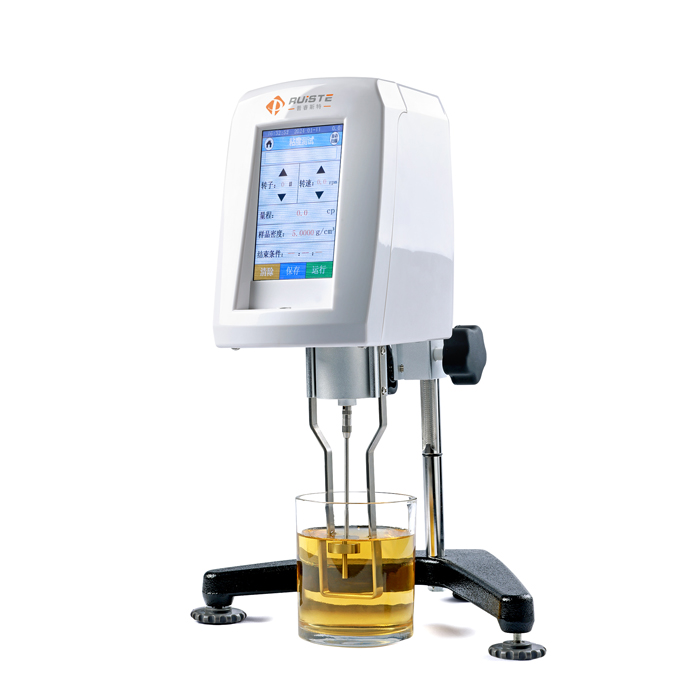
The working mechanism of automatic digital viscometers is rooted in the basic laws of fluid mechanics, following the core correlation between shear stress, shear rate, and fluid viscosity. Most mainstream automatic digital viscometers adopt the rotational testing principle, which operates by driving a precision rotor to rotate at a stable and controllable speed within a fluid sample. When the rotor moves in the fluid, it is subjected to viscous resistance from the fluid medium, and the magnitude of this resistance corresponds directly to the viscosity of the tested sample. The internal high-sensitivity sensing module of the instrument can accurately capture the torque signal generated by viscous resistance, convert the mechanical signal into a recognizable digital electrical signal, and complete data calculation, calibration, and compensation through a built-in microprocessor system. In addition to rotational testing structures, some automatic digital viscometers adopt capillary testing principles, using photoelectric sensing components to automatically monitor the flow state of fluid in precision capillary pipelines, calculate fluid viscosity based on the flow time and flow state of the fluid under fixed temperature and pressure conditions, and adapt to the testing needs of low-viscosity fluid samples with stable flow characteristics.
The overall structural design of automatic digital viscometers focuses on integration, precision, and automation, with each functional module cooperating closely to ensure the smooth progress of testing work. The precision drive system is the core power component of the instrument, usually equipped with a high-stability stepping motor that can output uniform and accurate rotational power, realizing stepless adjustment and fixed-speed operation of multiple shear rates. This stable power output ensures that the rotor maintains a consistent motion state during testing, avoiding data fluctuations caused by unstable rotation speed. The matching rotor components are designed with diversified specifications, adapting to fluid samples with different viscosity ranges, from low-viscosity solvents and aqueous solutions to high-viscosity colloids, greases, and molten polymer materials. The high-precision sensing and signal acquisition system is responsible for capturing subtle torque changes and flow state changes in real time. This module features high signal resolution and anti-interference ability, which can filter out minor environmental vibration and current signal interference in the working environment, ensuring the authenticity and effectiveness of collected data.
Temperature is a key factor affecting fluid viscosity characteristics, as the molecular activity and internal friction of most fluids change significantly with temperature fluctuations. For this reason, automatic digital viscometers are equipped with supporting intelligent temperature monitoring and constant temperature control modules. The built-in high-precision temperature probe can track the real-time temperature of the test sample throughout the testing process, while the external constant temperature control device can maintain the sample in a constant temperature state within a precise range. This real-time temperature linkage control function effectively eliminates detection errors caused by temperature deviation, ensures that all test data is obtained under standardized temperature conditions, and greatly improves the comparability and repeatability of experimental data. In practical testing, even small temperature changes can lead to obvious deviations in viscosity values, so the synchronous cooperation of temperature control and testing systems is an important guarantee for the reliable operation of automatic digital viscometers.
Different from traditional manual viscometers that require manual adjustment of parameters, manual timing, and manual recording of data, automatic digital viscometers realize full-process automated operation. Before testing, users only need to place the processed sample into the testing station and set the required testing parameters such as rotational speed, testing duration, and temperature conditions through the human-computer interaction interface. The instrument will automatically complete subsequent operations including rotor positioning, sample adaptation detection, constant temperature stabilization, formal testing, and data recording. During the testing process, the intelligent control system can automatically adjust operating parameters according to the real-time state of the sample. For non-Newtonian fluids with variable viscosity characteristics that change with shear rate, the instrument can complete multi-stage shear rate testing, record viscosity changes under different shear conditions, and form complete fluid rheological characteristic data. After the test is completed, the system will automatically sort and calculate the original data, eliminate abnormal data points generated by accidental interference, and output standardized viscosity test results.
The data processing and storage system of automatic digital viscometers endows the instrument with powerful data management capabilities. The built-in data processing program can complete automatic conversion of multiple viscosity units, meeting the unified data standard requirements of different industries and experimental scenarios. All test data, including real-time viscosity values, testing temperature, shear rate, testing time, and equipment operating parameters, can be automatically stored in the system’s internal memory. Users can query historical test records at any time, export data reports, and conduct trend analysis of sample viscosity changes through multi-group data comparison. This automatic data management mode avoids data loss and recording errors caused by manual paper recording, improves the standardization of experimental and production data management, and provides reliable data support for subsequent product formula optimization, process adjustment, and experimental result verification.
Automatic digital viscometers have a wide range of application scenarios, covering multiple fields of industrial production, material research and development, and quality inspection. In the coating and ink industry, the viscosity of coatings and inks directly affects spraying uniformity, film forming effect, and printing clarity. Automatic viscosity testing can help production personnel accurately control material consistency, avoid product defects such as sagging, uneven coating, and blurred printing caused by inappropriate viscosity, and stabilize product batch quality. In the adhesive and sealant industry, viscosity characteristics determine the construction performance and bonding effect of products. Real-time and accurate viscosity detection helps enterprises adjust production formulas and process parameters, ensuring that products maintain stable bonding strength and construction fluidity in different use environments.
In the daily chemical and cosmetic industry, raw materials such as lotion, cream, essence, and surfactant have strict viscosity requirements. Moderate viscosity ensures the appearance stability, skin feel, and use effect of daily chemical products. Automatic digital viscometers can efficiently detect the viscosity changes of raw materials and finished products in different production links, screen qualified raw materials, and monitor the stability of finished product performance during storage. In the food processing industry, fluid materials such as beverage syrup, sauce, edible oil, and dairy products have viscosity indicators closely related to taste, texture, and shelf stability. Precision viscosity testing helps food manufacturers standardize production processes and maintain consistent product taste and quality in mass production.
In the petrochemical and lubricant industry, the viscosity of lubricating oil, hydraulic oil, and petroleum products is a key indicator for evaluating product performance. Viscosity stability directly affects the lubricating protection effect of mechanical equipment and the operational stability of hydraulic systems. Automatic digital viscometers can complete rapid and accurate detection of petroleum-based fluid viscosity, monitor product performance changes before and after use, and provide a basis for equipment oil replacement and product quality grading. In the field of polymer material research and production, molten resins, latex, and polymer solutions have variable viscosity characteristics under different temperature and shear conditions. The automatic testing function of the instrument can accurately capture the rheological changes of polymer materials, providing important experimental data for material modification, formula research, and production process optimization.
In addition to industrial production applications, automatic digital viscometers also play an indispensable role in academic research and laboratory testing. In chemical engineering, material science, and biochemical research experiments, researchers need to obtain accurate viscosity data of fluid samples to analyze the molecular structure characteristics, solution compatibility, and fluid flow rules of materials. The high-precision and high-repeatability testing performance of automatic digital viscometers can meet the rigorous data requirements of scientific research experiments, helping researchers obtain objective and reliable experimental conclusions. At the same time, the automatic operation function reduces the manual operation links in the experiment, lowers the technical threshold for experimental operation, and improves the efficiency and reproducibility of experimental work.
Compared with traditional manual testing equipment, automatic digital viscometers show obvious advantages in testing accuracy, operational efficiency, and data stability. Manual testing is easily affected by human operation differences, such as inconsistent timing standards, unstable sample placement, and subjective judgment errors, leading to large data deviation and poor repeatability between multiple tests. Automatic digital viscometers adopt standardized program control procedures, and each test link is completed according to fixed program logic, which unifies the testing standards of different batches of samples and greatly reduces human-induced errors. In terms of efficiency, traditional manual testing requires multiple manual operations and waiting links, with a single test taking a long time, while automatic equipment can complete sample testing and data output in a short time, suitable for large-batch sample testing scenarios in industrial production and inspection institutions.
In terms of environmental adaptability, automatic digital viscometers have good anti-interference performance and can maintain stable testing performance in conventional laboratory and production workshop environments. The internal circuit and mechanical structure of the instrument are optimized and designed, which can resist minor changes in ambient temperature, humidity, and slight vibration, ensuring the continuity and stability of testing work. For special testing scenarios that require long-term continuous monitoring, some instruments support unattended automatic testing operation, which can regularly detect sample viscosity changes within a set time period and automatically record data, realizing dynamic monitoring of fluid material performance changes.
With the continuous development of intelligent manufacturing and precision testing technology, automatic digital viscometers are evolving toward higher precision, stronger intelligence, and broader application adaptability. The continuous upgrading of sensing technology and signal processing algorithms further improves the resolution of instrument testing, enabling it to capture subtle viscosity changes of low-concentration and low-viscosity samples. The intelligent algorithm system can realize automatic identification of fluid types, adaptive matching of testing parameters, and intelligent early warning of abnormal data, further simplifying user operation steps. In addition, the data interconnection function of modern instruments can realize data transmission and remote viewing, facilitating enterprise production data centralized management and laboratory information system docking, and promoting the digital and intelligent upgrading of industrial quality control and scientific research testing work.
In practical application and daily maintenance, the stable performance of automatic digital viscometers depends on standardized operation and regular maintenance. Keeping the testing rotor and sample container clean is the basic guarantee for accurate testing data; residual sample contamination will directly affect the viscous resistance of the rotor during operation, leading to testing deviation. Regular calibration of the instrument’s torque system and temperature control system can maintain the long-term accuracy of the equipment. At the same time, placing the instrument in a dry, stable working environment and avoiding long-term exposure to high temperature, humidity, and strong electromagnetic interference can effectively extend the service life of the equipment and maintain stable operating performance for a long time.
As an important precision testing instrument in the field of fluid performance detection, automatic digital viscometers have broken through the limitations of traditional manual testing methods with their automated operation, high-precision detection, and standardized data management capabilities. They provide reliable technical support for quality control in industrial production, technological innovation in material research and development, and data verification in scientific research experiments. In the future, with the continuous progress of industrial upgrading and testing technology, automatic digital viscometers will be further optimized in structural design, functional performance, and intelligent level, adapting to more complex and diverse testing scenarios, and playing a more important role in promoting the standardized development of various industries and the progress of material science research.
Automatic Digital Viscometer
https://www.pruiste.com/digital-viscometer.html
Post Date: May 23, 2026
https://www.supplier-manufacturer.com/digital-viscometer/automatic-digital-viscometer.html

![Digital Viscometer Exporter]()
Digital Viscometer Exporter
Viscosity stands as one of the most fundamental physical properties of fluid materials, reflecting the internal friction and flow resistance of substances during movement.…![Digital Viscometer For Sale]()
Digital Viscometer For Sale
Viscosity serves as one of the most fundamental physical properties of fluid substances, reflecting the internal friction and flow resistance of liquids during movement. I…![Industrial Digital Viscometer]()
Industrial Digital Viscometer
Viscosity stands as one of the most critical physical properties of fluid materials, reflecting the internal frictional resistance that occurs when a fluid undergoes flow …![Gravimetric Moisture Analyzer]()
Gravimetric Moisture Analyzer
Moisture content stands as one of the most critical physical parameters that define the quality, stability, and processing performance of diverse materials across industri…![Automatic Moisture Analyzer]()
Automatic Moisture Analyzer
Moisture content stands as one of the most critical physical indicators that determine the quality, stability and practical performance of various raw materials and finish…