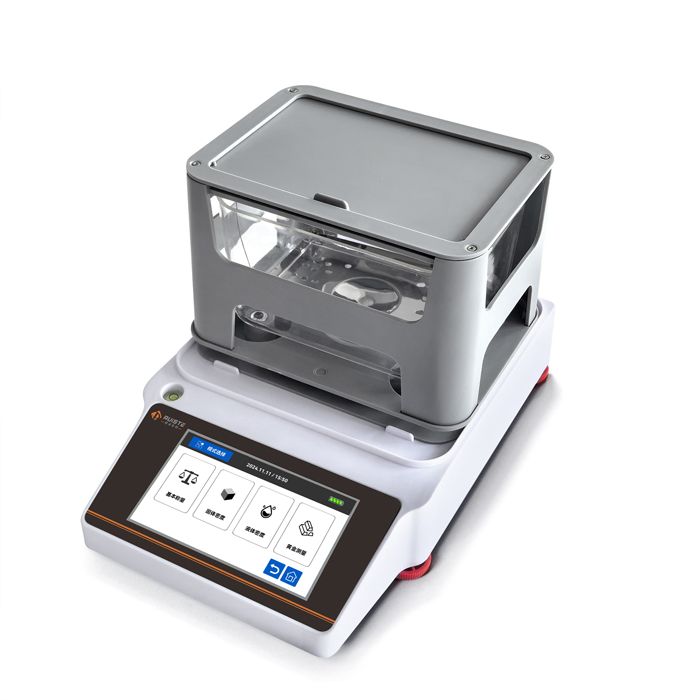
Portable Analytical Balance
In modern analytical testing, experimental research and industrial quality inspection sectors, precise mass measurement serves as the fundamental foundation for data acquisition and result verification. As a lightweight and easy-to-carry precision weighing instrument, the portable analytical balance has gradually become an essential measuring tool in various professional scenarios due to its unique combination of accurate measurement performance and flexible mobility. Different from stationary analytical balances that are limited to fixed laboratory platforms, this type of balance integrates compact structural design and mature sensing technology, maintaining reliable measurement accuracy while breaking the spatial constraints of traditional precision weighing equipment. It can adapt to diversified working environments and meet the growing demand for on-site rapid detection and mobile sampling measurement in multiple industries.
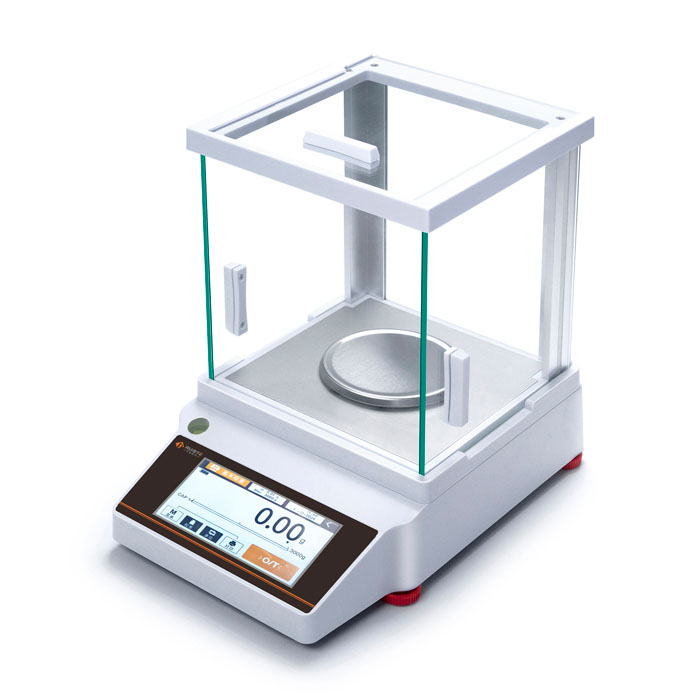
The internal operating mechanism of portable analytical balances mostly relies on electromagnetic force balance sensing technology, which has become a mainstream technical form for such precision weighing devices. When a sample is placed on the weighing pan, the tiny displacement generated by the pressure of the sample will be captured by the built-in displacement sensing component. The internal control system will dynamically adjust the current of the electromagnetic coil according to the displacement signal, so that the generated electromagnetic force can counteract the gravity of the sample and restore the weighing structure to its initial balanced position. In this working state, the magnitude of the current inside the coil maintains a stable proportional relationship with the mass of the sample, and the system converts the current signal into intuitive mass data through internal algorithm processing. This sensing method effectively reduces mechanical friction loss compared with traditional lever weighing structures, improving the stability of repeated measurements and extending the service life of internal components. Reasonable structural optimization also weakens the impact of mechanical vibration on measurement results, making the instrument more suitable for complex mobile use environments.
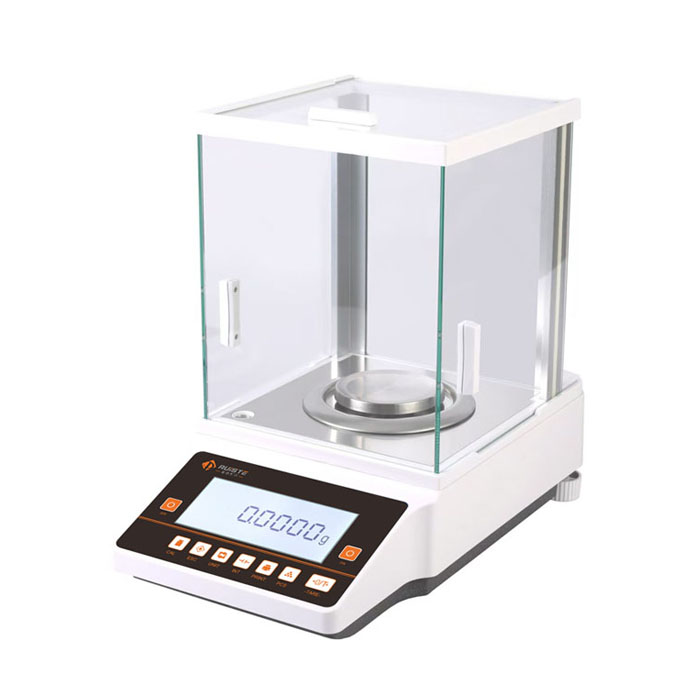
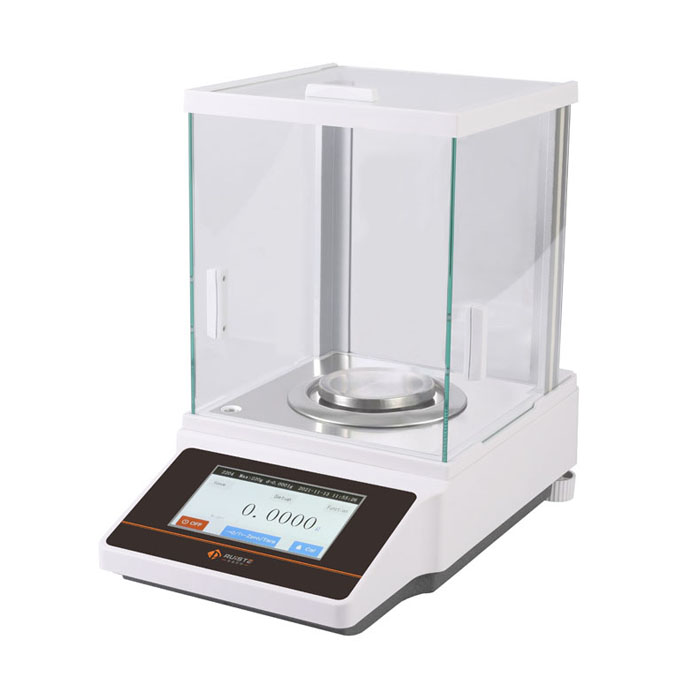
The overall structural design of portable analytical balance fully considers the dual requirements of portability and precision. The outer shell is made of lightweight and high-rigidity composite materials, which can reduce the overall weight of the equipment while resisting external scratch and corrosion. The weighing pan is usually processed with smooth and inert metal materials, which is convenient for cleaning residual samples and avoids chemical reactions with measured substances to affect measurement accuracy. To reduce the interference of air flow on tiny samples, most models are equipped with detachable transparent windproof covers. The simple folding or splicing structure of the windproof cover does not increase the storage volume of the instrument, and it can effectively block the flowing air in the external environment during weighing, preventing data fluctuation caused by air flow impact. The bottom of the instrument is fitted with adjustable supporting foot pads, which can fine-tune the horizontal state of the balance on uneven placement surfaces. The built-in level bubble assists users in completing horizontal calibration, ensuring that the internal sensing structure operates under stable mechanical conditions and reducing systematic errors caused by inclined placement.
In terms of performance parameters, portable analytical balances maintain moderate and applicable precision levels, which can meet the measurement needs of most conventional analytical scenarios. The measurable mass range covers trace samples of several milligrams to conventional samples of hundreds of grams, and the resolution can reach 0.1 milligrams in high-sensitivity modes. Each internal component undergoes strict debugging and calibration during the production process, ensuring good repeatability of measurement data. Under stable ambient conditions, the data deviation of multiple consecutive weighings of the same sample remains within a tiny range. The internal temperature compensation module can automatically sense ambient temperature changes and adjust sensing parameters accordingly, weakening the impact of temperature drift on measurement results. This temperature adaptation capability enables the instrument to work stably in conventional indoor and outdoor temperature ranges, avoiding drastic data fluctuations caused by sudden temperature changes. In addition, the built-in anti-interference shielding layer can reduce the influence of external electromagnetic signals on internal circuits, ensuring the stability of data transmission and calculation.
The flexible power supply mode further enhances the application convenience of portable analytical balances. In fixed working spaces such as laboratories, the instrument can be connected to a stable external power supply to maintain long-term continuous operation. For outdoor detection and mobile sampling scenarios, built-in rechargeable energy storage components can provide lasting power support. After being fully charged, the instrument can complete hundreds of independent weighing operations, meeting the measurement needs of all-day field work. The low-power operation design avoids excessive energy consumption, and the intelligent power-off function can automatically cut off the power supply after a period of inactivity, reducing unnecessary energy loss. The humanized display panel adopts a high-definition screen with soft light, which can clearly display mass data, calibration status and working parameters. The simple physical keys are convenient for users to complete basic operations such as zero clearing, peeling and unit switching. The intuitive operation logic lowers the usage threshold, allowing operators to master the measurement process in a short time without complicated professional training.
Portable analytical balances have a wide coverage of application scenarios, involving many fields such as scientific research, industrial production, environmental monitoring and educational teaching. In chemical analysis work, researchers use this instrument to weigh trace reagents and standard samples, providing accurate raw data for solution preparation, component titration and chemical reaction experiments. The compact volume allows it to be placed on temporary experimental platforms, supporting mobile detection of chemical samples in different spaces. In biological research, it is used for weighing biological samples such as plant tissues, microbial cultures and protein powders. The inert material of the weighing pan can prevent sample contamination, ensuring the purity of biological samples and the authenticity of experimental data.
In the pharmaceutical industry, portable analytical balances assist staff in raw material inspection and auxiliary formula debugging. During the sampling inspection of pharmaceutical raw materials, staff can carry the instrument to storage sites to complete on-site weighing, quickly screen raw materials that do not meet the mass standards, and improve the efficiency of quality inspection. In the processing of intermediate pharmaceutical products, the precise proportioning of auxiliary materials is completed through high-precision weighing to maintain the stability of product composition. In environmental monitoring work, technicians use the instrument to weigh sediment samples, dust particles and water-soluble residues collected from the natural environment. Accurate mass data provide reliable basis for analyzing environmental pollution degree and researching pollutant distribution rules. The mobile performance of the balance enables on-site weighing of field-collected samples, avoiding component changes caused by long-distance transportation of samples and ensuring the accuracy of monitoring data.
The industrial manufacturing sector also relies heavily on portable analytical balances for quality control and process optimization. In the electronic component processing industry, tiny conductive particles and miniature structural parts need to be weighed to verify whether the processing size and material dosage meet the production standards. In the new material research and development stage, researchers weigh composite raw materials in different proportions to explore the correlation between material mixing ratio and product performance, accelerating the iteration and optimization of new materials. In the food processing industry, the instrument is used to detect the mass of additives, nutrient components and residual substances in food samples, helping enterprises complete daily quality sampling and meet production specification requirements. Educational teaching scenarios in colleges and scientific research institutions also apply this type of balance. It is used for basic weighing training in experimental courses, enabling students to understand the working principle of precision measuring instruments and master standardized weighing operation methods, laying a solid operational foundation for subsequent professional experimental research.
Standardized operation and daily maintenance are crucial to maintain the long-term stable performance of portable analytical balances. Before each use, users need to place the instrument on a flat and firm placement surface, adjust the foot pads to keep the level bubble in the standard position, and complete preheating and zeroing operations. Preheating can activate the internal circuit and sensing components to make the instrument reach the optimal working state, while zeroing can eliminate the influence of the weighing pan itself and residual substances on the measurement results. During the weighing process, users should avoid touching the weighing pan with hands to prevent sweat and grease from contaminating the components. It is necessary to handle samples gently to avoid impact force causing displacement of internal precision structures. For volatile or corrosive samples, sealed containers should be used for auxiliary weighing to prevent sample evaporation or corrosion from damaging the instrument.
After completing the measurement work, users need to clean the residual samples on the weighing pan and the inner wall of the windproof cover with soft cleaning tools. Dry and dust-free storage environment can prevent moisture and particulate impurities from eroding internal circuits and sensing components. Regular professional calibration is also an essential maintenance link. The calibration operation can correct tiny system errors generated by long-term use, ensuring that the measurement accuracy remains within a reasonable range. In terms of daily storage, the instrument should be placed in a dry and cool environment, avoiding long-term exposure to direct sunlight and high-temperature humid spaces, so as to prevent aging and deformation of the shell and internal structural parts. Reasonable carrying and transportation measures are also required; shockproof packaging can reduce vibration and extrusion during movement, protecting the precision sensing components inside the balance.
Compared with other types of weighing instruments, portable analytical balances have prominent comprehensive advantages in practical application. Although fixed high-precision analytical balances have higher measurement sensitivity, they are bulky, inconvenient to move, and highly dependent on stable laboratory environments, which cannot meet the needs of outdoor and mobile operations. Ordinary portable scales have good flexibility, but their measurement accuracy is low, making it difficult to complete trace sample detection tasks. Portable analytical balances balance precision and flexibility, realizing complementary advantages in performance and usage scenarios. With the continuous progress of sensing technology and processing technology, the internal structural design of such instruments is constantly optimized. The anti-interference ability and environmental adaptability are steadily improved, and the humanized operation functions are increasingly rich, which can better adapt to the diversified and refined measurement needs of various industries.
In the future development process, portable analytical balances will further develop in the directions of miniaturization, intelligence and energy conservation. The optimized circuit integration technology will continue to reduce the internal space occupation, making the instrument more portable and easy to store. The intelligent data processing module will realize automatic recording, sorting and exporting of measurement data, reducing manual recording errors and improving experimental and detection efficiency. The upgraded energy storage technology will extend the single use time of portable power supply, adapting to longer-term outdoor continuous detection work. While maintaining the core precision performance, the instrument will strengthen the adaptive ability to extreme environments such as low temperature and high humidity, expanding the applicable scope of working scenarios. As one of the indispensable basic precision measuring instruments, portable analytical balances will continue to exert stable application value in multiple industries, providing accurate and reliable mass measurement data for scientific research innovation, industrial upgrading and environmental monitoring.
Portable Analytical Balance
https://www.pruiste.com/analytical-balance.html
Post Date: May 19, 2026
https://www.supplier-manufacturer.com/analytical-balance/portable-analytical-balance.html

![Shockproof Counting Scale]()
Shockproof Counting Scale
In modern industrial production, warehousing management, and small-part processing industries, accurate counting and stable weighing have become basic requirements for dai…![Advanced Counting Scale]()
Advanced Counting Scale
In the modern era of refined manufacturing and standardized material management, accurate counting of small-sized items has become an indispensable link in various industr…![Commercial Counting Scale]()
Commercial Counting Scale
In the daily operation of various commercial and industrial business scenarios, accurate quantity management of small parts, bulk packaged goods and standardized component…![Benchtop Laboratory Balance]()
Benchtop Laboratory Balance
In every modern laboratory setting that relies on precise quantitative measurement and accurate experimental data recording, the benchtop laboratory balance stands as an i…![Industrial Analytical Balance]()
Industrial Analytical Balance
In modern industrial production and material processing sectors, accurate mass measurement serves as the foundational cornerstone for maintaining production consistency, c…