Working Principle of Precision Balance
A precision balance stands as an indispensable measuring instrument in modern experimental research, industrial production, and material analysis, capable of detecting subtle mass changes of substances with high sensitivity. Unlike conventional weighing tools that focus on rough mass measurement, this type of instrument emphasizes stable and accurate data output under mild environmental interference, laying a solid foundation for quantitative analysis in multiple industries. The evolution of precision balance technology has gone through multiple stages of mechanical structure optimization and electronic technological iteration, and its internal working logic has gradually developed from simple mechanical force balance to intelligent electromagnetic force compensation control. Exploring its working principle can not only clarify the physical laws behind high-precision weighing but also help users understand the internal operating logic of the instrument, so as to standardize usage methods and maintain long-term measurement stability.
The early prototype of precision balances originated from the classical lever balance theory, which has been applied to mass measurement for thousands of years. The core logical basis of the lever principle is the torque balance rule. When two forces act on both ends of a uniform lever, the product of force and force arm on both sides remains equal in the balanced state. In traditional mechanical precision balances, the lever is processed with high-rigidity metal materials, and the force arms on both sides are strictly calibrated to maintain equal length. During the measurement process, the measured object is placed on one weighing pan, and standard weights with known mass are placed on the other pan. When the lever returns to the horizontal equilibrium position, the mass of the measured object is equivalent to the total mass of the matched standard weights. Although the mechanical structure has the advantages of simple logic and low dependence on energy supply, it has obvious inherent limitations. Friction loss exists in the hinge connection part of the lever, and tiny deformation of the metal structure under long-term stress will cause measurement deviation. In addition, manual weight placement leads to low measurement efficiency, and it is difficult to capture micro-mass changes, which makes mechanical precision balances gradually unable to meet the increasingly stringent measurement requirements of modern industries.
With the progress of electronic sensing technology, modern precision balances have widely adopted the electromagnetic force compensation principle, which has become the mainstream working mechanism of current high-precision weighing instruments. This principle takes gravity and electromagnetic force as the core stress elements, and realizes accurate mass conversion through closed-loop circuit regulation. All objects on the earth's surface are affected by gravitational acceleration, and the gravity generated by the mass of the measured object acts vertically downward on the weighing pan. This pressure will cause a slight displacement of the internal force transmission structure of the balance, and the displacement sensor arranged inside the instrument can instantly capture this tiny position change and convert the mechanical displacement signal into a continuous electrical signal. The electrical signal is transmitted to the internal control circuit, which dynamically adjusts the current intensity in the electromagnetic coil according to the real-time displacement data. The coil is placed in a stable magnetic field generated by permanent magnets, and the changing current will produce a vertical upward electromagnetic force. This force acts on the force transmission structure to offset the downward gravity of the measured object, and finally push the mechanical structure back to the initial balanced position.
There is a stable linear proportional relationship between the current intensity passing through the coil and the mass of the measured object in the electromagnetic force compensation system. When the external environmental conditions remain stable, the magnetic field strength of the permanent magnet does not fluctuate, and the structural rigidity of the force transmission component remains unchanged. The larger the mass of the measured object, the greater the downward pressure generated by gravity, and the higher the current intensity required to generate a balancing electromagnetic force. The internal data processing module of the balance records the current fluctuation data in real time, and converts the current signal into intuitive mass data through a built-in algorithm. Compared with the traditional mechanical lever structure, the electromagnetic force compensation structure reduces mechanical friction to a great extent. The whole weighing process relies on electronic signal transmission and electromagnetic force regulation, with mild structural wear and high response sensitivity, which can complete stable measurement within a short time and effectively identify micro mass differences.
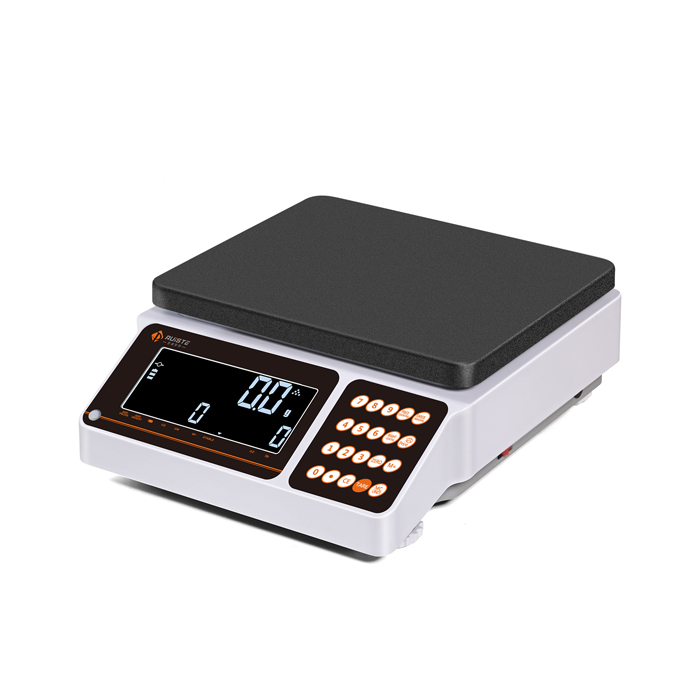
A complete precision balance contains multiple collaborative internal components, and each structural unit performs independent functions to ensure the continuity and accuracy of the weighing process. The weighing pan is the direct bearing component of the measured object, which is usually made of corrosion-resistant and high-density metal materials. The smooth surface can reduce the adhesion of dust and impurities, and the flat structural design ensures uniform force on the contact surface. Beneath the weighing pan is the force transmission mechanism, which adopts an integrated alloy structure in most high-performance products. The integrated molding process avoids assembly gaps and structural looseness caused by splicing parts, and improves the overall rigidity and anti-deformation ability. The displacement sensor is installed at the stress node of the force transmission mechanism, with ultra-high induction accuracy, which can capture micron-level displacement changes and avoid data delay caused by signal transmission.
The electromagnetic driving unit composed of permanent magnets and coils is the core power component to realize force balance. The permanent magnets are fixed inside the instrument to form a uniform and stable magnetic field, and the coils move slightly with the force transmission structure. The high-precision circuit control system undertakes the tasks of signal reception, data calculation and current regulation. It can filter out clutter signals generated by weak current fluctuations in the external circuit to ensure the stability of current output. The data processing and display module is responsible for converting processed electrical signals into readable mass values, and retaining real-time measurement data for subsequent viewing and analysis. In addition, some precision balances are equipped with auxiliary damping components, which can eliminate the slight vibration of the internal structure during the stress balance process and shorten the time required to reach a stable weighing state.
The complete weighing workflow of a precision balance follows a standardized logical sequence, and each link is closely linked to ensure data consistency. Before placing the sample, the instrument is kept in a power-on standby state, and the internal circuit maintains a low-power operating state. At this time, the weighing pan is empty, the internal mechanical structure is in the initial horizontal balance state, the sensor outputs a zero-displacement signal, and the coil keeps the minimum current output. After the measured object is stably placed on the center of the weighing pan, the gravity of the object acts on the force transmission structure, causing a slight downward offset of the structure. The displacement sensor immediately captures the offset signal and transmits it to the control circuit. The circuit calculates the required electromagnetic force according to the offset amplitude, and automatically increases the current in the coil. The electromagnetic force generated by the coil gradually offsets the gravity of the sample, and the offset structure slowly returns to the initial horizontal position.
When the mechanical structure remains static in the initial balance position again, the current intensity in the coil tends to be stable without obvious fluctuation. The data processing module records the stable current value at this time, and calculates the accurate mass of the sample through the preset calibration algorithm. After the data calculation is completed, the display screen presents the final weighing result. After taking away the measured object, the external pressure disappears, the internal structure rebounds to the zero position, the current returns to the standby state, and the instrument completes a complete weighing cycle. For repeated weighing scenarios, the instrument can keep the circuit in a continuous working state to shorten the response time of subsequent measurement and improve the overall weighing efficiency.
Although the internal structure and control algorithm of precision balances have been continuously optimized, the measurement accuracy is still affected by multiple external environmental factors, which is closely related to its working principle. Gravity acceleration is a basic physical factor affecting weighing results. Due to the influence of altitude and geographical latitude, the gravity acceleration value varies in different regions. The electromagnetic force compensation mechanism relies on the gravity of the sample for reverse calibration, so the instrument needs to complete regular calibration according to the local gravitational environment to eliminate systematic deviation caused by gravitational differences. Temperature change is also an important interference factor. Ambient temperature fluctuation will cause slight thermal expansion and contraction of internal metal components, changing the structural rigidity and gap spacing. Meanwhile, the magnetic field strength of permanent magnets and the conductivity of coils are also affected by temperature, leading to subtle changes in electromagnetic force output.
Air flow and dust pollution in the external environment will also interfere with weighing stability. In the process of micro-mass measurement, slow air flow will produce tiny air pressure difference on the surface of the weighing pan, causing structural vibration. Dust adhering to the surface of the weighing pan will increase the bearing mass invisibly, resulting in persistent deviation of measured data. In addition, mechanical vibration from the ground will be transmitted to the interior of the instrument, disrupting the static balance state of the force transmission structure. Therefore, most precision balances need to be placed in closed shielding casings and placed on special shock-absorbing countertops during use to reduce the interference of external adverse factors.
In order to maintain long-term measurement performance, precision balances are equipped with standardized calibration mechanisms, which are an important supplement to the working principle. Calibration is essentially to correct the functional relationship between current intensity and mass, so that the electromagnetic force can accurately match the gravity of the sample. The calibration modes are divided into passive manual calibration and automatic internal calibration. Manual calibration requires placing standard calibration objects with known mass on the weighing pan, and the instrument compares the measured value with the standard value to adjust the internal algorithm parameters. Automatic calibration relies on built-in sensing components. When the system detects obvious changes in ambient temperature or continuous idle time, it will automatically trigger the calibration program without manual operation. The calibration process can eliminate systematic errors caused by structural aging and environmental changes, and keep the sensitivity of the sensor and the stability of the circuit within a reasonable range.
With the continuous maturity of precision balance technology, its application scope has covered many professional fields. In chemical laboratories, it is used for the precise weighing of chemical reagents to ensure the accurate proportion of experimental formulas and improve the repeatability of chemical reaction experiments. In the pharmaceutical industry, it completes the measurement of raw material powder and micro-preparation components to meet the strict ingredient proportion requirements of pharmaceutical production. In the field of material science, it detects the mass change of materials before and after corrosion, oxidation and compression tests to analyze the structural stability of new materials. In addition, precision balances also play an important role in food detection, geological exploration and electronic component manufacturing, providing reliable data support for refined production and scientific research.
In conclusion, the working principle of modern precision balances is based on the combination of classical gravitational mechanics and electromagnetic induction theory, and realizes high-precision mass measurement through closed-loop electronic control and mechanical force balance. From the initial mechanical lever balance to the current electromagnetic force compensation structure, the technological iteration effectively makes up for the defects of traditional instruments in friction loss and sensitivity. The coordinated operation of internal sensing, circuit and mechanical components ensures the stability and intuitiveness of weighing data. Although environmental factors such as gravity, temperature and air flow still bring minor interference, the interference can be effectively controlled through structural optimization and standardized operation. In the future, with the continuous progress of sensing technology and intelligent algorithms, precision balances will develop towards lower interference sensitivity and higher data refresh rate, and provide more accurate and efficient measurement services for more professional fields.
Working Principle of Precision Balance
https://www.pruiste.com/precision-balance.html
Post Date: May 18, 2026
https://www.supplier-manufacturer.com/precision-balance/working-principle-of-precision-balance.html

![Electronic Balance RT SERIES]()
Electronic Balance RT SERIES
The RT series adopts high-definition keys, which is economical. The entire series of balances adopt domestic sensors, brand sensors, and aluminum alloy structure to ensure…![Low-shear Digital Viscometer]()
Low-shear Digital Viscometer
Viscosity stands as one of the most critical rheological properties that define the flow behavior of fluid materials, directly influencing the processing performance, stor…![Digital Viscometer Manufacturer]()
Digital Viscometer Manufacturer
Viscosity stands as one of the most fundamental physical properties of fluid materials, directly influencing the flow performance, processing characteristics, and final qu…![Laboratory Digital Viscometer]()
Laboratory Digital Viscometer
Viscosity stands as one of the most fundamental physical properties of fluid substances, reflecting the internal friction and flow resistance that occurs when a liquid or …![Compact Moisture Analyzer]()
Compact Moisture Analyzer
Moisture content detection stands as a fundamental analytical procedure across industrial production, laboratory research, and quality inspection workflows, as the proport…