Laboratory Balance Manufacturer
Laboratory balances stand as foundational precision instruments across scientific research, industrial production, quality inspection, and academic laboratory environments, serving as essential tools for accurate mass measurement of solids, liquids, and powdered substances. As professional laboratory balance manufacturers, the core focus of production and research lies in integrating mechanical stability, electronic precision, and user-centric design to develop reliable weighing equipment that adapts to diverse experimental and industrial scenarios. Unlike ordinary weighing devices used in daily commerce, laboratory balances demand strict consistency in measurement repeatability, environmental adaptability, and long-term operational stability, requiring rigorous control over every production link from raw material selection to finished product debugging and testing.
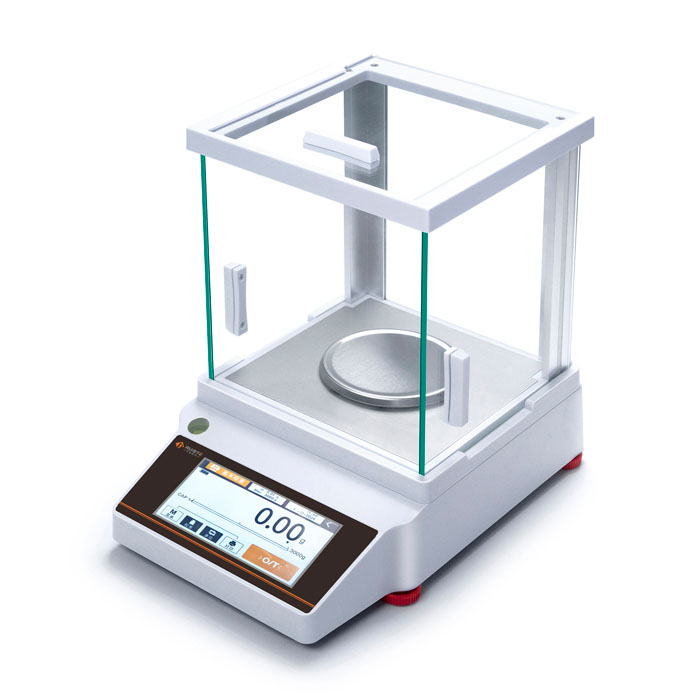
The evolution of laboratory balance manufacturing has long broken away from the traditional mechanical lever weighing structure that dominated the industry for decades. Modern manufacturing technologies center on electromagnetic force compensation and strain gauge sensing principles, which lay a stable technical foundation for high-precision mass measurement. In the production process, manufacturers prioritize the optimization of core sensing components, as these parts directly determine the accuracy and stability of the entire instrument. The electromagnetic coil systems adopted in high-precision laboratory balances require fine winding and calibration, ensuring that the electromagnetic restoring force generated can effectively counteract the gravitational force of measured samples and maintain the balance of the weighing pan. The current change value formed during this force balance process is proportionally converted into mass data through high-sensitivity signal processing modules, realizing intuitive and accurate digital display of measurement results.
Material selection is a critical initial link in laboratory balance manufacturing, directly affecting the instrument’s service life, anti-interference ability, and measurement stability. For the weighing pan, manufacturers usually adopt high-density, corrosion-resistant metal materials that resist deformation under long-term load and avoid chemical reactions when contacting common laboratory reagents, powders, and liquid samples. The instrument shell and internal support structures use high-rigidity composite materials and metal alloys to reduce the impact of external vibration and structural deformation on measurement data. In addition, key internal electronic components are selected with strict screening of temperature resistance and anti-aging performance, effectively reducing data drift caused by temperature changes and long-term operation, and ensuring that the instrument can maintain stable working performance in variable laboratory environments.
Structural design optimization runs through the entire manufacturing process of laboratory balances, focusing on solving common interference factors in laboratory weighing scenarios. Eccentric load error is a typical problem affecting weighing accuracy, so manufacturers optimize the suspension structure and pan carrier design of balances to ensure that the weighing pan can always maintain a horizontal and balanced state even when samples are placed unevenly. For high-precision analytical balances that are sensitive to air flow and dust interference, manufacturers adopt integrated windshield structures with seamless assembly processes. The transparent windshield panels are designed with high light transmittance and anti-static functions, which not only facilitate users to observe the weighing state but also prevent floating dust and air convection from interfering with tiny sample measurement. Meanwhile, the overall structural layout follows ergonomic principles, rationally arranging the display panel, operation keys, and weighing area to simplify daily operation steps and improve experimental efficiency.
Precision calibration and performance debugging are the core production links that determine the quality of laboratory balances. After the assembly of mechanical structures and electronic systems is completed, every instrument needs to undergo multi-dimensional parameter debugging and repeated weighing tests in a standardized constant-temperature workshop. Manufacturers simulate various conventional laboratory environmental conditions, including different temperature gradients, humidity levels, and slight vibration interference, to verify the instrument’s environmental adaptability. During the calibration process, standard mass samples of different specifications are used for repeated testing to adjust the signal conversion parameters of the internal microprocessor, eliminating systematic errors in the instrument. Each batch of products will also undergo random sampling inspection of long-term continuous operation to assess the stability of data output after hours of uninterrupted use, ensuring that each finished product can maintain consistent measurement performance in long-term laboratory application.
Different application scenarios drive the diversified product development of laboratory balance manufacturers, forming a complete product system covering multiple precision levels and weighing ranges. Precision balances with medium weighing ranges are widely used in conventional chemical experiments, food ingredient testing, and industrial raw material sampling, meeting the basic precision weighing needs of daily laboratory testing and routine quality inspection. Analytical balances with higher precision are tailored for pharmaceutical research, environmental monitoring, and fine chemical analysis, capable of completing accurate measurement of trace samples and providing reliable data support for precise experimental formulas and component analysis. Micro and semi-micro balances, with ultra-high measurement resolution, are applied in advanced scientific research fields such as material science, biochemical research, and nanotechnology, realizing accurate quantification of tiny samples that are difficult to measure with conventional instruments.
In addition to core weighing performance, modern laboratory balance manufacturers also focus on functional expansion and intelligent optimization of products to adapt to the upgrading of laboratory automation systems. Most newly manufactured balances are equipped with intelligent data processing functions, which can automatically record weighing data, eliminate manual reading errors, and support data transmission and statistical analysis. Built-in automatic zero-tracking and tare functions simplify the operation of weighing container deduction and multiple sample weighing, greatly improving the convenience of continuous experimental operation. Some models also support customized functional settings according to user needs, adapting to special weighing modes such as density measurement, percentage weighing, and counting weighing, expanding the application scope of a single instrument and improving the comprehensive utilization rate of laboratory equipment.
Quality control in the manufacturing process covers every detailed link from parts processing to finished product delivery. Manufacturers establish standardized production management systems to ensure that each component meets unified precision standards. The processing of mechanical parts adopts high-precision CNC machining technology to control the dimensional tolerance of key structures within a tiny range, avoiding assembly gaps and structural looseness that affect stability. Electronic circuit boards undergo anti-interference treatment and aging testing to ensure stable signal transmission and avoid data fluctuation caused by circuit interference. Before delivery, each instrument will complete a full set of performance tests, including linearity test, repeatability test, and stability test, to eliminate unqualified products and ensure that all delivered instruments meet the basic usage requirements of professional laboratories.
After-sales technical support and product maintenance guidance are indispensable parts of laboratory balance manufacturing services. Professional manufacturers do not only provide finished instruments but also deliver standardized usage guidance and maintenance solutions to help users extend the service life of equipment and maintain stable measurement accuracy. Laboratory balances are precision instruments that require daily standardized maintenance; manufacturers summarize universal maintenance specifications based on production experience, including regular cleaning of the weighing pan and windshield, regular calibration after environmental changes, and avoiding long-term overload use. Targeted solutions for common minor problems such as data drift and slow response are also provided, helping users solve operational faults in a timely manner and reduce equipment downtime.
With the continuous progress of scientific research and industrial technology, the development direction of laboratory balance manufacturing is gradually moving toward higher precision, stronger environmental adaptability, and more intelligent operation. Manufacturers continue to invest in technical research and development, optimizing sensor sensitivity and signal processing algorithms to further reduce measurement errors and improve the resolution of tiny sample weighing. At the same time, more attention is paid to the anti-interference design of instruments, optimizing the internal damping structure and signal filtering system to enable balances to maintain stable performance in complex laboratory environments with variable temperature, humidity, and slight vibration. The lightweight and integrated design of products is also continuously upgraded, making high-precision weighing instruments more compact and convenient for laboratory placement, movement, and integrated installation with other experimental equipment.
In the global scientific research and industrial system, laboratory balances are basic equipment that guarantees the accuracy of experimental data and product quality detection. The manufacturing level of laboratory balances directly affects the reliability of experimental results in multiple industries including biomedicine, new material research, environmental protection testing, and industrial quality control. Professional manufacturers always take precision, stability, and practicability as the core manufacturing concepts, continuously optimizing production processes and product functions according to the actual needs of terminal users. By balancing technical performance and user experience, they provide stable and efficient weighing solutions for various laboratory scenarios, laying a solid foundation for the smooth development of scientific research experiments and standardized industrial quality inspection work.
Laboratory Balance Manufacturer
https://www.pruiste.com/laboratory-balance.html
Post Date: May 22, 2026
https://www.supplier-manufacturer.com/laboratory-balance/laboratory-balance-manufacturer.html

![Digital Viscometer Vender In China]()
Digital Viscometer Vender In China
The manufacturing and supply of digital viscometers in China have witnessed steady and progressive development over the past decades, forming a complete and mature industr…![High-shear Digital Viscometer]()
High-shear Digital Viscometer
Viscosity serves as one of the most fundamental physical properties of fluid materials, reflecting the internal friction and flow resistance generated during fluid deforma…![Rotational Digital Viscometer]()
Rotational Digital Viscometer
Viscosity stands as one of the most fundamental physical properties of fluid materials, reflecting the internal frictional resistance that occurs when a fluid undergoes de…![Specifications of Moisture Analyzer]()
Specifications of Moisture Analyzer
A moisture analyzer is a fundamental analytical device designed to quantify the moisture content present in solid, powdered, granular, and viscous materials across diverse…![Moisture Analyzer Wholesale]()
Moisture Analyzer Wholesale
Moisture analysis stands as a fundamental quality control and process optimization step across modern industrial production, scientific research, and agricultural processi…