Automatic Analytical Balance
In modern scientific research, industrial production, and analytical testing industries, precise mass measurement serves as one of the most fundamental and indispensable experimental foundations. The automatic analytical balance stands out as a sophisticated measuring instrument designed to meet high-precision weighing requirements, offering stable and accurate mass data for various professional scenarios. Unlike conventional weighing tools with limited precision, this type of balance is engineered to capture subtle mass changes of tiny samples, relying on mature sensing technologies and intelligent control systems to realize automated weighing processes. It has gradually become a core piece of equipment in laboratories, replacing traditional mechanical weighing devices with cumbersome operation steps and unstable reading performance. Throughout the evolution of measuring instruments, the automatic analytical balance has continuously optimized its internal structures and functional logic, adapting to increasingly stringent testing standards in diverse industries.
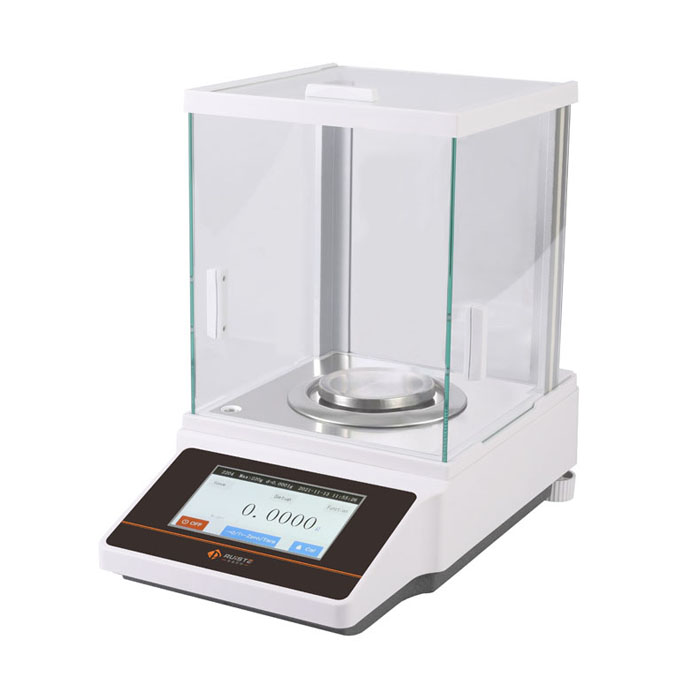
The working principle of the automatic analytical balance is primarily based on the electromagnetic force compensation mechanism, which constitutes the core logic of its high-precision measurement. Under no-load conditions, the internal circuit of the balance transmits stable current to the electromagnetic coil, generating a fixed electromagnetic force to maintain the horizontal balance of the internal mechanical transmission structure and keep the system at the zero calibration state. When a sample is placed on the weighing pan, the gravity of the sample causes a tiny displacement of the internal beam structure. The high-sensitivity position detection component instantly captures this subtle offset signal and converts the mechanical displacement into an electrical signal. After the signal is amplified and processed by the built-in circuit system, the current intensity of the electromagnetic coil is dynamically adjusted. The modified electromagnetic force counteracts the gravity of the sample, pushing the mechanical structure back to its initial balanced position. Within a reasonable measuring range, the current required to maintain structural balance maintains a stable linear proportional relationship with the mass of the sample. The internal data processing module converts the current signal into intuitive mass data, completing the automatic weighing process without manual intervention in data reading and mechanical adjustment.
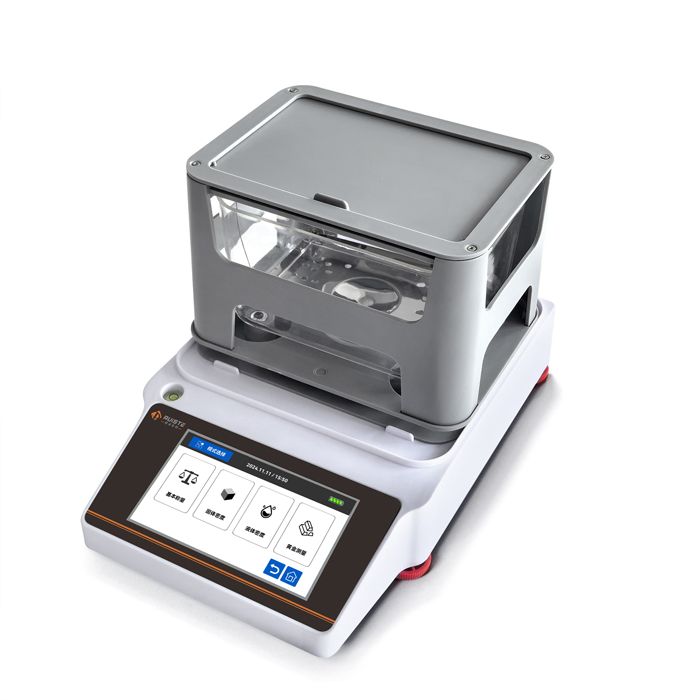
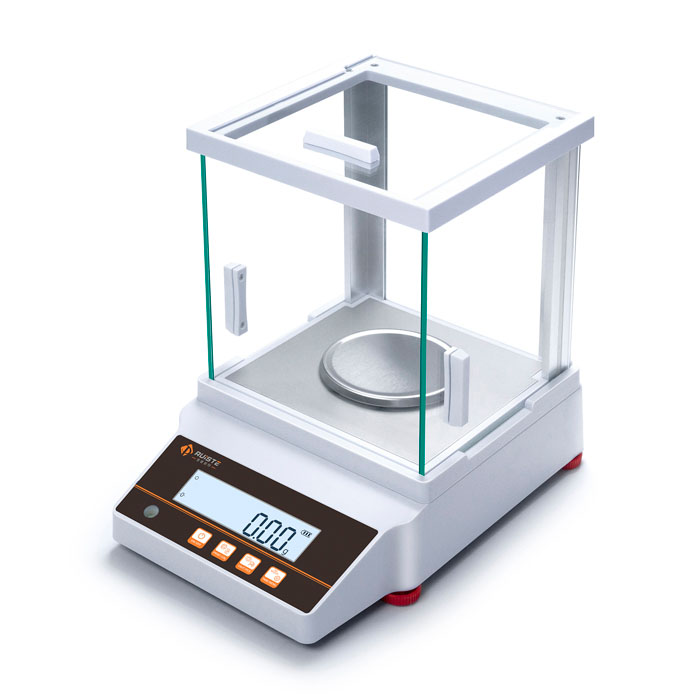
The overall structural design of the automatic analytical balance follows the principles of stability, airtightness and anti-interference, and each component has clear functional division to ensure measurement accuracy. The external shell is made of high-rigidity composite materials, which can effectively isolate external mechanical vibration and reduce the vibration interference generated by surrounding equipment operation. A transparent closed shielding cover is installed outside the weighing pan, mainly used to block the influence of flowing air in the environment. Even weak air convection may cause data fluctuation during the weighing of micro samples, and the closed space can maintain a stable airflow environment around the samples. The internal bearing structure adopts an integrated molding process to minimize mechanical friction during operation and avoid measurement errors caused by component wear. In addition to the core electromagnetic sensing unit, the balance is also equipped with a temperature sensing module and a humidity sensing module. These auxiliary components monitor the ambient temperature and humidity in real time, and the system automatically corrects the measurement data according to environmental changes, weakening the adverse effects of thermal expansion and contraction of parts and air density changes on weighing results.
Reasonable operation specifications are essential to maintain the measurement stability of the automatic analytical balance, and standardized usage procedures can effectively reduce human-induced errors. Before formal weighing, a sufficient preheating period is required to stabilize the internal circuit and electromagnetic components. Temperature drift of electronic parts will affect current transmission accuracy in the initial power-on stage, and constant-temperature operation can ensure the sensitivity of the sensing system. The placement of the instrument also needs to meet strict environmental requirements; it should be placed on a horizontal and stable work platform, keeping away from direct sunlight, heat sources and corrosive gas accumulation areas. The horizontal calibration device at the bottom of the balance needs to be adjusted regularly to ensure that the internal mechanical structure is in a horizontal state, otherwise eccentric stress will be generated inside the instrument and affect the linearity of force transmission. During sample placement, samples should be gently placed in the center of the weighing pan to prevent eccentric load caused by offset placement. Overload placement is strictly prohibited, as excessive load will cause irreversible fatigue damage to internal sensing components and shorten the service life of the instrument.
In chemical analysis laboratories, the automatic analytical balance exhibits irreplaceable application value and is widely used in quantitative analysis experiments. In titration analysis experiments, researchers need to accurately weigh solid reagents to prepare standard solutions with fixed concentration. Slight deviations in reagent mass will directly lead to changes in solution concentration, thereby affecting the accuracy of subsequent titration data. The high precision of the automatic analytical balance can control the weighing error of trace reagents within a tiny range, providing reliable basic data for solution configuration. In material composition detection, laboratories use this balance to weigh reaction samples and residual products, and calculate the material conversion rate and reaction yield according to mass changes before and after the chemical reaction. Moreover, in the field of purity detection of chemical raw materials, technicians analyze sample purity by measuring the mass of precipitates generated by chemical reactions, and the stable repeatability of the balance ensures the consistency of multiple parallel experimental data.
The pharmaceutical industry also relies heavily on automatic analytical balances to control production and testing quality. In pharmaceutical research and development laboratories, researchers need to configure compound reagents according to precise mass ratios to develop new pharmaceutical formulations. The proportional balance of various raw materials directly determines the efficacy and safety of pharmaceuticals, putting forward extremely high requirements for weighing accuracy. In pharmaceutical production links, intermediate products and finished medicines need regular sampling inspection. The mass detection of micro samples such as pharmaceutical particles and powder agents is completed by automatic analytical balances to ensure that the mass difference of each batch of products is within a reasonable control range. In addition, the purity inspection of medicinal auxiliary materials also requires the cooperation of high-precision weighing equipment to eliminate unqualified raw materials with excessive impurity content and guarantee the overall quality of pharmaceutical products.
In industrial detection and material science research, the automatic analytical balance provides accurate data support for material performance analysis. New material development often requires testing the physical characteristics of materials under different environmental conditions. For example, in the moisture resistance test of polymer materials, researchers measure the mass change of samples before and after moisture absorption to calculate the moisture absorption rate of materials and evaluate the environmental adaptability of materials. In the metal smelting and processing industry, trace impurity elements in metal raw materials are quantitatively analyzed through chemical dissolution and precipitation reactions, and the mass of precipitated impurities is accurately measured by the balance to judge the purity grade of metal materials. In the food processing industry, the instrument is used for nutritional component detection and additive content analysis of food samples. Accurate weighing of test samples ensures the authenticity and validity of food safety detection data, which is conducive to standardizing food production standards.
Daily maintenance and scientific storage are crucial to extend the service life of the automatic analytical balance and maintain long-term measurement accuracy. After each use, the residual samples and dust on the weighing pan and shielding cover should be cleaned with soft cleaning tools. Corrosive and volatile samples are prohibited from being directly placed on the weighing pan to prevent chemical corrosion of metal components and internal circuits. The instrument should be placed in a dry and ventilated storage environment, with humidity kept within a moderate range to avoid circuit short circuit and metal oxidation caused by excessive humidity. Regular calibration is an essential maintenance step. After long-term use or displacement of the instrument, external standard weights are used for linear calibration to eliminate system errors generated by component aging. In addition, the internal dust-proof structure should be inspected regularly to prevent fine dust from accumulating in the electromagnetic sensing area, which may affect the sensitivity of electromagnetic force feedback. During non-working hours, the power supply should be cut off and the dust cover should be covered to isolate external dust and vibration interference.
With the continuous progress of electronic information technology and sensor manufacturing technology, the performance of automatic analytical balances is constantly being optimized and upgraded. Modern instruments have realized intelligent data management functions, which can automatically record weighing data, store historical measurement records, and export data through external transmission interfaces, reducing manual recording errors and improving experimental efficiency. Some optimized models are equipped with anti-static structures to eliminate static interference generated by friction between dry air and samples, further improving the stability of micro-sample weighing. In terms of humanized design, the operation interface is simplified, and intuitive digital display and simple touch control modes reduce the operation threshold for users. The lightweight integrated structure also facilitates the movement and placement of the instrument in different laboratory spaces.
Despite its high measurement accuracy and stable operating performance, the automatic analytical balance still has certain usage limitations that need attention. The instrument is sensitive to environmental changes, and drastic fluctuations in temperature, humidity and air pressure will cause temporary data drift. It cannot be used in harsh environments such as strong corrosion, high dust and intense vibration. In addition, the weighing pan and internal sensing components have strict bearing limits, and long-term overload use will permanently damage the measurement system. Users need to formulate targeted usage plans according to experimental conditions and sample characteristics, and avoid improper operation affecting the instrument performance. Reasonable awareness of equipment limitations can give full play to the application advantages of automatic analytical balances and maintain long-term stable operating conditions.
From the initial mechanical weighing tools to modern intelligent automatic analytical balances, the upgrading of measuring instruments reflects the progress of scientific detection technology. As a precise measuring carrier connecting basic experiments and industrial detection, the automatic analytical balance undertakes the important task of providing accurate mass data for multiple industries. Its stable electromagnetic compensation principle, optimized anti-interference structure and convenient intelligent operation mode make it an indispensable basic equipment in scientific research and production. In the future, with the continuous breakthrough of micro-sensing technology and intelligent control technology, the automatic analytical balance will develop towards higher sensitivity, stronger environmental adaptability and more intelligent data processing, providing more reliable technical support for the innovation and development of chemistry, medicine, materials, food and other industries, and laying a solid foundation for the improvement of global precision detection standards.
Automatic Analytical Balance
https://www.pruiste.com/analytical-balance.html
Post Date: May 19, 2026
https://www.supplier-manufacturer.com/analytical-balance/automatic-analytical-balance.html

![Analytical Balance Factory]()
Analytical Balance Factory
An analytical balance factory serves as a fundamental manufacturing base for producing high-precision weighing instruments that underpin numerous scientific, industrial, a…![Explosion-proof Analytical Balance]()
Explosion-proof Analytical Balance
In modern industrial production and scientific research fields that involve flammable and combustible substances, the demand for high-precision weighing equipment with enh…![Attribute of Precision Balance]()
Attribute of Precision Balance
A precision balance stands as a fundamental measuring instrument designed to determine the mass of substances with refined measuring capability, serving as an indispensabl…![Working Principle of Precision Balance]()
Working Principle of Precision Balance
A precision balance stands as an indispensable measuring instrument in modern experimental research, industrial production, and material analysis, capable of detecting sub…![Explosion-proof Precision Balance]()
Explosion-proof Precision Balance
In modern industrial production and scientific research fields, the demand for high-precision weighing operations in hazardous working environments continues to grow stead…