Industrial Laboratory Balance
Industrial laboratory balances serve as foundational precision measuring instruments in modern industrial production, scientific research, and quality inspection workflows, delivering reliable mass measurement data that supports standardized production, experimental verification, and product performance optimization. Unlike ordinary commercial weighing devices designed for rough mass judgment, these professional instruments are engineered to meet the rigorous accuracy, stability, and repeatability requirements of laboratory and industrial testing environments, where even minor deviations in mass measurement can lead to significant changes in experimental results, product component ratios, and production quality control outcomes. As industrial manufacturing continues to advance toward refinement and intelligence, the role of high-precision laboratory balances has expanded from traditional chemical and physical experiments to cover new material development, pharmaceutical manufacturing, food processing, electronic component production, and environmental monitoring, becoming an indispensable tool for ensuring the consistency and credibility of industrial technical data.
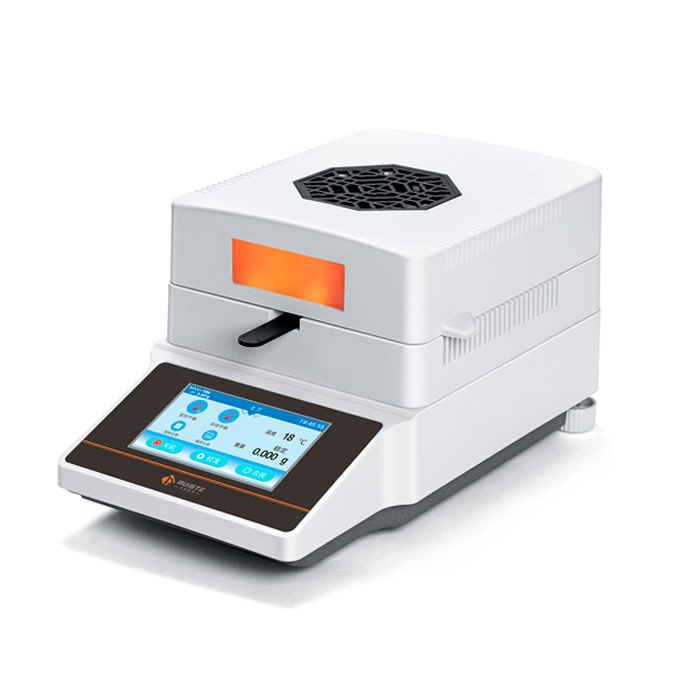
The operational logic of modern industrial laboratory balances primarily relies on mature electromagnetic force compensation technology, a closed-loop measurement mechanism that ensures stable and sensitive mass detection. When a sample is placed on the weighing pan, the gravitational force of the sample triggers a slight displacement of the internal mechanical structure and position sensing components. The built-in position detector captures this tiny positional change in real time and transmits electrical signals to the core control system. The system automatically adjusts the current intensity of the internal electromagnetic coil to generate an upward electromagnetic restoring force that counteracts the downward gravitational force of the sample. This dynamic adjustment continues until the weighing pan returns to its preset zero reference position, achieving a state of force balance within the instrument. The current value required to maintain this balanced state maintains a stable linear proportional relationship with the mass of the loaded sample. The integrated microprocessor converts the collected current signal into standardized mass data through internal algorithm calculation, filters out interference signals, and finally presents accurate numerical readings on the digital display interface. This working mechanism effectively avoids the mechanical friction errors inherent in traditional lever-based weighing equipment, laying a solid foundation for high-resolution and high-stability measurement.
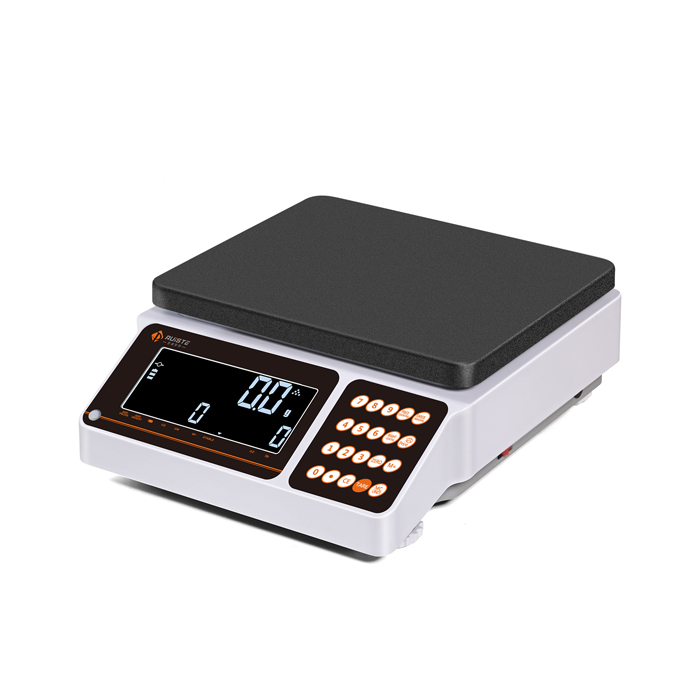
In addition to electromagnetic force compensation structures, some medium-load industrial laboratory balances adopt strain gauge load cell sensing structures, which are more suitable for scenarios requiring larger weighing ranges while retaining basic precision attributes. The core of this structure lies in high-sensitivity strain sensing components fixed inside the load-bearing mechanism. When a mass load acts on the weighing platform, the load cell produces micro elastic deformation, which drives the strain gauges attached to its surface to change in resistance value. The internal circuit system converts this resistance change into a measurable electrical signal, and after amplification, filtering, and digital processing, the final mass measurement result is output. Although the resolution of load cell-based balances is slightly lower than that of electromagnetic compensation models, their structural durability and load-bearing stability make them more adaptable to complex industrial environments with frequent sample replacement and large-quality batch detection, forming a complementary product layout with high-precision electromagnetic laboratory balances to meet diverse industrial measurement needs.
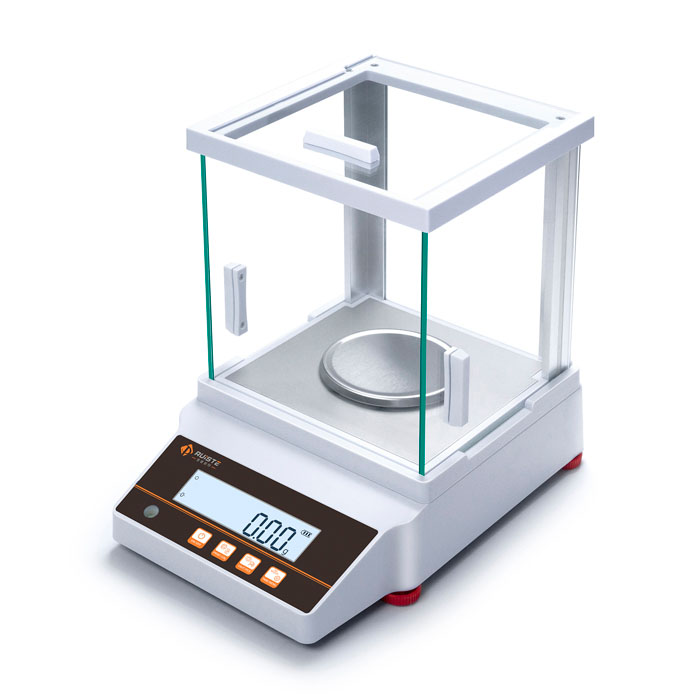
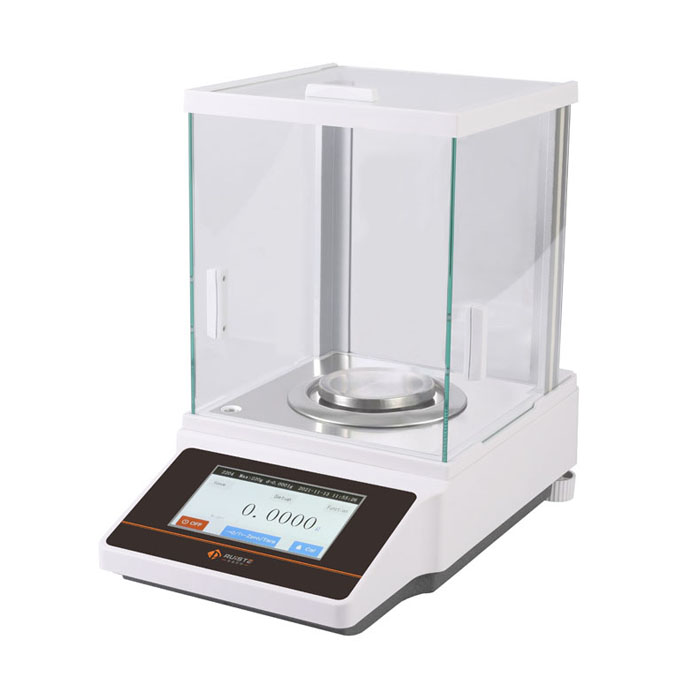
The overall structural design of industrial laboratory balances focuses on precision coordination and anti-interference performance, with each component optimized for stable measurement output. The external protective shell is made of high-rigidity, anti-corrosion materials that isolate internal precision components from external dust, moisture, and mechanical impact, preventing structural deformation or component aging caused by environmental erosion. The weighing pan is usually made of smooth, wear-resistant metal materials with flat and uniform force-bearing surfaces, ensuring that samples of different shapes can achieve stable force transmission without local stress deviation that affects measurement accuracy. The internal core components include precision sensors, signal processing circuits, microprocessor control modules, and high-stability power supply units. The power supply system is designed with voltage stabilization and anti-fluctuation functions to avoid data drift caused by instantaneous voltage changes in the industrial power grid. Meanwhile, professional damping structures are installed inside the instrument to weaken the impact of slight ground vibration and air flow fluctuation on the weighing state, ensuring that the instrument can maintain consistent measurement performance in conventional industrial laboratory environments.
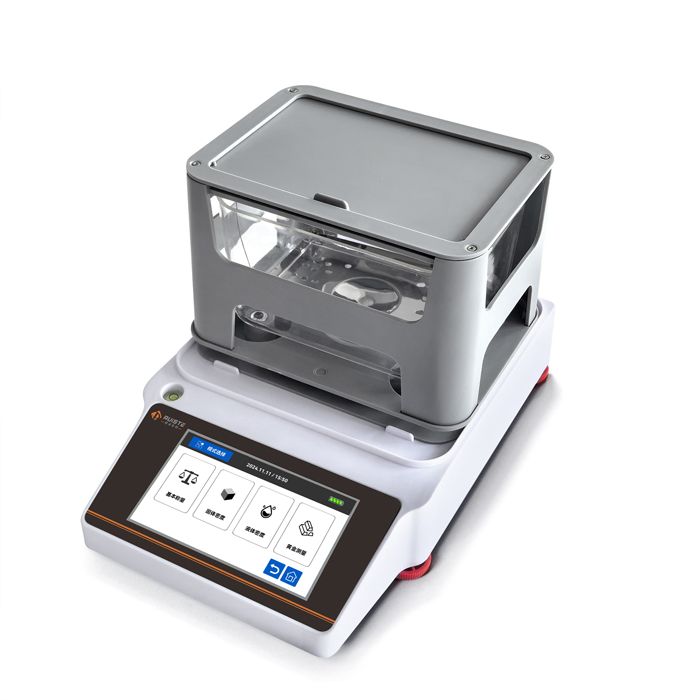
Auxiliary functional designs further enhance the practicality and applicability of industrial laboratory balances in complex industrial scenarios. Most mainstream instruments are equipped with automatic zero-tracking functions, which can fine-tune the zero point in real time to offset subtle zero drift caused by temperature changes, slight dust accumulation, or structural micro-deformation during long-term operation, ensuring the benchmark accuracy of each measurement. The automatic calibration function enables the instrument to complete internal parameter correction according to ambient temperature and humidity changes, reducing systematic errors generated by environmental factor fluctuations. In terms of data processing, modern industrial laboratory balances support multiple professional weighing modes, including percentage weighing, dynamic weighing, density measurement, and cumulative weighing. Percentage weighing can quickly calculate the mass proportion of test samples relative to standard samples, which is convenient for component ratio analysis in material formulation experiments. Dynamic weighing adapts to the measurement needs of continuously changing samples, suitable for real-time monitoring of mass changes in chemical reaction processes. Density measurement modes cooperate with auxiliary measuring tools to complete solid and liquid density detection through mass data calculation, expanding the instrument’s application boundary from single mass measurement to multi-dimensional physical parameter testing.
Data transmission and intelligent interaction capabilities are key features that distinguish modern industrial laboratory balances from traditional laboratory weighing equipment. Standard data interfaces are reserved on the instrument body, enabling stable connection with external computers, data collectors, and industrial terminal equipment. This connection supports real-time transmission, automatic recording, and classified storage of measurement data, avoiding manual recording errors and data omission problems in traditional manual operation modes. The matched data processing system can complete batch data sorting, trend analysis, and result comparison, helping technical personnel quickly summarize experimental rules and production quality change trends. In industrial batch detection scenarios, this intelligent data management mode greatly improves detection efficiency, realizes traceable management of measurement data, and provides complete data support for production process optimization, product quality filing, and technical problem analysis.
Industrial laboratory balances are widely applied in multiple industrial segments, with application scenarios covering basic experimental research and industrial batch quality control. In the chemical industry, these instruments are used for precise weighing of chemical raw materials, reagent preparation, and product component detection. Accurate raw material weighing ensures the scientific matching of chemical reaction ratios, improves the qualification rate of synthetic products, and avoids material waste and performance deviation caused by ratio errors. In new material research and development, laboratory balances assist researchers in testing the mass changes of materials before and after environmental aging, high-temperature treatment, and corrosion experiments, providing core data support for analyzing material stability and service performance. Slight mass changes in material samples can directly reflect the degree of material structural change, which is crucial for optimizing material formulas and improving product durability.
In the pharmaceutical and food processing industries, industrial laboratory balances undertake strict safety and quality control tasks. Pharmaceutical production requires precise weighing of raw medicinal materials, auxiliary materials, and intermediate products to ensure that the component content of finished drugs meets technical standards and avoid efficacy instability or safety risks caused by component deviation. In food production, the instruments are used for detection of raw material proportions, nutritional component content, and residual substances. Accurate mass measurement data helps standardize food formula ratios, control product taste and nutritional balance, and meet industry quality and safety requirements. At the same time, in food shelf-life and preservation experiments, real-time weighing of sample mass changes can reflect the moisture loss and oxidation degree of food products, providing a basis for optimizing preservation processes and packaging schemes.
The electronic manufacturing and precision component industries also rely heavily on high-precision industrial laboratory balances. Micro electronic components, such as chip accessories, precision connectors, and miniature sensor parts, have extremely small unit masses, and their mass consistency directly affects the assembly accuracy and operational stability of finished electronic products. Laboratory balances with high resolution can complete precise sampling detection of miniature components, screen out individual products with excessive mass deviation, and ensure the overall consistency of batch products. In addition, the instruments are used for detecting the coating thickness and material consumption of electronic components. By measuring the mass difference of samples before and after coating, the uniformity and consumption of coating materials can be accurately calculated, providing data support for optimizing coating processes and controlling production costs.
Standardized operation and daily maintenance are essential prerequisites for maintaining the long-term stable performance of industrial laboratory balances, as irregular operation and poor maintenance are important causes of measurement error and shortened instrument service life. Before formal use, the instrument needs to be placed on a stable horizontal workbench, and the horizontal bubble indicator should be checked to ensure the instrument is in a horizontal state, avoiding measurement deviation caused by unbalanced force on the internal structure. The instrument should be preheated for an appropriate duration after startup to stabilize the internal circuit system and sensor performance, eliminating unstable data output caused by low component activity after long-term shutdown. It is also necessary to clean the weighing pan and the surrounding working area before use to remove residual dust, sample residues, and sundries, ensuring a clean and stable weighing environment.
During the measurement process, standardized operation specifications must be strictly followed to avoid human-induced errors. Samples should be placed in the center of the weighing pan as much as possible to prevent eccentric load, which may cause uneven stress on the sensor and affect reading accuracy. Overload operation should be avoided at all times; long-term overload bearing will cause irreversible deformation of internal sensing components, permanently reducing instrument precision and stability. For samples that are prone to moisture, volatilization, or corrosion, professional closed weighing containers should be used for auxiliary measurement to prevent sample mass loss from affecting data accuracy and avoid corrosive substances damaging the weighing pan and internal components. In addition, frequent movement of the instrument during operation should be avoided, and external vibration and air convection interference should be minimized to ensure the stability of the weighing state.
Daily maintenance and regular calibration work determines the long-term operational reliability of industrial laboratory balances. After daily use, the weighing pan and instrument surface should be cleaned gently with soft cleaning tools to remove residual samples and dust, and stored in a dry, dust-free, and constant-temperature environment to avoid moisture and high-temperature aging of internal precision components. Regular comprehensive inspection should be carried out, including checking the flexibility of structural movement, the stability of circuit connection, and the sensitivity of sensor response. For instruments used in high-frequency industrial detection scenarios, regular professional calibration is required to correct systematic errors generated by long-term operation, ensuring that measurement results always maintain consistent accuracy. Once abnormal phenomena such as unstable reading, slow response, and obvious data deviation are found during use, the instrument should be stopped in time for inspection and maintenance, and it is forbidden to continue using faulty equipment for detection work to avoid generating invalid data and affecting production and experimental judgment.
Environmental adaptability is another important dimension for evaluating the performance of industrial laboratory balances. Different from ordinary laboratory environments with constant temperature and humidity, industrial production sites often have variable temperature and humidity, slight vibration, and floating dust. High-quality industrial-grade balances are designed with environmental adaptive optimization, with internal temperature compensation structures that can offset measurement errors caused by ambient temperature changes within a certain range. The sealed structural design reduces the impact of humid air and fine dust on internal circuits and sensors, ensuring stable operation in conventional industrial production and testing environments. Even in continuous working scenarios such as batch sampling and repeated weighing, the instrument can maintain stable measurement repeatability, and the data deviation of multiple consecutive measurements of the same sample remains within a reasonable range, meeting the continuous operation needs of industrial production lines.
With the continuous development of industrial intelligence and automated production, the application value of industrial laboratory balances is further deepening, and the development trend of the instruments is gradually moving toward higher precision, stronger anti-interference, intelligent linkage, and multi-functional integration. Traditional single-function weighing equipment can no longer meet the comprehensive detection needs of modern industrial refinement production. Future industrial laboratory balances will be more closely integrated with automated production lines, realizing automatic sampling, automatic weighing, real-time data uploading, and intelligent result judgment, reducing manual intervention in the detection process and improving the overall automation level of industrial quality control. At the same time, the environmental adaptability and structural durability of the instruments will be further optimized to adapt to more complex industrial application scenarios, providing more stable and accurate technical support for industrial product upgrading and process innovation.
In summary, industrial laboratory balances are core precision measuring tools integrating sensing technology, electronic technology, and microprocessor control technology. Their stable measurement performance, diverse functional modes, and wide environmental adaptability make them basic supporting equipment indispensable in modern industrial production and scientific research. Standardized operation, scientific maintenance, and reasonable application can effectively exert the instrument’s measurement advantages, ensure the authenticity, accuracy, and traceability of industrial measurement data, and provide solid technical guarantees for product quality control, production process optimization, and scientific experimental research in various industrial fields. In the context of continuous industrial upgrading and increasingly stringent quality control standards, the role of industrial laboratory balances in supporting high-quality industrial development will become more prominent, and their technical performance and application scenarios will continue to expand and innovate with the progress of industrial technology.
Industrial Laboratory Balance
https://www.pruiste.com/laboratory-balance.html
Post Date: May 22, 2026
https://www.supplier-manufacturer.com/laboratory-balance/industrial-laboratory-balance.html

![Analytical Balance Factory]()
Analytical Balance Factory
An analytical balance factory serves as a fundamental manufacturing base for producing high-precision weighing instruments that underpin numerous scientific, industrial, a…![Explosion-proof Analytical Balance]()
Explosion-proof Analytical Balance
In modern industrial production and scientific research fields that involve flammable and combustible substances, the demand for high-precision weighing equipment with enh…![Attribute of Precision Balance]()
Attribute of Precision Balance
A precision balance stands as a fundamental measuring instrument designed to determine the mass of substances with refined measuring capability, serving as an indispensabl…![Working Principle of Precision Balance]()
Working Principle of Precision Balance
A precision balance stands as an indispensable measuring instrument in modern experimental research, industrial production, and material analysis, capable of detecting sub…![Explosion-proof Precision Balance]()
Explosion-proof Precision Balance
In modern industrial production and scientific research fields, the demand for high-precision weighing operations in hazardous working environments continues to grow stead…