Precision Balance Manufacturer
Precision balances stand as indispensable measuring instruments across numerous industrial, scientific, and research sectors, serving as fundamental tools for obtaining reliable mass measurement data in fine material analysis, ingredient proportioning, and sample detection. The production of such sophisticated measuring equipment demands rigorous manufacturing standards, profound technological accumulation, and meticulous attention to every production detail. Every procedure from raw material selection to final assembly is tailored to maintain steady measuring performance and consistent operational stability of precision balances in diverse usage environments. Manufacturers dedicated to precision balance production focus on optimizing structural design, refining internal sensing systems, and improving production workflows to create instruments that meet the refined measurement demands of modern industries.
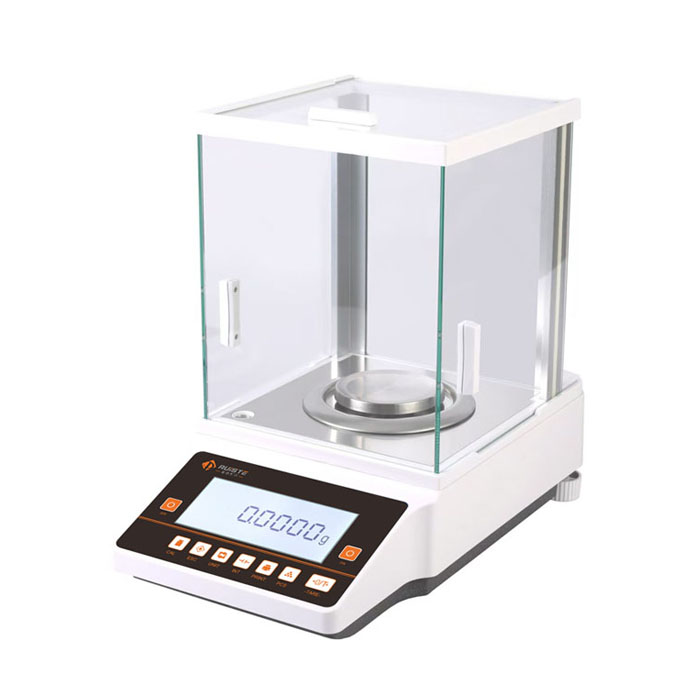
The core competitiveness of precision balance manufacturers originates from their in-depth comprehension of weighing principles and structural mechanics. Most modern precision balances adopt the electromagnetic force balance mechanism, a mature and reliable working principle that differs from traditional mechanical weighing structures. When a sample is placed on the weighing pan, subtle positional displacement occurs in the internal mechanical linkage structure. The high-sensitivity displacement detection component captures this tiny variation instantly and converts the physical displacement into continuous electrical signals. The built-in circuit system dynamically adjusts the current flowing through the internal coil, generating electromagnetic force to counteract the gravity of the measured sample and restore the mechanical structure to its initial balanced position. Since the current intensity maintains a stable proportional relationship with the mass of the object, the system can convert current data into intuitive mass readings through internal algorithm calculation. Manufacturers devote long-term research efforts to optimizing this electromagnetic force feedback loop, reducing signal delay during transmission, and smoothing data fluctuation to ensure the weighing process proceeds gently and steadily.
Raw material selection constitutes the foundational step in precision balance manufacturing, directly influencing the structural rigidity, temperature resistance, and anti-interference capability of finished products. For key load-bearing components and sensor frameworks, manufacturers prefer high-density alloy materials with low thermal expansion coefficients. These materials retain stable physical properties under subtle temperature changes, effectively minimizing structural deformation caused by ambient temperature fluctuation. The weighing pan, as the direct contact component for samples, requires smooth surface texture, corrosion resistance, and oxidation resistance. Polished alloy materials are commonly processed into flat and seamless weighing pans to prevent sample residue accumulation and ensure uniform force bearing on the pan surface. In terms of external shell materials, manufacturers prioritize durable metal and high-strength composite materials. Such materials can isolate internal components from external dust, moisture, and minor mechanical impact, creating a relatively stable internal operating space for precision electronic and mechanical structures. Every batch of raw materials undergoes strict sampling inspection before entering production workshops to eliminate materials with uneven texture or unstable chemical properties.
Component processing acts as a critical link that determines the inherent accuracy of precision balances. Manufacturers deploy high-precision processing equipment to machine core parts such as sensor frameworks, connecting brackets, and fixed bases. The internal mechanical structure requires extremely low assembly tolerance, and tiny dimensional deviations may lead to data deviation during long-term weighing operations. Integrated molding technology is applied to process key sensor components, integrating multiple discrete structural parts into an integral alloy component. This processing method reduces assembly gaps between parts, enhances overall structural rigidity, and weakens mechanical vibration conduction inside the instrument. For circuit boards and electronic control modules, manufacturers adopt refined etching and welding processes to ensure compact arrangement of circuit lines, lower circuit resistance, and reduce electromagnetic interference between electronic elements. In the processing stage, every finished component undergoes dimensional calibration and performance testing. Unqualified parts with dimensional errors or poor surface smoothness are eliminated to guarantee the consistency of subsequent assembly work.
Assembly work requires a dust-free and constant-temperature production environment, as tiny dust particles and drastic temperature changes can affect the coordination precision of internal components. Professional assembly workshops are equipped with air purification systems and constant-temperature control devices to maintain stable environmental conditions throughout the assembly process. Assembly technicians follow standardized operating procedures to complete component installation in a fixed sequence. The sensor unit, regarded as the core of the precision balance, is installed first. Technicians carefully adjust the horizontal angle and fixed position of the sensor to ensure vertical force bearing during weighing and avoid lateral force interference that may cause measurement deviation. Subsequently, circuit modules, data processing chips, and power supply components are installed and connected. Each wiring interface is firmly fixed to prevent loose wiring caused by long-term vibration. After installing internal functional components, workers assemble external shells, windproof structures, and operating panels. The windproof cover adopts a transparent and high-hardness design, which can block airflow interference in the external environment without affecting the observation of sample states during weighing.
Calibration and testing are essential procedures before precision balances leave the factory, serving as a key barrier to ensure stable product performance. The testing process covers multiple dimensions including weighing linearity, repeatability, temperature adaptability, and anti-vibration performance. In linearity testing, operators place standard weights of different masses on the weighing pan to record reading changes, verifying whether the instrument maintains stable calculation accuracy across the entire weighing range. Repeatability testing involves conducting multiple weighing tests on the same standard weight under identical environmental conditions to observe data fluctuation amplitude and assess the stability of internal algorithms. Temperature adaptability testing places finished products in temperature-adjustable test chambers to simulate temperature changes in different usage scenarios, checking whether temperature variation causes structural deformation or signal drift. Additionally, manufacturers simulate minor vibration and electromagnetic interference environments to test the anti-interference ability of precision balances, ensuring normal operation in complex industrial and laboratory spaces. Products that fail any testing indicator will be returned to the production line for debugging and optimization, and only products with qualified all indicators can proceed to subsequent packaging and delivery links.
To adapt to diverse application scenarios, precision balance manufacturers continuously optimize product structural design and functional configuration. For laboratory scenarios requiring trace sample measurement, products are equipped with highly enclosed windproof structures and high-sensitivity sensing components to weaken the impact of air flow and static electricity on tiny samples. For industrial production links such as ingredient proportioning and product inspection, balances adopt reinforced structural designs to resist frequent material handling and minor environmental vibration. In terms of operational design, humanized operating panels and clear data display interfaces are adopted. The simplified logical operation logic reduces the learning cost for users, and adjustable horizontal supporting feet help users correct placement angles on uneven surfaces to maintain the horizontal state of the instrument. Moreover, manufacturers reserve diversified data transmission interfaces for products, enabling real-time transmission of weighing data to external storage devices and analysis systems, which facilitates data sorting, archiving, and secondary analysis in industrial production and scientific research.
The after-production service system is also a vital part of the development of precision balance manufacturers. Considering the long-term usage demand of measuring instruments, manufacturers provide daily maintenance guidance and regular performance detection services for users. They compile detailed operation manuals to explain correct startup steps, sample placement specifications, and daily dust-proof and moisture-proof maintenance methods, helping users extend the service life of the instrument. In response to component aging and performance attenuation during long-term use, manufacturers provide professional debugging and component replacement services to restore the measuring accuracy of used equipment. Meanwhile, manufacturers collect user feedback from different application fields, summarize product usage pain points such as inconvenient operation and weak environmental adaptability, and feed the optimization suggestions back into product research and development links to iterate and upgrade product structures and functions continuously.
With the continuous progress of global industrial technology and scientific research, the market demand for precision balances is evolving toward higher refinement and richer functionality. Industries such as fine chemical engineering, pharmaceutical manufacturing, food detection, and material science have put forward stricter requirements on measurement stability, data sensitivity, and environmental adaptability of precision weighing instruments. Precision balance manufacturers need to keep up with industrial development trends, increase investment in basic technology research, and explore new sensing materials and intelligent algorithm models. By optimizing internal circuit control logic and strengthening anti-interference technology, manufacturers can further reduce subtle data errors caused by environmental changes. In addition, accelerating the intelligent upgrading of products to realize automatic data recording, abnormal data reminder, and intelligent calibration functions will better meet the efficient production and detection needs of modern enterprises.
In the highly competitive precision instrument industry, the core development logic of precision balance manufacturers lies in adhering to refined production concepts, focusing on technological innovation accumulation, and taking user usage demands as the fundamental starting point. From raw material screening to finished product testing, every production link embodies rigorous manufacturing standards. Through continuous optimization of production processes, enrichment of product functions, and improvement of service systems, manufacturers steadily enhance the comprehensive performance of precision balances. In the future, driven by material technology and intelligent manufacturing technology, precision balance manufacturing will achieve breakthroughs in environmental adaptability, intelligent interaction, and long-term stability, providing more reliable measuring support for technological progress and industrial upgrading in various fields.
Precision Balance Manufacturer
https://www.pruiste.com/precision-balance.html
Post Date: May 18, 2026
https://www.supplier-manufacturer.com/precision-balance/precision-balance-manufacturer.html

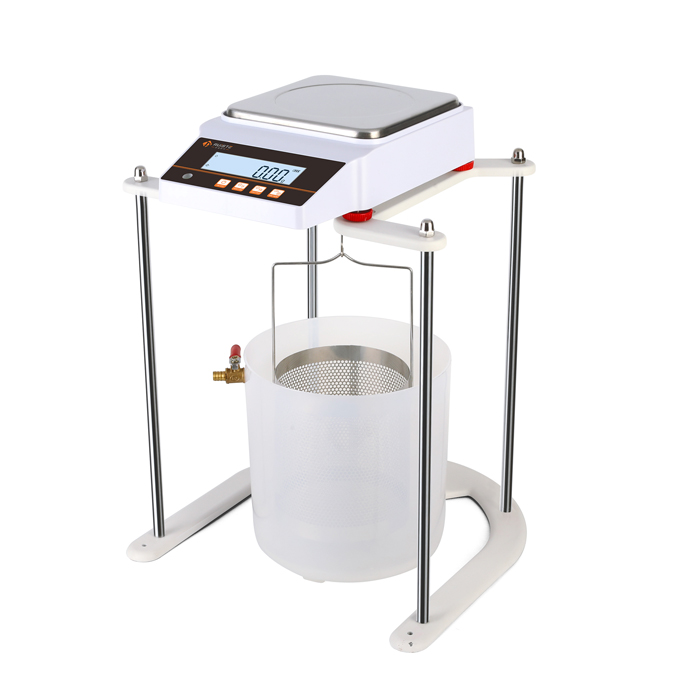
![Hydrostatic Balance JY SERIES]()
Hydrostatic Balance JY SERIES
The entire series of JY balances uses branded sensors to ensure high accuracy and stability of weighing results. This series of precision casting ABS Environmental protect…![Digital Viscometer Exporter]()
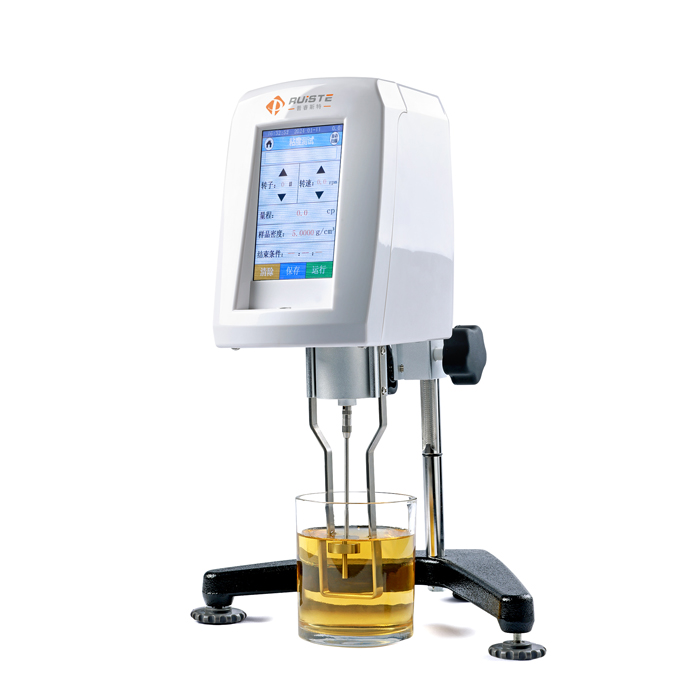
Digital Viscometer Exporter
Viscosity stands as one of the most fundamental physical properties of fluid materials, reflecting the internal friction and flow resistance of substances during movement.…![Digital Viscometer For Sale]()
Digital Viscometer For Sale
Viscosity serves as one of the most fundamental physical properties of fluid substances, reflecting the internal friction and flow resistance of liquids during movement. I…![Industrial Digital Viscometer]()
Industrial Digital Viscometer
Viscosity stands as one of the most critical physical properties of fluid materials, reflecting the internal frictional resistance that occurs when a fluid undergoes flow …![Gravimetric Moisture Analyzer]()
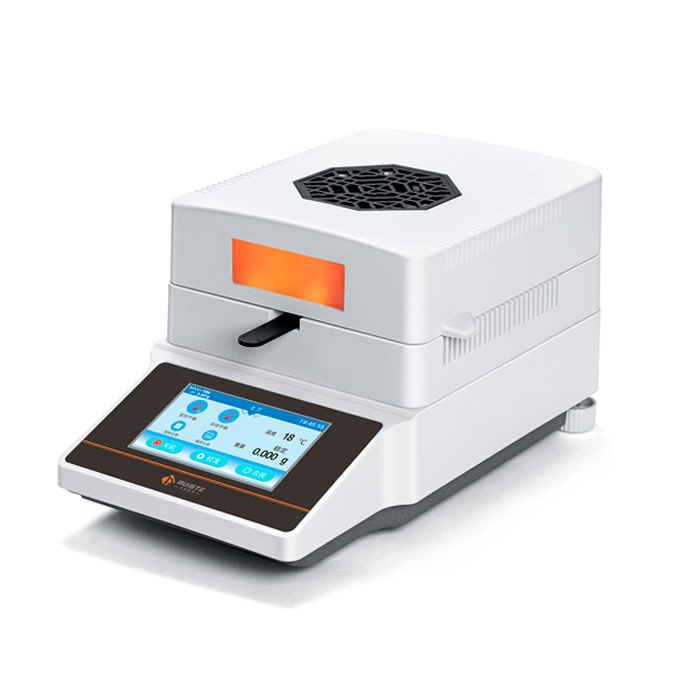
Gravimetric Moisture Analyzer
Moisture content stands as one of the most critical physical parameters that define the quality, stability, and processing performance of diverse materials across industri…