Types of Electronic Balance
Electronic balances have become indispensable weighing instruments in modern industrial production, scientific research, and daily analytical work, relying on electronic sensing technology to convert gravity signals into identifiable electronic data for mass measurement. Unlike traditional mechanical balances that depend on counterweights and mechanical lever structures, electronic balances feature simpler operation procedures, stable data output, and intuitive digital display, making them adaptable to diverse weighing environments and measurement requirements. Based on differences in working mechanisms, precision grades, functional designs, and application scenarios, electronic balances can be divided into multiple categories, each with unique structural characteristics and application orientations. A clear understanding of various electronic balance types helps users select suitable equipment according to actual usage needs and optimize the accuracy and efficiency of weighing work.
Classified by internal working sensing principles, electronic balances are mainly grouped into three common types, including strain gauge electronic balances, capacitive electronic balances, and electromagnetic force compensation electronic balances. Strain gauge electronic balances adopt a relatively straightforward sensing structure built on elastic deformation principles. When an object is placed on the weighing pan, the pressure generated by the object causes subtle deformation of the internal strain sensor. The deformation changes the resistance value of the sensitive components inside the sensor, and the internal circuit converts the resistance variation into electrical signals. After signal amplification and digital processing, the specific mass value of the measured object is displayed. This type of balance has a simple internal structure and strong environmental adaptability, with stable performance under conventional temperature and humidity conditions. Although its measurement precision has certain limitations compared with high-end weighing equipment, it meets the basic weighing demands of most ordinary scenarios, achieving a good balance between structural complexity and practical applicability.
Capacitive electronic balances utilize the capacitance change principle to complete mass detection. The core components consist of two sets of parallel electrode plates that form a capacitor structure. The bearing platform is connected to one electrode plate, and external pressure generated by the measured object changes the spacing between the electrode plates. Such spacing variation directly affects the capacitance of the capacitor, and the internal detection circuit captures capacitance changes and converts them into digital signals to obtain weighing data. This kind of balance features fast response speed, compact internal component layout, and low energy consumption during operation. The overall structure avoids easily worn mechanical transmission parts, extending the service cycle of the equipment. It is suitable for lightweight object weighing tasks with moderate precision requirements, and its stable response performance enables continuous and repeated weighing operations in daily use.
Electromagnetic force compensation electronic balances represent a relatively advanced type among common weighing equipment, widely applied in high-precision measurement scenarios. This balance relies on the interaction between magnetic fields and current to generate reverse electromagnetic force, offsetting the gravity of the measured object. After the object is placed on the weighing pan, the displacement sensor captures tiny position changes of the bearing structure, and the control circuit dynamically adjusts the current in the electromagnetic coil. The electromagnetic force generated by the coil balances the gravity of the object, and the current intensity in the coil maintains a stable proportional relationship with the object mass. The system calculates and outputs accurate mass data based on current changes. Equipped with high-sensitivity sensing components, this balance can eliminate subtle interference from external environments, delivering excellent repeatability and stability in measurement. Its internal manufacturing process is sophisticated, resulting in higher production costs compared with the other two types, which limits its application range to professional high-precision fields.
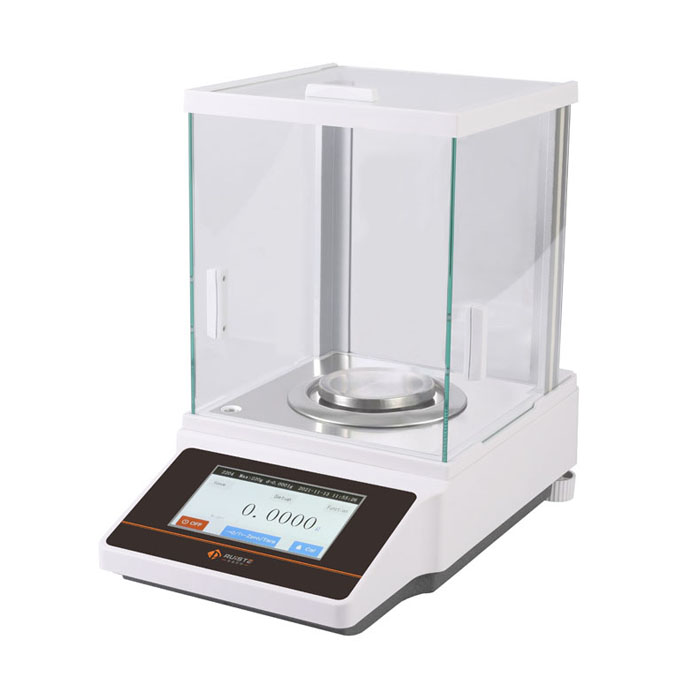
Precision grade serves as one of the most intuitive classification standards for electronic balances, and products of different grades have clear distinctions in measurable range and minimum graduation value. Ultra-micro electronic balances belong to high-precision equipment designed for trace sample detection. Their internal sensing components are highly sensitive, enabling accurate measurement of extremely tiny mass changes. The measurable range of this balance is narrow, suitable for detecting fine particles, chemical trace reagents, and micro biological samples. In order to reduce external interference such as air flow and temperature fluctuation, the equipment is usually equipped with a fully enclosed protective windproof cover to maintain a stable internal weighing environment. Such balances are commonly used in professional research fields with strict requirements for sample dosage control.
Semi-micro electronic balances have a slightly wider measurable range than ultra-micro products while retaining high measurement precision. They can meet the weighing needs of small-dose experimental samples and are frequently used in chemical component analysis, pharmaceutical ingredient research, and material microstructure detection. The structural design of this balance takes both precision and practicability into account. It has a compact appearance and is equipped with a simple windproof structure to weaken the impact of subtle air flow on measurement results. The data fluctuation range during repeated weighing is small, which can stably meet the daily test requirements of scientific research laboratories.
Macro electronic balances are the most widely used universal type with a relatively large measurable range, covering most conventional sample weighing demands in laboratories and industrial detection. Their precision is moderate, capable of meeting the mass measurement requirements of conventional chemical reagents, raw material samples, and daily experimental supplies. The operation threshold of this balance is low; users can complete weighing work through simple placement and key operation steps. The equipment has strong anti-interference ability and can maintain stable working performance in conventional indoor environments without strict dependence on constant temperature and humidity conditions. It is often configured in university laboratories, conventional detection institutions, and small-scale processing workshops.
In addition to the above types, precision electronic balances are specially defined for high-accuracy weighing scenarios. This type of balance has been optimized in terms of internal circuit calibration and structural shock absorption. It can effectively resist interference from slight vibration and humidity changes in the external environment. The data display is more detailed, and the error value of single measurement is controlled within a tiny range. It is commonly used for sample detection in food testing, environmental monitoring, and electronic component processing industries, providing reliable data support for product quality inspection.
According to functional design differences, electronic balances can be divided into basic ordinary balances and multi-functional composite balances. Basic electronic balances only retain the core weighing function, with simple internal programs and a clear human-computer interaction interface. The equipment has few operation keys, and the displayed data is single and intuitive. It is mainly used for simple mass recording tasks without complex data processing requirements. Owing to its simple structure and convenient maintenance, this balance is suitable for daily weighing scenarios such as raw material counting in small workshops and commodity component detection.
Multi-functional composite electronic balances integrate diverse extended functions on the basis of basic weighing. Built-in intelligent processing chips enable the equipment to realize percentage weighing, density calculation, unit conversion, and data storage. Some models are equipped with external data transmission interfaces to upload weighing information to terminal equipment for unified sorting and recording. The percentage weighing function can compare the mass difference between samples and standard samples to quickly judge sample uniformity; the density measurement function combines auxiliary measuring tools to calculate the physical density of solid and liquid samples. This type of balance is widely used in complex experimental detection and standardized industrial production links to improve the comprehensiveness and efficiency of weighing analysis.
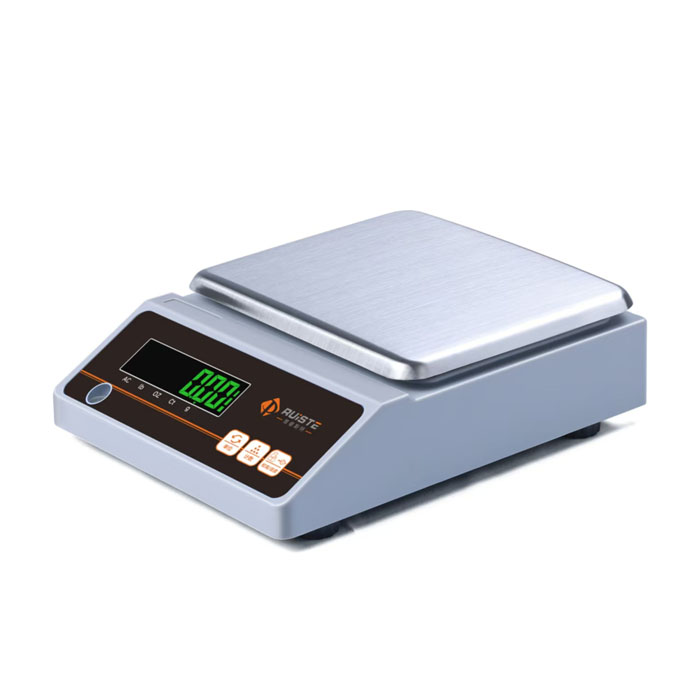
From the perspective of usage environment and structural form, electronic balances can be classified into desktop electronic balances and portable electronic balances. Desktop electronic balances have a fixed integrated structure, with a heavy base and stable placement. The internal components are arranged densely, and the shock absorption and anti-interference design are more complete. Most high-precision and medium-large range balances adopt a desktop structure, which is suitable for long-term fixed placement in laboratories, detection rooms, and production workshops. The weighing pan of desktop balances has a flat and smooth structure, which is convenient for placing different shapes of containers and samples, and the equipment can maintain long-term stable operation after one-time calibration.
Portable electronic balances feature a miniaturized and lightweight structural design, with compact internal components and foldable or detachable bearing parts. This type of balance is easy to carry and store, adapting to mobile weighing scenarios such as field sampling, outdoor detection, and temporary material counting. Although the measurable range and precision of portable balances are lower than those of desktop products, they can meet the rapid detection needs of conventional samples in mobile environments. Most portable balances are powered by both built-in batteries and external power supplies, ensuring continuous use in environments without stable power supply.
Different types of electronic balances have distinct applicable scenarios and performance characteristics, and there is no uniform standard to judge their applicability. In actual selection, users need to comprehensively consider core factors such as required measurement precision, sample mass range, usage environment conditions, and functional demand. Ultra-micro and semi-micro balances are preferred for trace analysis in scientific research; macro balances are suitable for daily conventional weighing; multi-functional balances can meet complex data processing needs; portable products are more suitable for mobile detection work. In addition to type selection, standardized daily operation and regular calibration are also important means to maintain the performance of electronic balances. Reasonable placement environment, standardized sample placement methods, and regular zero calibration can effectively reduce measurement errors and extend the service life of the equipment.
With the continuous progress of electronic sensing and intelligent control technology, the structural design of electronic balances is constantly optimized, and the functional differentiation among various types is becoming more refined. The integration of temperature compensation technology, anti-vibration processing modules, and intelligent data analysis programs has further improved the stability and convenience of electronic balances. In the future, electronic balances of different types will continue to expand their application boundaries in their respective fields, providing accurate and reliable mass measurement services for scientific research innovation, industrial upgrading, and daily detection work. Understanding the classification characteristics and performance differences of various electronic balances can help users give full play to the equipment advantages, optimize the weighing process, and ensure the authenticity and effectiveness of measured data in various application scenarios.
Types of Electronic Balance
https://www.pruiste.com/electronic-balance.html
Post Date: May 17, 2026
https://www.supplier-manufacturer.com/electronic-balance/types-of-electronic-balance.html

![Electronic Balance RT SERIES]()
Electronic Balance RT SERIES
The RT series adopts high-definition keys, which is economical. The entire series of balances adopt domestic sensors, brand sensors, and aluminum alloy structure to ensure…![Low-shear Digital Viscometer]()
Low-shear Digital Viscometer
Viscosity stands as one of the most critical rheological properties that define the flow behavior of fluid materials, directly influencing the processing performance, stor…![Digital Viscometer Manufacturer]()
Digital Viscometer Manufacturer
Viscosity stands as one of the most fundamental physical properties of fluid materials, directly influencing the flow performance, processing characteristics, and final qu…![Laboratory Digital Viscometer]()
Laboratory Digital Viscometer
Viscosity stands as one of the most fundamental physical properties of fluid substances, reflecting the internal friction and flow resistance that occurs when a liquid or …![Compact Moisture Analyzer]()
Compact Moisture Analyzer
Moisture content detection stands as a fundamental analytical procedure across industrial production, laboratory research, and quality inspection workflows, as the proport…