Ultra-precision Balance
In the modern era of scientific research and industrial manufacturing, the demand for precise mass measurement continues to grow steadily, which promotes the continuous upgrading of weighing instruments. The ultra-precision balance has become an essential measuring device in many high-standard technical scenarios by virtue of its subtle mass capture capability and stable operating performance. Unlike conventional weighing tools that are suitable for rough mass detection, this type of balance is designed to measure tiny substances with minimal mass changes, focusing on capturing micro-level mass fluctuations that cannot be identified by ordinary measuring equipment. It serves as a fundamental tool for quantitative analysis in multiple disciplines, laying a solid data foundation for experimental research, material development and industrial precision processing. The inherent technical attributes of ultra-precision balance determine its strict adaptability requirements for usage environments and operating specifications, and its internal structural design also contains sophisticated mechanical and electronic control technologies to ensure the consistency and authenticity of measurement data.
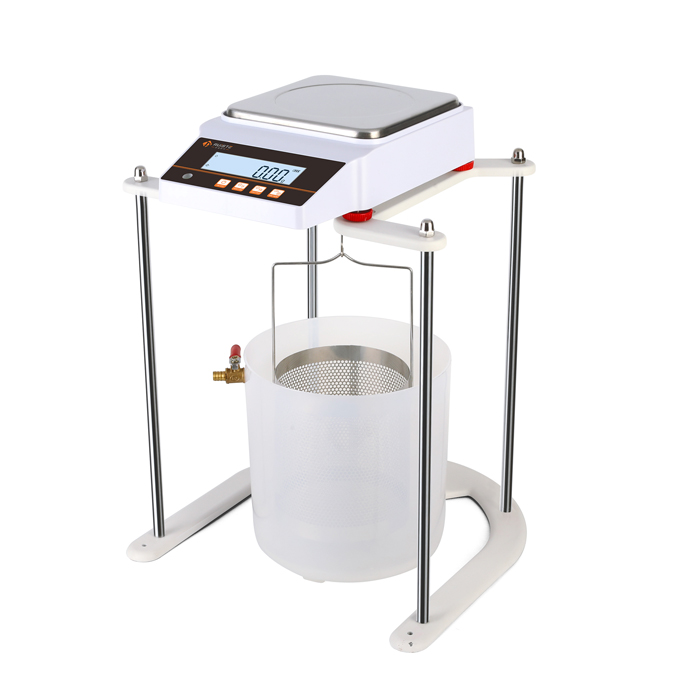
The core working principle of ultra-precision balance is mainly based on electromagnetic force compensation technology, which realizes accurate mass measurement through the balance between electromagnetic force and object gravity. When a sample is placed on the weighing pan, a slight displacement signal will be generated by the internal high-sensitivity displacement sensing component. The sensing system transmits the captured micro-displacement data to the closed-loop control circuit, which dynamically adjusts the current intensity of the internal coil in real time. The electromagnetic force generated by the coil counteracts the gravitational force of the measured sample, keeping the weighing structure in a stable balanced state. Within a reasonable measuring range, the current change of the coil presents a linear correlation with the mass of the sample. The system converts the current signal into intuitive mass data through internal algorithm calculation, completing the whole weighing process. This non-mechanical leverage balancing mode effectively reduces mechanical friction interference, enabling the equipment to maintain stable sensing performance when detecting trace samples, and greatly improving the sensitivity of tiny mass identification.
The internal structural design of ultra-precision balance follows the concept of high stability and anti-interference, and each component is carefully optimized to adapt to high-precision measurement needs. The weighing pan is usually made of corrosion-resistant and high-density alloy materials, with a smooth and flat surface to ensure uniform stress on the sample and avoid measurement deviation caused by uneven force bearing. The internal sensor component, as the core functional unit of the balance, adopts a compact integrated structure to reduce signal loss during force transmission. The external shell is equipped with a fully enclosed protective cover, which can effectively isolate floating dust, airflow and other external impurities in the air. Some structural parts are designed with temperature drift adaptive structures to slow down the performance fluctuation of internal components caused by ambient temperature changes. In addition, the bottom of the equipment is equipped with adjustable horizontal supporting feet, which can correct the placement angle of the balance to ensure that the equipment is always in a horizontal working state, avoiding measurement errors caused by inclined stress.
Environmental factors have an obvious impact on the measurement accuracy of ultra-precision balance, so the usage scenario needs to meet strict environmental control standards. Airflow disturbance is one of the common interference factors. Even weak flowing air can drive tiny samples to shift slightly or affect the stress balance of the weighing pan, so the equipment needs to be placed in a closed static air space. Temperature fluctuation will cause thermal expansion and contraction of internal metal components, changing the electromagnetic induction efficiency of the sensor. It is appropriate to keep the ambient temperature in a mild and stable range and avoid frequent temperature changes in a short time. Humidity control is also crucial. Excessively humid air is easy to form tiny water droplets on the surface of the sample or the weighing pan, increasing additional invisible mass, while too dry air may generate static electricity and adsorb fine particles in the air. Moreover, ground vibration and electromagnetic radiation will interfere with the internal sensing signal of the balance. It is necessary to stay away from mechanical vibration sources and high-power electrical equipment during placement to maintain a stable physical measurement environment.
Ultra-precision balance has a wide range of application coverage, involving many professional fields that rely on accurate mass data. In chemical analytical laboratories, it is used for the weighing of trace reagents and pure chemical samples, providing accurate raw material proportion data for chemical reaction experiments. Slight changes in the mass of reactants and products can be captured to assist researchers in analyzing reaction efficiency and material conversion rate. In the field of material science, researchers use this balance to detect the mass change of new materials before and after stress, corrosion and high-temperature treatment, so as to evaluate the durability and stability of materials. For the pharmaceutical industry, it can complete the precise weighing of raw powder materials for drugs, ensuring the uniformity of drug component ratio and improving the safety and stability of pharmaceutical preparations.
In addition to laboratory scientific research, ultra-precision balance also plays an irreplaceable role in high-end industrial manufacturing. In the processing of precision mechanical parts, it is used to detect the mass deviation of tiny accessories to ensure the consistency of product quality in batch production. The electronic industry relies on it to weigh micro-components such as chip raw materials and conductive particles, controlling the production error of miniature electronic devices within a tiny range. In the aerospace field, the mass detection of lightweight composite materials and precision structural parts needs the support of ultra-precision weighing technology to meet the strict lightweight and high-precision assembly requirements of aerospace equipment. Even in the field of environmental monitoring, it can weigh tiny sediment samples and air suspended particles, providing data support for environmental component analysis and pollution degree assessment.
In order to maintain long-term stable operating performance, ultra-precision balance integrates a variety of intelligent optimization technologies in the design process. The built-in data processing algorithm can automatically eliminate occasional interference signals in the measurement process and filter abnormal data generated by external subtle disturbances. The adaptive calibration system can sense the slight performance drift of internal components caused by long-term operation and complete automatic parameter correction without manual repeated debugging. The data recording module can store the measurement data of multiple groups of samples, which is convenient for staff to sort out, compare and trace experimental data in the later stage. At the same time, the human-computer interaction interface is designed to be concise and intuitive, with simple operation logic, enabling operators to quickly master the weighing process and reduce human operation errors caused by unfamiliarity with equipment.
Standardized daily maintenance and correct operation methods are important prerequisites to extend the service life of ultra-precision balance and maintain measurement accuracy. Before formal use, it is necessary to check the horizontal state of the equipment and clean the surface of the weighing pan to remove residual particles and dirt from previous measurements. The sample should be handled gently during placement to avoid violent impact causing structural displacement of internal precision components. It is not allowed to place samples with excessive temperature on the weighing pan to prevent temperature conduction from affecting the internal constant temperature environment of the equipment. After daily use, the protective cover should be closed in time to isolate dust, and the equipment should be kept in a dry and ventilated storage state. Regular professional maintenance is also essential, including deep cleaning of internal gaps, inspection of circuit connection status and regular calibration of sensing components, so as to keep the equipment in a good working condition for a long time.
With the continuous progress of manufacturing technology and scientific research level, the development direction of ultra-precision balance is gradually moving towards higher sensitivity, stronger anti-interference ability and intelligent integration. The upgrading of sensor materials and optimization of electromagnetic control circuits further reduce the lower limit of measurable mass, making it possible to detect lighter trace substances. The optimized anti-vibration and anti-electromagnetic interference structure enables the equipment to adapt to more complex usage environments, breaking the limitation that traditional precision balances can only be used in strictly controlled laboratories. The combination of intelligent algorithm and weighing equipment realizes real-time analysis and automatic sorting of measurement data, improving the overall work efficiency of the measurement link. While continuously optimizing hardware performance, the equipment also pays more attention to energy-saving consumption reduction and structural miniaturization, which is convenient for flexible placement and use in different production and research scenarios.
As a key basic measuring instrument in the precision manufacturing industry and scientific research field, ultra-precision balance undertakes the important task of providing accurate mass data. Its sophisticated mechanical structure, sensitive sensing system and stable control logic reflect the comprehensive application of interdisciplinary technologies such as mechanics, electronics and materials science. Whether it is basic experimental research or high-standard industrial production, the reliable measurement performance of ultra-precision balance provides strong technical support for the progress of related industries. In the future, with the continuous breakthrough of core manufacturing technologies, ultra-precision balance will achieve more excellent performance indicators, adapt to broader application scenarios, and continuously promote the development of modern industry and scientific research towards refinement and high precision.
Ultra-precision Balance
https://www.pruiste.com/precision-balance.html
Post Date: May 18, 2026
https://www.supplier-manufacturer.com/precision-balance/ultra-precision-balance.html

![Digital Viscometer Vender In China]()
Digital Viscometer Vender In China
The manufacturing and supply of digital viscometers in China have witnessed steady and progressive development over the past decades, forming a complete and mature industr…![High-shear Digital Viscometer]()
High-shear Digital Viscometer
Viscosity serves as one of the most fundamental physical properties of fluid materials, reflecting the internal friction and flow resistance generated during fluid deforma…![Rotational Digital Viscometer]()
Rotational Digital Viscometer
Viscosity stands as one of the most fundamental physical properties of fluid materials, reflecting the internal frictional resistance that occurs when a fluid undergoes de…![Specifications of Moisture Analyzer]()
Specifications of Moisture Analyzer
A moisture analyzer is a fundamental analytical device designed to quantify the moisture content present in solid, powdered, granular, and viscous materials across diverse…![Moisture Analyzer Wholesale]()
Moisture Analyzer Wholesale
Moisture analysis stands as a fundamental quality control and process optimization step across modern industrial production, scientific research, and agricultural processi…