Benchtop Precision Balance
Benchtop precision balances stand as essential measuring instruments widely deployed in laboratory environments, industrial production workshops, and academic research spaces. Designed to deliver steady and accurate mass measurement within limited desktop space, these instruments fill the gap between ordinary weighing devices and ultra-high-precision analytical measuring equipment. Compared with conventional weighing tools for daily use, benchtop precision balances feature finer measurement resolution, stable data output, and strong environmental adaptability, making them indispensable auxiliary equipment in multiple industries that require accurate mass quantification. The continuous optimization of structural design and internal sensing technology further consolidates their application value in modern scientific research and industrial manufacturing, ensuring reliable measurement performance under conventional indoor working conditions.

The evolution of benchtop precision balances traces back to traditional mechanical balance structures, which relied on lever principles and manual weight matching to complete mass detection. Early mechanical balancing devices required repeated manual adjustment to achieve horizontal balance of the lever structure, bringing cumbersome operation steps and prolonged measurement cycles. With the advancement of electronic sensing technology and digital control systems, modern benchtop precision balances have completely abandoned pure mechanical transmission structures. Most mainstream products adopt electromagnetic force balance sensing structures, which constitute the core working mechanism of current precision weighing equipment. When a sample is placed on the weighing pan, subtle displacement occurs in the internal mechanical connection structure. The built-in displacement sensing component captures this tiny positional change instantly and converts the physical displacement signal into an electrical signal. The internal control circuit dynamically adjusts the current intensity of the coil component, generating electromagnetic force that counteracts the gravity of the sample to restore the mechanical structure to its initial balanced position. In this working mode, the current intensity passing through the coil maintains a stable proportional relationship with the mass of the loaded sample, and the system converts current data into intuitive mass values through internal algorithm calculation, realizing efficient and accurate weighing processes.
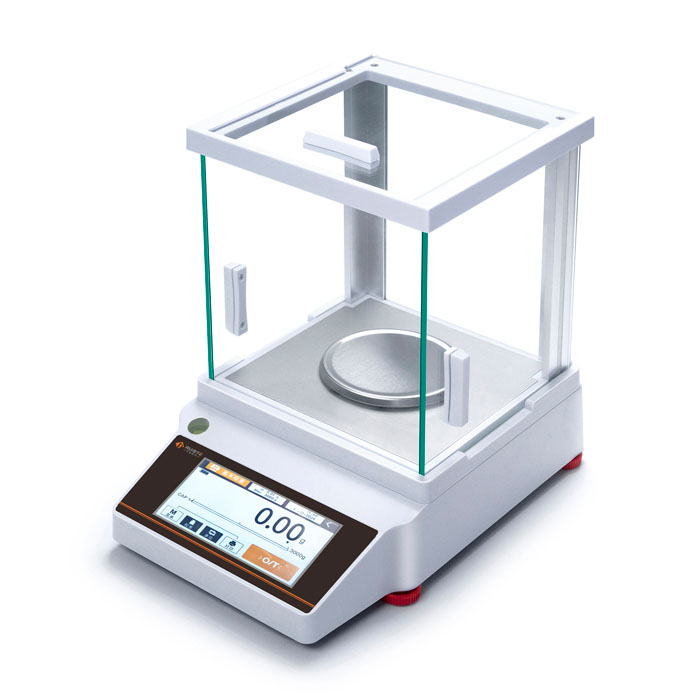
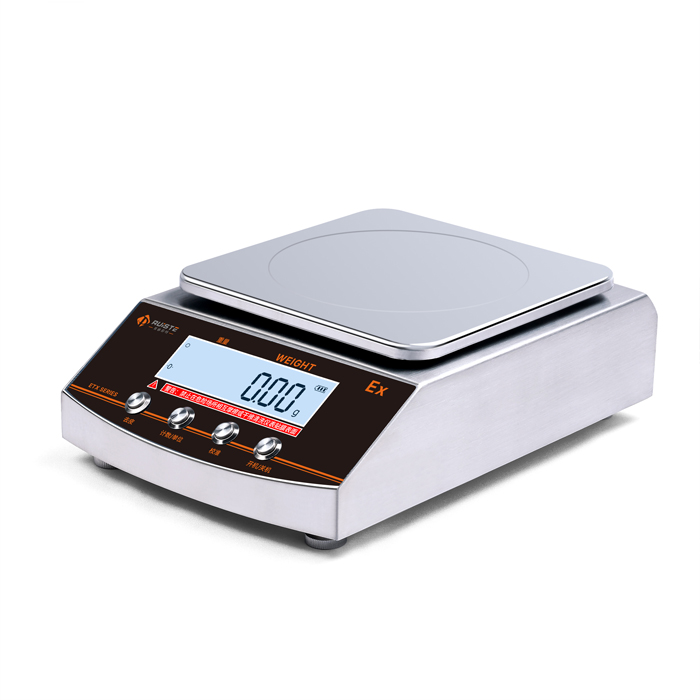
The overall structural composition of benchtop precision balance follows a compact and humanized design concept, which adapts to daily desktop placement and regular operation habits. The external part mainly includes a load-bearing weighing pan, a protective wind shield, a digital display panel, and physical operation keys. The weighing pan is usually made of corrosion-resistant metal materials with smooth surface treatment, which reduces sample residue and facilitates daily cleaning. The wind shield is a key external component for improving measurement stability, especially suitable for environments with subtle air flow. It blocks external flowing air from interfering with the stress balance of the weighing pan, effectively lowering data fluctuation caused by air convection. The display panel adopts a high-definition digital display mode to present real-time weighing data, and the simple key layout facilitates operators to complete function switching, parameter setting, and data clearing operations. The internal structure covers precision sensors, closed-loop control circuits, damping stabilization components, and temperature sensing modules. These hidden components undertake core tasks such as signal collection, data calculation, and state adjustment, and are sealed inside a sturdy shell to reduce interference from external dust and mechanical vibration.
Multiple built-in auxiliary functions endow modern benchtop precision balances with higher applicability in complex usage scenarios. Automatic calibration serves as one of the most practical basic functions. Changes in ambient temperature, long-term mechanical vibration, and continuous use will cause minor deviations in the internal stress sensing system. The temperature sensing module can capture real-time ambient temperature fluctuations. When the temperature variation exceeds a preset threshold or the equipment reaches a fixed working cycle, the system triggers internal calibration procedures to correct parameter deviations without manual auxiliary weights, maintaining consistent measurement accuracy for a long time. Overload protection is another necessary functional design. When the loaded sample exceeds the safe bearing range of the balance, the internal sensing structure will transmit an early warning signal, and the mechanical limit component will buffer excessive pressure to prevent permanent deformation of precision sensors and extend the service life of the equipment. In addition, most benchtop precision balances support unit switching, meeting the weighing unit requirements of different industries. Common display units include conventional mass units and proportional measurement units, which simplifies data conversion work for operators.
Benchtop precision balances have strict requirements for usage environments, as external environmental factors directly affect the stability and consistency of measurement data. Temperature acts as a core influencing factor. Severe temperature fluctuations will change the physical properties of internal metal structures and electromagnetic components, leading to subtle drift of sensing signals. It is recommended to place the equipment in a constant-temperature indoor space and avoid direct contact with heating or cooling equipment. Air flow interference should not be ignored either. Strong flowing air will generate unstable pressure on the weighing pan, resulting in floating display data. Therefore, it is necessary to keep the usage space air circulation gentle and close the wind shield during the weighing of tiny samples. Ground vibration is also an important interference source. Long-term low-frequency vibration transmitted by the desktop will disrupt the internal balance state of the precision structure. Operators should place the balance on a thick and stable countertop, keeping it away from mechanical operation equipment that generates vibration. Moreover, dusty and humid environments will corrode internal circuits and metal parts, so the working space needs to maintain dryness and cleanliness to reduce component aging speed.
Standardized operating procedures are crucial to exerting the optimal performance of benchtop precision balances. Before formal use, operators need to complete preheating and horizontal adjustment work. Sufficient preheating time can stabilize the operating state of internal circuits and sensors, reducing data errors caused by unstable equipment temperature. The horizontal bubble component at the bottom of the balance assists operators in adjusting the height of the supporting foot pads to keep the equipment in a horizontal state, avoiding measurement deviations caused by inclined stress. During sample placement, samples should be gently placed in the center of the weighing pan to prevent lateral friction and eccentric pressure from affecting structural balance. For samples susceptible to moisture and oxidation, sealed containers are required for auxiliary weighing to avoid mass changes caused by environmental contact. It is necessary to keep the weighing pan clean during use; residual sample debris should be cleaned up in a timely manner to prevent long-term residue from corroding the pan surface and contaminating subsequent samples. After daily use, operators need to cut off the power and cover the equipment with a dust cover to isolate dust and moisture.
Scientific daily maintenance can effectively prolong the service life of benchtop precision balances and maintain stable measurement performance. Routine cleaning work should follow mild operation principles. Soft dust-free cloths and neutral cleaning solutions are used to wipe the external shell and weighing pan, avoiding corrosive chemical solvents that damage surface materials and internal seals. The internal dust accumulation should be cleaned regularly with professional dust removal tools to prevent dust from blocking sensor movement gaps and affecting structural flexibility. The power supply environment needs to keep voltage stable; unstable voltage will cause abnormal fluctuations in current signals and interfere with measurement results. It is advisable to use an independent power socket and avoid sharing power with high-power electrical equipment. Long-term idle equipment requires regular power-on activation to prevent circuit aging and component stagnation. In addition, regular manual calibration inspection is recommended to check data repeatability and deviation degree, so as to discover potential equipment faults in a timely manner.
The application scope of benchtop precision balances covers multiple professional fields, showing strong industry compatibility. In chemical laboratories, researchers use them to weigh trace reagents, prepare precise concentration solutions, and complete material purity detection. Accurate reagent dosage effectively ensures the reproducibility of chemical reactions and improves the credibility of experimental data. In pharmaceutical research and production, these balances are used for weighing raw medicinal materials and testing auxiliary ingredients, controlling the dosage of trace active substances to meet pharmaceutical production standards. In the food processing industry, staff rely on precision weighing performance to detect food additives, nutrient content, and residual trace substances, providing data support for food quality control. Industrial manufacturing fields apply such balances to detect the mass consistency of small precision parts, screen qualified workpieces, and control the raw material ratio of composite materials. In addition, educational research institutions take benchtop precision balances as basic teaching equipment to help students understand the principles of mass measurement and cultivate standardized experimental operation habits.
In practical application scenarios, benchtop precision balances exhibit obvious usage advantages compared with other types of weighing equipment. Different from large-scale industrial weighing devices that focus on heavy-load measurement, benchtop precision balances prioritize small-range and high-precision detection, with compact size that saves desktop space and meets the placement requirements of small laboratories and independent operation stations. Unlike high-end analytical balances with ultra-high precision and complex maintenance procedures, they balance measurement accuracy and operation simplicity, lowering the threshold for daily operation and routine maintenance. The optimized anti-interference design enables the equipment to maintain stable operation in conventional indoor environments, without the need for extreme constant-temperature and constant-humidity working conditions, which greatly reduces site construction costs. Moreover, the intelligent data processing function can record real-time weighing data, facilitate data derivation and sorting, and adapt to the digital management needs of modern laboratories and production workshops.
With the continuous progress of sensor manufacturing and intelligent control technology, the technical upgrading direction of benchtop precision balances has become increasingly clear. The miniaturization of high-sensitivity sensors will further optimize the internal space structure, making the equipment more compact while maintaining existing measurement performance. Intelligent data interaction functions will be continuously enriched to realize automatic connection with external data storage equipment, completing real-time uploading and permanent storage of weighing data. The anti-interference technology will be further upgraded to weaken the impact of environmental vibration, humidity, and electromagnetic signals on measurement results, expanding the adaptable usage scenarios of the equipment. In addition, the humanized operation design will be continuously optimized, including simplifying parameter setting steps and improving the clarity of display information, so that operators with different proficiency levels can quickly master the usage methods.
As a reliable precision measuring instrument, the benchtop precision balance has become an important basic equipment in scientific research, industrial production, and teaching experiments by virtue of its stable working principle, compact structural design, and convenient operation mode. Standardized operation methods and scientific maintenance measures are important prerequisites to ensure its long-term stable operation. In the future, with the continuous integration of emerging technologies, such balances will achieve further breakthroughs in anti-interference performance, intelligent interaction capability, and structural optimization, providing more accurate and convenient mass measurement services for various industries. Whether for daily experimental detection or standardized industrial production, benchtop precision balances will always maintain irreplaceable application value and continuously support the steady development of related industries with reliable measurement performance.
Benchtop Precision Balance
https://www.pruiste.com/precision-balance.html
Post Date: May 18, 2026
https://www.supplier-manufacturer.com/precision-balance/benchtop-precision-balance.html

![Industrial Moisture Analyzer]()
Industrial Moisture Analyzer
Moisture content stands as one of the most critical physical indicators that determine the quality, stability, and processing performance of industrial materials across di…![Working Principle of Laboratory Balance]()
Working Principle of Laboratory Balance
Laboratory balances are fundamental measuring instruments widely applied in chemical analysis, pharmaceutical research, material testing, and environmental monitoring labo…![Multi-functional Laboratory Balance]()
Multi-functional Laboratory Balance
In modern scientific research, industrial testing, educational experimentation, and quality inspection fields, accurate mass measurement serves as the fundamental foundati…![Advanced Laboratory Balance]()
Advanced Laboratory Balance
In modern scientific research, industrial quality inspection, pharmaceutical development, and chemical analysis, accurate mass measurement serves as the fundamental founda…![Analytical Balance Wholesale]()
Analytical Balance Wholesale
Analytical balances stand as essential precision measuring instruments across numerous industrial and scientific sectors, serving as fundamental equipment for accurate mas…