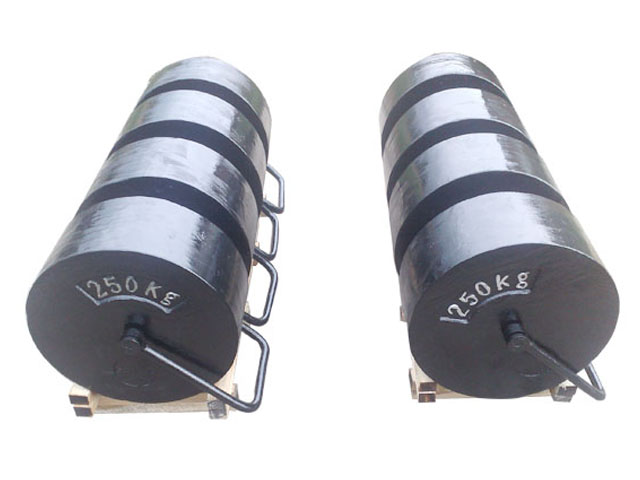
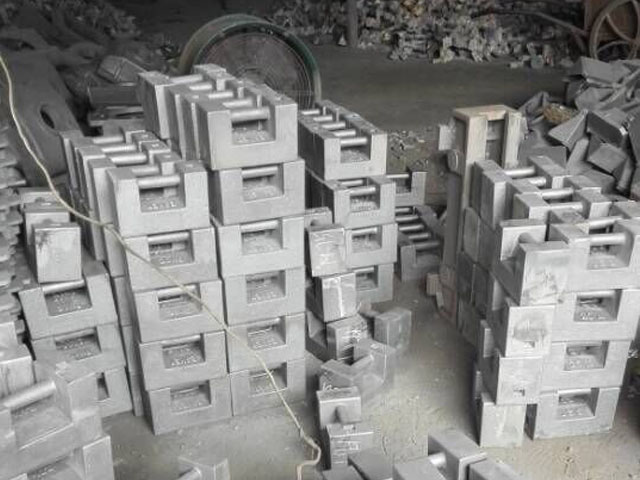
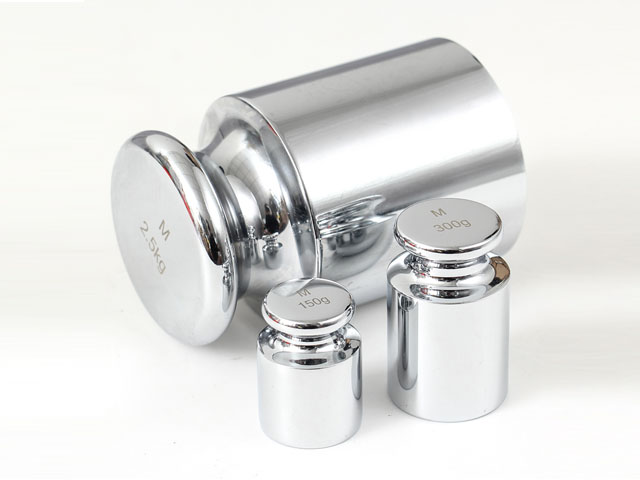
Precision Balance Weight
Precision balance weights are essential auxiliary components for high-accuracy mass measurement systems, serving as fundamental reference objects to calibrate, test, and verify the operational stability of precision weighing equipment. In all scenarios that require accurate mass data output, these weights act as a reliable mass benchmark, bridging the gap between theoretical mass values and practical measurement results. Unlike ordinary counterweights used for rough balancing, precision balance weights are manufactured with strict dimensional tolerance, uniform material density, and stable structural performance, which enables them to maintain consistent mass states under conventional environmental changes and long-term usage cycles. Their core value lies in providing standardized mass references to eliminate systematic errors in weighing equipment and ensure the authenticity and consistency of various measurement data in scientific research, industrial production, and quality inspection fields.
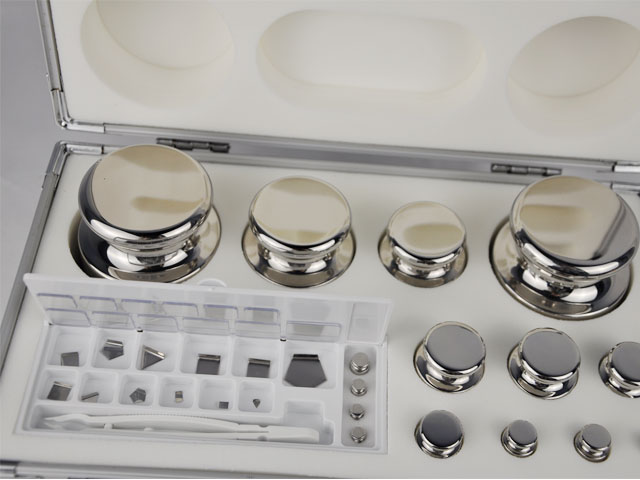
The material selection of precision balance weights determines their core performance and service adaptability, as material properties directly affect mass stability, surface durability, and environmental adaptability. Common manufacturing materials include high-density metal alloys with uniform internal structure and low thermal expansion coefficients. Such materials feature compact internal texture, minimal internal porosity, and stable physical properties, which can effectively avoid mass deviation caused by internal structural changes during long-term use. The density uniformity of the material is particularly critical, as uneven density may lead to subtle mass offset when the weight is placed in different postures on the weighing pan, affecting the accuracy of calibration and testing. In addition, qualified precision balance weight materials have good oxidation and corrosion resistance. Daily exposure to air, slight temperature and humidity fluctuations, and occasional contact with conventional laboratory reagents will not cause obvious surface oxidation, rusting, or chemical erosion, thus preventing gradual mass loss or increase that interferes with measurement accuracy.
The production and processing of precision balance weights follow rigorous manufacturing processes from rough processing to fine finishing. The initial stage involves precise cutting and forging of raw materials to form preliminary standard shapes, usually cylindrical or rectangular structures with regular outlines, which are convenient for stable placement and uniform force bearing during weighing. Subsequent fine grinding and polishing processes eliminate surface burrs, uneven edges, and tiny structural defects. Smooth and flat surfaces reduce the contact area with air and external pollutants, lowering the probability of dust adhesion and surface contamination. Each processing link strictly controls dimensional errors and surface roughness, because tiny structural deviations may cause inconsistent contact states with the weighing equipment, resulting in unstable measurement readings. After processing, each weight undergoes natural aging treatment for a certain period to release internal structural stress generated during processing, ensuring that the internal structure remains stable and no subtle mass changes occur after formal put into use.
The basic working logic of precision balance weights is based on the principle of mass balance and comparison measurement. All precision weighing equipment completes mass judgment through the balance of gravity torque. When calibrating a precision balance, standard weights with known accurate mass are placed on the weighing platform, and the equipment adjusts its internal sensing parameters according to the balanced state of the system to unify the measurement benchmark. In daily testing, staff can use precision balance weights to check the repeatability and stability of weighing equipment. By multiple placement and weighing tests, they can judge whether the equipment has subtle drift errors, thus ensuring that the equipment can maintain stable measurement performance in long-term continuous operation. For dynamic balancing scenarios of rotating equipment, precision balance weights can offset the unbalanced mass distribution of rotating parts. By arranging weights of corresponding mass at specific positions, the center of mass of rotating components coincides with the rotation axis, reducing centrifugal force deviation caused by unbalanced mass, so as to minimize mechanical vibration and friction loss during equipment operation.
Precision balance weights have a wide range of application scenarios, covering multiple fields that rely on accurate mass measurement data. In laboratory scientific research, they are indispensable auxiliary tools for chemical reagent proportioning, sample preparation, and experimental data verification. Many chemical and physical experiments require precise mass ratio collocation of raw materials, and tiny mass errors may lead to deviations in experimental results and affect the repeatability of experimental conclusions. Researchers use precision balance weights to calibrate analytical balances and precision weighing instruments before experiments, ensuring that the weighing data of experimental samples and reagents is true and reliable, providing a solid data foundation for experimental research and academic analysis. In biological research, accurate weighing of biological samples, culture medium raw materials, and experimental drugs also depends on calibrated precision weighing systems supported by standard balance weights.
In industrial production and manufacturing, precision balance weights play an important role in quality control and process parameter optimization. Many light industry, chemical, and electronic manufacturing processes require accurate proportioning of raw materials. Stable mass proportioning directly affects the uniformity of product performance and the consistency of finished product quality. Production workshops regularly use precision balance weights to calibrate online weighing equipment, avoiding product quality fluctuations caused by long-term operation drift of weighing devices. In parts manufacturing and processing industries, precision balance weights are used for dynamic balancing testing of high-speed rotating parts such as motor rotors, fan blades, and mechanical transmission components. Reasonable balancing adjustment can reduce equipment operation vibration, lower component wear, extend the service life of mechanical equipment, and improve the stability and safety of production operation.
In the field of quality inspection and metrology verification, precision balance weights serve as important transfer benchmarks for mass values. Metrology institutions rely on standardized precision balance weights to complete the verification and calibration of various weighing instruments, ensuring that all weighing equipment used in commercial transactions, industrial production, and scientific research maintains unified measurement standards. This standardized measurement mode avoids measurement deviation caused by inconsistent equipment benchmarks, ensuring the fairness of commodity trading and the standardization of industrial production measurement. In food and pharmaceutical industries, which have strict requirements on component content and dosage accuracy, precision balance weights help calibrate high-precision weighing equipment, ensuring that the proportion of raw materials and the dosage of finished products meet standardized production requirements, effectively maintaining product quality stability and production compliance.
The correct use and daily maintenance of precision balance weights are key factors to maintain their long-term accuracy and service life. During use, weights need to be placed gently and stably on the center of the weighing pan to avoid collision, extrusion, and arbitrary flipping. Violent impact may cause tiny deformation of the weight structure or changes in internal stress, leading to mass deviation. Staff should avoid direct hand contact with the surface of precision balance weights during operation, as sweat, grease, and dust on the skin will adhere to the surface, causing subtle mass changes and affecting measurement accuracy. It is recommended to use special tweezers or non-woven gloves for handling to keep the weight surface clean and dry.
Daily storage environment also has a significant impact on the performance of precision balance weights. They need to be placed in a dry, clean, and constant-temperature storage space, avoiding long-term exposure to humid, dusty, and corrosive gas environments. High humidity will accelerate surface oxidation and corrosion of metal weights, while excessive dust accumulation will form invisible attachments on the surface, changing the actual mass of the weights. Regular cleaning is required during daily storage; soft dust-free cloths can be used to gently wipe the surface to remove floating dust and tiny contaminants, and cleaning agents with corrosive properties are prohibited to prevent damage to the surface protective structure of the weights. In addition, precision balance weights need to avoid long-term stacking and extrusion, and independent classified storage according to different mass specifications can prevent surface friction and collision damage between weights.
Regular performance inspection is an essential link to ensure the effectiveness of precision balance weights. After a period of use, affected by environmental factors and subtle mechanical wear, the mass state of weights may have tiny changes. Regular comparison testing with reference standard mass objects can timely detect subtle mass deviation and structural abnormalities. For individual weights with slight performance changes, professional fine adjustment can be carried out to restore their standard mass state; for weights with serious structural deformation, corrosion, or irreversible mass deviation, they should be eliminated in a timely manner to avoid continued use affecting measurement accuracy. Scientific inspection and maintenance can effectively extend the service cycle of precision balance weights and maintain stable and reliable reference performance for a long time.
With the continuous upgrading of industrial manufacturing and scientific research technology, the performance requirements for precision balance weights are also constantly improving. Modern production processes are gradually optimizing the material formula and processing technology of weights, making their density uniformity higher, structural stability stronger, and environmental adaptability wider. More refined surface treatment technologies reduce the impact of external environmental factors on the mass state of weights, enabling them to maintain stable performance in more complex working environments. At the same time, the matching use mode of precision balance weights is also constantly optimized, forming a complete set of standardized operation processes from calibration, use, detection to maintenance, which further improves the accuracy and stability of mass measurement work in various fields.
In summary, precision balance weights are basic and core components in the field of precision mass measurement. Their stable physical performance, standardized structural design, and accurate mass attributes provide reliable technical support for scientific research exploration, industrial quality control, and metrology standardization. Although they are small in volume and simple in structure, they undertake the important task of unifying measurement benchmarks and ensuring data accuracy. Standardized use, scientific maintenance, and regular detection can maximize the performance advantages of precision balance weights, maintain the consistency and accuracy of mass measurement data in various application scenarios, and provide solid basic support for the steady development of various industries and the continuous progress of scientific research.
Precision Balance Weight
https://www.veidtweighing.com/standard-weights.html
Post Date: Jun 7, 2026
https://www.supplier-manufacturer.com/standard-weight/precision-balance-weight.html

![250kg Test Weight]()
250kg Test Weight
In the vast and intricate landscape of industrial production, mechanical operation, and metrological verification, the 250kg test weight stands as an indispensable foundat…![E1 Class Test Weight]()
E1 Class Test Weight
In the intricate and interconnected world of modern metrology, the pursuit of reliable and consistent mass measurement forms the foundational backbone of countless profess…![M1 Class Cast Iron Weight]()
M1 Class Cast Iron Weight
In the intricate and interconnected ecosystem of industrial measurement and metrological calibration, M1 class cast iron weight stands as an indispensable foundational com…![Gram Test Weight]()
Gram Test Weight
In the intricate and interconnected world of mass measurement, few tools hold as much quiet significance and foundational importance as the gram test weight. Often overloo…![M1 Calibration Weight]()
M1 Calibration Weight
In every sector that relies on consistent and dependable mass measurement, the role of standardized calibration hardware remains irreplaceable, and M1 calibration weight s…