F2 Class Test Weight
In the entire system of mass measurement and weighing calibration, F2 class test weight occupies an irreplaceable middle core position, connecting high-precision reference mass standards and daily industrial and laboratory weighing verification work, undertaking the key task of maintaining the consistency and traceability of mass data in various measurement scenarios. Mass measurement is one of the most basic and fundamental measurement links in all scientific research, industrial production, commercial circulation and material testing fields, and all weighing instruments, whether precision laboratory balances or conventional industrial weighing devices, need regular calibration and verification with qualified standard test weights to ensure that the measured data obtained in daily work is consistent with the true mass value of substances. F2 class test weight is designed and manufactured according to unified international measurement specifications, with reasonable accuracy tolerance range, stable physical performance and wide application compatibility, which can perfectly balance the demand for measurement accuracy and the adaptability of complex use environments, becoming the most commonly used standard mass carrier in most conventional precision measurement and daily calibration work scenarios. Unlike higher-level precision reference weights that are only suitable for strict constant-temperature and constant-humidity laboratory storage and use, F2 class test weight has excellent environmental adaptability and structural durability, and unlike ordinary low-level weighing auxiliary weights that have large error ranges and cannot support precise calibration work, it maintains a scientific balance between precision indicators and practical usability, making it the core foundational tool for realizing standardized and standardized mass measurement work in various industries and institutions.
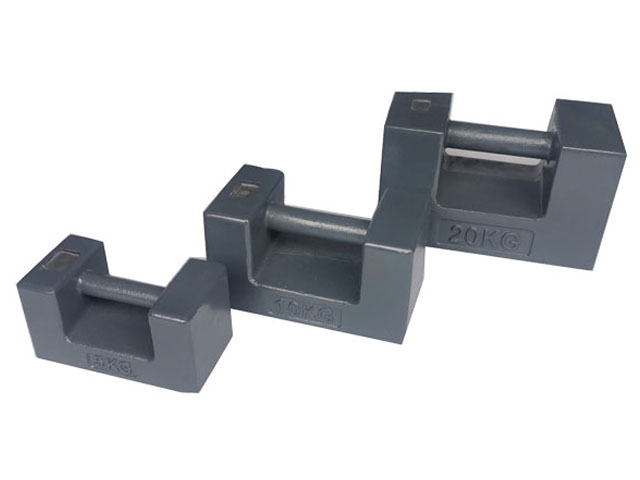
The accuracy hierarchy of standard test weights is divided strictly according to professional measurement specifications, and F2 class test weight is located in the middle link of the entire accuracy gradient, with error control standards far stricter than conventional common weights and slightly relaxed compared with higher-level F1 class precision reference weights. This reasonable accuracy positioning makes F2 class test weight have unique application value in the whole measurement work chain. The maximum permissible error of F2 class test weight is set within a scientific and reasonable interval according to different nominal mass specifications, and the error control level fully meets the calibration requirements of most conventional precision weighing equipment used in daily production and experiments. In the comparison of accuracy levels, the error tolerance of F1 class weights is much smaller than that of F2 class, which means F1 class weights are more suitable for top-level mass value transfer and high-precision laboratory research work that requires extremely strict data accuracy, while F2 class test weight focuses more on practical daily calibration and routine verification work that requires both certain precision and strong environmental adaptability. This differentiated accuracy positioning does not mean that F2 class test weight has insufficient performance, but is a professional design based on the actual demand grading of mass measurement work, realizing the reasonable matching between measurement tools and use scenarios, avoiding the waste of high-precision resources in conventional work, and also preventing the hidden danger of inaccurate measurement data caused by the use of low-precision weights in precision calibration links.
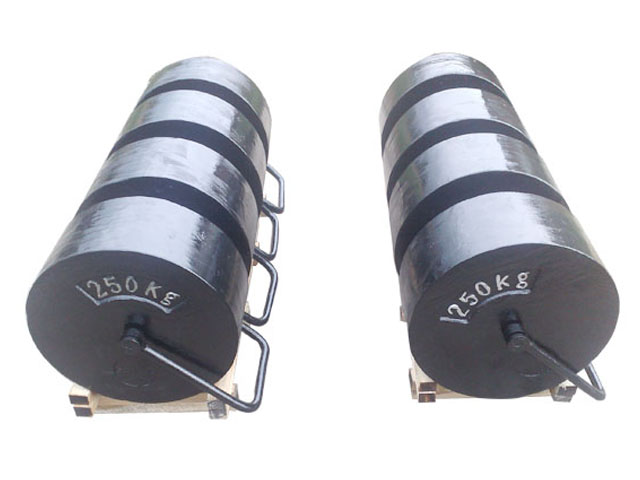
The selection of manufacturing materials is the fundamental guarantee for the long-term stability and accurate performance of F2 class test weight, and the production of qualified F2 class test weight mostly adopts high-quality metal materials with stable physical and chemical properties, low thermal expansion coefficient and strong corrosion resistance. The ideal manufacturing materials need to meet multiple core performance requirements at the same time, including stable density that is not easy to change with external environmental changes, strong oxidation resistance to avoid surface oxidation and quality change during long-term storage and use, uniform internal material texture without internal pores or impurities that affect mass stability, and moderate hardness and wear resistance to prevent mass loss caused by surface friction and wear in frequent handling and use processes. High-quality stainless steel and nickel silver are the mainstream materials for manufacturing F2 class test weight of different specifications, and these materials have been screened and tested for a long time in the measurement industry, with stable performance in different temperature and humidity environments, not easy to produce chemical reactions with air, moisture and common industrial chemical substances, and can maintain long-term mass consistency without obvious quality attenuation after years of use and repeated calibration work. For small-specification F2 class test weights with tiny nominal mass, the surface is processed with fine polishing treatment to ensure smooth surface finish, reduce the contact area with external air and moisture, further enhance oxidation and corrosion resistance, and avoid tiny mass changes caused by surface adsorption of dust and moisture; for large-specification F2 class test weights used in industrial heavy-load weighing calibration, the material thickness and structural strength are appropriately optimized on the basis of ensuring mass accuracy, so as to ensure that the weight will not be deformed by external pressure during handling, placement and use, and the internal mass structure remains stable for a long time.
The structural design of F2 class test weight follows professional measurement ergonomics and precision calibration practicality principles, and most of the weights with nominal mass above 10g adopt a two-piece combined structural design with an internal adjusting cavity, which is a key structural setting to ensure the precise debugging and long-term accuracy maintenance of F2 class test weight. The core advantage of the adjustable cavity structure is that in the later stage of production and processing and subsequent regular maintenance and calibration, professional operators can fine-tune the internal mass of the weight through the adjusting cavity, accurately correcting the tiny mass deviation generated in the production and processing links, so that the final mass of each F2 class test weight fully meets the specified accuracy tolerance requirements. The surface of F2 class test weight is marked with clear and durable nominal mass identification by professional marking process, and the marking mode is designed to be different from higher-level precision weights, adopting punch-marked identification technology to ensure that the identification will not be blurred or fall off due to long-term use and surface friction, which is convenient for operators to quickly identify the specification and model of the weight in complex working environments and avoid mixing different specifications of weights to affect calibration work. The overall shape design of the weight conforms to the standard placement specifications of weighing equipment, the bottom is flat and smooth to ensure stable placement on the weighing pan of various balances and weighing scales without tilting or shaking, the edge structure is rounded and polished to prevent operators from being scratched during handling and use, and the overall structural design takes into account both the accuracy of measurement work and the safety and convenience of daily operation.
The production and processing process of F2 class test weight involves multiple precise processing and fine debugging links, and every production step is strictly implemented in accordance with unified measurement process specifications to ensure that each finished weight can reach the standard accuracy level and performance stability. The whole production process starts with raw material inspection, and each batch of metal raw materials used for production will undergo strict physical and chemical performance testing, including density detection, hardness testing, corrosion resistance testing and internal texture inspection, to eliminate raw materials with unstable performance, unqualified density or internal impurities, and lay a solid foundation for the subsequent production of qualified weights. After the raw materials pass the inspection, they are cut and initially formed according to the standard size and structural parameters of different nominal mass specifications, and the initial formed weight blank is processed by precision machining equipment to realize the standardization of overall size, flatness of the bottom surface and smoothness of the surface. After the initial machining is completed, the weight will enter the fine grinding and polishing stage, and the surface is finely polished to remove processing burrs and surface uneven parts, reduce surface roughness, and enhance the surface anti-oxidation and anti-wear performance of the weight.
The precision mass adjustment link is the core key step in the entire production process of F2 class test weight, and it is also the key to ensure that the weight meets the F2 class accuracy tolerance standards. After the initial processing of the weight is completed, professional measurement operators will place each weight on a higher-level precision weighing reference device in a standardized constant-temperature measurement environment to detect the initial actual mass, compare the detected actual mass with the standard nominal mass, and calculate the tiny mass deviation value. According to the deviation data, the operators carry out fine mass adjustment through the internal adjusting cavity of the weight, adding or removing a small amount of adjusting filler with stable performance, until the actual mass of the weight is completely controlled within the maximum permissible error range specified by F2 class standards. After the adjustment work is completed, the adjusting cavity is sealed and fixed by a professional process to prevent the adjusting filler from shifting or leaking during subsequent use and handling, which would cause mass deviation of the weight. Finally, all finished F2 class test weights will undergo repeated re-inspection and stability testing, including placement stability testing in different temperature and humidity environments and repeated weighing detection, to ensure that the mass performance of the weight is stable, the error does not fluctuate, and all indicators meet the standard requirements before leaving the production link and entering the application and use link.
F2 class test weight has extremely wide application coverage in various industries and measurement scenarios, and it is the most commonly used standard weight for conventional precision calibration and daily weighing verification in laboratories, industrial production enterprises, material testing institutions and quality inspection departments. In chemical laboratories and pharmaceutical research and production institutions, various precision analytical balances and experimental weighing devices need regular calibration with F2 class test weight. In chemical component proportioning, pharmaceutical raw material batching and experimental sample testing work, the accuracy of weighing data directly affects the success rate of experimental research and the safety and qualification of product production. F2 class test weight can provide accurate mass reference for these weighing devices, ensuring that the weighing data of experimental samples and production raw materials is accurate and consistent, avoiding experimental failure or product quality problems caused by inaccurate weighing data. In material testing and building materials detection industries, various material performance testing equipment needs to weigh test samples of different specifications, and the calibration of weighing equipment directly affects the accuracy of material performance test data. F2 class test weight is used for regular calibration of these testing and weighing equipment, ensuring that the test results of material density, compression resistance and other performance indicators are true and reliable, and providing accurate data support for material quality evaluation and performance research.
In industrial production and manufacturing links, especially in food processing, hardware manufacturing, plastic production and other industries that require precise raw material batching and finished product weighing inspection, F2 class test weight plays an important role in calibrating various production weighing scales and online weighing equipment. In the continuous production process of industrial enterprises, long-term use of weighing equipment is prone to slight deviation of measurement accuracy due to mechanical vibration, environmental temperature change and frequent use. Regular calibration with F2 class test weight can timely correct the measurement deviation of weighing equipment, ensure the accurate proportioning of production raw materials, stabilize the consistency of finished product quality, and avoid production quality fluctuation and material waste caused by inaccurate weighing. In commercial weighing supervision and daily measurement verification work, grassroots measurement supervision institutions use F2 class test weight to calibrate various commercial weighing devices and conventional enterprise weighing equipment, ensuring the fairness and accuracy of commercial weighing transactions and standardized production weighing work, and maintaining the stable order of market circulation and industrial production measurement.
Another core application of F2 class test weight is the grading calibration and value transfer of lower-level working weights, forming a complete and orderly mass measurement value transfer system together with higher-level reference weights and lower-level working weights. In the entire mass measurement value transfer chain, higher-level F1 class precision weights are responsible for calibrating F2 class test weights to ensure that the mass value of F2 class weights is traceable to the unified national mass standard, and F2 class test weights are further used to calibrate conventional lower-level working weights used in daily production and on-site work. This hierarchical value transfer mode realizes the gradual transmission of accurate mass values from top-level reference standards to grassroots daily weighing work, ensuring that all weighing equipment and working weights used in all links of social production and life have unified and accurate mass measurement benchmarks. F2 class test weight undertakes the important middle transfer link in this system, not only ensuring the accuracy of its own mass value through higher-level weight calibration, but also providing stable and reliable calibration reference for a large number of lower-level working weights, maintaining the overall consistency and accuracy of the entire mass measurement system, and avoiding measurement chaos and data inconsistency caused by disjointed value transfer in different links.
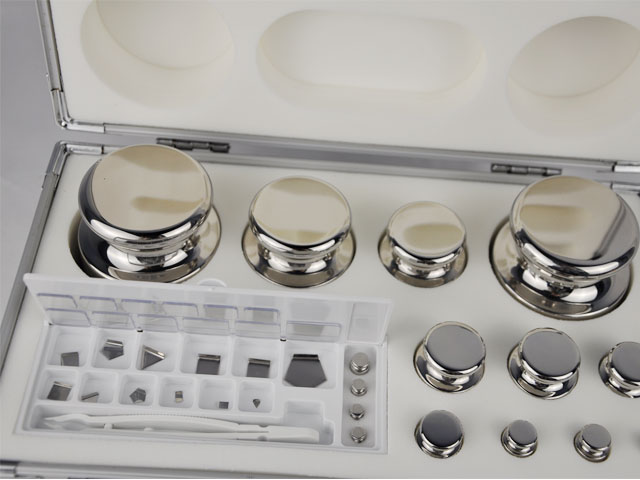
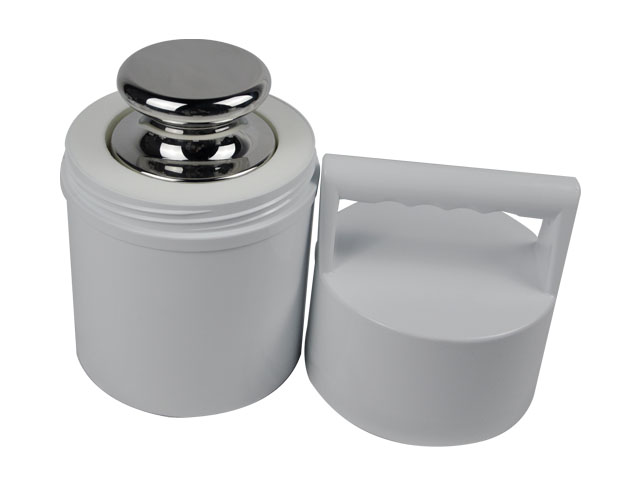
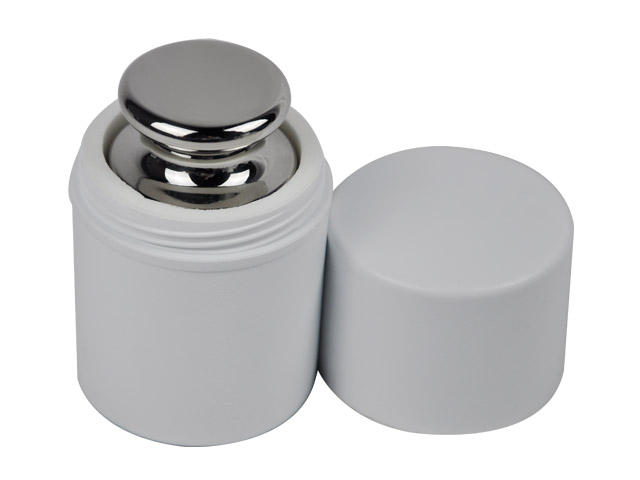
Daily storage, handling and maintenance management are crucial to maintaining the long-term accuracy and service life of F2 class test weight, and standardized management and use habits can effectively avoid unnecessary mass deviation and performance attenuation of the weight, ensuring that it can maintain stable and qualified accuracy indicators for a long time in long-term use. In terms of storage management, F2 class test weight needs to be placed in a dry, ventilated and dust-proof special storage environment, avoiding long-term placement in high temperature, high humidity, corrosive gas and dusty environments. Humid environment will easily cause surface oxidation and rust of the weight, corrosive gas will corrode the metal surface of the weight and cause tiny mass loss, and dust accumulation on the surface will lead to mass change caused by dust adsorption, affecting the calibration accuracy of the weight. The storage position of the weight needs to be fixed, and weights of different nominal specifications should be placed separately to avoid collision and friction between different weights, resulting in surface wear and mass change; small-specification lightweight weights need to be placed in special protective storage boxes to prevent loss and accidental damage.
In the handling and use process of F2 class test weight, standardized operation specifications must be strictly followed, and direct contact between hands and the surface of the weight should be avoided as much as possible. The sweat, grease and dust on human hands will adhere to the surface of the weight, forming a thin adsorption layer that is difficult to clean, leading to tiny mass changes of the weight and affecting long-term accuracy stability. When taking and placing the weight, special professional tweezers and handling tools should be used to ensure stable taking and placing, avoiding dropping, collision and violent friction of the weight. Dropping and collision will easily cause structural deformation and surface damage of the weight, and even tiny internal structural changes, resulting in irreversible mass deviation; violent surface friction will cause surface wear of the weight, resulting in long-term slow mass loss. When using F2 class test weight for calibration work, it should be placed gently and stably on the weighing pan of the weighing equipment, avoiding tilting, shaking and repeated placement, so as to ensure the accuracy and stability of calibration detection data.
Regular cleaning and periodic re-calibration maintenance are essential core links to keep F2 class test weight in good working condition for a long time. For the surface cleaning of F2 class test weight, professional non-corrosive cleaning tools and cleaning solutions should be used, and soft cleaning cloths and neutral cleaning agents should be selected to gently wipe the surface of the weight, removing surface dust, stains and residual adsorbed substances. It is forbidden to use corrosive cleaning agents and hard cleaning tools to scrub the weight, so as to prevent surface corrosion and scratch wear of the weight. After cleaning, the weight should be dried naturally in a dry and ventilated environment, and placed back into the special storage box after ensuring that the surface is dry without moisture. In terms of periodic re-calibration, F2 class test weight needs to be sent to a professional measurement institution for regular accuracy re-inspection and calibration according to the frequency specified by measurement management regulations. After long-term use, even if there is no obvious damage to the appearance of the weight, tiny mass deviation may occur due to long-term environmental influence and slight surface wear. Regular professional calibration can timely detect the tiny mass deviation of the weight, and carry out re-adjustment and correction through professional means to ensure that the weight always meets the F2 class accuracy tolerance requirements in the long-term use process.
The environmental adaptability of F2 class test weight enables it to maintain stable performance in different working conditions, whether it is a constant-temperature and dry professional laboratory environment or a conventional industrial production workshop with slight changes in temperature and humidity. Different from high-level precision reference weights that can only be used and stored in strictly controlled constant-temperature and constant-humidity professional laboratories, F2 class test weight has been optimized in material selection and structural design, with small thermal expansion coefficient and stable structural performance, and will not produce obvious mass change and structural deformation due to normal temperature and humidity fluctuations in conventional working environments. In the face of slight environmental changes such as seasonal temperature difference and indoor and outdoor humidity change, the physical properties and mass accuracy of F2 class test weight can remain stable without obvious fluctuation, which greatly reduces the limitation of use environment and improves the flexibility and convenience of calibration work. This excellent environmental adaptability makes F2 class test weight not only suitable for professional laboratory precision calibration work, but also can be used for on-site calibration and daily verification work in industrial production workshops and on-site operation links, meeting the measurement accuracy needs of different working environments.
In the long-term development and continuous improvement of the measurement industry, the status and role of F2 class test weight have always been irreplaceable, and with the continuous improvement of industrial production precision and scientific research measurement requirements, the application demand and performance requirements of F2 class test weight are also constantly standardized and optimized. All links from raw material selection, production and processing, precision debugging to later storage, use and maintenance are closely linked and mutually restrictive, jointly determining the overall performance and service life of F2 class test weight. Scientific and reasonable accuracy positioning, high-quality and stable manufacturing materials, standardized and rigorous production technology, standardized daily use and maintenance management, together make F2 class test weight a reliable core tool for mass measurement calibration work. It not only undertakes the important task of mass value transfer in the measurement system, but also provides accurate and stable measurement guarantee for various industries such as scientific research experiments, industrial production, material testing and quality supervision. In all work links related to mass weighing and measurement calibration, qualified F2 class test weight is an indispensable basic support, ensuring the accuracy, consistency and traceability of all mass measurement data, and laying a solid foundation for the standardized development of various industries and the smooth progress of scientific research and production work.
F2 Class Test Weight
https://www.veidtweighing.com/test-weight.html
Post Date: Apr 29, 2026
https://www.supplier-manufacturer.com/test-weight/f2-class-test-weight.html

![Standard Weight For Hanging Scales]()
Standard Weight For Hanging Scales
Standard weights for hanging scales are fundamental metrological reference tools that underpin the accuracy, consistency, and reliability of suspended weighing operations …![Standard Weight For Analytical Balances]()
Standard Weight For Analytical Balances
In precision laboratory measurement, analytical balances stand as foundational instruments that deliver highly accurate mass readings for chemical analysis, pharmaceutical…![Oiml F2 Calibration Standard Weight]()
Oiml F2 Calibration Standard Weight
Mass measurement forms the foundational backbone of all quantitative scientific research, industrial production, and commercial transaction activities. Every data result o…![Analytical Balance Calibration Weight]()
Analytical Balance Calibration Weight
Analytical balance calibration weights serve as fundamental reference tools in precision weighing operations, forming the core foundation for maintaining the accuracy and …![100g Calibration Weight For Pocket Scale Calibration]()
100g Calibration Weight For Pocket Scale Calibration
Pocket scales have become indispensable tools in countless daily and professional scenarios, favored for their compact size, portability, and ability to deliver fine weigh…