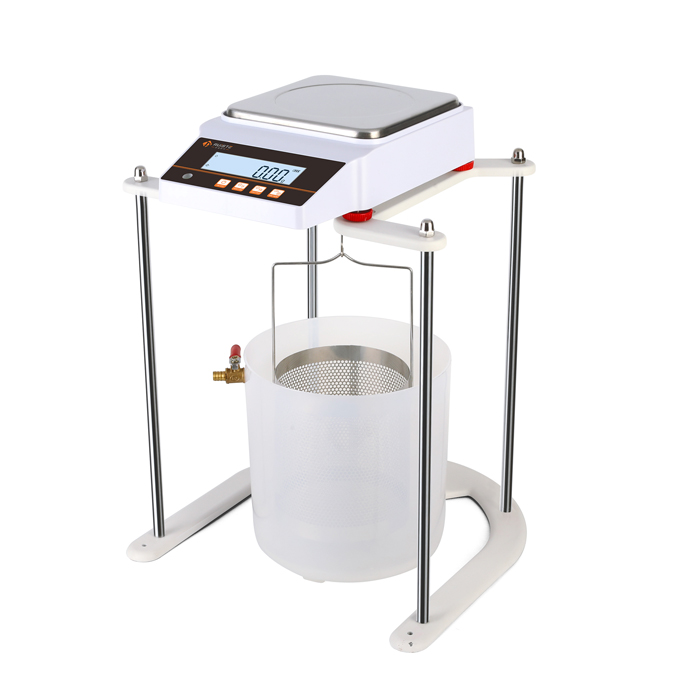
Explosion-proof Analytical Balance
In modern industrial production and scientific research fields that involve flammable and combustible substances, the demand for high-precision weighing equipment with enhanced safety performance has continued to grow steadily over the years. Common conventional analytical balances are designed for standard laboratory environments with stable atmospheric conditions, clean air, and no hazardous volatile substances. These ordinary weighing instruments rely on common circuit structures and open internal layouts, which may generate tiny electric sparks, static accumulation, or transient high temperatures during long-term operation or occasional circuit fluctuations. In confined spaces filled with flammable gas, volatile liquid vapor, or combustible dust, such subtle energy releases can easily trigger dangerous chain reactions, bringing irreversible safety risks to production activities, experimental research, and staff personal safety. The explosion-proof analytical balance emerges as a specialized weighing device tailored to eliminate such potential hazards, combining the high-precision measurement capability of traditional analytical balances with optimized safety structural designs to adapt to complex and dangerous working environments. This type of weighing instrument maintains rigorous measurement accuracy while suppressing internal energy release and isolating hazardous internal factors, forming a reliable weighing solution for high-risk industrial and research scenarios.

The core design logic of the explosion-proof analytical balance centers on balancing accurate metering performance and intrinsic operational safety. Similar to standard electronic analytical balances, this instrument adopts the electromagnetic force balance principle as the fundamental weighing mechanism. Inside the equipment, a stable magnetic field is constructed through professional magnetic components, and the energized conductor generates quantitative electromagnetic force in the magnetic field. During the weighing process, the gravity of the sample placed on the weighing pan acts vertically downward, while the electromagnetic force provides an upward balancing force. The system automatically adjusts the current intensity to keep the two forces in a stable equilibrium state, and the precise weight data of the sample is converted through the linear correlation between current signals and mass parameters. To adapt to high-precision measurement requirements, the internal sensing components are processed with high-density precision technology, which can capture subtle pressure changes and signal fluctuations, realizing accurate measurement of tiny mass changes of samples. What distinguishes it from ordinary analytical balances lies in a series of targeted safety optimizations for internal circuits, external structures, and material selection, which fundamentally reduce various ignition sources that may induce explosion risks in harsh environments.
In terms of internal circuit optimization, the explosion-proof analytical balance adopts low-energy circuit configuration to control the energy consumption of all electronic components within a safe threshold. All circuit modules including sensing elements, signal transmission lines, data processing chips, and power supply components are subjected to energy limitation processing. The circuit system avoids instantaneous current surges and voltage fluctuations during startup, continuous operation, and shutdown, effectively restraining the generation of electric sparks caused by circuit short circuits, component aging, or instantaneous current changes. Meanwhile, independent anti-interference modules are embedded in the circuit structure to shield external electromagnetic signals and prevent electromagnetic induction from generating additional induced current inside the equipment. This rational circuit design ensures that even under abnormal working conditions such as component aging and minor circuit failures, the heat and electric energy released by the internal circuit cannot reach the critical ignition energy of surrounding combustible mixtures, forming an intrinsic safety barrier at the electrical level.
The structural sealing and shell reinforcement design further strengthen the environmental adaptability and safety of the explosion-proof analytical balance. The external shell is made of high-strength corrosion-resistant metal materials, which possess excellent pressure resistance, impact resistance, and thermal stability. The shell can withstand slight internal pressure changes caused by component operation and avoid structural deformation or damage under external physical impact. All splicing gaps of the shell are filled with high-elasticity sealing accessories, which achieve a tight isolation effect between the internal operating space of the equipment and the external working environment. This airtight structure prevents flammable gases, volatile liquid vapors, and combustible dust in the external environment from penetrating into the interior of the balance, avoiding the contact between internal heat sources, electrical components and hazardous substances. In addition, the weighing pan and the external contact parts are polished with smooth and anti-static technology to reduce static accumulation caused by friction during sample placement and equipment operation. The anti-static design effectively eliminates static discharge risks, cutting off another common ignition source in high-risk working environments.
Temperature and humidity adaptive optimization is another important design feature of the explosion-proof analytical balance. Most production and research scenarios with explosion hazards have unstable environmental parameters, such as chemical reaction workshops with fluctuating temperatures and raw material storage areas with high humidity. Extreme temperature changes will affect the magnetic field stability and circuit sensitivity of precision weighing components, while excessive humidity may induce circuit leakage and accelerate component aging. This type of balance is equipped with an intelligent temperature compensation system, which can monitor real-time ambient temperature and automatically correct measurement parameters to offset the impact of thermal expansion and contraction of internal structural parts on weighing accuracy. The internal dehumidification and moisture-proof structure isolates humid air from precision electronic components, maintaining stable operating performance of the equipment in high-humidity environments. Moreover, the heat dissipation structure is reasonably arranged inside the balance to evenly export the heat generated by electronic components during long-term operation, avoiding local overheating and ensuring that the surface temperature of the equipment is always lower than the ignition temperature of common combustible substances.
The application scope of explosion-proof analytical balances covers multiple industrial and scientific research sectors involving hazardous raw materials. In the fine chemical industry, such equipment is used for the precise batching of flammable chemical raw materials, quantitative sampling of reaction intermediates, and residual detection of finished chemical products. Accurate weighing data helps chemical enterprises control reaction ratios, stabilize product quality, and reduce raw material waste while ensuring the safety of personnel in explosive workshops. In the pharmaceutical production field, many pharmaceutical intermediates, organic solvents, and raw material powders have flammable and volatile characteristics. Explosion-proof analytical balances complete the weighing of trace pharmaceutical ingredients in closed production workshops, meeting the strict precision requirements of pharmaceutical preparation and avoiding safety accidents caused by volatile solvents. In the new energy material industry, which has developed rapidly in recent years, the weighing and testing of battery raw materials, combustible electrolyte components, and special energy storage powders also rely heavily on such safe and precise weighing equipment to support material modification and performance testing experiments.
In addition to industrial production, explosion-proof analytical balances also play an irreplaceable role in professional scientific research and detection institutions. Laboratories dedicated to hazardous material analysis often need to weigh trace flammable samples, volatile organic compounds, and combustible mineral powders. The safe structural design of the balance eliminates potential safety hazards in experimental operations, and its high-precision measurement capability provides reliable data support for component analysis, purity detection, and sample proportioning. Moreover, in the fields of environmental monitoring and hazardous waste disposal, staff use this balance to quantitatively analyze residual combustible components in waste gas, waste liquid, and solid waste, providing accurate basic data for environmental hazard assessment and waste harmless treatment. In metallurgical and energy processing industries, it is applied to the sampling and detection of combustible mineral raw materials, helping enterprises optimize processing techniques and reduce energy consumption.
Daily maintenance and standardized operation are essential to maintain the long-term stable performance and safety of explosion-proof analytical balances. Before daily use, operators need to check the surface tightness of the shell, the integrity of sealing accessories, and the flatness of the weighing pan to ensure no gaps or damage in the isolation structure. It is necessary to place the equipment on a horizontal and stable working platform to avoid vibration interference, and keep the working area clean and tidy to prevent combustible dust from accumulating on the surface of the equipment. During the weighing process, excessive impact force when placing samples should be avoided, and overloading is strictly prohibited to prevent permanent damage to internal sensing components. After daily use, the surface of the equipment should be cleaned with dry soft cleaning tools to remove residual samples and dust, and the power supply should be cut off in time to reduce the continuous operation loss of electronic components.
Regular professional maintenance further prolongs the service life of the explosion-proof analytical balance. Professional maintenance personnel need to conduct regular inspections of internal circuits, sealing structures, and heat dissipation components, replace aging sealing parts and degraded circuit accessories in a timely manner, and eliminate potential safety hazards such as poor circuit contact and reduced sealing performance. Regular calibration of weighing parameters is required to correct measurement errors caused by long-term use and environmental changes, ensuring that the weighing accuracy remains within a stable range. In addition, the equipment should be stored in a dry and ventilated environment when not in use for a long time, avoiding long-term exposure to corrosive gases and high-temperature environments to prevent material corrosion and component aging.
Compared with ordinary analytical balances and low-precision explosion-proof weighing scales, explosion-proof analytical balances have unique comprehensive advantages in performance and applicability. Different from ordinary analytical balances that cannot adapt to hazardous environments, it achieves multi-dimensional isolation and suppression of ignition sources through circuit energy limitation, structural sealing, and anti-static design, adapting to complex dangerous working conditions. Unlike low-precision explosion-proof weighing equipment suitable for heavy sample weighing, it retains the high-sensitivity measurement performance of analytical balances, meeting the detection and batching requirements of trace and micro samples. The integration of safety and precision makes it an indispensable basic measuring instrument in high-risk precision production and experimental links. With the continuous upgrading of industrial production standards and the improvement of safety supervision systems in various industries, the market demand for explosion-proof analytical balances with stable performance and reliable safety will continue to increase.
Looking into the future, the technological evolution of explosion-proof analytical balances will focus on intelligent optimization, environmental adaptability expansion, and energy consumption reduction. With the continuous progress of electronic sensing technology and material science, new high-temperature resistant, corrosion-resistant, and lightweight composite materials will be applied to the shell and internal structural parts of the balance, further improving the durability and environmental tolerance of the equipment. The intelligent data processing system will realize automatic recording, sorting, and remote transmission of weighing data, which is convenient for production and experimental data management and traceability. At the same time, the optimized low-power circuit design will reduce the heat generation of components during operation, further lowering the hidden dangers of energy accumulation. While maintaining the core advantages of safety and precision, the equipment will develop towards more convenient operation, stronger anti-interference ability, and more diversified adaptation scenarios, providing more solid technical support for the safe and high-quality development of chemical, pharmaceutical, new energy, and scientific research industries.
Explosion-proof Analytical Balance
https://www.pruiste.com/analytical-balance.html
Post Date: May 19, 2026
https://www.supplier-manufacturer.com/analytical-balance/explosion-proof-analytical-balance.html

![Hydrostatic Balance JY SERIES]()
Hydrostatic Balance JY SERIES
The entire series of JY balances uses branded sensors to ensure high accuracy and stability of weighing results. This series of precision casting ABS Environmental protect…![Digital Viscometer Exporter]()
Digital Viscometer Exporter
Viscosity stands as one of the most fundamental physical properties of fluid materials, reflecting the internal friction and flow resistance of substances during movement.…![Digital Viscometer For Sale]()
Digital Viscometer For Sale
Viscosity serves as one of the most fundamental physical properties of fluid substances, reflecting the internal friction and flow resistance of liquids during movement. I…![Industrial Digital Viscometer]()
Industrial Digital Viscometer
Viscosity stands as one of the most critical physical properties of fluid materials, reflecting the internal frictional resistance that occurs when a fluid undergoes flow …![Gravimetric Moisture Analyzer]()
Gravimetric Moisture Analyzer
Moisture content stands as one of the most critical physical parameters that define the quality, stability, and processing performance of diverse materials across industri…