Types of Analytical Balance
Analytical balances are essential precision measuring instruments widely applied in chemical laboratories, pharmaceutical research, food testing, geological analysis and other professional fields. Designed to measure small mass samples with high precision, these instruments can detect subtle mass changes that ordinary weighing equipment cannot identify. Their reliable weighing performance lays a solid foundation for quantitative analysis, ingredient proportioning and experimental data recording in various scientific researches. Based on differences in mechanical structure, working principles, precision grades and functional designs, analytical balances can be divided into multiple categories, and each type possesses unique structural characteristics, working mechanisms and applicable scenarios. Understanding the classification and inherent attributes of different analytical balances helps laboratory personnel select appropriate equipment according to experimental demands, so as to maintain the stability and accuracy of experimental data throughout the weighing process.
Mechanical analytical balances are traditional weighing devices developed in the early stage of precision weighing technology, and they operate mainly based on the fundamental lever principle. The internal structure of these balances adopts a rigid lever system, and the torque balance on both sides of the lever is utilized to compare the mass of measured samples with standard weights. This kind of balance relies on pure mechanical transmission without electronic sensing components, and its weighing stability is hardly affected by external electromagnetic interference. Within the mechanical analytical balance category, diverse subtypes have been derived through structural optimization and accessory iteration. Double pan mechanical analytical balances are one of the classic designs, featuring two symmetrical weighing pans distributed on both ends of the equal-arm lever. During operation, researchers place the tested sample on one pan and standard weights on the other pan, and fine adjustment is completed through a built-in graduated beam and sliding rider. The symmetrical structural design effectively offsets the influence of gravitational deviation and surface uneven placement, bringing relatively high weighing stability under conventional laboratory conditions. This type of balance is suitable for routine constant quantity analysis experiments and has long been used in basic chemical analysis teaching and conventional sample detection.
Single pan mechanical analytical balances are another important branch of mechanical balances, adopting an unequal-arm structural layout different from double pan models. Only one weighing pan is arranged on the outer side of the balance, and all standard weights are built into the internal mechanical structure. Staff can adjust the weight combination through external control knobs instead of manually adding or removing weights, which simplifies the weighing operation steps. The internal weight storage mode also reduces the contamination and abrasion of standard weights caused by frequent manual contact, maintaining the long-term weighing consistency of the instrument. Compared with double pan mechanical balances, single pan designs have smaller external volume and more concise operation logic, making them adaptable for laboratories with limited space and medium-precision weighing requirements. In addition, air-damped mechanical analytical balances are optimized on the basis of traditional mechanical structures. An air damping device is installed inside the balance body, which can effectively slow down the up-and-down oscillation of the lever and weighing pan after placing samples. This damping structure shortens the static waiting time of the pointer, improves overall weighing efficiency, and lowers human reading errors caused by pointer jitter. Such balances are commonly used in experimental scenarios that require continuous batch weighing and have moderate requirements for weighing speed.
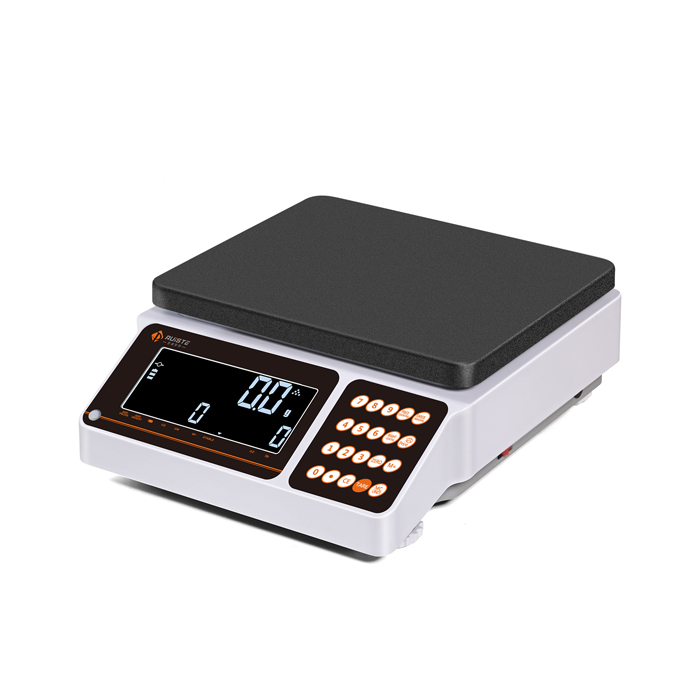
With the continuous progress of electronic sensing technology, electronic analytical balances have gradually replaced part of mechanical balances and become mainstream precision weighing equipment in modern laboratories. Different from the mass comparison mode of mechanical balances, most electronic analytical balances adopt the electromagnetic force compensation principle. The internal high-sensitivity sensor converts the gravity generated by the sample mass into electrical signals, and the internal circuit system calculates and displays accurate mass data through algorithm processing. The overall structure of electronic balances is more compact, and the integrated design of sensing components and data modules avoids complex mechanical transmission structures, reducing mechanical wear during long-term use. According to precision classification standards, electronic analytical balances can be subdivided into constant analytical balances, semi-micro analytical balances, micro analytical balances and ultra-micro analytical balances. Constant electronic analytical balances have a relatively large measurable range among analytical balances, meeting the weighing demands of conventional solid and liquid samples in general chemical experiments. The internal circuit structure is stable, and the data response speed is fast, which is convenient for staff to quickly obtain weighing results in daily detection work.
Semi-micro and micro electronic analytical balances are optimized for trace sample detection scenarios. They are equipped with higher-precision sensing elements and refined internal calibration structures, capable of capturing tiny mass changes of trace samples. Semi-micro models are often used for weighing small-dose chemical reagents and fine particulate samples, while micro electronic balances are more suitable for ultra-trace sample detection in biological analysis and material research. Ultra-micro analytical balances belong to high-precision weighing equipment, which need to be placed in strictly controlled laboratory environments to avoid interference from air flow, temperature fluctuation and vibration. These balances are widely used in advanced scientific research fields such as nanomaterial testing and microbial sample analysis to provide accurate mass data for micro-scale experimental research.
In addition to the classification based on mechanical and electronic structures, analytical balances can also be categorized according to range segmentation and calibration modes, which is conducive to distinguishing functional differences in practical application. Multi-interval analytical balances are designed with a segmented weighing range. A single weighing space is divided into multiple local intervals, and each interval is matched with an independent scale interval. When the sample mass changes and crosses the interval threshold, the balance can automatically switch the precision gear to ensure high accuracy in both low-load and medium-load weighing states. After the tare operation, this kind of balance can automatically return to the highest precision interval, which improves the flexibility of multi-specification sample weighing. Multiple-range analytical balances are different from segmented interval structures; they are equipped with several independent weighing ranges, and users can manually switch the range mode according to the preset mass interval of samples. This design reduces the data fluctuation caused by range switching and is suitable for laboratories with fixed types of experimental samples and regular mass gradient changes.
Calibration mode is also an important basis for distinguishing analytical balance types, and calibration stability directly determines the long-term weighing reliability of instruments. External calibration analytical balances require staff to use matched standard weights to complete regular calibration work. Before formal weighing, it is necessary to place standard weights on the weighing pan to correct data deviation caused by temperature changes and position movement. This calibration method has simple structural design and low maintenance difficulty, suitable for laboratories with stable environmental conditions and low calibration frequency requirements. Internal calibration analytical balances are embedded with built-in weight components and automatic driving structures inside the balance body. The system can independently trigger calibration procedures according to temperature changes or standby time, without manual placement of external weights. The automatic calibration function reduces human operation errors and keeps the instrument in a high-precision working state for a long time, which is more suitable for professional laboratories with continuous working hours and strict data requirements.
Different types of analytical balances have distinct applicable environments and usage limitations, so it is necessary to select equipment in combination with experimental conditions in practical application. Mechanical analytical balances have strong anti-interference ability against electromagnetic signals, and they can maintain stable operation in environments with slight electromagnetic field fluctuations. However, their weighing speed is slow, and manual reading is easy to produce visual errors, so they are more used for basic teaching experiments and low-frequency conventional detection. Electronic analytical balances have intuitive digital display results and simple operation steps, but they are sensitive to ambient temperature, air flow and vibration. It is necessary to place them in a closed dust cover during use and keep the laboratory environment dry and stable. High-precision micro and ultra-micro electronic balances also need to be equipped with special shock absorption platforms and constant temperature systems to eliminate external interference. Balances with multi-interval and multi-range structures are more inclined to comprehensive laboratory scenarios with diverse sample types, while internal calibration balances are favored by pharmaceutical and testing institutions that require long-term continuous detection.
In terms of daily maintenance, different types of analytical balances also have targeted management methods. Mechanical balances need regular lubrication of mechanical connection parts to reduce friction resistance of lever movement, and the weighing pan and metal structure should be kept clean to avoid corrosion affecting structural balance. Electronic balances need to keep the internal circuit dry, avoid liquid reagent leakage from eroding sensing components, and regularly clean the dust on the surface of the weighing pan and dust cover. Regardless of the balance type, long-term idle equipment needs to be placed in a dry and dust-proof storage environment, and regular debugging and calibration should be carried out to prevent component aging from affecting weighing performance.
In conclusion, the diverse types of analytical balances form a complete precision weighing system, covering different demands from conventional constant weighing to ultra-trace micro weighing. Mechanical balances retain the advantages of stable mechanical structures and strong anti-interference performance, while electronic balances achieve breakthroughs in operation convenience and data intuition through electronic sensing technology. Classification based on range structure and calibration mode further enriches the functional differentiation of analytical balances. With the continuous development of laboratory technology, the structural design of analytical balances will be further optimized, and the adaptation ability to complex environments will be continuously improved. Reasonable selection and standardized use of different types of analytical balances can effectively ensure the authenticity and repeatability of experimental data, providing reliable technical support for chemical analysis, pharmaceutical production, scientific research exploration and other industries.
Types of Analytical Balance
https://www.pruiste.com/analytical-balance.html
Post Date: May 19, 2026
https://www.supplier-manufacturer.com/analytical-balance/types-of-analytical-balance.html

![Counting Balance RSB-C SERIES]()
Counting Balance RSB-C SERIES
The RSB-C series adopts high-definition keys, which is economical. The entire series of balances adopt Nuosheng sensors, brand sensors, and aluminum alloy structure to ens…![Digital Viscometer Price]()
Digital Viscometer Price
Digital viscometers have become indispensable precision testing instruments across modern industrial production, laboratory research and development, and quality inspectio…![Working Principle of Digital Viscometer]()
Working Principle of Digital Viscometer
Viscosity is an inherent physical property of fluid substances, which characterizes the internal friction and flow resistance generated when a fluid undergoes relative mot…![High-temperature Digital Viscometer]()
High-temperature Digital Viscometer
Viscosity stands as one of the most fundamental physical properties of fluid substances, reflecting the internal friction and flow resistance generated during the movement…![Rapid Moisture Analyzer]()
Rapid Moisture Analyzer
Moisture content stands as one of the most critical physical indicators that determine the quality, stability, and practical performance of various raw materials and finis…