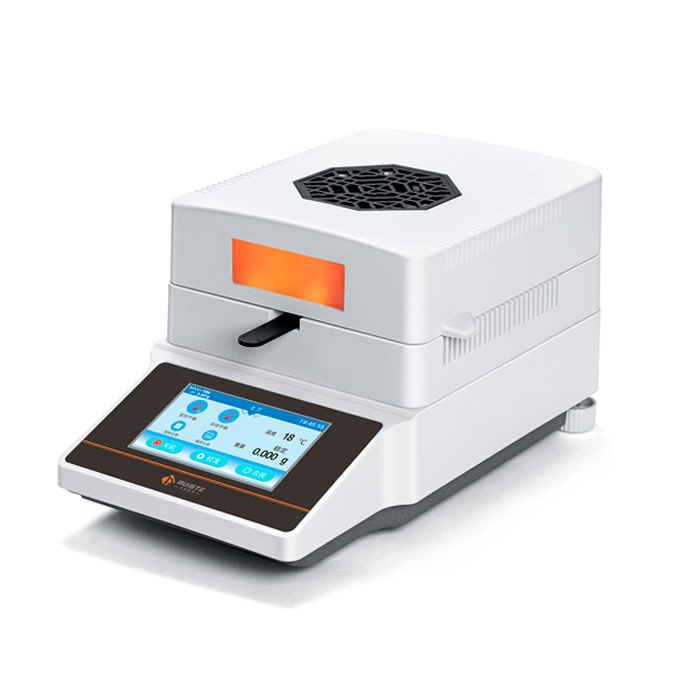
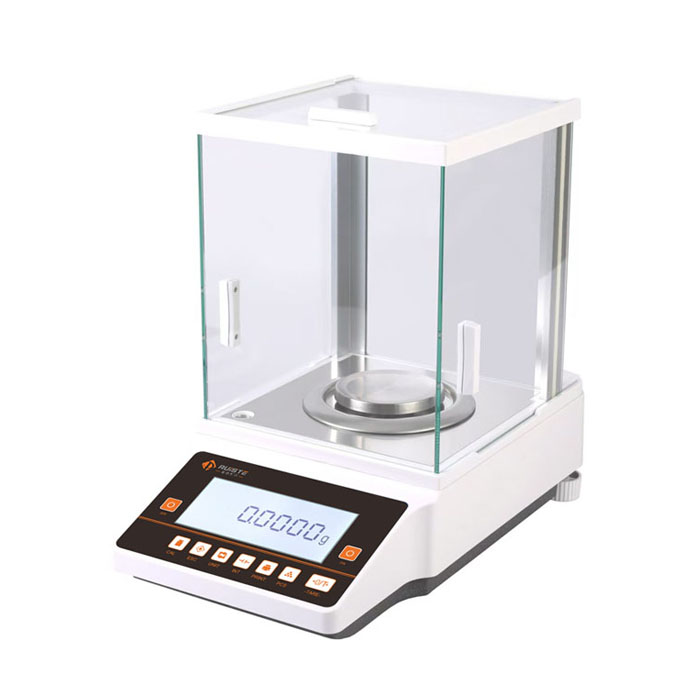
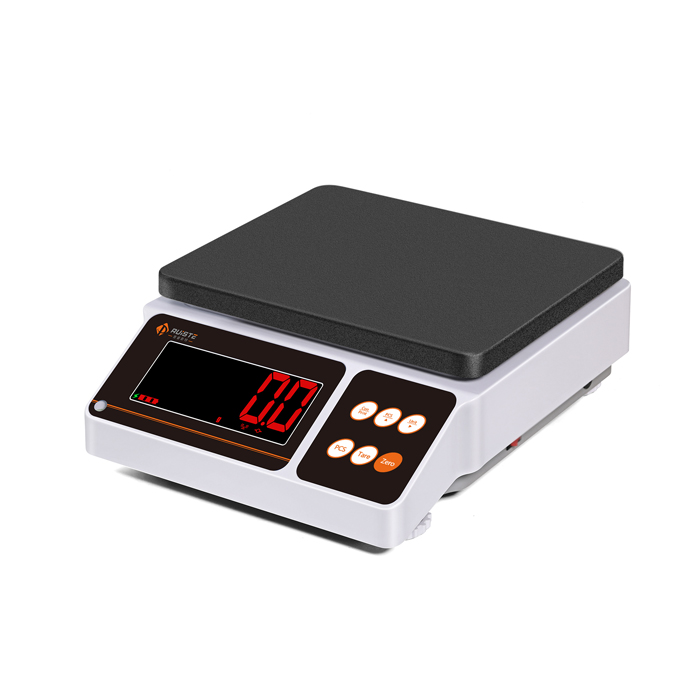
Types of Precision Balance
Precision balances stand as indispensable measuring instruments in modern quantitative analysis, serving as foundational tools for obtaining reliable mass data across diverse professional scenarios. These instruments are engineered to identify subtle variations in sample mass, far exceeding the detection capability of ordinary weighing devices, and their consistent performance ensures stable and repeatable measurement results in daily testing, experimental research, and industrial production. The diversified development of manufacturing technologies and structural designs has derived multiple types of precision balances, each with unique working mechanisms, structural characteristics, and applicable service conditions. A comprehensive understanding of the classification and inherent attributes of different precision balances enables practitioners to select appropriate equipment based on experimental requirements, sample characteristics, and environmental conditions, thereby optimizing measurement accuracy and improving operational efficiency. The classification of precision balances follows multiple logical dimensions, including working principles, measurement accuracy grades, structural layouts, and functional design orientations, and each categorization method reflects distinct technical traits and application boundaries of the instruments.
Based on inherent working principles, precision balances can be primarily divided into mechanical precision balances and electronic precision balances, which represent two mature technical systems developed in different industrial stages. Mechanical precision balances originate from the basic lever principle, relying on the equilibrium of mechanical torque to complete mass measurement. The core structure of this type of balance consists of a rigid lever, a central fulcrum, weighing pans, and standard counterweights. During operation, the measured sample is placed on one weighing pan, while standardized weights with known mass are added to the other pan. When the lever returns to a horizontal balanced state, the mass of the sample equals the combined mass of the added weights. Some optimized mechanical precision balances are equipped with auxiliary vernier scales and fine-tuning torque components, which effectively narrow the minimum measurable unit and enhance overall weighing precision. These mechanical devices feature simple structural composition, stable physical properties, and no dependence on power supply, making them adaptable to environments without stable power support. Nevertheless, their inherent limitations are equally prominent. Manual weight placement increases human operation errors, and mechanical friction between internal components generates subtle measurement deviations. Additionally, prolonged continuous use may cause slight wear of the lever and fulcrum structure, gradually affecting long-term measurement stability. Such balances are currently commonly used in basic teaching experiments, simple raw material screening, and scenarios with low frequency of high-precision measurement.
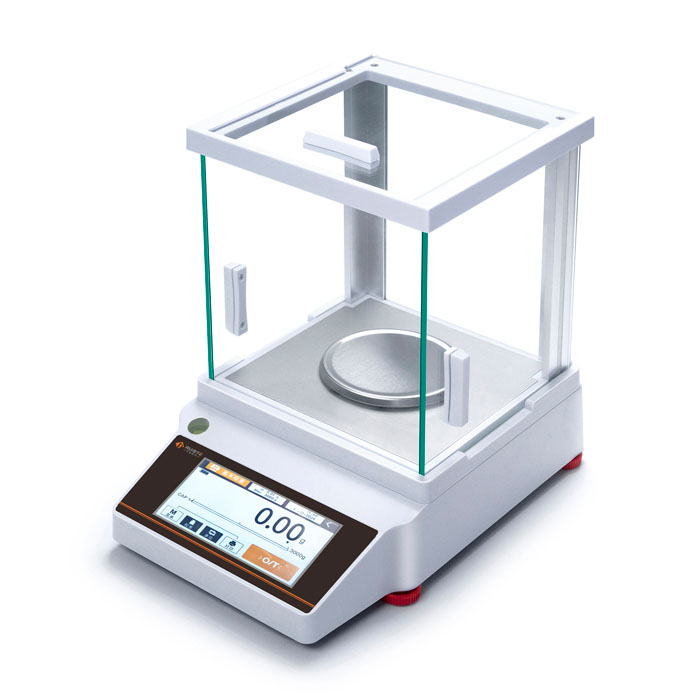
Electronic precision balances have gradually become mainstream measuring equipment in modern professional fields by virtue of electromagnetic force compensation technology, abandoning the traditional mechanical weight stacking mode. The internal core sensing system of electronic precision balances includes displacement detectors, electromagnetic coils, and permanent magnet assemblies. When a sample is placed on the weighing pan, the slight pressure triggers tiny displacement of the bearing structure, and the high-sensitivity displacement detector instantly captures the positional change and converts it into an electrical signal. The internal circuit system dynamically adjusts the current intensity of the electromagnetic coil, generating an electromagnetic force that counteracts the gravity of the sample to push the bearing structure back to its initial position. There is a stable positive correlation between the real-time current intensity and the sample mass, and the system converts current data into intuitive mass readings through algorithm calculation. Compared with mechanical structures, electronic precision balances effectively reduce human intervention errors and mechanical friction interference. They deliver sensitive response speed, stable data output, and can maintain good consistency in repeated weighing operations. Most electronic precision balances are embedded with environmental adaptation modules to mitigate the impact of subtle temperature fluctuations and air flow on measurement results. Despite these advantages, electronic instruments rely on continuous power supply, and extreme electromagnetic interference environments may disrupt the stability of internal sensing signals, requiring standardized placement and use conditions.
From the perspective of measurement accuracy and range classification, precision balances can be categorized into ultra-micro precision balances, micro precision balances, and general analytical precision balances, which are defined by readable resolution and maximum load capacity to meet differentiated measurement demands for samples of varying masses. Ultra-micro precision balances possess extremely high sensitivity, with a minimum readable unit reaching an extremely fine level and a relatively small maximum load range. These instruments are suitable for detecting trace samples with tiny mass, such as particulate matter in chemical reagents, microcrystalline experimental samples, and trace impurity components in high-purity materials. The internal sensing components of ultra-micro balances adopt high-precision customized structures, equipped with closed shielding shells to isolate external air flow, static electricity, and dust interference. The internal space of the weighing chamber is compact, which further reduces the impact of environmental factors on micro samples. Micro precision balances have a moderate improvement in load range on the basis of retaining high resolution, striking a balance between measurement accuracy and weighing capacity. They are widely applied in pharmaceutical ingredient proportioning, fine chemical testing, and biological sample preparation, where both trace precision and moderate sample loading volume are required. These instruments usually have optimized anti-interference designs, including static elimination structures to neutralize static charges accumulated on the surface of insulating samples and avoid data drift caused by static adsorption.
General analytical precision balances are the most extensively used type in conventional laboratories, with reasonable resolution and a broader load range. They can meet the daily weighing needs of most conventional experimental samples, including solid reagent preparation, solution solute weighing, and routine physical property testing of materials. Although their accuracy threshold is lower than that of ultra-micro and micro precision balances, they maintain excellent data repeatability under conventional laboratory conditions. Their internal structural design focuses on balancing cost performance and practicality, simplifying part of the extreme anti-interference structures while retaining core precision measurement functions. Such balances are highly adaptable to conventional indoor environments and do not require overly strict constant temperature and humidity conditions, making them ideal for daily testing tasks in educational laboratories, industrial quality inspection departments, and scientific research institutions.
In accordance with structural layout and weighing chamber design, precision balances can be classified into open-type precision balances and closed-type precision balances, and the structural difference directly determines their applicable working environments and sample types. Open-type precision balances feature an exposed weighing pan without enclosed protective shells. The simplified structural design reduces equipment maintenance difficulty and facilitates quick placement and removal of bulk samples. The internal mechanical or electromagnetic sensing structure is optimized for bearing stability, with strong pressure resistance and good tolerance for daily operation vibration. These balances are suitable for weighing large-sized solid samples with low sensitivity to environmental interference, such as industrial raw material particles, non-volatile bulk chemicals, and building material test pieces. However, the open structure cannot block external air flow and dust, so they are not applicable for measuring lightweight samples that are prone to drift or samples susceptible to environmental pollution.
Closed-type precision balances are equipped with fully enclosed transparent protective cabins, and the sealed space effectively isolates external air convection, dust deposition, and human breathing airflow interference. The cabin door adopts a flexible sliding structure to reduce vibration generated during opening and closing, ensuring the stability of the internal weighing environment. Some upgraded closed-type balances are fitted with auxiliary functional structures, such as drying modules to reduce moisture interference in damp samples and gas isolation units to prevent volatile samples from reacting with air. This closed structure is particularly suitable for measuring volatile chemical samples, hygroscopic solid reagents, and lightweight flake samples that are easily affected by air flow. In addition, the closed protective cabin can reduce the impact of static temperature changes in the external environment on internal sensing components, maintaining long-term measurement stability in complex indoor environments.
Based on functional positioning and application orientation, precision balances can be divided into basic conventional balances and enhanced multifunctional balances. Basic conventional precision balances only retain core mass measurement functions, with simple operation logic and clear data display. The internal program algorithm is single and stable, focusing on completing basic static weighing tasks. Their structural configuration is compact, with low failure rate and convenient daily maintenance. They are suitable for simple and repetitive weighing work in fixed environments, such as raw material counting and weighing in small processing workshops and basic weighing demonstrations in teaching laboratories. Enhanced multifunctional precision balances integrate diversified auxiliary functions on the basis of basic weighing. These devices support real-time data recording, cumulative weighing, and unit switching, and can be connected to external data storage devices to realize automatic data export and sorting. Some models are designed with adaptive calibration structures, which automatically sense subtle changes in ambient temperature and humidity and complete trace calibration without manual operation, ensuring measurement consistency in long-term continuous use. Multifunctional balances are commonly used in professional scientific research laboratories, pharmaceutical production detection, and environmental monitoring industries, which require complete data records and high continuous working stability.
Different types of precision balances have distinct advantages and applicable scenarios, and there is no universal model that can adapt to all measurement environments. Mechanical precision balances are reliable and power-free, suitable for simple measurement scenarios with low environmental requirements; electronic precision balances deliver sensitive response and convenient operation, dominating modern high-precision testing work. Ultra-micro high-precision models focus on trace sample detection, while general analytical models adapt to daily conventional weighing tasks. Open structural designs cater to bulk and stable samples, and closed structures protect sensitive samples from external interference. Basic functional models meet repetitive simple operations, and multifunctional models support complex data management work. In actual application processes, personnel need to comprehensively consider sample characteristics, environmental conditions, measurement frequency, and data accuracy requirements to select matching precision balance equipment. Proper selection and standardized operation can effectively reduce measurement errors, extend the service life of instruments, and ensure the authenticity and validity of experimental and detection data. With the continuous progress of manufacturing technology, the performance of precision balances will be further optimized, and more innovative types will emerge to meet the increasingly refined measurement demands of various industries, providing solid technical support for the development of scientific research, industrial production, and quality detection fields.
Types of Precision Balance
https://www.pruiste.com/precision-balance.html
Post Date: May 18, 2026
https://www.supplier-manufacturer.com/precision-balance/types-of-precision-balance.html

![Types of Precision Balance]()
Types of Precision Balance
Precision balances stand as indispensable measuring instruments in modern quantitative analysis, serving as foundational tools for obtaining reliable mass data across dive…![Electronic Balance Manufacturer]()
Electronic Balance Manufacturer
In the modern industrial and scientific landscape, precise weight measurement serves as an indispensable foundation for countless production, research, and quality control…![Waterproof Electronic Balance]()
Waterproof Electronic Balance
In modern industrial production, laboratory research, food processing and daily commercial measurement scenarios, environmental interference has always been a key factor a…![Stainless Steel Weighing Scale]()
Stainless Steel Weighing Scale
In modern industrial production, daily commercial transactions, and laboratory research environments, weighing equipment serves as a fundamental auxiliary tool to quantify…![Weighing Scale Supplier]()
Weighing Scale Supplier
In the global circulation of commodities and industrial production chains, weighing scales stand as indispensable measuring instruments that underpin the basic operation o…