Weighing Analytical Balance
The weighing analytical balance stands as an indispensable precision measuring instrument widely deployed in laboratory environments, research institutions, and industrial testing workshops. Designed for subtle mass measurement of tiny substances, this instrument distinguishes itself from conventional weighing devices through its exceptional sensitivity and steady measurement performance. It focuses on capturing slight mass variations that ordinary scales fail to identify, offering reliable numerical data for scientific experiments, material analysis, and routine quality inspection work. With the continuous advancement of experimental technology and industrial manufacturing standards, the analytical balance has gradually evolved from simple mechanical structures to sophisticated electronic configurations, retaining the core logic of accurate mass measurement while optimizing internal transmission structures and signal processing modes to adapt to increasingly stringent measurement requirements in diverse industries.
To understand the operational logic of a weighing analytical balance, it is essential to clarify the physical principles that support its measurement functions. Early mechanical analytical balances rely on the lever equilibrium principle, a basic physical law that has guided mass measurement for thousands of years. The internal structure features a well-polished rigid beam with fixed supporting points. When substances of equal mass are placed on both ends of the beam, the gravitational pull acting on both sides maintains the beam in a horizontal balanced state. Staff judge the mass of measured samples by comparing them with standard weights, and the smooth contact surfaces of internal structural components effectively reduce friction interference during beam swinging, ensuring the stability of equilibrium judgment. Modern electronic analytical balances adopt an electromagnetic force compensation mechanism, a more efficient and stable working mode compared with mechanical structures. When a sample is placed on the weighing pan, the bearing structure undergoes tiny displacement due to gravitational action. The built-in displacement sensor quickly captures this subtle positional change and converts it into a real-time electrical signal. The internal control circuit dynamically adjusts the current intensity of the coil inside the magnetic field, generating an electromagnetic force that counteracts the gravity of the sample to push the bearing structure back to its initial balanced position. In this working state, the current intensity maintains a stable proportional relationship with the sample mass, and the system converts current signals into intuitive mass data through internal algorithm calculation to complete the weighing process.
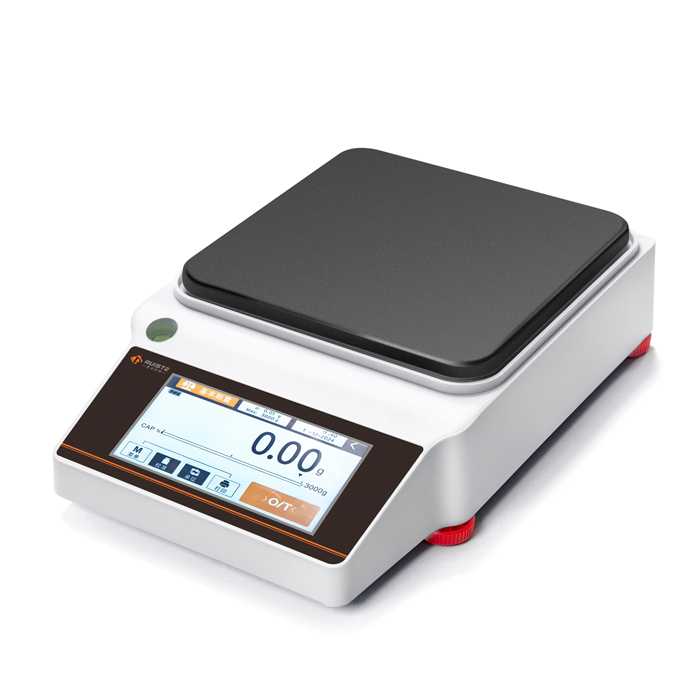
The overall structural design of a weighing analytical balance follows ergonomic principles and precision mechanical design concepts, with each component undertaking independent and interconnected functions. The external shell is made of sturdy and corrosion-resistant materials, which can isolate external dust, moisture, and corrosive gases to prevent internal precision components from being damaged by environmental erosion. A transparent windshield structure is equipped around the weighing pan, a crucial design for high-precision measurement. Natural air flow in the surrounding environment can generate subtle air pressure fluctuations, which exert noticeable interference on tiny samples with low mass. The closed windshield weakens the impact of air convection, ensuring the weighing pan remains in a stable airflow environment. The weighing pan itself is usually made of smooth and wear-resistant metal materials with a flat surface to ensure uniform force bearing of samples and avoid measurement errors caused by uneven placement. The internal sensing and signal processing components are fixed on a shock-absorbing base, which can buffer tiny vibrations transmitted by the external desktop and further improve the stability of the measurement process. In addition, the instrument is equipped with a simple and intuitive display interface, which can clearly present real-time measurement data, and the embedded control buttons support basic function settings such as zero clearing and tare weighing, simplifying daily operation steps.
Strict environmental requirements are necessary for the normal operation of a weighing analytical balance, as subtle environmental changes can affect measurement stability. Temperature fluctuation serves as one of the key influencing factors. Drastic temperature changes cause thermal expansion and contraction of internal metal components, altering the tightness of structural connections and the sensitivity of sensing parts. It is appropriate to place the instrument in a constant-temperature space with mild temperature changes to maintain the stable physical properties of internal components. Humidity control is equally important; an excessively humid environment may lead to dampness on internal circuits and metal parts, triggering slow oxidation or short-circuit hidden dangers, while an overly dry environment is prone to static accumulation, interfering with the transmission of electrical signals. In addition, the placement position of the instrument needs to avoid direct sunlight and heat sources such as heating equipment, because localized heat radiation will form uneven air flow around the weighing pan and disrupt the force balance state of samples. The placement desktop must be flat and solid to prevent slight shaking during use. It is also necessary to keep away from vibration-generating equipment such as centrifuges and stirrers in the laboratory to reduce resonant vibration interference.
Standardized operating procedures directly determine the accuracy of measurement data and the service life of the weighing analytical balance. Before formal use, staff need to inspect the instrument status comprehensively, checking whether the weighing pan is clean and flat, whether the windshield is tightly closed, and whether the display screen can show normal numbers. After turning on the power, the instrument requires an appropriate preheating period to stabilize the internal circuit system and magnetic field environment, eliminating data deviation caused by insufficient equipment activation. Before weighing samples, it is necessary to perform zero calibration to eliminate the influence of the weighing pan itself and residual impurities on the pan on measurement results. For samples that are easy to absorb moisture or volatile, closed containers should be used for holding to prevent mass changes caused by substance exchange with the air during weighing. When placing samples, gentle movements are required to avoid impact force causing structural displacement of the balance. Overloading use should be strictly avoided; long-term bearing of excessive mass will cause irreversible fatigue deformation of internal sensing components and reduce measurement sensitivity. After completing the weighing work, staff need to clean up residual samples on the weighing pan, close the windshield, and cut off the power supply to keep the instrument in a dry and tidy storage state.
Reasonable daily maintenance can effectively maintain the working performance of the weighing analytical balance and extend its service cycle. Daily cleaning work should focus on mild operation; soft dust-free cloths are used to wipe the surface of the weighing pan and the inner wall of the windshield, and volatile corrosive cleaning agents are prohibited to prevent corrosion of metal structures and transparent shells. Regular dust removal treatment should be carried out on the internal gap parts to avoid dust accumulation affecting the flexibility of mechanical structures and the sensitivity of sensors. The instrument should be placed in a dry and ventilated storage space when not in use for a long time, and moisture-proof materials can be placed around to prevent internal component dampness. Periodic calibration is an essential maintenance link. Under the influence of long-term use and environmental changes, the measurement reference benchmark of the balance may drift. Professional calibration methods are adopted to adjust internal parameters to ensure the consistency of measurement data. In addition, the connection lines and fixed parts of the instrument need regular inspection; loose connections should be fastened in time to avoid equipment failure during operation.
Weighing analytical balances have extensive application coverage in multiple professional fields, providing basic data support for various precision research and production work. In chemical laboratories, researchers use the balance to weigh trace chemical reagents. Accurate reagent mass proportion is the premise of smooth chemical reactions, which helps researchers master reaction laws and summarize chemical change mechanisms. In the pharmaceutical industry, the instrument is applied to the proportioning of raw medicinal materials and the detection of finished drug components. Precise mass control ensures the uniformity of drug ingredient content and stabilizes the medicinal effect of products. In the food testing industry, staff weigh trace samples to detect nutrient content, harmful residue elements, and additive proportions in food, providing accurate data basis for food safety evaluation. In material science research, the balance is used to measure the mass change of new materials before and after physical and chemical reactions, helping researchers analyze material stability, durability, and structural characteristics. In addition, it also plays an important role in geological testing, environmental monitoring, and cosmetic research, completing the quantitative detection of tiny samples in different scenarios.
In the process of long-term use, some common subtle faults may occur in weighing analytical balances, and reasonable troubleshooting methods can ensure continuous and stable operation of the equipment. Unstable numerical fluctuation on the display screen is a frequent phenomenon, which is usually caused by unclosed windshields, unstable placement desktops, or residual impurities on the weighing pan. The fluctuation can be eliminated by cutting off external airflow interference, adjusting the placement position, and cleaning the weighing pan. If the displayed data cannot return to zero normally, it may be due to accidental displacement of internal components or failure of the zero-setting sensor. Simple reset operation can be carried out first, and professional debugging is required if the fault persists. Slow data response during weighing is generally related to insufficient preheating time or aging of internal circuit components. Extending the preheating time and regularly maintaining circuit parts can effectively optimize the response speed. For abnormal noise during equipment operation, it is necessary to check whether the internal fixed parts are loose and eliminate resonant vibration generated by component friction.
With the continuous progress of manufacturing technology, the comprehensive performance of weighing analytical balances is constantly optimized and upgraded. On the basis of retaining stable measurement principles, modern instruments have realized miniaturization and lightweight structural design, saving laboratory placement space while maintaining measurement accuracy. The intelligent control system is gradually improved, realizing automatic zero tracking, data storage, and data transmission functions, which reduces manual operation errors and improves experimental work efficiency. The anti-interference performance of the instrument has also been significantly enhanced. Optimized shielding structures can resist electromagnetic interference from surrounding electronic equipment, and upgraded shock-absorbing materials weaken the impact of external vibration. In the future, with the integration of intelligent sensing and digital technology, weighing analytical balances will develop towards higher sensitivity, simpler operation, and stronger environmental adaptability, continuously meeting the increasingly refined measurement needs of scientific research, industrial production, and detection industries.
As a fundamental precision measuring instrument, the weighing analytical balance undertakes the important task of trace mass measurement in various professional scenarios. Its stable working principle, rigorous structural design, and flexible application characteristics make it an indispensable auxiliary tool for modern scientific research and industrial detection. Standardized operation and scientific maintenance are the keys to maintaining its measurement performance. Understanding its working logic and application scope can help staff give full play to its measurement advantages. In the context of continuous technological innovation, the weighing analytical balance will keep pace with the times in structural optimization and functional upgrading, providing more accurate and convenient data support for the development of multiple industries and promoting the steady progress of precision measurement technology.
Weighing Analytical Balance
https://www.pruiste.com/analytical-balance.html
Post Date: May 19, 2026
https://www.supplier-manufacturer.com/analytical-balance/weighing-analytical-balance.html

![Digital Viscometer Exporter]()
Digital Viscometer Exporter
Viscosity stands as one of the most fundamental physical properties of fluid materials, reflecting the internal friction and flow resistance of substances during movement.…![Digital Viscometer For Sale]()
Digital Viscometer For Sale
Viscosity serves as one of the most fundamental physical properties of fluid substances, reflecting the internal friction and flow resistance of liquids during movement. I…![Industrial Digital Viscometer]()
Industrial Digital Viscometer
Viscosity stands as one of the most critical physical properties of fluid materials, reflecting the internal frictional resistance that occurs when a fluid undergoes flow …![Gravimetric Moisture Analyzer]()
Gravimetric Moisture Analyzer
Moisture content stands as one of the most critical physical parameters that define the quality, stability, and processing performance of diverse materials across industri…![Automatic Moisture Analyzer]()
Automatic Moisture Analyzer
Moisture content stands as one of the most critical physical indicators that determine the quality, stability and practical performance of various raw materials and finish…