Precision Analytical Balance
In every modern laboratory setting, whether dedicated to chemical research, biological experimentation, pharmaceutical formulation development, material science exploration, or environmental component testing, the ability to obtain reliable and repeatable mass measurements stands as an irreplaceable foundation for all subsequent experimental work and data analysis. A precision analytical balance serves as one of the most essential and widely utilized laboratory instruments designed specifically to capture subtle variations in the mass of solid, powdered, and even properly contained liquid substances, delivering consistent and dependable measurement data that directly shapes the credibility of experimental conclusions, research findings, and industrial quality control processes. Unlike ordinary weighing tools used for rough mass estimation in general daily scenarios or basic industrial preliminary sorting, this type of weighing instrument is engineered to focus on subtle mass changes that cannot be perceived by conventional weighing equipment, making it an indispensable core device for any work requiring rigorous quantitative analysis and precise material proportioning. The entire working process and application practice of the precision analytical balance revolve around maintaining measurement stability, eliminating external interference, and standardizing human operation, ensuring that every recorded mass reading faithfully reflects the actual physical properties of the measured sample without unnecessary deviation or random fluctuation that could compromise experimental accuracy.
The evolution of precision analytical balances spans centuries of scientific exploration and mechanical and electronic technological iteration, reflecting humanity’s continuous pursuit of higher accuracy and better stability in gravimetric measurement. The earliest forms of analytical weighing devices relied purely on mechanical balance principles, utilizing a carefully calibrated equal-arm beam with fine craftsmanship and high-hardness pivot points to compare the mass of a measured sample against standardized reference weights. These traditional mechanical weighing instruments required meticulous manual adjustment of weight combinations and fine tuning of sliding calibration components to achieve beam balance, with readings determined through visual observation of pointer alignment and scale marking correspondence. While these early mechanical devices laid the basic theoretical and practical foundation for laboratory precision weighing, their operation process was relatively cumbersome, the response to subtle mass changes was slow, and measurement results were easily affected by manual reading errors and minor mechanical friction inside the structure. As electronic technology, sensor technology, and microprocessor control systems matured and advanced rapidly in recent decades, electronic precision analytical balances gradually became the mainstream configuration in modern laboratories, replacing most traditional mechanical weighing equipment. This technological transformation did not change the core goal of accurate mass measurement but optimized the internal working mechanism, simplified daily operation steps, improved the speed of achieving stable weighing readings, and greatly reduced the impact of human operational factors on final measurement results, creating more favorable conditions for long-term continuous laboratory testing and high-volume sample batch weighing work.
The core working mechanism of modern precision analytical balance relies on a mature and stable electromagnetic force balance compensation principle, which forms a precise dynamic equilibrium system between the measured sample’s gravitational force and the internal electromagnetic force generated by the instrument. When a sample is steadily placed on the central position of the weighing pan, the pressure generated by the sample’s mass causes a tiny and almost imperceptible downward displacement of the load-bearing structure connected to the weighing pan. High-sensitivity displacement detection components inside the instrument immediately capture this subtle position change and convert the physical displacement signal into a precise electrical signal that can be processed and identified by the internal control system. The built-in microprocessor receives this electrical signal, conducts real-time calculation, signal filtering, and data optimization through internal program algorithms, and then adjusts the current output of the internal electromagnetic coil in real time. The electromagnetic force generated by the coil precisely counteracts the gravitational force exerted by the sample on the weighing structure, quickly restoring the entire weighing system to a stable balanced state. Since the magnitude of the current required to maintain electromagnetic force balance maintains a stable linear correlation with the mass of the measured sample, the microprocessor can accurately convert the current value into a clear mass numerical reading and display it on the intuitive digital display screen. The entire balance adjustment and signal conversion process is completed in a very short time, enabling the instrument to quickly output stable readings while maintaining good consistency for repeated measurements of the same sample, effectively avoiding the data fluctuations and reading delays common in traditional mechanical weighing methods.
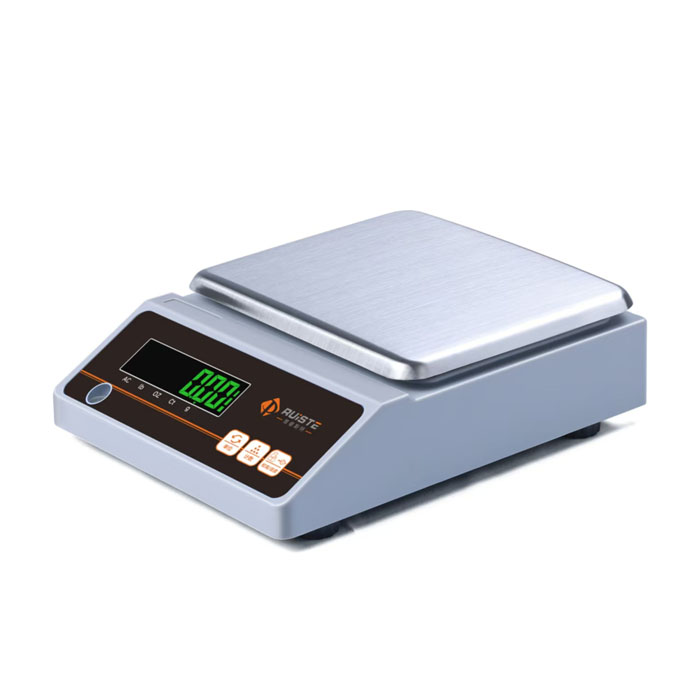
A precision analytical balance is composed of multiple carefully designed and precisely manufactured core components, each of which plays a vital role in ensuring overall measurement stability and long-term reliable operation, and the coordination and cooperation between all parts directly determine the consistency and accuracy of daily weighing work. The weighing pan, usually made of corrosion-resistant and high-strength metal materials with a smooth and flat surface, is the direct bearing part for placing samples and weighing containers, requiring strong rigidity to avoid slight deformation caused by sample placement or long-term use that could affect measurement accuracy. Surrounding the weighing pan is a closed protective windproof enclosure with transparent panels on all sides, a necessary structural design to eliminate the interference of ambient air convection, indoor wind flow, and tiny dust particles on the weighing process. Even slight air flow in the laboratory can generate subtle pressure changes on the surface of the weighing pan, leading to unstable reading fluctuations and reducing the repeatability of measurement data, so keeping the windproof enclosure closed during all formal weighing operations is a basic requirement for obtaining valid data. The internal load-bearing and force-sensing structure, including the electromagnetic coil assembly and high-precision displacement sensor, is installed in a shockproof and fixed internal base, effectively isolating the impact of external ground vibration and desktop shaking on the internal balance system. The external base of the entire balance is equipped with adjustable horizontal support feet and a horizontal bubble indicator, allowing operators to fine-tune the instrument’s level state before use; keeping the balance in a perfect horizontal position ensures that the sample’s gravitational force acts vertically downward on the sensing structure, preventing component force deviation caused by tilting that would lead to systematic measurement errors. In addition, the instrument is equipped with a dedicated data processing and display module, as well as an external data transmission interface, facilitating real-time transmission of weighing data to external computers or data storage devices for unified recording, sorting, and subsequent experimental data statistical analysis.
Environmental conditions in the laboratory have a profound and direct impact on the measurement performance of precision analytical balances, and maintaining a stable and suitable working environment is a prerequisite for ensuring long-term accurate and stable operation of the instrument, far more critical than many conventional laboratory devices. Temperature fluctuation is one of the most influential environmental factors; drastic temperature changes or long-term exposure to high or low temperature environments can cause slight thermal expansion and contraction of the internal metal structure and electronic components of the balance, altering the sensitivity of the electromagnetic force sensing system and leading to gradual deviation of measurement readings. It is ideal to place the precision analytical balance in a laboratory room with relatively constant indoor temperature, avoiding placement near heating equipment, air conditioning air outlets, direct sunlight irradiation positions, or locations prone to obvious temperature alternation between day and night. Humidity control is also equally important; excessively high indoor humidity can easily cause moisture adhesion on internal circuit components and metal structures, leading to slow corrosion of parts and unstable signal transmission, while overly dry air may generate static electricity on the surface of samples and weighing containers, causing subtle adsorption effects that affect weighing stability. In addition, the placement position of the balance must avoid areas with obvious vibration interference, such as near mechanical operating equipment, pedestrian heavy traffic passages, or experimental tables prone to shaking; continuous slight vibration will prevent the internal balance system from maintaining a stable state, resulting in constantly jumping readings and inability to obtain fixed and reliable measurement results. Keeping the laboratory environment clean and reducing floating dust and volatile corrosive gases can also effectively extend the service life of the internal components of the balance and maintain long-term consistent measurement performance.
Standardized operating procedures are the key to giving full play to the performance advantages of precision analytical balances and avoiding human-induced measurement errors, and every operator needs to strictly follow standardized steps to complete all weighing work to ensure the authenticity and effectiveness of experimental data. Before starting formal weighing tasks, the instrument needs to be powered on for a certain period of preheating operation, allowing the internal electronic circuit system and electromagnetic sensing components to reach a stable working temperature state and eliminating measurement deviations caused by cold start of the equipment. During the preheating period, operators should check the horizontal bubble position of the balance, adjust the support feet to correct any tilting, and confirm that the weighing pan and internal windproof enclosure are clean and free of residual sample debris, dust, or other contaminants left by previous use. After confirming the instrument is in a normal standby state, a zero-setting or taring operation should be carried out according to experimental needs; taring function can effectively deduct the mass of weighing containers such as weighing bottles, weighing paper, or small beakers, directly obtaining the net mass data of the sample itself and simplifying subsequent data calculation steps. When placing samples, it is necessary to use clean tweezers or dedicated sampling tools for handling, avoiding direct contact with hands to prevent skin grease, sweat, and dirt from adhering to the container or weighing pan, which would increase extra mass and cause measurement errors. For samples with strong hygroscopicity, easy volatility, or corrosive properties, sealed weighing containers must be used for weighing, preventing sample quality changes due to moisture absorption, volatilization loss, or corrosion damage to the balance structure during the weighing process.
During the formal weighing reading process, the windproof enclosure doors on all sides must be kept closed, and the operator should avoid leaning too close to the balance or breathing directly towards the interior of the windproof enclosure, preventing human breath and body temperature from causing local air convection and temperature changes that affect reading stability. After placing the sample gently, wait for the instrument’s reading to stabilize completely before recording data, avoiding hasty data recording during reading fluctuation, which would lead to inaccurate experimental results. For experiments requiring multiple parallel weighing tests, the same operating conditions and steps should be maintained each time, including consistent sample placement position, identical container specifications, and consistent ambient environment state, to ensure good parallelism and repeatability between multiple sets of data. After completing all daily weighing work, timely clean the weighing pan and the inside of the windproof enclosure, remove residual sample dust and debris, keep the instrument surface and internal environment clean and tidy, and turn off the power after confirming the instrument returns to normal standby state. Regular standardized operation not only ensures the accuracy of each weighing work but also effectively reduces equipment failure probability and maintains the long-term stable working condition of the precision analytical balance.
Precision analytical balances have extensive and indispensable application value in multiple professional fields, providing core data support for experimental research and industrial production quality control in various industries. In chemical laboratory research, the balance is widely used for the precise preparation of standard solution concentrations, accurate weighing of chemical reagents for qualitative and quantitative analysis experiments, and mass recording of samples before and after chemical reaction experiments, ensuring that the ratio of reactants meets experimental design requirements and that the yield and reaction conversion rate of chemical products can be accurately calculated. In pharmaceutical research and pharmaceutical production quality inspection, accurate weighing of raw material pharmaceutical ingredients, auxiliary materials, and finished drug samples is required; subtle changes in the mass of pharmaceutical raw materials may affect the efficacy, stability, and safety of final drugs, making precise weighing an essential link in pharmaceutical formulation screening and finished product quality inspection. In biological and biomedical research, the balance is used for weighing biological samples, culture medium raw materials, and experimental reagents, providing accurate basic data for cell culture, microbial experiments, and biological component detection, ensuring the reproducibility and scientific validity of biological experimental results.
In the field of new material science research and development, researchers need to accurately weigh various raw material powders, additives, and composite components to prepare new functional materials with specific ratios; slight deviations in the proportion of each component may lead to significant changes in the physical and chemical properties of the final material, and precision analytical balances provide reliable mass guarantee for material ratio design and performance optimization. In environmental monitoring and water quality testing work, various water body sediment samples, atmospheric dust fall samples, and soil environmental samples need to be precisely weighed before subsequent chemical component detection and pollutant content analysis, providing accurate basic data for evaluating environmental pollution levels and formulating environmental protection governance measures. In food testing and agricultural product quality supervision, the balance is used for weighing food and agricultural product samples to detect nutrient content, harmful residue components, and additive proportions, providing data support for food safety supervision and agricultural product quality grading. No matter which professional field it is in, the precision analytical balance undertakes the basic work of data source guarantee, and all subsequent advanced testing, analysis, and research work cannot be carried out without accurate gravimetric measurement support.
Daily maintenance and long-term reasonable maintenance work are crucial to prolonging the service life of precision analytical balances and maintaining stable measurement performance for a long time, forming an important part of laboratory daily equipment management work. Daily maintenance mainly focuses on keeping the instrument clean and dry; after each use, timely wipe the weighing pan and the inside of the windproof enclosure with a soft, clean cloth to remove residual sample particles and dust, avoiding long-term accumulation of dirt that may cause corrosion of internal components or affect the flexibility of the weighing structure. It is necessary to avoid placing any overweight items exceeding the instrument’s weighing range on the weighing pan at any time, preventing permanent deformation of the internal load-bearing structure and irreversible damage to the sensing system caused by overload pressure, which would affect subsequent measurement accuracy. Regular manual inspection of the balance’s horizontal state and zero point stability is required; if zero point drift is found during use, timely zero calibration should be carried out to ensure the instrument is always in a valid working state. For balances that have not been used for a long time, they should be placed in a dry and dust-proof storage environment, and regular power-on preheating and performance inspection should be carried out to prevent circuit moisture and component aging caused by long-term shutdown. During daily movement and handling, violent vibration and collision should be avoided, and the internal precision sensing structure should be protected from mechanical damage, maintaining the good working performance of the balance for a long time.
In summary, the precision analytical balance, as a core basic instrument for laboratory precise gravimetric measurement, has simple and intuitive external form but sophisticated internal structure and scientific working principle, with every design detail and operation specification formulated around the core goal of ensuring measurement accuracy and data stability. From the technological evolution from traditional mechanical structure to modern electronic electromagnetic balance, from strict requirements for laboratory environmental conditions to standardized daily operation steps, from wide application in multiple professional research and industrial fields to meticulous daily maintenance and upkeep work, every link is closely connected and mutually restrictive, jointly determining the overall working effect of the balance. All laboratory experimental research and industrial quality control work based on quantitative analysis cannot be separated from the accurate data provided by precision analytical balances. Adhering to standardized use habits, maintaining a good working environment, and doing a good job in daily maintenance can give full play to the due performance of the precision analytical balance, provide solid and reliable basic measurement support for various laboratory research and testing work, and lay a solid foundation for obtaining scientific, accurate, and repeatable experimental research results and stable industrial product quality.
Precision Analytical Balance
https://www.pruiste.com/analytical-balance.html
Post Date: May 5, 2026
https://www.supplier-manufacturer.com/analytical-balance/precision-analytical-balance.html

![Digital Viscometer Supplier]()
Digital Viscometer Supplier
Viscosity stands as one of the most fundamental physical properties of fluid materials, reflecting the internal frictional resistance that occurs when a fluid flows or und…![Portable Digital Viscometer]()
Portable Digital Viscometer
Viscosity stands as one of the most fundamental physical properties of fluid substances, reflecting the internal friction and flow resistance that occurs when liquids move…![Food Moisture Analyzer]()
Food Moisture Analyzer
Moisture content stands as one of the most fundamental and influential physical parameters in all types of food materials and finished food products. It exerts a profound …![Chemical Moisture Analyzer]()
Chemical Moisture Analyzer
Moisture content stands as one of the most critical physical and chemical indicators for evaluating the quality, stability, and applicability of various materials across i…![Moisture Analyzer Supplier]()
Moisture Analyzer Supplier
Moisture content stands as one of the most critical physical indicators for a wide range of raw materials, semi-finished goods, and finished products across global industr…