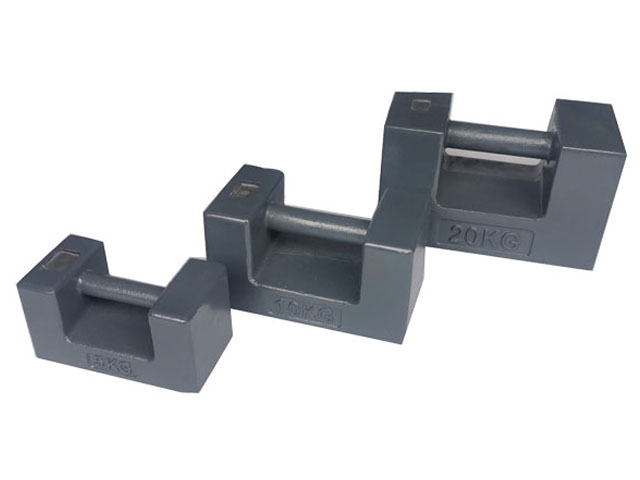
Calibration Weight Production
Calibration weights stand as the foundational backbone of all precise mass measurement activities across industrial production, laboratory research, commercial trade, and scientific exploration, serving as the tangible physical reference that unifies measurement consistency and ensures the reliability of every weighing instrument in daily operational use. The production of calibration weights is far more than a simple metal shaping and forming process; it is a sophisticated integration of material science, mechanical precision machining, physical performance optimization, and meticulous manual refinement, where every single production step is governed by strict dimensional stability, mass uniformity, and long-term environmental adaptability requirements. Unlike ordinary metal counterweights that only need basic shape and load-bearing functions, calibration weights demand unwavering mass permanence over years or even decades of use, minimal susceptibility to external environmental interference, and consistent surface and structural integrity that resists gradual wear, corrosion, and subtle physical deformation. Every stage of production, from the initial selection of raw metal materials to the final protective packaging of finished products, is executed with extreme attention to microscopic details, as even the tiniest deviation in material composition, machining precision, or surface treatment can lead to measurable mass drift and undermine the core purpose for which calibration weights are manufactured. The entire production workflow is designed to eliminate potential variables at every possible link, ensuring that each completed calibration weight can maintain stable and accurate mass attributes throughout its service life, whether deployed in high-precision laboratory weighing environments, harsh industrial workshop conditions, or frequent on-site calibration operations for various weighing devices.
The commencement of calibration weight production lies in the rigorous selection and preliminary inspection of raw materials, a foundational step that directly determines the inherent stability and service performance of the final finished weights. The ideal raw materials for calibration weight production must possess several core inherent characteristics: high and uniform density to ensure compact structural design and consistent mass distribution within limited volume, excellent corrosion resistance to withstand long-term exposure to varying humidity, temperature fluctuations, and occasional contact with common industrial chemical substances, low magnetic susceptibility to avoid mass measurement interference caused by magnetic field induction in working environments, and strong internal structural stability to prevent internal lattice deformation, material shrinkage, or subtle mass loss over extended time and repeated use. Manufacturers mainly select high-quality metal alloys with mature and stable physical properties as the base materials, avoiding any impure or mixed materials that may cause uneven density or unstable chemical composition. Before formal processing, all raw metal materials undergo comprehensive preliminary screening and physical property testing in dedicated testing areas, where professional technicians conduct detailed checks on material density uniformity, surface oxidation degree, internal structural compactness, and magnetic performance consistency. Any raw material batches with uneven component distribution, tiny internal cracks, surface rust spots, or unqualified magnetic characteristics are directly eliminated and will never enter the subsequent production process. This strict raw material screening mechanism is essential because inferior or unqualified materials will inevitably lead to hidden troubles such as long-term mass drift, surface corrosion and peeling, or structural micro-deformation in finished calibration weights, which cannot be compensated for by subsequent precision machining and manual adjustment processes. After passing all preliminary inspections, the qualified raw metal materials are sorted and stored in constant-temperature and dry storage areas, effectively avoiding surface oxidation and moisture absorption caused by drastic temperature and humidity changes before processing, and maintaining the original physical and chemical stability of the materials.
Following raw material preparation and screening, the production process moves to the preliminary cutting and rough forming stage, which aims to process the complete raw metal materials into preliminary weight blanks that match the basic size and structural outline of finished calibration weights. This stage adopts automated cutting and rough machining equipment to ensure the overall dimensional consistency of all weight blanks and lay a good foundation for subsequent fine machining and precision mass adjustment. According to the preset structural design standards for different specifications and types of calibration weights, technicians input accurate dimensional parameters into automated processing equipment, and the raw metal materials are cut into regular cylindrical, square, or special-shaped blanks of corresponding sizes through mechanical cutting and blanking processes. The core goal of rough forming is to remove excess redundant materials from the raw materials, make the overall shape and basic dimensions of the blanks close to the final finished product standards, and reserve a reasonable processing allowance for subsequent fine grinding, polishing, and mass fine-tuning procedures. During the rough forming process, special attention is paid to controlling the uniformity of stress distribution inside the weight blanks, avoiding local structural stress concentration caused by uneven cutting and rough machining, which could lead to subtle structural deformation in the later use of calibration weights. After rough cutting and forming, all weight blanks are transferred to the stress relief treatment link, a key process to eliminate internal mechanical stress generated during cutting and preliminary machining. The blanks are placed in professional constant-temperature heating equipment for a period of heat preservation and natural cooling at a stable temperature, which effectively relieves internal lattice distortion and mechanical stress generated in the metal materials during the cutting process. This stress relief treatment prevents the weight blanks from slow structural deformation and dimensional changes after long-term placement or subsequent fine processing, ensuring that the basic structure and initial mass state of each blank remain stable and consistent for a long time after forming. After the completion of stress relief treatment, technicians conduct preliminary dimensional inspection and appearance screening on all blanks, removing individual blanks with obvious dimensional deviations, surface damage, or structural deformation to ensure that only qualified blanks can enter the next fine processing stage.
Fine machining constitutes the core link that shapes the dimensional accuracy, surface finish, and structural standardization of calibration weights, and it is also the key production stage to narrow the mass error of weight blanks close to the final required standard range. Different from rough forming, fine machining focuses on microscopic dimensional precision control and surface structural refinement, using high-precision numerical control machining equipment to carry out fine turning, milling, and grinding on the preliminarily formed weight blanks. Each processing parameter, including cutting speed, tool feed rate, and machining depth, is precisely set and strictly controlled according to the production process requirements to ensure that the outer contour, flatness of the bottom contact surface, verticality of the side walls, and structural size of each weight blank fully meet the design specifications. For calibration weights equipped with internal adjusting cavities, the fine machining process also includes precise drilling and shaping of the bottom adjusting cavity, with the depth and inner diameter of the cavity accurately controlled to reserve a reasonable space for subsequent fine mass adjustment operations, while ensuring that the opening design of the cavity does not affect the overall structural firmness and surface integrity of the weight. During the fine machining process, real-time dimensional detection is carried out intermittently, and professional measuring tools are used to repeatedly measure the key dimensions of the weight blanks after each machining procedure. Once any tiny dimensional deviation is found, the machining parameters are adjusted in a timely manner for supplementary fine processing to eliminate errors in time and avoid the accumulation of dimensional deviations affecting subsequent mass adjustment and final product accuracy. After fine machining, the surface of the weight blanks still has subtle tool marks and uneven surface roughness left by mechanical processing, so the next polishing and surface smoothing treatment is carried out. The polishing process is divided into preliminary mechanical polishing and subsequent fine surface treatment, gradually removing surface burrs, tool traces, and tiny uneven textures, making the surface of the weights smooth and flat. Smooth and uniform surface finish not only enhances the appearance quality of calibration weights but, more importantly, reduces the adhesion of dust, moisture, and other impurities in the use environment, effectively avoiding mass changes caused by surface contamination or oxidation adhesion during long-term use. For weights used in high-precision application scenarios, further advanced surface smoothing treatment is carried out to optimize surface roughness to an extremely low level, ensuring that the surface state of the weights remains stable and does not produce subtle mass changes due to external environmental contact.
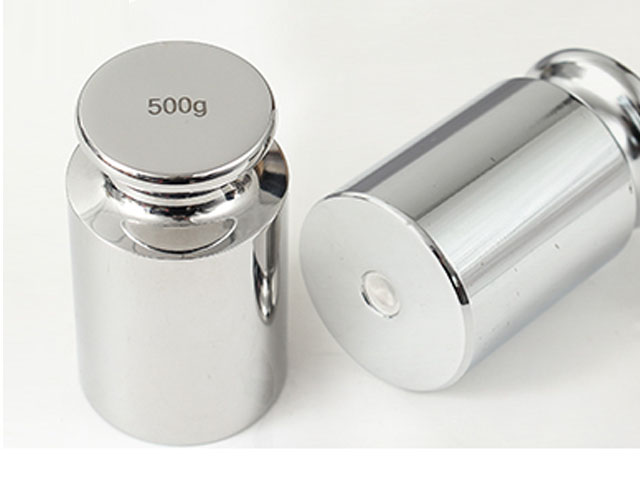
Precision mass adjustment is the most critical and delicate core process in the entire calibration weight production process, directly determining whether the final mass of each calibration weight meets the required precision standards and achieving the core functional requirements of accurate mass reference. After fine machining and polishing, the basic dimensions and surface state of the weight blanks are finalized, but their actual mass still has a small deviation from the standard target mass, which requires iterative and meticulous fine-tuning to achieve the optimal mass accuracy range. The entire adjustment process is carried out in a dedicated constant-temperature and humidity-adjusted precision working area, where the external temperature, humidity, and air flow are kept stable at all times to prevent environmental changes from affecting the accuracy of mass measurement and adjustment results. Technicians use high-precision mass comparison equipment to accurately measure the initial actual mass of each processed weight blank and record the specific mass deviation value between the actual mass and the standard target mass. According to the measured deviation data, technicians carry out micro material removal treatment through the reserved adjusting cavity at the bottom of the weight, using fine drilling and grinding tools to remove an extremely tiny amount of metal material each time. After each micro material removal, the weight is placed back on the precision mass comparison equipment for re-measurement, and the deviation data is recorded again. This process of material removal and re-measurement is repeated iteratively until the actual mass of the weight is completely within the required precision error range. The entire mass adjustment work cannot be completed in a single operation; it relies on the rich operational experience of professional technicians and high-precision testing equipment to achieve gradual and subtle correction, avoiding excessive material removal that would cause irreversible mass deviation and scrap the weight blank. After completing the mass fine-tuning, the adjusting cavity of the calibration weight is subjected to sealing treatment to seal the adjusting opening firmly and smoothly. The sealing process ensures that the structure of the adjusting cavity is completely closed, preventing external dust, moisture, and corrosive substances from entering the interior, avoiding internal material oxidation or contamination that may cause long-term mass drift, and maintaining the permanent stability of the weight’s adjusted mass state.
After the completion of mass adjustment and sealing treatment, calibration weights enter the comprehensive performance inspection and quality control stage, which is a multi-link and all-round detection process to screen finished products and ensure that all delivered weights meet comprehensive performance requirements. The quality inspection work covers multiple key detection dimensions including mass accuracy re-inspection, surface finish inspection, structural stability detection, magnetic performance testing, and corrosion resistance preliminary verification. Firstly, the mass accuracy of each weight is re-tested repeatedly, and multiple measurements are taken at different time periods in the constant-temperature detection environment to verify the stability and consistency of the weight’s mass, ensuring that there is no mass fluctuation caused by structural micro-deformation or sealing problems after adjustment and sealing. Then, technicians conduct detailed manual and instrumental inspection on the surface of the weights to check for any surface scratches, pits, oxidation spots, polishing defects, or sealing gaps, ensuring that the surface integrity and finish of all weights meet production standards. Structural stability detection is carried out by applying conventional external pressure simulating daily use scenarios to check for structural looseness, deformation, or sealing falling off, ensuring that the weights can withstand normal handling and use without structural damage or mass changes. Magnetic performance testing is an essential inspection item to detect the magnetic susceptibility of each calibration weight, ensuring that the weight will not produce magnetic induction interference in the working environment, which would affect the accuracy of weighing and calibration work. For calibration weights used in special working environments, additional preliminary corrosion resistance tests are carried out to simulate long-term exposure to humid and weakly corrosive environments, verifying that the surface and internal structure of the weights will not be corroded or damaged in conventional use scenarios. All inspection data of each calibration weight are recorded in detail one by one, and any individual weight that fails to meet any inspection standard is marked as unqualified, returned to the corresponding production link for reprocessing or directly scrapped, and will never be mixed into the finished product inventory. Only after passing all comprehensive quality inspection items can calibration weights be confirmed as qualified finished products and enter the final finishing and packaging stage.
The final finishing and protective packaging stage is designed to ensure that calibration weights maintain stable performance and intact state during storage, transportation, and subsequent long-term storage after leaving the production workshop. After passing quality inspection, qualified calibration weights are first subjected to thorough cleaning and dust removal treatment to remove tiny dust, polishing residues, and surface attachments generated during the production and inspection process, making the surface of the weights clean and free of any impurities that may affect mass stability. After cleaning, the weights are placed in a dust-free and constant-temperature drying area for natural drying to ensure that there is no moisture residue on the surface or inside the sealing position, preventing long-term moisture retention from causing surface oxidation or internal corrosion. Subsequently, necessary surface marking treatment is carried out on the weights, with clear and durable identification marks marked on the surface through non-damaging marking methods to facilitate subsequent use, management, and classification of the calibration weights. The marking process is carried out with low-impact operation to avoid damaging the surface structure and mass accuracy of the weights. After finishing all finishing work, each calibration weight is individually packaged with protective and shock-absorbing packaging materials to prevent surface scratches, collision deformation, and dust contamination during transportation and handling. Multiple calibration weights of the same specification are placed in customized protective storage boxes with shockproof, moisture-proof, and dust-proof functions, which can not only protect the weights during transportation but also provide a safe and stable storage environment for long-term idle use after delivery. The outer packaging of the finished products is made of solid and wear-resistant packaging materials to withstand external extrusion and collision during long-distance transportation, ensuring that all calibration weights can reach the use site with intact structure, stable performance, and unchanged accuracy. The entire production process of calibration weights ends with standardized finished product warehousing and management, and all finished products are stored in a constant-temperature, dry, and dust-free warehouse waiting for delivery, maintaining the optimal performance state of each calibration weight until formal application in various mass measurement and calibration work.
Throughout the entire production process of calibration weights, every link is centered on the core goals of long-term mass stability, high precision consistency, and strong environmental adaptability, with no redundant production steps and every process operation serving the fundamental performance requirements of the product. The production of calibration weights is never a pursuit of simple output and rapid processing speed, but a persistent focus on every tiny detail in material selection, machining, adjustment, inspection, and protection. It is the strict control of every production link and the rigorous attitude towards microscopic precision that enables each finished calibration weight to become a reliable mass measurement reference tool. Whether used in high-precision scientific research experiments that require extremely strict mass accuracy or in conventional industrial calibration scenarios that require long-term stable use, calibration weights produced through standardized and refined production processes can always maintain consistent and reliable working performance. Behind every simple-looking calibration weight lies the perfect combination of sophisticated production technology, precise processing equipment, and professional technical operation, as well as the strict implementation of refined production management and quality control systems. This rigorous and professional production mode ensures that the basic role of calibration weights in unifying mass measurement standards and maintaining measurement accuracy can be effectively exerted, providing solid and reliable basic support for all fields that rely on precise mass measurement.
Calibration Weight Production
https://www.veidtweighing.com/calibration-weights.html
Post Date: Apr 30, 2026
https://www.supplier-manufacturer.com/calibration-weight/calibration-weight-production.html

![Working Principle of Stainless Steel Weight]()
Working Principle of Stainless Steel Weight
Stainless steel weights are essential standard measuring objects widely applied in industrial detection, laboratory measurement, instrument calibration, and daily weighing…![Test Weight For Sale]()
Test Weight For Sale
In every sector that relies on precise mass measurement to maintain operational stability, consistent production standards, and reliable daily workflows, test weights stan…![E2 Class Standard Weight]()
E2 Class Standard Weight
In the intricate and foundational field of modern mass metrology, the maintenance of accurate and consistent weight measurement forms the bedrock of countless industrial p…![Calibration Weight Manufacturer]()
Calibration Weight Manufacturer
In the modern industrial and scientific measurement ecosystem, accurate mass measurement stands as the most fundamental and indispensable foundation for all production, re…![10kg Test Weight]()
10kg Test Weight
In the intricate and interconnected framework of modern industrial production, commercial trade, scientific laboratory research, and daily public service operations, the c…