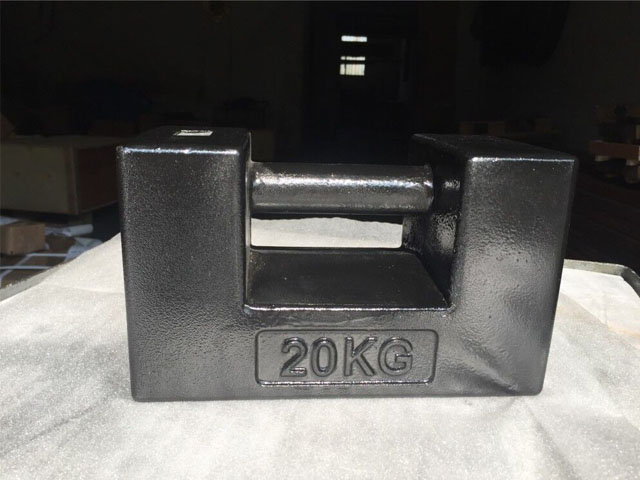
200kg Test Weight
In the complex and interconnected system of modern industrial production, logistics transportation, engineering construction and experimental testing, the stability and reliability of weighing measurement work run through every key link of operational development. All walks of life that rely on accurate weight data for production scheduling, quality control, equipment debugging and safety assessment need a stable and reliable reference carrier to unify measurement standards, correct weighing deviation and verify the stable operation of weighing equipment. The 200kg test weight stands out among various weight reference tools with its moderate single weight, strong structural adaptability and wide scenario compatibility, becoming an indispensable basic auxiliary facility in conventional measurement verification and daily equipment maintenance work across multiple fields. Unlike small-specification test weights that are only suitable for laboratory precision fine-tuning and ultra-large heavy weights that are difficult to transport and operate, this test weight achieves a perfect balance between single weight bearing capacity and on-site handling flexibility, and can adapt to both fixed indoor measurement workstations and complex outdoor field operation environments, providing solid and effective basic support for maintaining the consistency and accuracy of weighing data in various production and operation links.
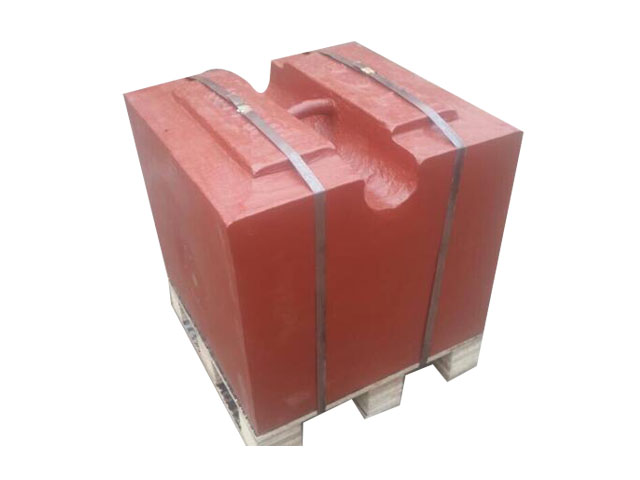
The basic design and structural manufacturing of the 200kg test weight are centered on the core demand of long-term stable weight retention and convenient standardized operation. The overall structural design follows the practical logic of industrial on-site use, abandoning overly complicated modeling and redundant functional settings, and focusing on optimizing the core performance related to weight stability, structural firmness and operation safety. Most of the conventional 200kg test weight bodies adopt an integrated casting and forming process, which makes the overall structure compact and uniform, effectively avoiding the weight deviation and structural looseness caused by long-term splicing and assembly of multiple parts. The surface of the test weight is treated with smooth and flat finishing processing, which not only reduces the accumulation of dust, debris and various industrial pollutants in daily use, but also avoids the weight change caused by surface corrosion, wear and adhesion of foreign substances after long-term placement and frequent handling. Inside the test weight, a reasonable structural hollowing and adjusting cavity structure is reserved according to professional design norms. This hidden adjusting area is specially used for fine weight trimming in the later stage of production and long-term use. After the fine adjustment work is completed, the cavity will be tightly sealed with matching sealing parts, which can effectively prevent external moisture, rainwater, industrial sewage and dust from entering the interior, avoid internal material dampness, corrosion and weight fluctuation, and ensure that the basic weight value of the test weight can remain stable for a long time in different use and storage environments.
In terms of material selection, the production and manufacturing of 200kg test weights always prioritize durability, weather resistance and weight uniformity, selecting high-quality raw materials that are suitable for high-intensity industrial use and have stable physical properties. Most conventional products adopt high-purity cast iron materials with uniform density and good compression resistance. This kind of material has natural excellent stability, will not produce obvious thermal expansion and contraction deformation with the change of ambient temperature in conventional industrial working environments, and will not have obvious quality loss or structural damage due to frequent lifting, stacking and moving operations. The internal structure of the cast iron material is dense and uniform, with no internal pores, cracks and other defects that affect weight accuracy and structural firmness, ensuring that each 200kg test weight has uniform stress performance and stable weight basis. For some special use scenarios with high requirements for surface finish and corrosion resistance, such as humid coastal industrial areas, chemical production workshops and pharmaceutical processing sites, test weights made of high-density stainless steel materials can be selected. This kind of material has stronger anti-rust and anti-corrosion ability, can resist the erosion of chemical corrosive substances, humid air and salt fog environment, and maintain the integrity of the surface structure and the stability of weight value for a longer time even in harsh working conditions. Regardless of the material selected, the production process will strictly control the density uniformity of the raw materials and the consistency of the forming process, so that the physical properties and weight performance of each batch of test weights are kept in a stable and controllable state, laying a solid foundation for subsequent measurement and calibration work.
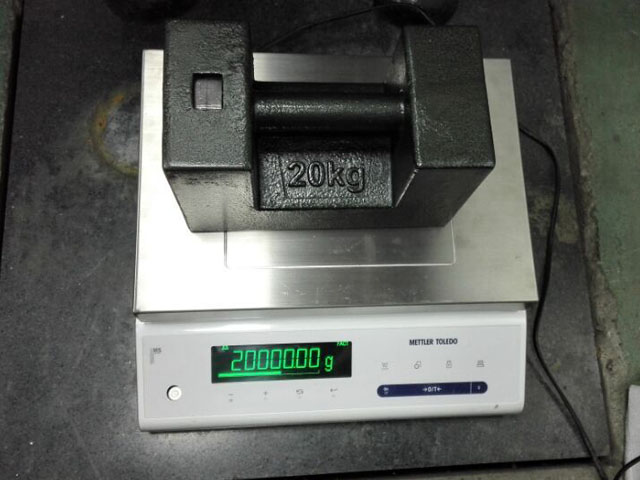
The humanized handling and carrying structure design is a key part of the practical value of the 200kg test weight, and also an important condition to ensure the safety and efficiency of on-site operation. Considering that the single weight of 200kg cannot be moved manually by a single person, all test weights of this specification are equipped with standardized integrated handling structures according to different use scenarios and operation modes. Some test weights are designed with built-in lifting lugs and reserved crane connection positions at the top and side positions. The structural strength of the lifting parts is consistent with the main body of the test weight, and there is no risk of fracture or falling during long-term crane lifting and hoisting operations. Workers can quickly complete the connection with lifting equipment through simple matching connecting parts without preparing additional complex handling tools, realizing rapid hoisting, moving and placement of the test weight. Some other test weights adopt roller type and lock type integrated design, which not only retains the lifting function, but also adds a rolling mobile structure at the bottom. On flat and solid ground such as factory workshops, logistics yards and weighing station platforms, the test weight can be pushed and moved in a short distance by manpower or simple mechanical assistance, which greatly improves the convenience of position adjustment during on-site calibration work. In addition, the outer edge and contact parts of all handling structures are polished smoothly to avoid sharp edges and corners, preventing scratches and collisions to operators and weighing equipment during handling and placement, and effectively improving the overall safety of on-site measurement operation.
In the field of industrial manufacturing production, the 200kg test weight has become an essential basic tool for the daily debugging and regular verification of various production supporting weighing equipment. Modern manufacturing enterprises involve a large number of links such as raw material incoming weighing, production process batching weighing, finished product outgoing weighing and production equipment load testing, all of which rely on various fixed and mobile weighing equipment to complete data collection and statistics. The long-term continuous operation of weighing equipment will inevitably produce mechanical wear of internal sensors, structural fatigue of bearing parts and slight deviation of data transmission, resulting in inaccurate weighing data, which will further affect the accuracy of production batching ratio, the qualification rate of finished products and the rationality of production cost accounting. By using the 200kg test weight for regular calibration and verification of these weighing equipment, enterprise staff can timely detect the subtle deviation of weighing data, adjust the equipment parameters in time, and ensure that the weighing data collected in each production link is true and effective. In mechanical processing and equipment manufacturing workshops, test weights are also used to test the bearing performance and structural stability of mechanical equipment such as lifting platforms and supporting frames, simulating the load state of equipment in actual work, verifying whether the equipment can operate safely and stably under rated load conditions, and eliminating potential safety hazards caused by insufficient bearing capacity of equipment before formal production operation.
The logistics warehousing and freight transportation industry is another core application scenario for the 200kg test weight, bearing the important work of calibrating various large and medium-sized weighing scales and ground weighing devices. In modern logistics parks, freight distribution centers, port terminals and highway weighing stations, ground scales, truck scales and forklift scales need to maintain high weighing accuracy all the time. Accurate weighing data is not only the basic basis for cargo freight settlement, but also an important guarantee for standardized management of cargo loading and transportation safety control. Over long-term use, these large-scale weighing devices will be affected by vehicle rolling, cargo impact, environmental temperature and humidity changes and other factors, resulting in gradual drift of weighing accuracy. Regular calibration with 200kg test weights can effectively correct the data deviation of weighing equipment and ensure the fairness and rationality of freight settlement between logistics enterprises and customers. At the same time, in the cargo storage and inventory management link of warehousing enterprises, weighing equipment is used to count the weight of stored goods and manage inventory data. The use of test weights to verify the accuracy of weighing equipment can ensure the authenticity of inventory data, avoid inventory differences and management confusion caused by inaccurate weighing, and help enterprises realize refined and standardized inventory management. In the cargo loading and transportation link, test weights are also used to assist in detecting whether the weighing data of transportation vehicles is accurate, preventing overloading and underloading of vehicles, ensuring the safety of road transportation and the compliance of cargo transportation management.
Engineering construction and infrastructure construction projects also rely heavily on the 200kg test weight to carry out equipment debugging and safety performance testing work. In the construction process of large buildings, bridge projects, road infrastructure and municipal engineering, a variety of engineering machinery and equipment such as cranes, lifting equipment, construction elevators and bearing support facilities need to undergo strict load testing and performance verification before they are put into use. The 200kg test weight can be used as a stable standard load to simulate the actual bearing state of engineering equipment, detect whether the lifting capacity, bearing strength and structural stability of the equipment meet the construction use requirements, and ensure that all mechanical equipment can operate safely and reliably in the high-intensity construction environment. In addition, in the construction quality detection link of engineering projects, some detection and weighing equipment used for building material quality inspection and structural component performance testing also need regular calibration with test weights. Accurate weighing data of building materials such as cement, steel bars and concrete raw materials is directly related to the construction quality and structural safety of the whole project. The test weight provides a unified measurement standard for the detection work, ensuring that all detection data is accurate and reliable, and providing strong data support for the acceptance and quality evaluation of engineering construction projects.
Experimental testing and scientific research institutions also widely use 200kg test weights to carry out professional measurement verification and experimental data calibration work. Various professional laboratories, material testing institutions and scientific research and development platforms need to carry out a large number of material performance tests, mechanical stress tests and precision measurement experiments, all of which are based on accurate weight measurement data. The test weight provides a stable and unified weight reference standard for these experimental and testing work, ensuring the repeatability and comparability of experimental data. In the process of new product research and development and material performance testing, researchers need to conduct multiple load simulation tests on new materials, new equipment and new products. The stable weight provided by the 200kg test weight can simulate different load environments, help researchers accurately record the performance changes of test samples under different load conditions, and provide reliable data basis for product structure optimization and material performance improvement. At the same time, the precision weighing equipment in the laboratory needs regular daily calibration and periodic accuracy verification. The moderate weight of the 200kg test weight is very suitable for the calibration work of medium and large-sized laboratory weighing equipment, ensuring that the experimental measurement work is always carried out under accurate measurement conditions, and avoiding experimental result deviation and scientific research data errors caused by inaccurate weighing equipment.
Outdoor operation and special harsh environment scenarios put forward higher requirements for the environmental adaptability and structural stability of the 200kg test weight, and also reflect the excellent comprehensive performance of this type of test weight in complex working conditions. Unlike indoor fixed use environments with stable temperature and humidity and clean environment, outdoor operation scenarios such as field construction, open-air logistics yards and coastal port terminals are often affected by wind and rain erosion, sun exposure, temperature alternation and dust pollution. The surface anti-corrosion treatment and dense internal structure of the 200kg test weight can effectively resist the damage of these external environmental factors. The surface will not produce obvious rust, peeling and wear after long-term outdoor placement and use, and the internal weight value will not fluctuate due to environmental changes. Even in low-temperature cold winter and high-temperature hot summer environments, the material structure and weight performance of the test weight can remain stable without obvious thermal expansion and contraction deformation or quality change. For some working environments with frequent dust accumulation and industrial garbage pollution, the smooth surface of the test weight is convenient for daily cleaning and maintenance. Staff can complete surface cleaning work through simple wiping and flushing, remove surface attachments in time, ensure that the weight value is not affected by external adhesion, and maintain long-term stable use performance in harsh outdoor working conditions.
Standardized daily operation and scientific long-term maintenance are crucial to prolong the service life of the 200kg test weight and maintain the stability of its weight value. Although the test weight is made of high-strength and durable materials and has a solid structural design, unreasonable use mode and improper maintenance management will still lead to structural damage, surface corrosion and weight deviation, affecting the accuracy of subsequent measurement and calibration work. In the daily operation and use link, staff need to operate in accordance with standardized operation specifications. When lifting and placing the test weight, it is necessary to avoid violent collision, arbitrary throwing and fierce extrusion, prevent structural deformation and surface damage caused by excessive impact force, and avoid weight change caused by local structural wear and damage. When stacking multiple test weights, it is necessary to ensure stable placement and uniform stress, avoid tilting and unstable stacking, prevent sliding and falling during stacking, and ensure the safety of operation and the integrity of the test weight structure. After each use, the test weight should be cleaned in time to remove surface dust, mud, industrial residues and other attachments, and keep the surface clean and dry.
In terms of long-term storage and maintenance, the 200kg test weight should be stored in a dry, ventilated and flat special storage area as far as possible, avoiding long-term placement in humid, dark and corrosive gas environments. The storage ground needs to be flat and solid to ensure that the test weight is placed stably without tilting and structural deformation caused by uneven ground. Regular regular inspection and maintenance work should be arranged every certain cycle. The inspection content includes checking whether the surface of the test weight has rust, wear, cracks and other damage, whether the sealing part of the internal adjusting cavity is tight and intact, whether the handling lifting structure is firm and reliable, and whether there is obvious weight deviation. If slight surface rust and wear are found, targeted anti-corrosion maintenance and surface repair treatment should be carried out in time. If structural damage and sealing failure are found, repair and adjustment should be carried out immediately to avoid further expansion of damage and weight deviation. Through standardized use and scientific maintenance, the service life of the 200kg test weight can be effectively prolonged, and its weight stability and operation safety can be always maintained, ensuring that it can provide accurate and reliable reference services for various measurement and calibration work for a long time.
With the continuous upgrading and standardized development of various industrial industries, the importance of unified measurement standards and accurate weighing work in social production and operation is becoming more and more prominent. All links from industrial production, logistics and transportation to engineering construction and scientific research and testing are inseparable from reliable weighing measurement support, and the 200kg test weight, as a basic and universal measurement auxiliary tool, undertakes the important task of maintaining measurement accuracy and unifying measurement standards. Its reasonable structural design, reliable material performance, wide scenario adaptability and convenient operation mode make it play an irreplaceable role in different industries and different use environments. It not only ensures the accuracy and consistency of weighing data in production and operation links, but also provides a solid guarantee for production quality control, operation safety management and scientific research data authenticity.
In the future, with the continuous progress of industrial production technology and the continuous improvement of measurement standard management requirements, the production and design of 200kg test weights will also be continuously optimized and upgraded according to the actual needs of on-site use. The structural design will be more in line with the efficient and convenient operation needs of modern industrial production, the material selection will be more adapted to more complex and diverse working environments, and the maintenance cycle and stable use time will be further improved. No matter how the industrial production mode and measurement management standards change, the core function of the 200kg test weight as a standard weight reference tool will never change. It will continue to serve as an important basic guarantee for various industries to carry out accurate weighing measurement and standardized production management, escort the stable operation and high-quality development of all walks of life, and lay a solid foundation for the standardized and orderly development of the entire industrial measurement system.
200kg Test Weight
https://www.veidtweighing.com/test-weight.html
Post Date: Apr 29, 2026
https://www.supplier-manufacturer.com/test-weight/200kg-test-weight.html

![Test Weight Supplier]()
Test Weight Supplier
In the modern industrial production, laboratory testing, commercial weighing and engineering calibration fields, test weights occupy an indispensable basic supporting posi…![Structure of Calibration Weight]()
Structure of Calibration Weight
The structural design of calibration weights serves as the foundational guarantee for stable mass reference and consistent weighing calibration performance across laborato…![Calibration Weight Wholesale]()
Calibration Weight Wholesale
In the modern global industrial and commercial ecosystem, accurate weight measurement serves as the fundamental cornerstone of every production, trading, quality control, …![1000kg Test Weight]()
1000kg Test Weight
In the complex and interconnected framework of modern industrial production, material circulation, engineering operation, and scientific measurement, the consistency and r…![20kg Test Weight]()
20kg Test Weight
In the modern industrial production system, daily measurement verification and routine equipment performance testing work run through every link of manufacturing, logistic…