Digital Viscometer For Sale
Viscosity serves as one of the most fundamental physical properties of fluid substances, reflecting the internal friction and flow resistance of liquids during movement. In modern industrial production, scientific research experimentation, and daily product quality inspection, accurate viscosity measurement is indispensable for stabilizing product quality, optimizing production processes, and verifying material performance. Traditional viscosity testing tools rely heavily on manual observation and mechanical reading, which are prone to human error, low testing efficiency, and poor data repeatability, making them unable to adapt to the growing demand for precise and efficient fluid detection. With the continuous upgrading of testing instrumentation, digital viscometers have gradually replaced traditional mechanical equipment and become mainstream testing tools in various industries, thanks to their optimized structural design, intuitive data display, and stable testing performance. For enterprises, research institutions, and testing laboratories in need of fluid viscosity detection, reliable digital viscometer equipment has become an essential part of daily production and experimental work.
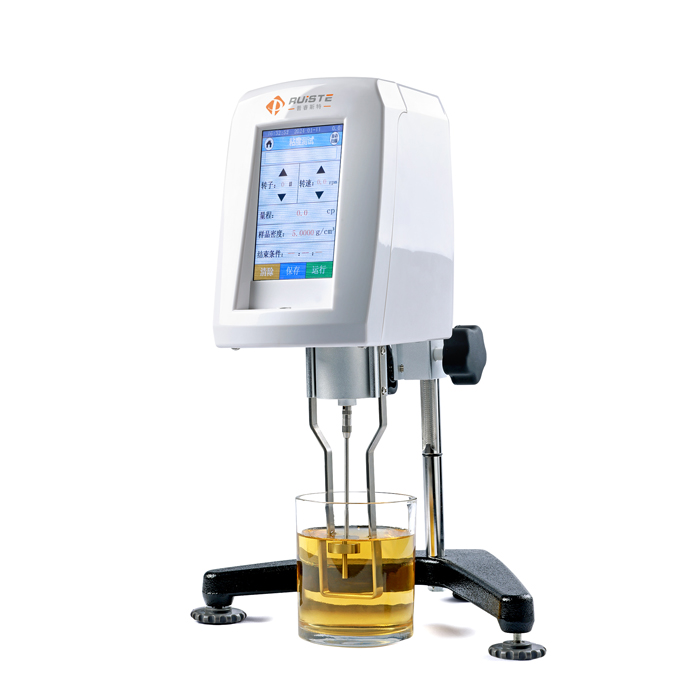
A digital viscometer is a professional testing instrument designed to measure the dynamic viscosity of various fluids, including Newtonian and non-Newtonian liquids. Unlike conventional mechanical viscometers that require manual calculation and pointer reading, this type of instrument integrates modern sensing technology, microprocessor control systems, and digital display modules, realizing automatic testing, real-time data output, and intelligent data processing. The core working principle of the equipment follows the basic law of fluid viscosity measurement. During operation, a precision drive system drives the spindle to rotate at a stable and controllable speed in the tested fluid. When the spindle rotates, it is affected by the internal friction resistance of the fluid, and the torque sensor inside the instrument accurately captures the resistance torque generated by fluid shear force. The built-in microprocessor converts the collected torque signal into standard viscosity data through professional algorithm calculation, and directly displays the numerical result on the high-definition digital screen, eliminating complex manual calculation steps and effectively reducing testing errors caused by human operation.
The internal structural design of digital viscometers is highly precise and modular, with each component cooperating closely to ensure the stability and accuracy of the testing process. The precision drive motor is the power core of the equipment, capable of providing stable and adjustable rotating speeds with uniform speed output and small fluctuation range, which creates accurate shear rate conditions for fluid testing. Different rotating speed gears can be selected according to the viscosity characteristics of different samples, meeting the testing requirements of low-viscosity thin liquids and high-viscosity thick pastes. The matching spindle is a key component in contact with the sample, and spindles of different specifications and sizes are configured to adapt to fluids with different viscosity ranges. The structural design of the spindle follows fluid mechanics principles, ensuring uniform shear force on the fluid during rotation and avoiding test data deviation caused by uneven stress. In addition, high-sensitivity torque sensors are built into the equipment, which can capture tiny resistance changes in the fluid with high sensitivity, ensuring that subtle differences in fluid viscosity can be accurately identified and recorded.
Most modern digital viscometers are equipped with real-time temperature monitoring modules, which is a crucial design for improving testing accuracy. Fluid viscosity is highly sensitive to temperature changes; slight temperature fluctuations will cause obvious changes in fluid flow resistance, thereby affecting the authenticity and stability of test data. The built-in temperature probe can synchronously monitor the temperature of the sample solution during the viscosity testing process, feed back temperature data to the control system in real time, and form a dual data record of viscosity and temperature. This design enables testers to grasp the viscosity characteristics of samples under specific temperature conditions, which is particularly important for materials whose viscosity parameters change greatly with temperature, such as lubricating oils, adhesives, and cosmetic emulsions. Some optimized models also support temperature compensation functions, which can correct test data according to real-time temperature changes to ensure the consistency and authenticity of detection results.
In terms of operational use, digital viscometers have obvious advantages over traditional testing equipment. The whole operation process is simple and intuitive, without complicated professional operation steps. After placing the sample and selecting the appropriate spindle and rotating speed parameters, the equipment can complete automatic testing within a short time. The digital display interface directly presents intuitive viscosity values, temperature data, and working status parameters, which is convenient for operators to read and record quickly. In terms of data management, most equipment supports automatic data storage and query functions, which can record multiple groups of test data in a targeted manner, facilitate subsequent data sorting, comparison and analysis, and also provide complete data support for product quality traceability and experimental result verification. Meanwhile, the equipment has a good human-computer interaction design, with simple parameter setting steps and clear operation prompts, enabling staff without professional testing background to master the operation method quickly after simple training.
Digital viscometers have extremely wide application scenarios, covering almost all industries that need fluid viscosity detection. In the coating and ink industry, viscosity is a key indicator affecting the construction performance and finished product quality of paints and inks. Excessively high viscosity will lead to poor fluidity, uneven coating and easy cracking of the finished product, while excessively low viscosity will cause sagging and thin coating. By using digital viscometers to detect viscosity in real time during production, enterprises can adjust raw material ratios and production processes in a timely manner to ensure stable coating thickness, uniform color and good construction effect of paint and ink products.
In the food processing industry, the viscosity of food materials directly affects product taste, texture and processing performance. Sauces, condiments, dairy products, beverage thickeners and other food raw materials all need strict viscosity testing. Moderate viscosity can ensure the uniform taste of food, stable suspension of ingredients and good pourability. For example, in the production of ketchup, salad dressing and yogurt, accurate viscosity control can avoid product stratification, precipitation or overly thick and stiff texture, ensuring the consistent taste and quality of batch products. Digital viscometers can accurately capture subtle viscosity changes of food materials, helping food enterprises standardize production processes and improve product market competitiveness.
The daily chemical and cosmetic industry also relies heavily on digital viscosity testing equipment. Emulsions, creams, shampoos, body lotions and other cosmetic products have strict viscosity standards. Appropriate viscosity can ensure good product ductility and use experience, while avoiding product leakage or poor smearing performance. In the production process of cosmetics, raw material emulsification degree and formula proportion will directly affect the final viscosity of the product. Real-time detection with digital viscometers can effectively monitor the emulsification effect and production stability, ensure that each batch of products has stable texture and use performance, and meet the consistent quality requirements of daily chemical products.
In the chemical and new material industry, a variety of chemical raw materials, resin materials, adhesives, sealants and polymer solutions need viscosity detection. The viscosity parameters of these materials are closely related to their chemical properties, bonding performance and molding effect. For adhesive products, stable viscosity ensures uniform glue application and reliable bonding effect; for resin and polymer materials, viscosity changes can reflect the polymerization degree and reaction progress of materials, helping technicians judge whether the production reaction is complete and optimize the reaction process parameters. Digital viscometers can adapt to the detection of various chemical fluids with different viscosity ranges, providing accurate data support for the research, development and mass production of chemical materials.
In the mechanical lubrication and petroleum industry, viscosity is a core index for evaluating the performance of lubricating oil, hydraulic oil and petroleum products. The viscosity of lubricating oil directly determines its lubricating, anti-wear and heat dissipation effects in mechanical operation. Too high viscosity will increase mechanical operation resistance and cause energy consumption waste, while too low viscosity will fail to form a complete lubricating film and lead to mechanical wear. Digital viscometers can detect the viscosity of oil products under different temperature conditions, help enterprises screen qualified oil products, and monitor the viscosity changes of oil products during use, providing a basis for equipment maintenance and oil replacement.
In addition to industrial production, digital viscometers are also widely used in university laboratories, scientific research institutions and testing and inspection institutions. In material science research, chemical experiment analysis and fluid mechanics research, accurate viscosity data is an important basis for experimental data verification and theoretical research. The stable performance and high-precision detection capability of digital viscometers can meet the rigorous data requirements of scientific research experiments, and the data storage and analysis functions are convenient for researchers to sort out experimental data and summarize experimental laws, providing reliable technical support for academic research and technological innovation.
In terms of equipment performance and durability, well-made digital viscometers adopt high-quality anti-corrosion and wear-resistant materials for the whole machine. The spindle in contact with the sample has good chemical stability, and can adapt to the detection of acidic, alkaline and common organic solvent samples without corrosion and damage. The internal circuit system and sensor components have good anti-interference performance, which can resist the interference of external environmental factors such as electromagnetic signals and temperature changes, ensuring long-term stable operation of the equipment. The equipment has a compact and reasonable structural design, small floor space, convenient placement and movement, and is suitable for use in production workshops, laboratory environments and mobile testing scenarios.
Daily maintenance and operation standardization are key to maintaining the long-term stable performance of digital viscometers. In the daily use process, operators need to keep the equipment surface and spindle clean. After each test, the residual sample on the spindle should be cleaned in time to avoid sample solidification or adhesion affecting the accuracy of subsequent tests. Before formal testing, level calibration needs to be carried out to ensure that the equipment is placed horizontally and avoid test deviation caused by tilt placement. Meanwhile, the equipment should be placed in a dry, dust-free and constant temperature environment as far as possible, avoiding long-term exposure to humid, high-temperature and corrosive gas environments, so as to prevent internal component aging and circuit failure. Regular parameter calibration and equipment debugging can further ensure the long-term accuracy and stability of test data and extend the service life of the equipment.
When selecting a suitable digital viscometer, users need to comprehensively consider their own application scenarios, sample characteristics and testing needs. First of all, it is necessary to confirm the viscosity range of the tested sample and select equipment with a matching testing range to ensure that the sample viscosity value is within the optimal testing interval. Secondly, for samples with high temperature sensitivity or needing constant temperature testing, priority can be given to equipment with high-precision temperature monitoring and temperature compensation functions. In addition, users with batch testing and data statistical analysis needs can choose models with expanded data storage and data export functions, which is convenient for subsequent data sorting and quality filing. Reasonable selection of equipment matching actual needs can give full play to the testing performance of digital viscometers and meet the daily production and experimental detection requirements.
With the continuous development of industrial intelligence and precision testing technology, digital viscometers are also evolving towards more intelligent, efficient and humanized directions. The continuous optimization of sensor accuracy and algorithm system further improves the stability and precision of testing data. The upgrading of intelligent control functions realizes more automatic testing processes, reduces manual intervention links, and improves testing efficiency. The diversified functional expansions also enable the equipment to adapt to more complex sample testing scenarios and meet the increasingly diverse testing needs of various industries. As a key equipment in the field of fluid performance testing, digital viscometers will always play an important role in industrial quality control, scientific research innovation and product performance optimization.
For users who need to purchase fluid viscosity testing equipment, digital viscometers with stable performance and complete functions are cost-effective testing solutions. They solve the pain points of large error, low efficiency and cumbersome operation of traditional testing equipment, and can stably provide accurate and repeatable viscosity test data for various production and experimental scenarios. Whether it is routine quality inspection in industrial production, parameter verification in product research and development, or data detection in scientific research experiments, digital viscometers can provide reliable technical support, helping users standardize testing processes, improve product quality levels, and reduce production and testing costs.
Digital Viscometer For Sale
https://www.pruiste.com/digital-viscometer.html
Post Date: May 23, 2026
https://www.supplier-manufacturer.com/digital-viscometer/digital-viscometer-for-sale.html

![Counting Weighing Scale]()
Counting Weighing Scale
In modern daily operations, small business management, industrial production processing, warehouse inventory management, and material distribution work, the need to quanti…![Laboratory Analytical Balance]()
Laboratory Analytical Balance
Within every professional laboratory setting, whether dedicated to chemical research, biological experimentation, material development, or environmental sample analysis, r…![Counting Precision Balance]()
Counting Precision Balance
In modern industrial production, scientific research experimentation, warehouse material management, and quality inspection workflows, the need for accurate quantitative m…![What is Weighing Scale]()
What is Weighing Scale
A weighing scale is an essential basic measuring instrument widely used in daily life, commercial operations, scientific research and laboratory work. Its core function is…![Electronic Balance YP SERIES]()
Electronic Balance YP SERIES
The YP series adopts high-definition keys, which is economical. The entire series of balances adopt Nuosheng sensors, brand sensors, and aluminum alloy structure to ensure…