Low-shear Digital Viscometer
Viscosity stands as one of the most critical rheological properties that define the flow behavior of fluid materials, directly influencing the processing performance, storage stability, and final application effect of liquid products across industrial manufacturing, scientific research, and material development fields. For a large number of low-viscosity and sensitive fluid systems, traditional viscosity testing equipment often fails to capture accurate and consistent data due to excessive shear force during measurement, which easily distorts the original structural state of the fluid and leads to biased test results. Low-shear digital viscometers have been developed to address this technical pain point, adopting optimized rotational structures and precise digital control systems to complete viscosity detection under mild shear conditions. This type of testing instrument maintains the inherent microscopic structure of fluid samples while realizing quantitative, repeatable, and digital viscosity measurement, gradually becoming a core testing tool in fine chemical, food processing, cosmetic production, and new material research fields.
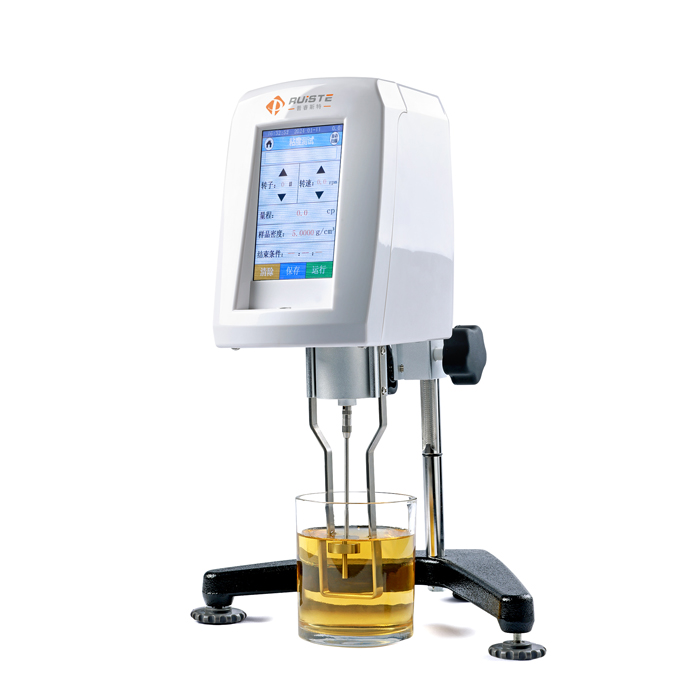
The working logic of low-shear digital viscometers is based on the fundamental law of fluid rheology, which establishes the correlation between fluid viscosity, shear stress, and shear rate. All fluid substances produce internal friction resistance when subjected to external force and flow, and the magnitude of this resistance is the core manifestation of viscosity. Different from conventional viscometers that rely on high-speed rotation to generate obvious fluid resistance for data calculation, low-shear digital viscometers use ultra-low rotational speed and uniform force application modes to apply gentle shear force to the sample. When the precision spindle immersed in the fluid rotates at a stable and low angular velocity, it is subject to tiny rotational resistance generated by the internal friction of the fluid. The high-sensitivity sensing module inside the instrument captures the torque change generated by this resistance in real time, converts the collected mechanical signal into a standardized digital signal, and calculates the dynamic viscosity value of the sample through built-in algorithm processing. The whole measurement process strictly controls the shear rate within a low range, effectively avoiding the destruction of weak intermolecular structures and dispersed phase states in sensitive fluids, which is the core technical advantage that distinguishes low-shear digital viscometers from ordinary rotational viscometers.
In terms of structural design, low-shear digital viscometers adopt a mature coaxial cylinder matching structure, which consists of a precision drive unit, a high-precision sensing system, a replaceable spindle assembly, a constant-temperature sample testing chamber, and a digital data processing and display module. The drive unit uses a stepper motor with stable speed output, which can achieve stepless fine adjustment of low rotational speeds and maintain consistent rotational torque output during long-term operation, eliminating data fluctuations caused by unstable power output. The sensing module is calibrated with high precision, which can capture subtle torque changes even under extremely low shear conditions, ensuring that the instrument can accurately identify tiny viscosity differences of low-viscosity fluids. The replaceable spindle design enriches the measurement range of the equipment. Spindles of different specifications can be selected according to the approximate viscosity range of the sample, realizing adaptive testing of multiple fluid samples from ultra-low viscosity to medium viscosity. The supporting constant-temperature testing chamber can maintain a stable temperature environment during the test. Since the viscosity of most fluids is highly sensitive to temperature changes, a constant-temperature condition effectively avoids test errors caused by thermal expansion and contraction of fluid molecules and ensures the reproducibility of test data.
The low-shear measurement mode endows the instrument with unique adaptability to non-Newtonian fluids with weak structural characteristics. Many industrial fluids such as polymer aqueous solutions, latex dispersions, cosmetic emulsions, and biological suspensions have delicate internal network structures. Under high shear force, these structures will be instantly destroyed, resulting in a sharp drop in fluid viscosity and inability to reflect the real viscosity state under static or low-flow conditions. In actual application scenarios, most of these fluid products are stored, transported, and used in low-shear environments. The viscosity data measured by high-shear equipment cannot guide actual production and application. Low-shear digital viscometers simulate the real low-shear service environment of fluids through controlled low shear rate testing, retain the complete internal structure of the sample, and obtain viscosity parameters that are highly consistent with the actual working conditions, providing reliable data support for product formula optimization and process adjustment.
Digital intelligent control is another important feature of modern low-shear digital viscometers. Different from traditional pointer-type viscometers that rely on manual reading and manual calculation, this type of instrument integrates a microcomputer processing chip, which can automatically complete data collection, calculation, correction, and storage after the user sets test parameters such as rotational speed and test duration. The built-in data algorithm can automatically eliminate interference data generated by minor environmental vibrations and sample surface fluctuations, further improving the stability of test results. The visual digital display interface can directly present real-time viscosity values, shear rate, shear stress, and sample temperature data, enabling operators to intuitively grasp the test state. In addition, the equipment supports continuous testing and data recording within a set time, which can track the viscosity change trend of fluids over time, providing effective data for studying the stability of fluid products during storage and aging. For batch testing scenarios, the instrument can store multiple groups of test data, which is convenient for subsequent data sorting, comparison, and analysis, greatly improving the efficiency of laboratory testing and quality inspection work.
In fine chemical production, low-shear digital viscometers play an indispensable role in quality control and formula research. Water-based coatings, environmental adhesives, and ink products are typical low to medium viscosity fluid systems, and their viscosity stability directly affects coating uniformity, bonding performance, and printing effect. In the production process of water-based coatings, the dispersion state of resin particles and fillers determines the viscosity of the coating. Excessive shear force during testing will break the dispersed particle groups, leading to low test data and failure to detect unqualified formulas with insufficient dispersion. Low-shear testing can accurately reflect the dispersion uniformity of the coating system, helping technicians adjust the proportion of additives and grinding process parameters in a timely manner to ensure the construction stability of the coating. For adhesive products, low-shear viscosity data can characterize the fluidity and initial bonding performance of the adhesive under static spreading conditions, providing a basis for controlling the coating thickness and bonding effect of the adhesive in industrial assembly.
The cosmetic and daily chemical industry also relies heavily on low-shear digital viscosity testing technology. Emulsion products such as facial lotion, body milk, and essence toner have delicate oil-water two-phase dispersion structures. These emulsions are prone to delamination and instability if the internal network structure is damaged. Traditional high-shear viscometers will destroy the emulsified microstructures during testing, resulting in inaccurate viscosity data that cannot reflect the hand feel and spreading performance of cosmetics during actual use. Low-shear digital viscometers can complete testing under mild conditions, effectively protecting the emulsified structure of cosmetic samples. The obtained viscosity parameters can accurately guide the optimization of product texture, ensuring that the products have moderate fluidity, uniform spreading, and stable storage performance. At the same time, in the production of shampoo, shower gel, and other surfactant products, low-shear viscosity testing helps monitor the thickening effect of thickeners, maintain stable product consistency, and avoid batch differences in product texture.
In the field of food processing, low-shear digital viscometers provide reliable technical support for product quality stability and formula innovation. Liquid food materials such as fruit juice, plant protein beverage, syrup, and dairy suspension all have sensitive fluid characteristics. The viscosity of these products is closely related to taste, precipitation resistance, and processing adaptability. High-shear testing will destroy the suspended particle structure in the beverage, leading to abnormal viscosity values and inability to accurately evaluate the anti-precipitation performance of the product during storage. Low-shear testing can truly reflect the static viscosity state of liquid food, help food researchers optimize the ratio of raw materials and stabilizers, reduce product precipitation and delamination problems, and improve product taste and shelf stability. In addition, in the processing of jam, honey sauce, and thickened dairy products, continuous low-shear viscosity monitoring can track the changes in material viscosity during concentration and fermentation, ensuring the consistency of product texture in different production batches.
In scientific research and new material development, low-shear digital viscometers are important basic experimental equipment for studying fluid rheological properties. Polymer solution materials, biological culture fluids, nanomaterial dispersions, and pharmaceutical liquid preparations all require accurate low-shear viscosity data to support theoretical research and product development. The microstructure of many new material dispersions is extremely fragile, and external high shear force will cause particle agglomeration or molecular chain breakage, completely changing the inherent properties of the material. Low-shear testing conditions can maintain the original state of the experimental sample, enabling researchers to obtain real and effective viscosity characteristic parameters, analyze the relationship between material formula, molecular structure and rheological properties, and accelerate the research and iteration of new fluid materials. At the same time, the instrument’s high data repeatability provides stable experimental conditions for comparative experiments in scientific research, ensuring the credibility and reproducibility of experimental results.
In terms of operation and maintenance, low-shear digital viscometers have the characteristics of simple operation and low maintenance cost, which are suitable for long-term continuous use in laboratory and industrial production environments. The standardized operation process only requires operators to complete sample placement, parameter setting, and one-click testing, reducing the error probability caused by manual operation. The detachable spindle and sample testing chamber are convenient for daily cleaning, avoiding cross-contamination between different samples and ensuring the accuracy of subsequent test results. The core drive and sensing components adopt stable structural design, with good anti-interference performance against conventional environmental factors such as temperature and humidity changes in the laboratory, maintaining long-term stable working state. Daily maintenance only needs to keep the equipment surface clean, regularly calibrate the spindle and sensing accuracy, and check the stability of the constant-temperature system, which can effectively extend the service life of the equipment and ensure the consistency of long-term test data.
Compared with traditional capillary viscometers and high-speed rotational viscometers, low-shear digital viscometers show more targeted technical advantages in the testing of sensitive and low-viscosity fluids. Capillary viscometers require a large amount of samples and have a long test cycle, and can only measure the average viscosity under fixed flow conditions, failing to obtain rheological parameters such as shear stress and shear rate. High-speed rotational viscometers are only suitable for stable high-viscosity fluids and cannot adapt to structural sensitive samples. Low-shear digital viscometers make up for the shortcomings of traditional equipment in low-viscosity and sensitive fluid testing, realizing multi-dimensional data testing including dynamic viscosity, shear stress, and shear rate with a small sample volume and short test cycle. The digital data output mode also facilitates the integration of test data into modern production quality management systems, realizing data-based traceability and standardized management of product quality.
With the continuous upgrading of industrial manufacturing standards and the continuous deepening of new material research, the requirements for fluid viscosity testing accuracy and working condition simulation are constantly improving. More and more industries have begun to pay attention to the low-shear rheological characteristics of fluids, and the application scenarios of low-shear digital viscometers are constantly expanding. In the fields of fine chemical customization, high-end cosmetic research and development, functional food production, and biomedical material preparation, the low-shear, high-precision, and digital testing advantages of this type of instrument can fully meet the refined testing needs of modern industries. In the future, with the continuous innovation of sensor technology and intelligent algorithm technology, low-shear digital viscometers will further improve the accuracy of low-shear micro-testing, realize more intelligent automatic parameter matching and multi-condition synchronous testing, and provide more comprehensive and accurate technical support for industrial quality upgrading and scientific research innovation in the field of fluid materials.
Low-shear Digital Viscometer
https://www.pruiste.com/digital-viscometer.html
Post Date: May 23, 2026
https://www.supplier-manufacturer.com/digital-viscometer/low-shear-digital-viscometer.html

![Electronic Balance YP SERIES]()
Electronic Balance YP SERIES
The YP series adopts high-definition keys, which is economical. The entire series of balances adopt Nuosheng sensors, brand sensors, and aluminum alloy structure to ensure…![Digital Viscometer Factory]()
Digital Viscometer Factory
Viscosity stands as one of the most fundamental physical properties of fluid materials, reflecting the internal friction and flow resistance that occur when fluids undergo…![Compact Digital Viscometer]()
Compact Digital Viscometer
Viscosity stands as one of the most fundamental physical properties of fluid materials, reflecting the internal friction and flow resistance that occur when a substance un…![Benchtop Digital Viscometer]()
Benchtop Digital Viscometer
Viscosity stands as one of the most fundamental physical properties of fluid substances, reflecting the internal friction and flow resistance generated during the movement…![Moisture Analyzer Exporter]()
Moisture Analyzer Exporter
Moisture content stands as one of the most critical physical indicators that determine the quality, stability, and usability of raw materials and finished products across …