Jewelry Counting Scale
In the intricate and refined world of jewelry production, trading, and inventory management, accurate measurement and quantity statistics stand as fundamental links to ensure smooth operational procedures. A jewelry counting scale serves as a specialized precision weighing device tailored for small, dense, and uniformly sized jewelry accessories, distinguishing itself from ordinary weighing scales through its dual capabilities of high-precision weight detection and intelligent quantity calculation. This type of weighing equipment has become an indispensable auxiliary tool for jewelry processing workshops, physical jewelry stores, precious metal recycling institutions, and jewelry warehousing management departments. It effectively addresses the tedious counting challenges brought by miniature jewelry parts, optimizes daily operational workflows, and maintains consistent data accuracy throughout repeated usage cycles. With the gradual refinement of the jewelry industry’s industrial chain and the growing demand for standardized management, the application scope of jewelry counting scales continues to expand, and their functional design is constantly optimized to adapt to diverse complex usage environments.
The core working logic of a jewelry counting scale originates from the statistical relationship between single piece weight and total weight. For batches of jewelry accessories with uniform specifications, such as tiny metal beads, gemstone inlays, silver connecting pieces, and miniature metal ornaments, each individual piece maintains an approximate constant weight within a stable physical environment. The counting function of the scale operates by first collecting the weight data of a small number of sample items, calculating the average single piece weight through an internal algorithm, and then measuring the total weight of the bulk items. The system subsequently derives the total quantity of the measured items via automatic division computation. This operational principle avoids the inefficiency and human error inherent in manual counting, especially suitable for scenarios involving large quantities of tiny jewelry components that are difficult to count one by one. Unlike general industrial counting scales, jewelry counting scales prioritize higher sensitivity and finer weight division, catering to the ultra-light weight characteristics of most jewelry accessories. Many common jewelry parts weigh only a few milligrams to several grams, imposing stringent requirements on the sensor resolution and data processing capability of the counting scale.
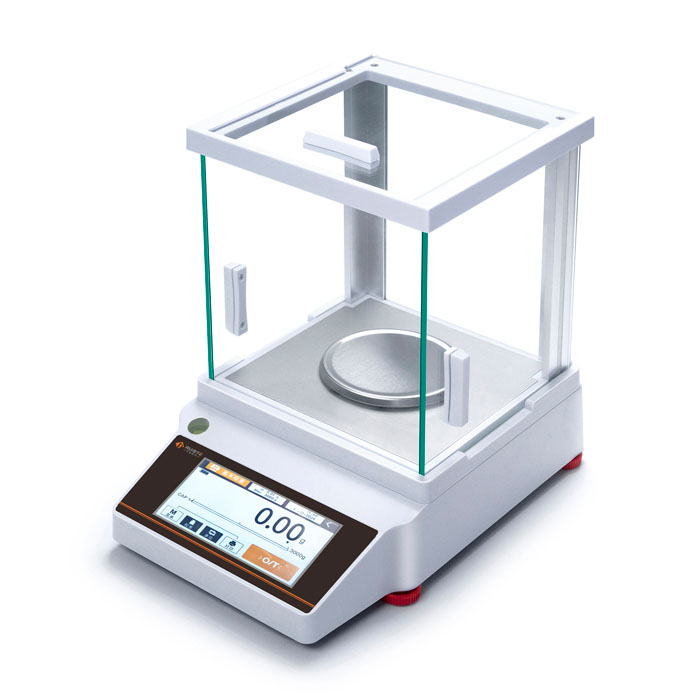
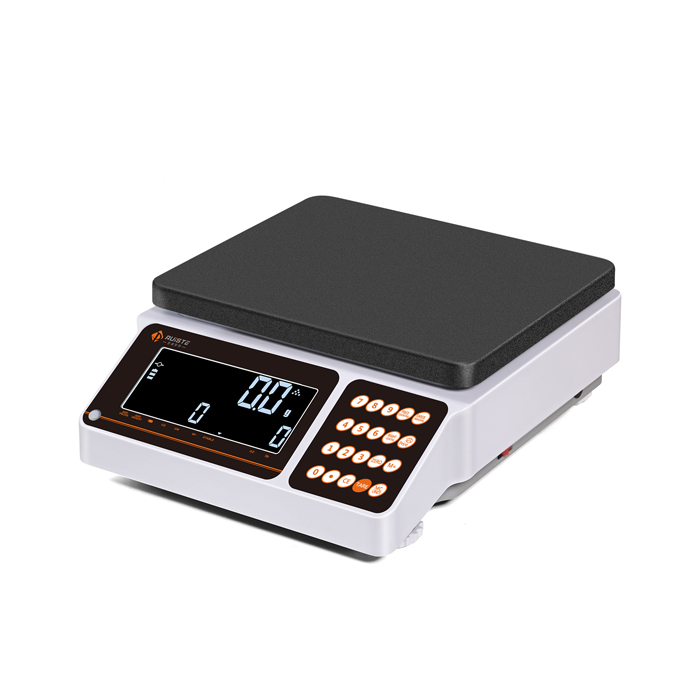
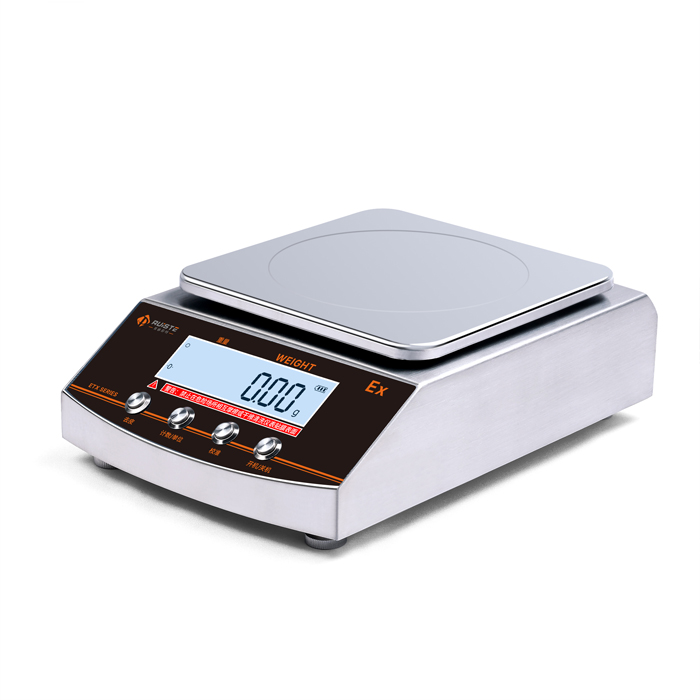
The internal structural configuration of a jewelry counting scale is meticulously designed to meet the specialized measurement needs of the jewelry sector. The high-sensitivity pressure sensor acts as the core component, responsible for capturing subtle pressure changes generated by placed items and converting physical weight signals into electronic data for system identification. Optimized sensor internal circuitry effectively reduces signal interference caused by weak current fluctuations, ensuring that tiny weight variations can be accurately captured and recorded. The weighing pan, usually crafted from smooth corrosion-resistant metal materials, features a flat and seamless surface to prevent small jewelry fragments from slipping or getting trapped in gaps during measurement. Meanwhile, the reasonable surface area design of the weighing pan can accommodate different placement volumes of bulk jewelry parts, balancing space utilization and weighing stability. The built-in data processing chip undertakes the tasks of sample weight recording, average value calculation, total quantity conversion, and data real-time output. It can complete a full set of computing processes in a short time and present intuitive digital results on the display screen. Additionally, the equipment is equipped with simple physical function keys, enabling operators to perform sample calibration, data clearing, unit switching, and other basic operations with straightforward steps and low learning costs.
Environmental adaptability constitutes a crucial optimization direction for modern jewelry counting scales, as the daily usage environments of jewelry equipment often contain numerous unstable interference factors. In physical jewelry stores and processing workshops, subtle vibration generated by personnel walking and mechanical operation may affect the stability of weighing data. To mitigate such impacts, most well-designed jewelry counting scales incorporate internal vibration damping structures, which buffer external vibration interference and maintain the stability of data readings. Changes in ambient temperature and humidity also exert subtle influences on metal sensors and jewelry accessories; hence, these counting scales are embedded with temperature compensation modules. The modules dynamically adjust internal calculation parameters according to real-time environmental temperature changes, weakening data deviation caused by thermal expansion and contraction of components. Moreover, the surface of the equipment undergoes anti-static treatment to prevent tiny gemstone fragments and metal accessories from adhering to the scale surface due to static electricity, which would otherwise affect measurement accuracy. These humanized structural optimizations enable the jewelry counting scale to sustain stable working performance in conventional indoor environments without demanding overly harsh placement conditions.
The application scenarios of jewelry counting scales cover the entire upstream and downstream links of the jewelry industry chain, delivering practical value to different operational segments. In jewelry processing and manufacturing workshops, producers frequently use counting scales to count batch-produced accessories, such as metal chain segments, fixed-size zircon accessories, and customized tiny hardware parts. Accurate quantity statistics facilitate production personnel in managing raw material consumption, formulating processing plans, and avoiding material waste caused by inaccurate quantity estimation. During the finished product assembly stage, workers can verify the quantity of matching parts through counting scales to ensure the completeness of jewelry assembly and reduce defective products arising from missing accessories. For physical jewelry retail stores, counting scales are applicable to daily inventory sorting and stocktaking work. A large number of small-sized jewelry ornaments stored in bulk can be quickly counted by the equipment, replacing time-consuming manual counting and lowering the probability of counting omissions and repeated calculations. In precious metal recycling businesses, counting scales assist operators in counting fragmented precious metal accessories. Combined with weight data, they conduct comprehensive value assessment to ensure equitable transaction processes. In addition, jewelry warehousing and logistics institutions rely on counting scales to record the quantity of incoming and outgoing goods, establishing standardized inventory data archives to realize traceable product management.
Standardized operation methods directly determine the service life and data stability of jewelry counting scales, and users need to comply with scientific usage specifications in daily application. Before formal measurement, the equipment should be placed on a dry, flat, and hard horizontal tabletop, avoiding soft carriers such as sponges and cloth cushions that are prone to deformation. A preheating preparation of several minutes is necessary after powering on the device, allowing the internal sensor and data processing system to reach an optimal working state. The sample calibration step is critical for counting measurement; users should select intact and representative individual products as samples, place a moderate quantity of samples on the weighing pan, and trigger the sample recording function. It is essential to keep the sample quantity within a reasonable range to prevent calculation errors from excessive or insufficient sampling. During the bulk weighing process, jewelry accessories should be gently placed in the center of the weighing pan, avoiding concentrated stacking on a single side to prevent data deviation caused by uneven stress. Strong airflow such as electric fans and air conditioners should be kept away from the operating area, as flowing air can interfere with the weighing accuracy of ultra-light items. After completing each measurement task, users need to clear the weighing data and clean residual debris on the weighing pan to prepare for subsequent measurement work.
Daily maintenance and upkeep work helps maintain the long-term stable performance of jewelry counting scales and reduce equipment failure rates. In terms of cleaning, the surface of the weighing pan and the equipment shell can be wiped with soft dry cotton cloth; corrosive chemical liquids are prohibited to prevent surface material damage and internal circuit corrosion. The equipment should be stored in a dry and ventilated environment to avoid prolonged exposure to humid air, which may cause oxidation and rust of internal metal parts. Regular inspection of the power connection components is required to check for aging or loose wires, ensuring safe power usage. When the equipment is not in use for an extended period, the power supply should be cut off, and the weighing pan should be covered with a dust cover to block dust particles. Dust accumulation on the sensor and circuit board may affect data sensitivity. It is necessary to avoid severe collision and extrusion during handling and placement, as violent impact can damage the precision internal sensor and cause irreversible accuracy loss. For equipment that has been used for a long time, regular blank calibration can eliminate cumulative errors generated during long-term operation and sustain consistent measurement stability.
Compared with manual counting and single-function weighing equipment, jewelry counting scales possess prominent application advantages in the jewelry industry. In terms of counting efficiency, mechanical automatic calculation replaces repetitive manual sorting and counting, shortening the statistical time of bulk accessories from hours to a few minutes and greatly improving operational efficiency. In terms of data accuracy, high-precision sensors capture subtle weight changes, and scientific algorithms eliminate human subjective judgment errors, maintaining counting accuracy within a low error range. In terms of cost control, the efficient working mode reduces the labor input required for inventory sorting and quantity statistics, cutting daily operational labor costs for enterprises. In terms of operational convenience, the compact body design occupies minimal space, and the simple human-computer interaction interface lowers the usage threshold for operators without professional technical backgrounds. Furthermore, most jewelry counting scales support multiple unit switching, adapting to different statistical habits and calculation standards in various trading scenarios, which enhances the overall compatibility of the equipment.
With the continuous upgrading of electronic information technology, the functional design of jewelry counting scales is also evolving toward intelligence and humanization. Some updated models are embedded with data storage modules, which can automatically record the weight and quantity data of each measurement, facilitating subsequent data query and statistical analysis. The optimized display interface adopts high-definition backlight screens, ensuring clear data viewing even in dim indoor environments. Partial equipment is equipped with external data transmission interfaces, enabling measured data to be uploaded to terminal management systems for unified sorting and archiving, which is convenient for digital inventory management of jewelry enterprises. In terms of appearance design, streamlined shells and waterproof and dustproof structures are gradually popularized, adapting to the complex cleaning and storage needs of jewelry processing environments. While improving basic performance, modern jewelry counting scales pay more attention to user operation experience, optimizing key steps such as sample calibration and data reset to further simplify the operational process.
In conclusion, the jewelry counting scale, as a professional precision measuring tool integrating weighing and counting functions, fills the industry gap in rapid quantity statistics of miniature jewelry accessories. Its unique structural design, stable environmental adaptability, and efficient working mode provide reliable technical support for production, trading, inventory, and other links in the jewelry industry. Whether for small processing workshops with flexible production demands or large-scale jewelry enterprises with standardized management systems, jewelry counting scales can match diverse usage needs and bring practical economic benefits to users through efficiency improvement and error reduction. In the future, driven by technological progress and industry demand upgrading, jewelry counting scales will continue to iterate in terms of sensing accuracy, intelligent functions, and environmental adaptability, constantly optimizing the use experience to keep pace with the refined development trend of the global jewelry industry. For practitioners in related fields, selecting a suitable counting scale and mastering standardized usage and maintenance methods is an important measure to standardize operational processes and improve overall industry management levels.
Jewelry Counting Scale
https://www.pruiste.com/counting-scale.html
Post Date: May 7, 2026
https://www.supplier-manufacturer.com/counting-scale/jewelry-counting-scale.html

![What is Laboratory Balance]()
What is Laboratory Balance
Mass weighing is the fundamental core link in scientific research testing, sample preparation and data calibration in various laboratories. As basic measuring instruments …![Counting Balance RSB-C SERIES]()
Counting Balance RSB-C SERIES
The RSB-C series adopts high-definition keys, which is economical. The entire series of balances adopt Nuosheng sensors, brand sensors, and aluminum alloy structure to ens…![Digital Viscometer Price]()
Digital Viscometer Price
Digital viscometers have become indispensable precision testing instruments across modern industrial production, laboratory research and development, and quality inspectio…![Working Principle of Digital Viscometer]()
Working Principle of Digital Viscometer
Viscosity is an inherent physical property of fluid substances, which characterizes the internal friction and flow resistance generated when a fluid undergoes relative mot…![High-temperature Digital Viscometer]()
High-temperature Digital Viscometer
Viscosity stands as one of the most fundamental physical properties of fluid substances, reflecting the internal friction and flow resistance generated during the movement…