Density Balance ME Series
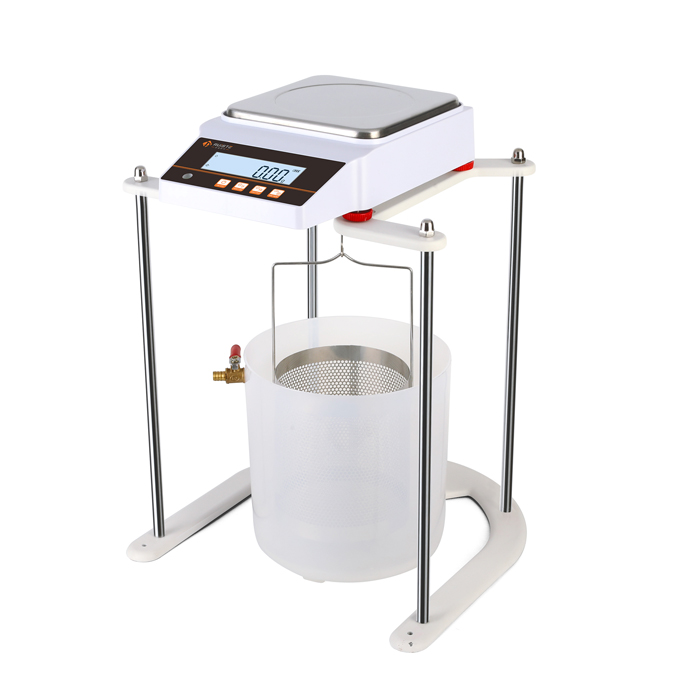
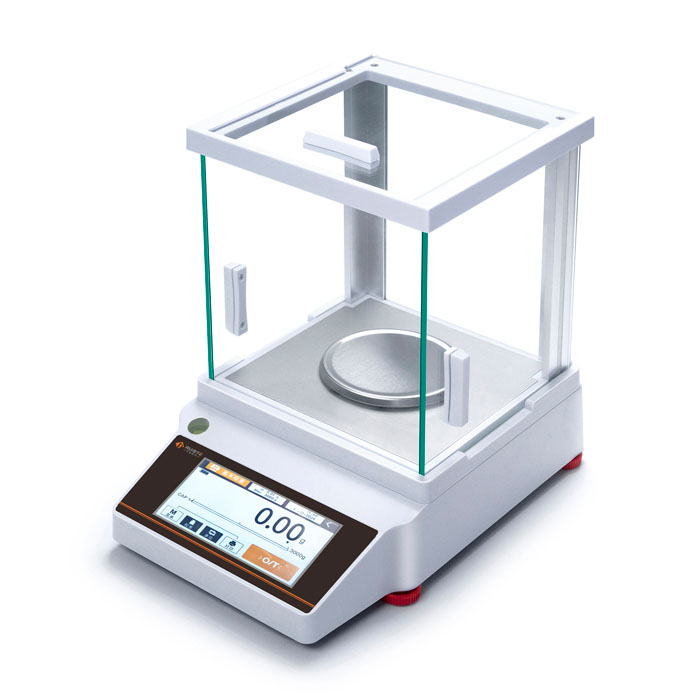
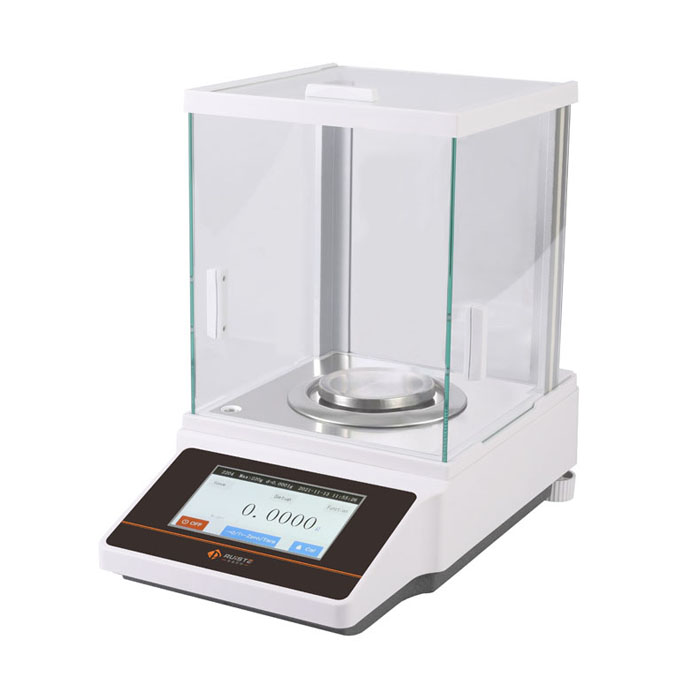
The ME series density balance adopts the Internet of Things 5-inch color TFT control system integrated touch high-definition screen. The entire series of balances adopts German HBM sensors and brand sensors, which can ensure high accuracy and stability of weighing results. This series of precision casting ABS Environmental protection materials are designed, with one-key switching mode of Chinese and English interface, high-efficiency die-cast aluminum alloy base, stable and solid bearing base, stainless steel countertop and stainless steel weighing pan are used in the whole machine, with a resolution of up to 1.2 million, high-speed 24bitsad, excellent anti-interference ability, anti-radiation, anti-static and high-efficiency. The electronic density balance uses Archimedes principle to automatically calculate the density of the sample through the derivation and transformation of the buoyancy and density calculation formula to form an equation. Mainly used for plastic, rubber, plastic particles, metal alloys, mineral rocks, wire and cable, composite materials, magnetic materials, etc., can be directly read solid, block, particle body, film body, floating body such as the sample weight in the air, water weight and density value and volume.

Density balance stands as a subtle yet profound physical state that permeates every corner of the natural world and human industrial activities, embodying the harmonious coordination between mass distribution, spatial volume and environmental force conditions. Beyond the basic mechanical definition, it reflects a universal operational logic where substances constantly adjust their internal structures and external states to maintain relatively stable density distribution. This state of balance is neither static nor rigid; instead, it exists in a dynamic fluctuating range, adapting to changes in temperature, pressure and surrounding medium environments. To understand density balance is to grasp the underlying rules that govern the morphological changes and stable existence of all tangible substances on earth, ranging from tiny microscopic particles to macroscopic ecological systems and industrial material applications.
The theoretical foundation of density balance traces back to basic fluid mechanics and force equilibrium principles, among which the buoyancy discovery by Archimedes provides the core logical support for density balance observation and application. When any solid substance is immersed in a fluid medium, it bears two interacting forces: the downward gravitational force determined by its own mass and the upward buoyancy generated by the displaced fluid. Density balance is achieved when the density relationship between the substance and the medium reaches a relative equilibrium state, enabling the substance to stay in a stable suspension, floating or slow sinking state without drastic displacement changes. This simple mechanical interaction explains numerous common phenomena in daily life. For instance, layered liquids form naturally in transparent containers, with liquids of different densities stacking in an orderly manner without mutual mixing under static conditions. Tiny fine particles in still water gradually distribute at different water layers based on their own density differences, forming a stable particle distribution system over time. These intuitive scenes visually present the inherent attributes of density balance, revealing that all substances tend to pursue density consistency with the surrounding environment to reduce force imbalance.
In natural ecosystems, density balance acts as an invisible regulatory mechanism to maintain the stability of material circulation and habitat environments. Ocean water bodies serve as the most typical natural carrier of density balance. The density of seawater is affected by salinity, water temperature and water depth, forming continuous and gentle density gradients in the vertical direction of the ocean. Cold and high-salinity seawater with higher density sinks to the ocean bottom, while warm and low-salinity seawater with lower density floats on the surface. This layered density distribution drives the slow flow of ocean currents, realizing the global circulation of seawater and transporting nutrients and heat across different sea areas. Marine organisms also adapt to density balance rules during long-term evolution. Plankton adjust their internal tissue density by changing water content and gas storage volume in their bodies, so that they can stay in suitable water layers to obtain sunlight and nutrients. Deep-sea creatures form unique tissue density structures to adapt to the high-density deep-sea water environment, avoiding physical damage caused by density pressure differences. On land, soil systems also follow density balance logic. Mineral particles, organic matter and moisture in soil mix in specific density proportions. Excess moisture will squeeze out air in soil gaps and break the original density balance, while natural evaporation and infiltration will gradually restore the stable density state of soil layers, providing a suitable growth environment for plant roots.
The industrial production sector relies deeply on density balance principles, applying them to material detection, product manufacturing and quality optimization to ensure the uniformity and stability of finished products. In the processing of rubber and polymer materials, density monitoring runs through the entire production process. Raw materials with different molecular proportions have distinct density characteristics, and reasonable ratio collocation can form uniform internal material density. If tiny pores or uneven molecular aggregation appear inside the material, local density differences will occur, breaking the overall density balance. Such subtle structural defects will reduce the durability and compression resistance of materials, making them prone to deformation and damage under long-term external force. Therefore, production workers observe density changes of semi-finished products to adjust processing parameters, eliminating internal density deviations and maintaining the overall balance of material structure. In ceramic and powder metallurgy industries, density balance changes before and after sintering are important reference standards for judging product quality. The loose raw powder has low overall density, and high-temperature sintering promotes particle bonding and internal gap reduction. The gradual increase in density and the formation of uniform density distribution mark the completion of high-quality molding.
The food and daily chemical industries also take density balance as an important basis for product formulation and stability control. Beverage production needs to monitor liquid density changes caused by sugar content and soluble substance concentration. Reasonable density collocation enables various raw materials to mix evenly without layered precipitation during long-term storage. For emulsified products such as lotions and creams, density balance determines the service life and use experience. Oil-soluble and water-soluble ingredients have inherent density differences, and scientific formula adjustment can narrow the density gap between different components. This suppresses the floating and sinking of raw materials, keeping the emulsion in a homogeneous and delicate state. In the papermaking process, fiber concentration and pulp density directly affect the flatness and toughness of paper. Controlling the density balance of pulp suspension ensures uniform fiber distribution in water, avoiding local thickness differences in finished paper. These industrial applications all reflect that stable density balance is an essential condition for maintaining product consistency and usability.

Laboratory measurement and precision detection are important scenarios for quantitative analysis of density balance. Traditional density measurement methods are derived from buoyancy principles. By measuring the mass of a sample in air and its apparent mass after being completely immersed in a fixed-density medium, workers can calculate the sample density through buoyancy difference. Modern detection equipment optimizes this measurement logic with high-sensitivity sensing components, capturing subtle mass changes in the measurement process to obtain accurate density data. In the detection of solid materials, even tiny internal bubbles will cause local density abnormalities and break the overall density balance of the sample. Such subtle defects are difficult to observe with the naked eye but can be clearly identified through density data changes. In liquid sample detection, density balance stability reflects the uniformity of solute distribution. Continuous density fluctuation indicates insufficient raw material mixing or chemical reaction imbalance inside the liquid, providing intuitive data support for experimental personnel to adjust experimental conditions.
Mechanical operation and dynamic structure design also cannot do without density balance regulation. For rotating mechanical structures such as rotating shafts and cylindrical liners, uniform mass density distribution is the key to stable operation. If local mass accumulation causes density deviation on the component surface, unbalanced centrifugal force will be generated during high-speed rotation. This brings continuous vibration and friction to the equipment, accelerating component wear and even triggering operational risks. Mechanical designers optimize structural density distribution by adjusting material thickness and internal filling amount, so that the mass density of each part of the rotating component tends to be consistent. This maintains dynamic density balance during high-speed operation and reduces vibration loss. In hydraulic and pneumatic transmission systems, medium density balance affects transmission efficiency. Density differences caused by temperature changes will lead to uneven fluid flow rates. Auxiliary temperature control structures can stabilize medium density and keep the transmission system in a stable working state.
It is worth noting that density balance is a relative state rather than an absolute invariant condition. Any external environmental fluctuation will cause slight density changes of substances, breaking the original balance and prompting the system to adjust to form a new balanced state. Temperature rise usually accelerates molecular thermal motion, expanding material volume and reducing overall density. Pressure increase compresses molecular gaps, improving material density and tightening internal structure. The substitution of surrounding media will also change the buoyancy environment, prompting substances to adjust their spatial positions to adapt to new density balance conditions. This flexible adjustment mechanism enables density balance to exist in all changing environments. The balance breaking and reconstruction process essentially reflects the energy and mass exchange between substances and the external environment, constituting the basic evolution law of material morphological changes.
In scientific research and technological exploration, the in-depth study of density balance expands human cognition of material characteristics. New material development needs to accurately control density balance to obtain specific physical properties. Composite materials formed by mixing multiple raw materials need to eliminate local density differences through process optimization, so that each component exerts collaborative performance advantages. In aerospace research, material density balance under extreme environments is a key research direction. Low-temperature and high-pressure environments in the airspace will change material density parameters. Researchers adjust material internal structures to maintain density balance under extreme conditions, ensuring the stable operation of aerospace equipment. In environmental monitoring, the density balance of water bodies and air is an important indicator of environmental quality. Abnormal density fluctuations of water bodies often mean excessive suspended pollutants, while unbalanced air density indicates abnormal gas component distribution, providing effective judgment basis for environmental protection work.
From natural evolution to human production, from macroscopic systems to microscopic particles, density balance weaves an invisible balanced network for all substances. It is not only a physical phenomenon that can be observed and measured, but also a kind of operational wisdom hidden behind material changes. Understanding the formation conditions, influencing factors and adjustment rules of density balance helps humans optimize production processes, improve material utilization efficiency and explore more unknown material characteristics. With the continuous progress of detection technology and processing technology, human ability to regulate density balance will become more sophisticated. This will further tap the application potential of density balance in more industries, realize the harmonious unity of material stability and functional optimization, and lay a solid foundation for the innovation and upgrading of various industries. In the constantly changing material world, density balance always maintains its inherent logical laws, silently supporting the stable existence and iterative evolution of all things.
DENSITY BALANCE ME SERIES
https://www.pruiste.com/cmpxl/mdtpme
Post Date: May 7, 2026
https://www.supplier-manufacturer.com/counting-weighing-balance/density-balance-me-series.html

![High-capacity Laboratory Balance]()
High-capacity Laboratory Balance
In modern scientific research, industrial production, and quality inspection workflows, accurate mass measurement serves as a fundamental foundation for reliable experimen…![Auto-calibrating Laboratory Balance]()
Auto-calibrating Laboratory Balance
Laboratory weighing operations form the foundational backbone of quantitative analysis across scientific research, industrial testing, pharmaceutical development, and envi…![Analytical Balance For Sale]()
Analytical Balance For Sale
In modern laboratory environments across diverse industrial and scientific sectors, precision weighing equipment stands as an indispensable foundation for reliable experim…![Portable Analytical Balance]()
Portable Analytical Balance
In modern analytical testing, experimental research and industrial quality inspection sectors, precise mass measurement serves as the fundamental foundation for data acqui…![Purposes of Precision Balance]()
Purposes of Precision Balance
In the modern era of scientific exploration and industrial refinement, accurate mass measurement stands as one of the most fundamental and indispensable steps in various p…