Electronic Balance Price
In modern industrial production, scientific research, and daily analytical work, electronic balances have become indispensable measuring instruments that underpin the accuracy of mass measurement across numerous professional fields. Unlike traditional mechanical weighing devices that rely on physical weights and manual adjustment mechanisms, electronic balances adopt advanced electronic sensing technologies to complete mass detection and data output, delivering steady performance and convenient operation experiences. The value of such measuring equipment is reflected not only in its basic weighing functions but also in its adaptable structural design, reliable operational stability, and wide applicability in diverse working environments, which together determine the comprehensive cost performance and long-term usage value for users. Understanding the core attributes, functional characteristics, influencing factors, and application logic of electronic balances helps users make rational selections and achieve standardized usage, maximizing the utilization efficiency of the equipment in different scenarios.
The internal working mechanism constitutes the fundamental foundation of electronic balance performance, and mainstream modern electronic balances rely on mature sensing principles to convert gravity signals into identifiable electronic signals for data calculation. Among common sensing structures, electromagnetic balance sensors are widely applied in high-precision models. When an object is placed on the weighing pan, the tiny displacement of the internal mechanical structure is captured by high-sensitivity position detectors, which instantly transmit electrical signals to the internal control circuit. The circuit adjusts the current intensity of the built-in coil to generate electromagnetic force that counteracts the gravity of the measured object, restoring the mechanical structure to its initial balanced position. Since the current intensity maintains a stable proportional relationship with the mass of the object, the microprocessor can convert current data into intuitive mass values and display them on the screen. In addition to electromagnetic structures, strain-based and capacitive sensors are adopted in medium and low-precision electronic balances. Strain-based sensors utilize the deformation characteristics of elastic components under pressure to generate resistance changes, while capacitive sensors convert pressure variations into capacitance fluctuations; both structures feature simple internal layouts and moderate production costs, meeting the basic weighing demands of ordinary scenarios.
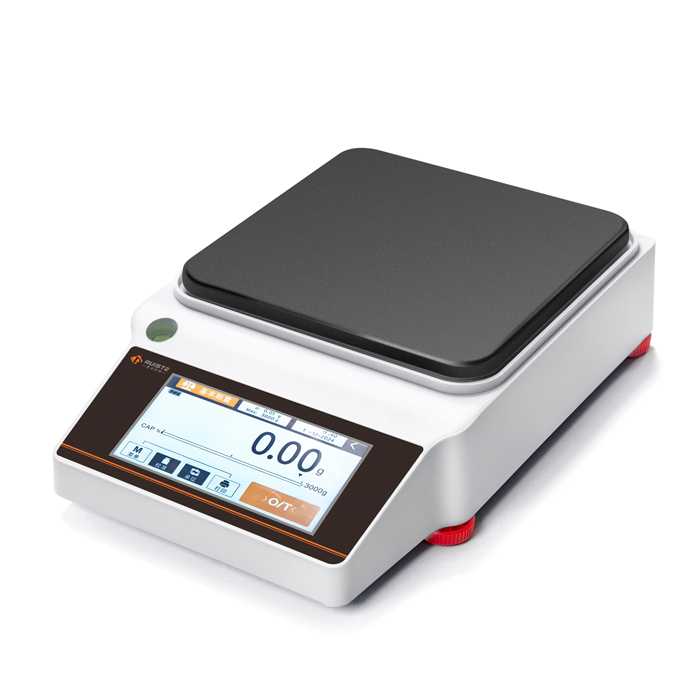
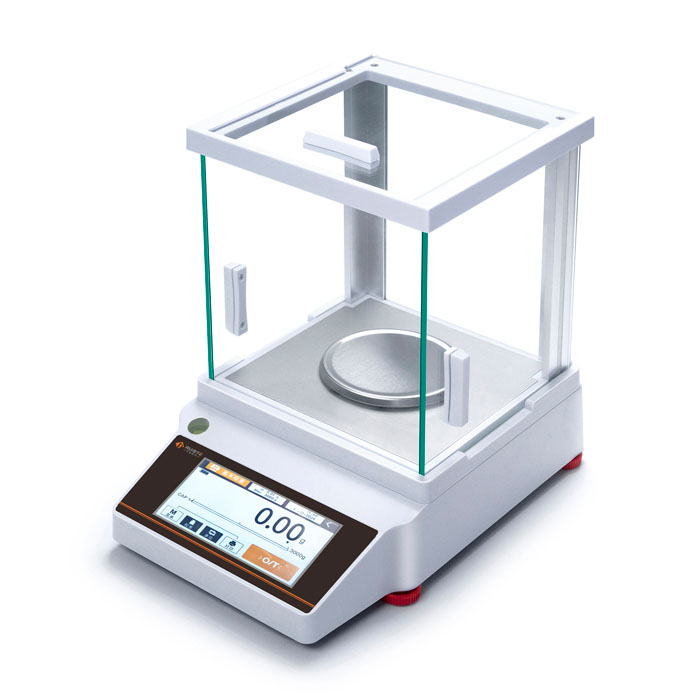
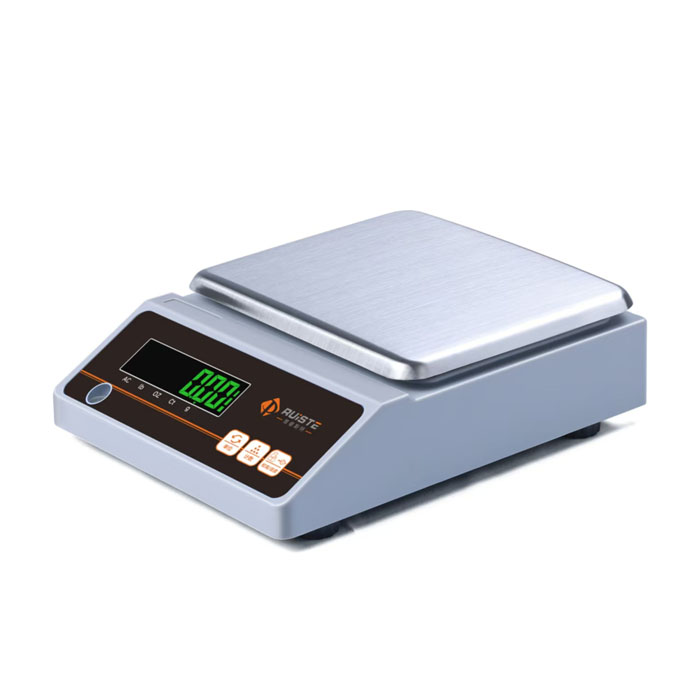
The overall structural design of electronic balances focuses on balancing functional integrity and environmental adaptability, with each component playing an irreplaceable role in ensuring measurement stability. The external weighing pan, usually made of corrosion-resistant metal materials, features a smooth and flat surface to ensure uniform stress on measured objects and facilitate daily cleaning. The surrounding windproof cover is a key accessory for high-precision models, effectively weakening the interference of air flow on tiny mass changes and reducing data fluctuation during measurement. The internal core components include sensors, control circuits, data processing chips, and power supply modules, all sealed inside a durable shell to isolate dust, moisture, and mechanical vibration. The external operation panel is equipped with simple physical keys and a clear display screen, enabling users to complete basic operations such as zero resetting, peeling, and mode switching. Reasonable structural integration not only optimizes the overall volume of the equipment but also lowers the difficulty of daily maintenance, extending the stable service cycle of electronic balances in long-term operation.
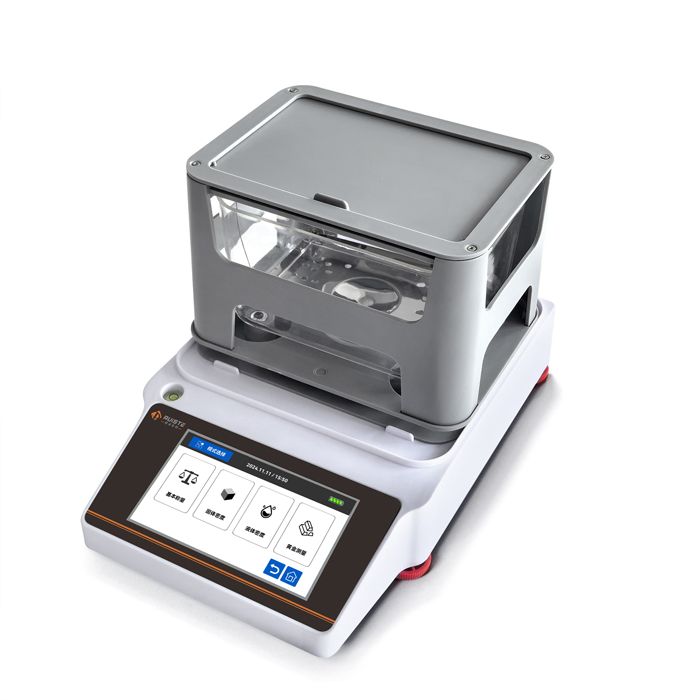
Multiple internal and external factors jointly affect the comprehensive value positioning of electronic balances, covering core performance parameters, structural configurations, and auxiliary functional designs. Precision grade serves as a critical indicator that differentiates product attributes; subtle differences in minimum measurable mass directly lead to variations in manufacturing difficulty and material selection standards. High-precision electronic balances require ultra-sensitive sensors and high-stability circuit modules, with stricter production tolerance control for internal mechanical structures, resulting in higher comprehensive manufacturing costs. Measuring range is another essential factor, as equipment with a wider load-bearing interval needs optimized structural rigidity and pressure resistance to avoid component deformation during long-term heavy-load use. Auxiliary functions also bring value differences: basic models only support single weighing modes, while upgraded versions integrate percentage weighing, density calculation, automatic counting, and temperature compensation functions, expanding the application boundary of the equipment. Moreover, the anti-interference capability of electronic balances matters; optimized electromagnetic shielding structures and temperature adaptation designs enable the equipment to maintain stable measurement in complex environments, and such enhanced environmental adaptability also optimizes the overall usage value of the products.
Environmental conditions and manual operation norms have a profound impact on the service effect and service life of electronic balances, further influencing the long-term use cost for users. Temperature and humidity fluctuations are common environmental interference factors. Excessively high or low temperatures will affect the sensitivity of internal sensors and cause slight deviations in circuit operation, while humid air may lead to damp aging of internal electronic components. Air flow and ground vibration also interfere with high-precision measurement; even weak air convection or tiny vibration can cause data jitter during the weighing of micro samples. In terms of manual operation, non-standard behaviors such as placing corrosive objects directly on the weighing pan, overloading the equipment, and frequent violent movement will accelerate component wear. Therefore, standardized usage environments and scientific operation methods can reduce equipment failure rates, lower maintenance and replacement costs, and indirectly improve the cost performance of electronic balances. Regular calibration is also an essential maintenance link; reasonable calibration cycles can eliminate systematic errors caused by long-term use and ensure the consistency of measured data.
Electronic balances exhibit distinct application characteristics in different industry scenarios, and the differentiated demand of various fields drives the diversified product classification in the market. In laboratory scientific research scenarios including chemical analysis, biological research, and pharmaceutical development, high-precision electronic balances are widely used for weighing trace reagents, experimental samples, and raw medicinal materials. These scenarios require equipment with low data fluctuation and excellent repeatability to ensure the reproducibility and accuracy of experimental results. In industrial production and processing, medium-precision electronic balances are applied to raw material proportioning, product sampling inspection, and parts counting. Such equipment emphasizes operational efficiency and structural durability to adapt to continuous working conditions in production workshops. In the food processing and agricultural cultivation industries, electronic balances with corrosion-resistant and easy-to-clean structures are favored, meeting the hygiene detection and ingredient weighing needs of food raw materials as well as the mass measurement of agricultural samples. In teaching and daily laboratory training, economical and practical basic electronic balances are commonly used to help learners master weighing principles and operation methods, lowering the threshold for popular science teaching.
When selecting electronic balances, users need to combine usage scenarios, functional demands, and long-term use costs to make rational judgments, instead of blindly pursuing excessive parameter configurations. First of all, it is necessary to clarify the required precision grade and measuring range; matching basic parameters with actual usage needs can avoid resource waste caused by redundant functions. Secondly, attention should be paid to the environmental adaptability of the equipment. For humid, dusty, or frequently vibrating working spaces, it is essential to select products with enhanced protection structures to reduce later maintenance costs. In addition, the simplicity of operation and the convenience of daily maintenance should be taken into consideration. Equipment with intuitive operation logic and detachable cleaning components can effectively improve work efficiency in high-frequency use scenarios. Users also need to pay attention to the stability of after-sales service support, including component replacement and technical debugging services, to ensure that potential faults in the use process can be solved in a timely manner and reduce idle loss of equipment.
With the continuous progress of electronic information technology and sensor manufacturing technology, the overall performance of electronic balances is steadily optimized, and the rationality of value allocation is constantly improved. The iterative upgrading of sensing components enhances the anti-interference ability and measurement stability of the equipment, while the optimization of circuit control systems shortens data response time and reduces energy consumption. The lightweight and humanized structural design lowers the operation threshold, making electronic balances applicable to more refined and diversified usage scenarios. In the future, electronic balances will further develop toward intelligent integration, realizing data automatic recording, remote transmission, and intelligent error correction functions, which will better adapt to the automated production and digital management needs of various industries. Throughout the evolution process, electronic balances have always maintained the core logic of balancing performance and practicability, providing reliable mass measurement solutions for all walks of life with reasonable value positioning.
In conclusion, electronic balances are mature and essential measuring instruments, whose comprehensive value is jointly determined by working principles, structural design, performance parameters, environmental adaptability, and functional configuration. A clear understanding of the internal characteristics and external influencing factors of electronic balances can help users recognize the inherent value logic of such equipment. Whether used for high-precision scientific research measurement or conventional daily weighing work, standardized selection, correct operation, and scientific maintenance are key to giving full play to the performance of electronic balances. While meeting the basic mass measurement demands, electronic balances continuously optimize technical structures and application forms, providing stable and accurate data support for industrial upgrading, scientific exploration, and daily production activities, and maintaining irreplaceable practical value in the modern measurement system.
Electronic Balance Price
https://www.pruiste.com/electronic-balance.html
Post Date: May 17, 2026
https://www.supplier-manufacturer.com/electronic-balance/electronic-balance-price.html

![Weighing Precision Balance]()
Weighing Precision Balance
A weighing precision balance stands as an essential measuring instrument designed to determine the mass of small samples with refined measurement resolution, serving as a …![Electronic Balance Supplier]()
Electronic Balance Supplier
In the modern industrial and scientific measurement ecosystem, electronic balances have evolved into indispensable weighing instruments, serving as fundamental tools for q…![Precision Electronic Balance]()
Precision Electronic Balance
Precision electronic balance stands as an essential measuring instrument widely utilized in professional scenarios that demand subtle mass detection and stable data output…![Laboratory Weighing Scale]()
Laboratory Weighing Scale
In modern scientific research, industrial testing, and academic experimental environments, laboratory weighing scales stand as indispensable measuring instruments dedicate…![Counting Scale Wholesale]()
Counting Scale Wholesale
The wholesale trade of counting scales has gradually become an indispensable segment within the global weighing instrument industry, catering to diverse operational demand…