Electronic Balance Supplier
In the modern industrial and scientific measurement ecosystem, electronic balances have evolved into indispensable weighing instruments, serving as fundamental tools for quality detection, experimental analysis, and production parameter calibration across diverse industries. Electronic balance suppliers act as critical links connecting manufacturing terminals and end-users, undertaking the tasks of product research and development, standardized production, technical iteration, and after-sales service. The continuous advancement of global industrialization and laboratory research has steadily driven the optimization of electronic balance production systems, pushing suppliers to constantly adjust production logic and upgrade technical capabilities to meet differentiated weighing demands from various industries. Unlike traditional mechanical weighing equipment, electronic balances rely on advanced sensor structures and circuit control systems, featuring stable operation, intuitive data display, and convenient operation procedures, which lay a solid foundation for their widespread adoption in commercial production, scientific research laboratories, and daily industrial detection scenarios.

The core operational principle of mainstream electronic balance products in the current market originates from electromagnetic force balance technology, a mature and reliable mechanical and electrical integration structure. When a measured object is placed on the weighing pan, subtle displacement occurs in the internal mechanical structure of the instrument, and high-sensitivity displacement sensors capture such tiny position changes in real time. The internal control circuit dynamically adjusts the current intensity of the coil inside the magnetic field according to the displacement signal, generating electromagnetic force to counteract the gravity of the measured object and restore the mechanical structure to its initial balanced position. Since the current intensity in the circuit maintains a stable proportional relationship with the mass of the loaded object, the weighing data can be accurately converted and presented through the digital processing module. In addition to electromagnetic force balance structures, some medium and low-load electronic balance products adopt strain sensor structures. This structural design features simple mechanical composition and reasonable manufacturing costs, making it suitable for conventional weighing scenarios with moderate precision requirements. Different structural designs enable suppliers to enrich their product matrices and cover application scenarios with varying precision ranges and load specifications.
For electronic balance suppliers, product manufacturing involves multi-dimensional process control covering mechanical structure processing, electronic component assembly, and internal program debugging. The production process starts with the selection of raw materials, where metal materials for weighing pans and bearing structures need to possess stable hardness and corrosion resistance to adapt to complex usage environments, while electronic components such as sensors and circuit boards require consistent signal transmission performance to avoid data deviation caused by component aging. During the assembly stage, production personnel need to maintain a dust-free and constant-temperature processing environment to prevent fine dust and temperature fluctuations from affecting the sensitivity of precision components. The debugging link is a core step in the production process; suppliers need to simulate different environmental conditions including temperature changes, slight vibration, and air flow interference to test the weighing repeatability and anti-interference performance of finished products. Each batch of products needs to complete multiple rounds of repeated weighing tests with standard weights to optimize internal algorithm parameters and reduce systematic errors in the weighing process. Strict production and debugging standards help suppliers maintain stable product quality and build long-term market trust.
The application scenarios of electronic balances present obvious diversified characteristics, which guides suppliers to carry out categorized product research and development and customized production. In scientific research laboratories, high-precision electronic balances are widely used for reagent weighing, sample density measurement, and trace substance detection. Chemical analysis and biological experiment processes put forward strict requirements on the sensitivity and data stability of balances, requiring instruments to maintain accurate measurement results under long-term continuous operation. In the pharmaceutical production industry, electronic balances assist in the proportioning of raw medicinal materials and the detection of finished product components, where consistent weighing data helps standardize production processes and control product quality. The food processing industry applies electronic balances to raw material blending and finished product component testing, realizing standardized control of food ingredients. In addition, small and medium-sized electronic balances are commonly used in daily commodity detection, agricultural product sampling, and jewelry weighing scenarios. To adapt to differentiated industrial demands, suppliers continuously optimize product functions, adding customizable modes such as percentage weighing, unit conversion, and data recording to meet the diversified operational needs of different users.
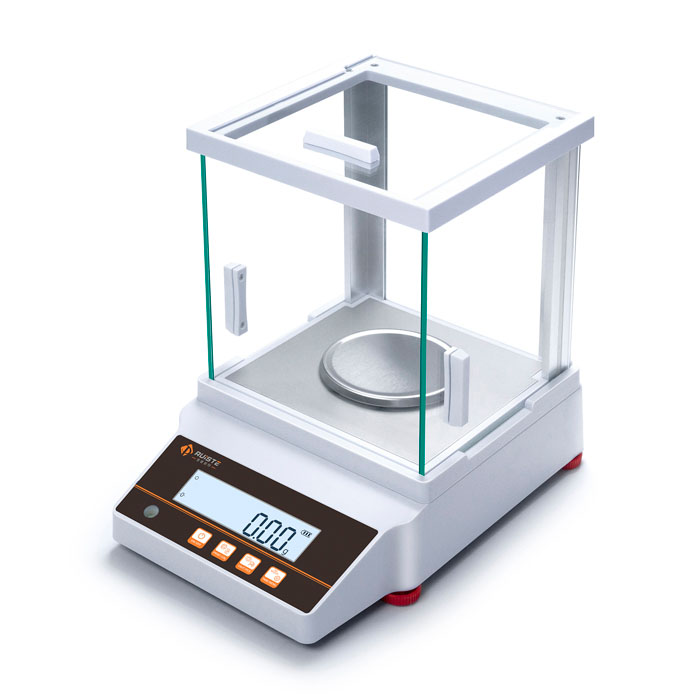
Environmental adaptability optimization has become a key research direction for electronic balance suppliers in recent years. In actual use, factors such as ambient temperature, air humidity, external vibration, and air flow can interfere with weighing accuracy. For this reason, suppliers add protective structures such as windshield covers and shock-absorbing bases to precision products. The windshield cover can reduce the impact of air flow on the weighing pan, while the shock-absorbing base weakens the vibration transmitted from the placement platform to the internal mechanical structure. At the same time, temperature compensation circuits are embedded in the internal circuit system of the balance to automatically correct data deviation caused by ambient temperature changes. For products applied in humid and corrosive industrial environments, suppliers adopt surface anti-corrosion coating treatments for metal components and conduct sealed protection for internal circuits to extend the service life of instruments. These targeted optimization measures reflect suppliers’ in-depth insight into user usage pain points and also improve the environmental adaptability of electronic balance products.
In the global supply chain system, the operational layout of electronic balance suppliers shows hierarchical distribution characteristics. Some suppliers focus on medium and conventional precision products, undertaking large-batch standardized production to meet the basic weighing demands of small and medium-sized processing enterprises and daily commercial scenarios. Other manufacturers concentrate on high-precision customized products, investing more resources in precision component processing and algorithm optimization to serve high-end laboratories, pharmaceutical research institutions, and material development enterprises. In terms of regional layout, production bases are mostly concentrated in regions with complete electronic component supporting industries, which can effectively reduce component transportation costs and improve production efficiency. Raw material procurement, component processing, finished product assembly, and market distribution form a complete industrial chain, and the smooth operation of each link determines the overall production capacity and market supply capacity of suppliers.
After-sales technical service is an indispensable part of the business system of electronic balance suppliers. As precision measuring instruments, electronic balances require regular maintenance and calibration during use to maintain long-term measurement stability. Suppliers provide users with daily maintenance guidance, including cleaning methods for weighing pans, storage environment requirements, and daily operation precautions. For equipment failures caused by improper operation or component aging, professional technical teams offer remote fault diagnosis and on-site maintenance services. In addition, suppliers regularly update product operation programs and optimize internal data processing algorithms, providing users with free program upgrade services to improve the intelligent level of old equipment. A sound after-sales service system enhances user stickiness for suppliers and forms a positive market reputation in the fiercely competitive measuring instrument industry.
With the continuous integration of intelligent technology and measurement equipment, the technological upgrading direction of electronic balance suppliers has become increasingly clear. The combination of Internet of Things technology and electronic balances enables real-time uploading, cloud storage, and remote viewing of weighing data, which facilitates enterprise production data management and laboratory experimental data sorting. Some optimized products are equipped with intelligent human-computer interaction interfaces, supporting touch operation and multi-language switching to adapt to global user usage habits. In terms of energy consumption optimization, suppliers adopt low-power circuit design and high-efficiency power supply modules to reduce the energy consumption of equipment during long-term standby and continuous operation. Meanwhile, the lightweight and compact structural design gradually replaces bulky traditional structures, making electronic balances more convenient for transportation, placement, and daily movement. These technological upgrades not only improve the comprehensive performance of products but also expand the applicable boundary of electronic balances.
The sustainable development of electronic balance suppliers still faces multiple challenges in the industry. The iteration speed of electronic measurement technology continues to accelerate, requiring suppliers to maintain continuous investment in research and development to keep up with technological updates. The fluctuation of raw material prices such as precision sensors and metal structural parts will affect the production cost control of enterprises. In addition, user demands for personalized customized products are increasing, which puts forward higher requirements for the flexible production capacity of suppliers. To cope with these industry changes, excellent suppliers establish stable long-term cooperation with raw material suppliers to stabilize the procurement cost of components. They also set up professional research and development teams to track cutting-edge measurement technologies and carry out pre-research of new processes and new structures. At the same time, optimizing production line scheduling and improving flexible production modes can effectively meet the customized production needs of small batches and multiple specifications.
Looking into the future, the electronic balance industry will maintain a steady development trend, driven by the progress of global manufacturing and scientific research. Electronic balance suppliers will continue to take product quality optimization and technological innovation as the core development direction, further integrating intelligent sensing, data transmission, and automatic control technologies into product design. The product system will develop towards higher precision, stronger stability, more convenient operation, and better environmental adaptability. In terms of market layout, suppliers will further expand emerging market channels, optimize global supply chain distribution, and reduce circulation links between products and end-users. While improving product performance, suppliers will also pay more attention to the humanized design of products, optimizing operation logic and interface display to lower the usage threshold of different groups of users. As an important part of the precision measurement industry, electronic balance suppliers will keep promoting the iterative upgrading of weighing instruments and provide reliable basic measurement support for the steady development of various global industries.
Electronic Balance Supplier
https://www.pruiste.com/electronic-balance.html
Post Date: May 17, 2026
https://www.supplier-manufacturer.com/electronic-balance/electronic-balance-supplier.html

![Precision Digital Viscometer]()
Precision Digital Viscometer
Viscosity stands as one of the most fundamental physical properties of fluid substances, reflecting the internal friction and flow resistance generated during the movement…![Purposes of Moisture Analyzer]()
Purposes of Moisture Analyzer
Moisture content stands as one of the most fundamental and influential physical properties of nearly all raw materials, semi-finished goods, and finished products across i…![Types of Moisture Analyzer]()
Types of Moisture Analyzer
Moisture analysis stands as a fundamental testing procedure across industrial manufacturing, laboratory research, agricultural processing, and material quality inspection.…![Portable Moisture Analyzer]()
Portable Moisture Analyzer
Moisture content stands as one of the most critical physical indicators that determine the quality, stability, and processing performance of diverse materials across indus…![Ultra-precision Laboratory Balance]()
Ultra-precision Laboratory Balance
Ultra-precision laboratory balances serve as foundational measuring instruments in modern scientific research, industrial analysis, and precision material testing, designe…