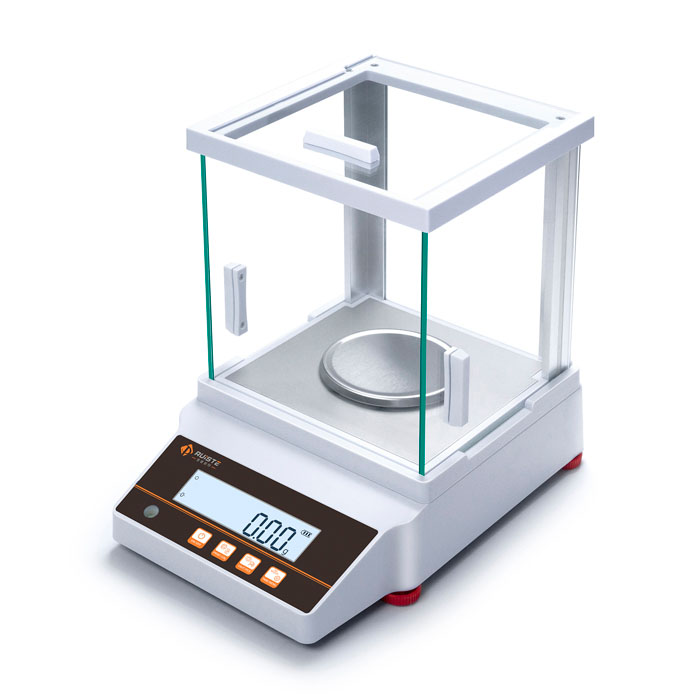
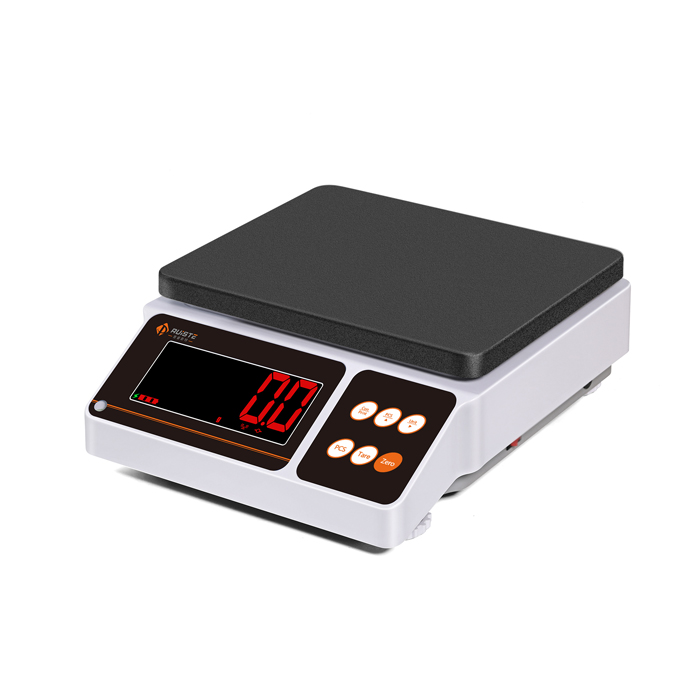
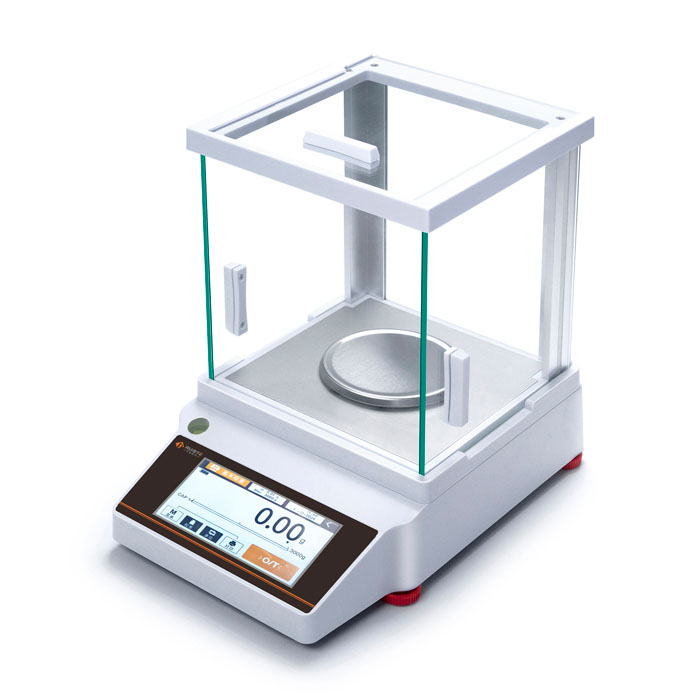
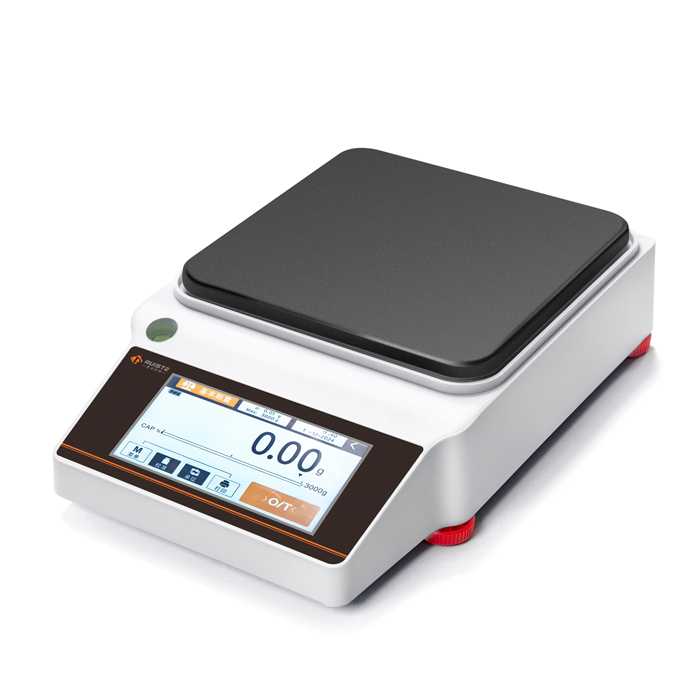
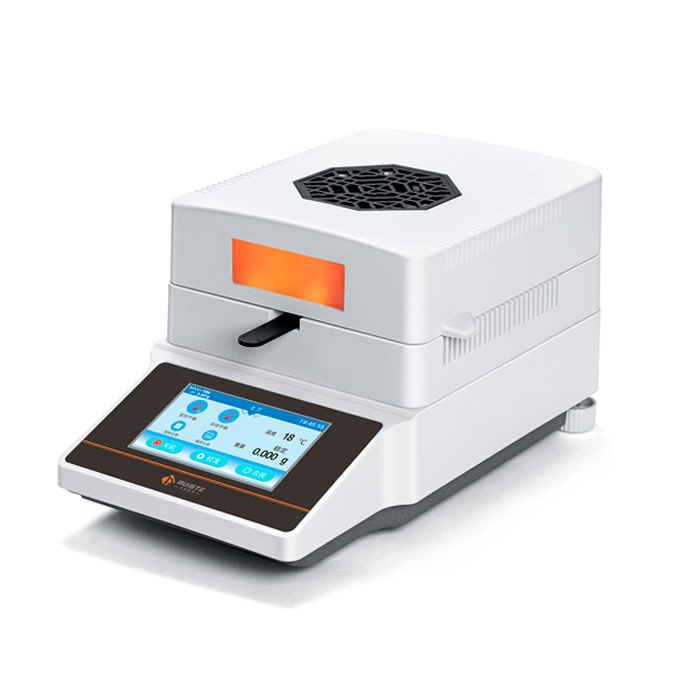
Moisture Analyzer DHS Series
DHS series adopts the Internet of Things 5 inch color TFT control system integrated touch HD screen, and the whole series moisture meter adopts German HBM sensor and brand sensor, which can ensure the high accuracy and stability of weighing results. This series of precision casting ABS Environmental protection materials are designed with one-key switching mode between Chinese and English interface, high-efficiency die-cast aluminum alloy base, stable and solid bearing base, stainless steel table plate and stainless steel weighing pan, resolution as high as 1.2 million, high-speed 24bitsad, anti-interference ability, anti-radiation, anti-static high-efficiency, etc., weighing double-reading mode, heating time setting, heating temperature setting, peeling function, automatic drying, timing drying, current records, historical records, self-storage experimental weighing data record results, widely used in tobacco, paper, tea, food, grain, chemical raw materials, pharmaceutical, textile and other industries to test the moisture content of all kinds of samples.
Moisture content stands as one of the most critical physical attributes of substances across solid, liquid, and gaseous states, exerting profound influences on material stability, physical properties, chemical reactivity, and overall product quality. Trace amounts of moisture in raw materials or finished goods can trigger subtle changes in structural composition, while excessive water content may lead to degradation, deterioration, or functional failure of materials. In modern industrial production, scientific research, and daily manufacturing processes, accurate detection and quantitative analysis of moisture levels have become an indispensable part of quality control and process optimization. A moisture analyzer serves as a specialized analytical instrument designed to determine the proportion of water molecules contained in various samples, adopting diversified technical mechanisms to adapt to testing requirements for different types of materials. With the continuous advancement of manufacturing technology and analytical methodologies, such instruments have gradually evolved from simple manual detection tools into intelligent, high-precision testing equipment, widely deployed in multiple industries to support standardized production and reliable quality evaluation.
The fundamental working logic of moisture analyzer originates from the physical and chemical disparities between water molecules and other substances in samples. Water possesses unique molecular characteristics, including strong polarity, distinct boiling point, and specific absorption capacity for particular energy waves, which provide inherent theoretical basis for moisture detection. Among diverse detection technologies, the thermal gravimetric method remains one of the most commonly adopted approaches due to its intuitive detection logic and stable operational performance. This method relies on the principle of mass variation before and after sample dehydration. During testing, a homogeneous sample is placed in a sealed and temperature-controlled testing chamber, where external heat is applied to steadily raise the ambient temperature. As the temperature reaches the vaporization point of free water inside the sample, water molecules convert from liquid state to gaseous state and completely volatilize from the sample. High-sensitivity weighing sensors continuously record the mass changes of the sample throughout the heating process. After the completion of dehydration, the system calculates the moisture content by comparing the initial mass and the final constant mass of the sample, reflecting the water proportion through intuitive numerical values. This detection mode is applicable to most solid and partial liquid samples with stable thermal properties, featuring simple operational logic and easy data interpretation.
Apart from thermal gravimetric technology, optical-based detection methods also occupy an essential position in moisture analysis. Water molecules have specific absorption characteristics for infrared spectrum radiation, generating a unique absorption peak within a fixed wavelength range. Optical moisture analyzers emit stable infrared light beams toward processed samples, and the internal sensing components capture the light intensity changes after the light penetrates or reflects off the sample. According to the attenuation degree of light energy, the system quantifies the moisture concentration in the sample. This testing approach requires minimal sample consumption and achieves rapid detection without causing irreversible damage to sample structure, making it suitable for batch and non-destructive testing of high-value materials. In addition, microwave-based detection technology utilizes the polarity of water molecules. When microwave energy with a specific frequency penetrates materials, polar water molecules absorb microwave energy and cause energy attenuation. By detecting the energy difference between emitted and received microwaves, combined with temperature compensation algorithms, the instrument can accurately deduce internal moisture content. This technology is mostly applied in online continuous monitoring scenarios for bulk raw materials, realizing real-time data output without interrupting production workflows.
In gaseous environment detection, condensation-based measurement mechanisms are widely utilized to identify trace moisture in gases. The core structure of such analyzers includes a controllable temperature reflection mirror and high-precision optical sensing elements. During operation, sampled gas is delivered into a sealed detection cavity, and the built-in temperature control component gradually lowers the surface temperature of the mirror. When the mirror temperature drops to the dew point temperature of the gas sample, water vapor in the gas condenses into tiny droplets on the mirror surface, changing the mirror’s light reflectivity. Optical sensors capture the sudden variation in reflection signals and feed the data back to the data processing module. The system converts dew point temperature data into corresponding moisture content values through built-in thermodynamic algorithms. This type of analyzer shows excellent adaptability in detecting trace moisture in high-purity gases, effectively identifying tiny water molecules that are difficult to capture by conventional detection methods, and providing reliable data support for gas purification and industrial gas transmission monitoring.
The internal structural configuration of a standard moisture analyzer follows modular design concepts, ensuring operational stability and maintenance convenience. The weighing module acts as the core data acquisition component, adopting high-precision sensor structures to eliminate mass detection errors caused by external vibration and air flow. The temperature control module consists of heating elements and temperature sensing components, which can precisely adjust the internal temperature of the testing chamber within a wide range and maintain constant temperature conditions to ensure thorough dehydration or stable detection environments. The data processing module integrates independent operation chips and algorithm programs, responsible for collecting real-time data from sensors, completing numerical calculation, and eliminating interference data through filtering algorithms. The human-computer interaction module includes display interfaces and control buttons, enabling operators to set detection parameters, observe real-time data changes, and export historical detection records. Meanwhile, the sealed structural design of the testing chamber can effectively isolate external air humidity, temperature fluctuation, and dust pollution, preventing external environmental factors from interfering with detection accuracy.
Moisture analyzers cover extensive application scenarios, penetrating raw material inspection, production monitoring, and finished product quality inspection in multiple industries. In the food processing industry, moisture content directly affects the shelf life, taste, and storage stability of food products. Excess moisture in grain and cereal products can accelerate microbial reproduction and lead to mildew, while low moisture in baked goods may cause texture hardening and taste degradation. Food producers use moisture analyzers to regularly detect raw grain, flour, baked snacks, and preserved foods, adjusting production parameters to control moisture within a reasonable range and extend product storage cycles. In the feed manufacturing industry, balanced moisture content helps maintain the nutritional stability of feed and avoids nutrient loss caused by damp deterioration, providing standardized feeding conditions for livestock breeding.
The chemical and new material industries also have stringent requirements for moisture detection. Many chemical raw materials, including powder reagents, granular additives, and liquid solvents, are highly sensitive to moisture. Excessive water content may trigger chemical reactions such as hydrolysis and oxidation, changing the chemical composition and activity of raw materials. In the production of polymer materials, residual moisture inside raw materials can cause surface cracks and structural defects in finished products during molding processing. Staff use moisture analyzers to conduct sampling tests on incoming raw materials and semi-finished products, eliminating unqualified materials that do not meet moisture standards and ensuring the consistency of chemical product properties. In the construction material industry, moisture detection of building raw materials such as cement, sand, and gypsum helps optimize the mixing ratio of building materials, avoiding hidden dangers such as wall cracking and structural instability caused by excessive moisture during construction usage.
In pharmaceutical and biological fields, the application value of moisture analyzers is equally prominent. Pharmaceutical raw materials, tablet preparations, and powdered medical supplies require strict moisture control to prevent component degradation and bacterial contamination. Excess moisture in medicinal materials may reduce the efficacy of active ingredients and shorten the valid period of pharmaceuticals. Biological samples such as microbial cultures and biological reagents also need stable moisture environments to maintain biological activity. Precision moisture analysis equipment is adopted in pharmaceutical production laboratories and testing rooms to realize trace moisture detection, meeting the strict quality supervision requirements of the pharmaceutical industry. Additionally, in the agricultural field, detecting moisture in soil, seeds, and agricultural by-products helps judge soil fertility, optimize seed storage conditions, and formulate scientific crop planting and harvesting plans.
To ensure stable detection performance and accurate data output during daily use, standardized operational specifications and reasonable maintenance measures are essential. Before conducting sample testing, operators need to place the instrument on a flat and stable horizontal platform, avoiding placement in environments with strong vibration, direct sunlight, or severe air convection. It is necessary to preheat the instrument for an appropriate duration to stabilize the internal temperature and sensor sensitivity, eliminating detection deviations caused by unstable initial operating status. For different types of samples, targeted pretreatment is required: solid samples need to be crushed and sieved to ensure uniform particle size and consistent heating dehydration effect; viscous liquid samples need to be spread evenly with auxiliary tools to expand the contact area with hot air; volatile samples require sealed testing accessories to reduce substance loss during detection.
In the testing process, operators should set reasonable temperature parameters and detection duration according to sample thermal stability. For heat-sensitive samples that are prone to thermal decomposition, low-temperature gradient heating mode should be adopted to avoid sample deterioration affecting data authenticity; for high-stability mineral and metal powder samples, constant high-temperature heating can be used to accelerate dehydration and improve testing efficiency. After the completion of each detection, the testing chamber and internal bearing components need to be thoroughly cleaned to remove residual sample impurities, preventing cross-contamination between different samples. Regular calibration of weighing sensors and temperature control components is also required to offset subtle performance attenuation caused by long-term operation and maintain long-term detection stability of the instrument.
Despite the mature application of current moisture analysis technologies, the industry still faces multiple technical challenges in practical promotion. In complex mixed samples containing volatile organic components, non-aqueous volatile substances are easy to volatilize along with water molecules during heating detection, resulting in higher measured moisture data than the actual value. For viscous and porous samples with special structures, internal water molecules cannot fully separate during testing, bringing difficulties in accurate quantification of bound water. In extreme industrial environments such as high dust and high humidity, external interference can easily affect the sensitivity of precision sensors, increasing the difficulty of on-site detection. To solve these problems, continuous optimization of detection algorithms and structural design is underway. Multi-stage temperature control programs, differential pressure compensation technology, and impurity filtering algorithms have been gradually applied to improve the anti-interference ability and detection accuracy of instruments for complex samples.
Looking into the future development direction of moisture analyzers, intelligent integration and portable miniaturization will become the mainstream evolution trends. With the popularization of internet technology, modern moisture analysis equipment has realized data interconnection, enabling real-time upload of detection data to terminal management systems for unified sorting, storage, and analysis, which facilitates enterprises to establish complete production quality monitoring archives. Miniaturized portable analyzers are continuously optimized in structural volume and weight, adapting to outdoor field detection and mobile sampling requirements, breaking the spatial limitation of traditional laboratory fixed detection equipment. Meanwhile, multi-technology integrated detection instruments are being developed, combining thermal gravimetric, optical, and electrochemical detection principles to simultaneously identify free water, bound water, and trace moisture in samples, realizing comprehensive multi-dimensional moisture data analysis.
As global industrial production standards become increasingly stringent and scientific research exploration continues to deepen, the market demand for moisture analyzers with stable performance and wide adaptability keeps growing. This type of analytical instrument, as a basic guarantee for material quality control, connects raw material inspection, production processing, and finished product evaluation links. It provides objective and reliable data references for industrial production optimization, scientific experimental research, and agricultural development planning. Through continuous technological iteration and performance optimization, moisture analyzers will break through the limitations of existing detection conditions, adapt to more complex sample types and harsh detection environments, and deliver stronger technical support for the standardized, refined, and intelligent development of various industries. In the long run, the continuous progress of moisture analysis technology will further deepen human understanding of material moisture characteristics, laying a solid foundation for the improvement of material utilization efficiency and product quality level in all walks of life.
MOISTURE ANALYZER DHS SERIES
https://www.pruiste.com/cmpxl/kssfcdydhs
Post Date: May 7, 2026
https://www.supplier-manufacturer.com/counting-weighing-balance/moisture-analyzer-dhs-series.html

![Portable Moisture Analyzer]()
Portable Moisture Analyzer
Moisture content stands as one of the most critical physical indicators that determine the quality, stability, and processing performance of diverse materials across indus…![Ultra-precision Laboratory Balance]()
Ultra-precision Laboratory Balance
Ultra-precision laboratory balances serve as foundational measuring instruments in modern scientific research, industrial analysis, and precision material testing, designe…![Laboratory Balance Factory]()
Laboratory Balance Factory
Laboratory balances stand as foundational analytical instruments across scientific research, industrial production, pharmaceutical development, environmental monitoring, a…![Laboratory Balance Manufacturer]()
Laboratory Balance Manufacturer
Laboratory balances stand as foundational precision instruments across scientific research, industrial production, quality inspection, and academic laboratory environments…![Benchtop Analytical Balance]()
Benchtop Analytical Balance
In modern experimental research, industrial production and quality inspection industries, precise mass measurement serves as an indispensable basic technical link. The ben…