Low-capacity Electronic Balance
In modern experimental research, fine chemical production, and precision sample detection, the demand for accurate mass measurement of tiny samples continues to grow steadily. The low-capacity electronic balance has become an essential measuring instrument in these professional scenarios due to its compact structural design, stable data output, and high sensitivity for micro-sample weighing. Different from large-scale weighing equipment that focuses on heavy-load measurement, this type of electronic balance is designed for small-mass samples, with a reasonable load range that fits the weighing needs of trace substances, fine particles, and miniature experimental materials. Its unique performance orientation makes it distinct from ordinary weighing tools, forming an independent product category in the field of precision weighing and providing reliable technical support for numerous refined industrial operations and scientific research experiments.
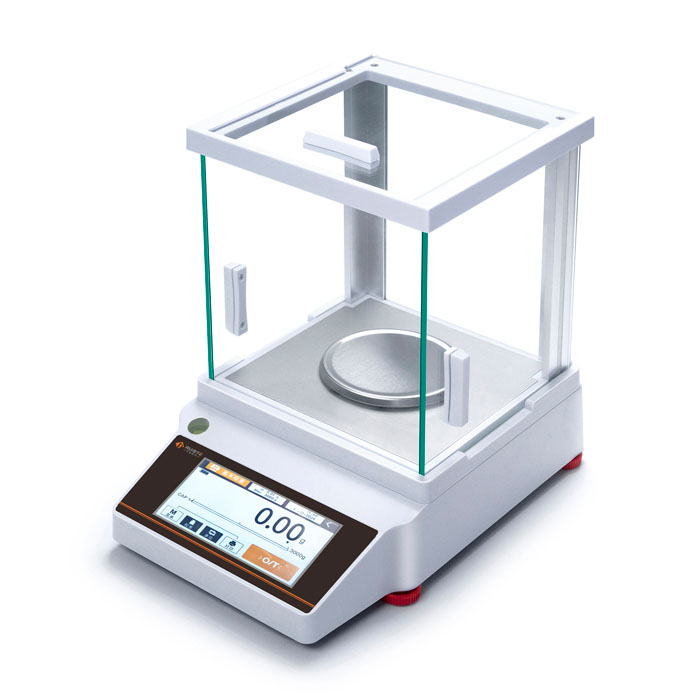
The internal working mechanism of low-capacity electronic balances follows mature physical sensing principles, and most mainstream products adopt electromagnetic force balance technology to complete mass detection. When a sample is steadily placed on the weighing pan, the gravity generated by the sample will cause a slight displacement of the internal mechanical transmission structure. The high-sensitivity position detection component can instantly capture this tiny displacement signal and convert it into a weak electrical signal. After the signal is transmitted to the internal circuit system, the current intensity in the electromagnetic coil will be automatically adjusted. The magnetic field generated by the coil interacts with the built-in permanent magnet to produce an electromagnetic force that counteracts the gravity of the sample. This force balance process can push the internal mechanical structure back to the initial equilibrium position. In this working mode, the current passing through the coil maintains a stable proportional relationship with the mass of the loaded sample. The internal microprocessor records and calculates the current data, and finally converts it into intuitive mass information displayed on the screen. In addition to electromagnetic force balance structures, some low-capacity electronic balances are equipped with strain sensors and capacitive sensors. Strain sensors rely on elastic deformation of sensitive components to perceive pressure changes, featuring simple internal structures and stable operating performance. Capacitive sensors judge mass changes through the variation of internal capacitance values, which can adapt to relatively compact internal space layouts and reduce the overall volume of the equipment.
The overall structural design of low-capacity electronic balance focuses on practicability and precision control, and each component is configured to adapt to the characteristics of micro-sample weighing. The external weighing pan is usually made of smooth and corrosion-resistant metal materials, with a flat and compact surface that can ensure stable placement of tiny samples while avoiding adhesion of dust and residual substances. Most equipment is equipped with a transparent wind shield structure, which can block the interference of flowing air in the external environment on the weighing process. For low-capacity weighing scenarios, even subtle air fluctuations may cause data deviation, and the closed space formed by the wind shield effectively weakens the impact of air convection. The bottom of the balance is fitted with adjustable supporting foot pads, which can fine-tune the horizontal state of the equipment according to the placement environment. A horizontal bubble indicator is matched to assist users in completing level calibration, reducing measurement errors caused by inclined placement. The internal circuit system is equipped with signal amplification modules and filtering components. Weak sensing signals captured by sensors are amplified and screened to eliminate clutter interference generated by current fluctuations and external electromagnetic radiation, ensuring the clarity and accuracy of transmission data. The digital display screen adopts a high-definition dot matrix design, which can clearly present multi-digit decimal data, meeting the high-resolution reading requirements of micro-mass measurement.
In terms of inherent performance characteristics, low-capacity electronic balances have prominent advantages in sensitivity and data stability. The sensitive sensing components can respond to tiny mass changes within a short time, realizing rapid data stabilization and reading. Compared with traditional mechanical balances, it omits tedious manual weight adjustment steps, and the electronic sensing mode effectively reduces human operation errors. During continuous use, the equipment maintains good data repeatability. When weighing samples of the same mass multiple times, the deviation between measured values remains within a tiny controllable range. The equipment is also embedded with an overload protection structure. When the loaded mass exceeds the preset bearing range, the internal sensing structure will automatically trigger a limit protection state to avoid permanent deformation of precision components caused by excessive pressure. In addition, most low-capacity electronic balances have simple automatic calibration functions. Users can complete parameter correction through standard calibration substances in daily use, offsetting slight data drift caused by long-term operation and environmental changes, and maintaining long-term measurement stability. Limited by the low-load design positioning, this type of balance has a narrow maximum weighing range, which makes it unsuitable for detecting large-mass samples, but it shows higher precision pertinence than general-purpose balances in the micro-weighing field.
Low-capacity electronic balances are widely applied in multiple professional fields, covering scientific research experiments, light industrial manufacturing, and environmental detection industries. In chemical laboratories, researchers use such balances to weigh trace chemical reagents, fine crystal samples, and experimental catalysts. Accurate micro-weighing data ensures the precise proportioning of experimental formulas, laying a foundation for the smooth progress of chemical reaction experiments and material synthesis tests. In the biological research industry, the equipment is used to measure tiny biological samples such as plant cells, microbial colonies, and freeze-dried biological powders. The sealed weighing space can reduce the contact between biological samples and external air, avoiding sample deterioration and mass loss caused by oxidation. In the cosmetic and daily chemical processing industry, producers rely on low-capacity electronic balances to proportion high-purity raw materials and functional additives. Reasonable raw material dosage control helps stabilize the product composition ratio and maintain consistent product quality in batch production.
In environmental monitoring and food detection fields, this type of balance also plays an irreplaceable role. Environmental detection personnel collect tiny particulate matter in the air and water sediment samples, and use low-capacity electronic balances to record subtle mass changes of samples before and after treatment, so as to analyze pollutant content and component characteristics. In food safety inspection, staff weigh trace food additives, residual pesticide components, and extracted food tissue samples. High-precision weighing data provides an accurate data basis for judging food safety indicators. In addition, in the jewelry processing and handicraft production industries, the equipment is used to weigh tiny precious metal fragments and gem particles. The compact structure and high reading accuracy meet the fine measurement needs of high-value miniature materials, facilitating processing personnel to formulate reasonable processing plans.
The service life and measurement accuracy of low-capacity electronic balances are closely related to daily use habits and maintenance methods. During placement, the equipment should be kept away from direct sunlight, high-temperature heat sources, and humid corrosive environments. Long-term exposure to high temperature and humidity will accelerate the aging of internal circuit components and cause corrosion of metal sensing structures, which is not conducive to long-term stable operation. Before formal measurement, users need to preheat the equipment for an appropriate period to stabilize the internal circuit operating temperature and reduce data fluctuation caused by temperature differences. In the sample placement process, it is necessary to avoid direct contact between sharp tools and the weighing pan to prevent surface scratches and structural deformation. Liquid samples should be placed in sealed containers for weighing to prevent liquid leakage from eroding internal components. After daily use, the dust and residual impurities on the weighing pan and wind shield should be cleaned with soft cleaning tools to keep the equipment surface clean.
It is also necessary to pay attention to environmental interference control during the measurement process. Strong vibration around the placement platform will cause mechanical jitter of the balance, resulting in unstable jumping of display data. Therefore, the equipment should be placed on a stable counter with shock absorption measures. Strong electromagnetic equipment such as high-power motors and radio frequency transmitters should be kept at a certain distance to avoid electromagnetic signal interference affecting sensor sensing accuracy. In addition, the air humidity of the working environment needs to be controlled within a moderate range. Excessively dry air is prone to static electricity, which will adsorb tiny samples and affect weighing results, while excessive humidity will increase the adhesion of dust and corrode internal precision parts. Regular professional calibration is also an essential maintenance link. With the extension of service time, the internal sensing parameters will produce slight drift, and regular calibration can correct parameter deviations to ensure that the measurement data always maintains high credibility.
With the continuous progress of electronic sensing technology and intelligent control technology, the overall performance of low-capacity electronic balances is constantly optimized and upgraded. The iteration of sensing components further improves the sensitivity of micro-mass capture, reducing the minimum distinguishable mass unit. The optimized circuit structure enhances the equipment's anti-interference ability, enabling it to maintain stable working conditions in complex laboratory environments. In terms of functional expansion, some upgraded products are equipped with data storage and data transmission modules, which can record historical weighing data and transmit information to external terminal equipment, facilitating subsequent data sorting, analysis, and traceability. The humanized operating interface is continuously optimized, with simplified functional keys and intuitive display logic, reducing the operation threshold for users. Meanwhile, the lightweight and miniaturized structural design makes the equipment easier to carry and place, adapting to the mobile detection needs of different working scenarios.
In the entire precision weighing industry, low-capacity electronic balances occupy a unique market positioning. They do not pursue excessive load-bearing performance, but focus on digging into the accuracy details of micro-weighing, forming a differentiated competitive advantage in the instrument industry. From basic scientific research experiments to refined industrial production, from daily safety detection to high-precision processing and manufacturing, this type of equipment provides accurate mass data support for various links. Although its application scope is limited by the low-load attribute and cannot cover heavy-quality measurement scenarios, it shows irreplaceable professionalism and pertinence in the field of tiny sample detection. In the future, with the continuous development of material science and intelligent manufacturing technology, low-capacity electronic balances will make greater breakthroughs in sensing accuracy, environmental adaptability, and intelligent functions, and continuously expand the application boundary in emerging fields such as new material research, micro-nano processing, and biomedical testing, providing more reliable technical guarantees for the development of modern precision industries.
Low-capacity Electronic Balance
https://www.pruiste.com/electronic-balance.html
Post Date: May 13, 2026
https://www.supplier-manufacturer.com/electronic-balance/low-capacity-electronic-balance.html

![Benchtop Digital Viscometer]()
Benchtop Digital Viscometer
Viscosity stands as one of the most fundamental physical properties of fluid substances, reflecting the internal friction and flow resistance generated during the movement…![Moisture Analyzer Exporter]()
Moisture Analyzer Exporter
Moisture content stands as one of the most critical physical indicators that determine the quality, stability, and usability of raw materials and finished products across …![Textile Moisture Analyzer]()
Textile Moisture Analyzer
Moisture content stands as one of the most fundamental and influential physical indicators in the entire textile industry chain, exerting a profound impact on the processi…![Industrial Moisture Analyzer]()
Industrial Moisture Analyzer
Moisture content stands as one of the most critical physical indicators that determine the quality, stability, and processing performance of industrial materials across di…![Working Principle of Laboratory Balance]()
Working Principle of Laboratory Balance
Laboratory balances are fundamental measuring instruments widely applied in chemical analysis, pharmaceutical research, material testing, and environmental monitoring labo…