Types of Counting Scale
Counting scales serve as essential weighing instruments designed to calculate the quantity of homogeneous items by measuring their weight, and they have become indispensable tools in modern industrial production, warehouse management, commercial circulation and daily material sorting processes. The core working logic of such equipment lies in the correlation between unit weight and total weight. After obtaining the single-piece weight of items through preliminary sampling, the internal calculation system can convert the overall measured weight into a specific quantity, which effectively eliminates the inefficiency and error risks of manual counting. With the diversification of usage scenarios and the differentiation of item characteristics, counting scales have derived multiple types with distinct structural designs, working mechanisms and functional attributes. A clear understanding of different categories of counting scales, as well as their applicable conditions and performance characteristics, can help users select suitable equipment to optimize counting workflows and improve operational accuracy.
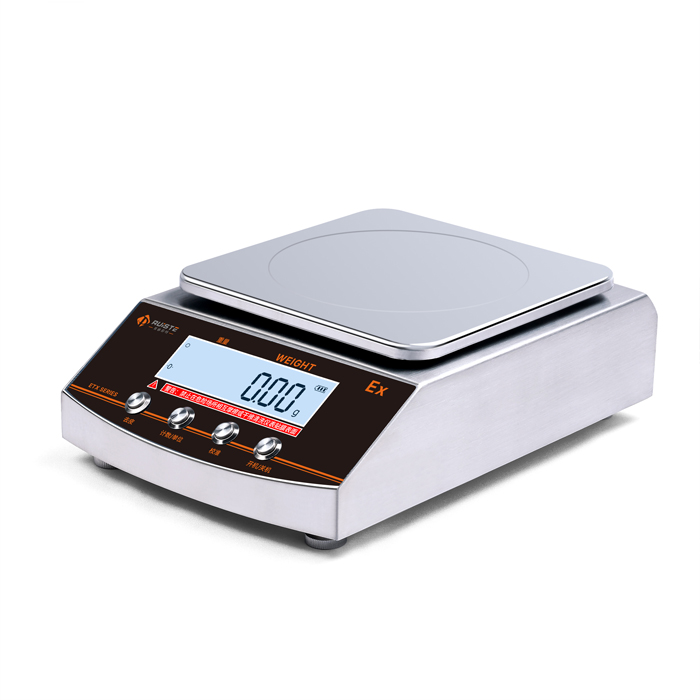
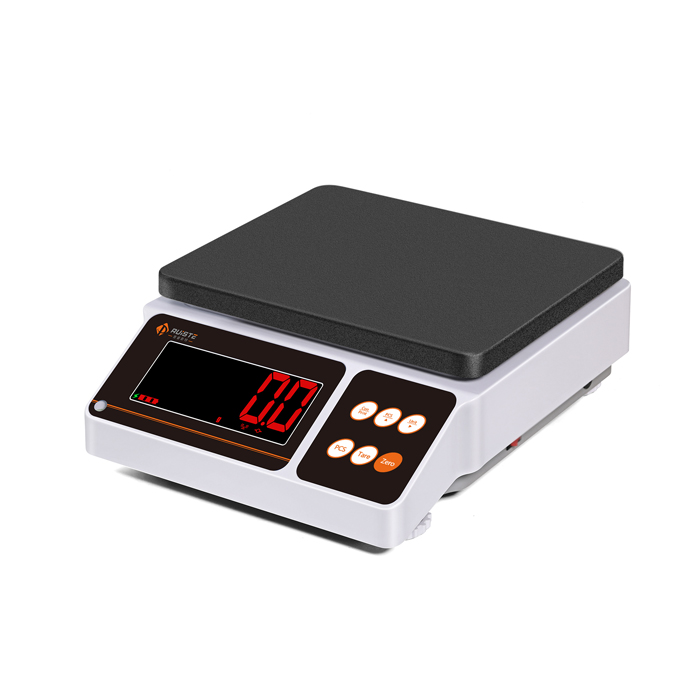
Based on structural form and portable performance, counting scales can be divided into desktop counting scales, floor-standing counting scales and portable counting scales. Desktop counting scales are the most common type with compact external dimensions and lightweight bodies. They are usually placed on flat working surfaces such as operating tables and workbenches, and occupy minimal space in working areas. The bearing platforms of desktop counting scales are mostly made of smooth and corrosion-resistant metal materials, which are easy to clean and maintain during daily use. This kind of scale is generally suitable for counting small items with light single weight, including electronic accessories, metal fasteners, plastic parts and small hardware components. Its internal sensing components are highly sensitive, which can capture tiny weight changes and ensure reliable counting results for miniature objects. In daily operation links such as small-batch material sorting, accessory inventory checking and laboratory sample statistics, desktop counting scales show stable adaptability, and their simple operation logic also lowers the usage threshold for ordinary operators. Floor-standing counting scales feature a supportive bracket structure and a heightened bearing platform, which enables them to bear heavier loads compared with desktop types. The overall frame is made of thickened metal materials to enhance structural stability, avoiding shaking and tilting during the weighing process of heavy items. The spacing of the supporting legs of floor-standing counting scales can be adjusted appropriately to adapt to uneven ground environments in factories and warehouses. These scales are widely used to count medium and large-sized goods, such as packaged industrial parts, bulk bagged supplies and mechanical components with relatively large volume. Owing to their excellent load-bearing capacity and structural stability, they can maintain long-term continuous operation in harsh industrial environments without obvious performance attenuation. Portable counting scales are designed for mobile operation demands, with simplified structural configuration and foldable parts in most cases. Some models are equipped with anti-slip hand-held structures to facilitate carrying and transferring. Their power supply modes are flexible, supporting both wired power connection and built-in battery power supply, so they can work normally in spaces without fixed power interfaces. This type of scale is commonly applied in temporary inventory inspection, outdoor material counting and mobile commodity sorting, and it can quickly complete quantity statistics of scattered items in different spatial locations. Although portable counting scales have slight limitations in load-bearing range and sensing accuracy compared with fixed-type equipment, their mobility and flexibility make them irreplaceable in temporary operation scenarios.
According to internal sensing and calculation principles, counting scales can be classified into mechanical induction counting scales and electronic induction counting scales. Mechanical induction counting scales rely on physical mechanical structures to complete weight sensing and quantity conversion. The internal core components include elastic deformation parts, transmission connecting rods and mechanical dial display structures. When items are placed on the bearing platform, the gravity of the objects causes elastic components to deform, and the mechanical transmission structure converts the deformation amplitude into dial indication data. Operators need to complete sampling weighing and unit weight recording through manual observation, and then calculate the total quantity with auxiliary mechanical computing parts. The structural design of mechanical induction counting scales is relatively simple, and they do not depend on electronic circuits and digital chips, so they have strong anti-interference ability in complex environments with electromagnetic fluctuations. Moreover, their maintenance cost is low, and the failure rate of mechanical parts is stable during long-term use. However, restricted by physical mechanical precision, this kind of scale has obvious limitations in counting tiny items, and it is prone to produce minor measurement deviations under the influence of external temperature and vibration. Electronic induction counting scales adopt high-precision sensing chips and digital signal processing systems as core components. After items are placed on the bearing platform, pressure sensors convert gravity signals into electrical signals, and the internal circuit system amplifies, filters and calibrates the signals. The digital processor automatically calculates the single-piece weight and total quantity of items based on preset sampling data, and presents intuitive digital results on the display screen. Electronic induction counting scales are equipped with intelligent data processing functions, which can automatically eliminate the interference of external static electricity and slight vibration on weighing data. Some optimized models can also record historical counting data and store sampling parameters of conventional items, which simplifies repeated debugging operations in continuous use. In terms of counting accuracy and data intuition, electronic induction counting scales have obvious advantages over mechanical types, and they are more suitable for modern production links that require high data precision and standardized data management.
In accordance with different application industries and functional orientations, counting scales can be categorized into industrial counting scales, commercial counting scales and experimental counting scales. Industrial counting scales are tailored for large-batch and high-intensity industrial production scenarios. They adopt reinforced structural designs and wear-resistant surface treatments to resist friction impact and dust erosion in industrial workshops. The load-bearing range of industrial counting scales covers multiple weight segments from light miniature parts to heavy bulk materials, and the internal sensing system can adapt to continuous uninterrupted weighing for a long time. In production links such as parts assembly, raw material statistics and finished product packaging, this kind of scale can efficiently complete batch counting tasks and ensure consistent quantity standards of packaged products. Commercial counting scales focus on daily commodity circulation and retail auxiliary work, with concise operation interfaces and intuitive data display modes. The appearance design is simple and neat, which can adapt to the display environment of shopping malls, supermarkets and wholesale markets. They are often used to count regular-shaped commodities such as packaged snacks, daily necessities and small retail goods, helping merchants quickly sort goods and check inventory quantities. The functional configuration of commercial counting scales is highly targeted, removing redundant industrial professional functions and retaining basic counting and weighing capabilities, which reduces operation difficulty and energy consumption. Experimental counting scales are developed for laboratory detection and scientific research scenarios, pursuing high precision and data stability. The internal sensors of such scales have extremely high sensitivity, which can capture subtle weight changes of micro samples. The external structure is equipped with isolation protection components to block the interference of ambient air flow, temperature change and dust on measurement results. In chemical component sampling, biological sample counting and precision material testing experiments, experimental counting scales provide accurate quantity data for scientific research, and their data repeatability meets the strict requirements of experimental detection.
Different types of counting scales have unique performance characteristics and applicable scenarios, and there is no uniform standard to judge the superiority of equipment. Desktop portable electronic products are suitable for small-batch and high-precision indoor counting, while heavy-duty floor-standing equipment adapts to industrial heavy-load operation; mechanical counting scales are reliable and easy to maintain for simple operation scenarios, and electronic intelligent counting scales meet the needs of digital data management. In the actual selection process, users need to comprehensively consider factors such as the weight range, volume attribute, production batch and usage environment of measured items. Reasonable matching of counting scale types can not only improve the efficiency of quantity statistics, but also reduce counting errors caused by equipment mismatch. With the continuous progress of manufacturing technology, the structural optimization and functional upgrading of counting scales are still in progress. Future counting scale products will balance portability, accuracy and durability more intelligently, and further expand their application boundaries in more professional fields, providing more convenient and accurate quantity measurement solutions for all walks of life. While understanding the classification of counting scales, users should also pay attention to daily maintenance such as regular cleaning of bearing platforms, stable placement of equipment and avoidance of overload use, so as to prolong the service life of the equipment and maintain long-term stable counting performance.Counting scales serve as essential weighing instruments designed to calculate the quantity of homogeneous items by measuring their weight, and they have become indispensable tools in modern industrial production, warehouse management, commercial circulation and daily material sorting processes. The core working logic of such equipment lies in the correlation between unit weight and total weight. After obtaining the single-piece weight of items through preliminary sampling, the internal calculation system can convert the overall measured weight into a specific quantity, which effectively eliminates the inefficiency and error risks of manual counting. With the diversification of usage scenarios and the differentiation of item characteristics, counting scales have derived multiple types with distinct structural designs, working mechanisms and functional attributes. A clear understanding of different categories of counting scales, as well as their applicable conditions and performance characteristics, can help users select suitable equipment to optimize counting workflows and improve operational accuracy.
Based on structural form and portable performance, counting scales can be divided into desktop counting scales, floor-standing counting scales and portable counting scales. Desktop counting scales are the most common type with compact external dimensions and lightweight bodies. They are usually placed on flat working surfaces such as operating tables and workbenches, and occupy minimal space in working areas. The bearing platforms of desktop counting scales are mostly made of smooth and corrosion-resistant metal materials, which are easy to clean and maintain during daily use. This kind of scale is generally suitable for counting small items with light single weight, including electronic accessories, metal fasteners, plastic parts and small hardware components. Its internal sensing components are highly sensitive, which can capture tiny weight changes and ensure reliable counting results for miniature objects. In daily operation links such as small-batch material sorting, accessory inventory checking and laboratory sample statistics, desktop counting scales show stable adaptability, and their simple operation logic also lowers the usage threshold for ordinary operators. Floor-standing counting scales feature a supportive bracket structure and a heightened bearing platform, which enables them to bear heavier loads compared with desktop types. The overall frame is made of thickened metal materials to enhance structural stability, avoiding shaking and tilting during the weighing process of heavy items. The spacing of the supporting legs of floor-standing counting scales can be adjusted appropriately to adapt to uneven ground environments in factories and warehouses. These scales are widely used to count medium and large-sized goods, such as packaged industrial parts, bulk bagged supplies and mechanical components with relatively large volume. Owing to their excellent load-bearing capacity and structural stability, they can maintain long-term continuous operation in harsh industrial environments without obvious performance attenuation. Portable counting scales are designed for mobile operation demands, with simplified structural configuration and foldable parts in most cases. Some models are equipped with anti-slip hand-held structures to facilitate carrying and transferring. Their power supply modes are flexible, supporting both wired power connection and built-in battery power supply, so they can work normally in spaces without fixed power interfaces. This type of scale is commonly applied in temporary inventory inspection, outdoor material counting and mobile commodity sorting, and it can quickly complete quantity statistics of scattered items in different spatial locations. Although portable counting scales have slight limitations in load-bearing range and sensing accuracy compared with fixed-type equipment, their mobility and flexibility make them irreplaceable in temporary operation scenarios.
According to internal sensing and calculation principles, counting scales can be classified into mechanical induction counting scales and electronic induction counting scales. Mechanical induction counting scales rely on physical mechanical structures to complete weight sensing and quantity conversion. The internal core components include elastic deformation parts, transmission connecting rods and mechanical dial display structures. When items are placed on the bearing platform, the gravity of the objects causes elastic components to deform, and the mechanical transmission structure converts the deformation amplitude into dial indication data. Operators need to complete sampling weighing and unit weight recording through manual observation, and then calculate the total quantity with auxiliary mechanical computing parts. The structural design of mechanical induction counting scales is relatively simple, and they do not depend on electronic circuits and digital chips, so they have strong anti-interference ability in complex environments with electromagnetic fluctuations. Moreover, their maintenance cost is low, and the failure rate of mechanical parts is stable during long-term use. However, restricted by physical mechanical precision, this kind of scale has obvious limitations in counting tiny items, and it is prone to produce minor measurement deviations under the influence of external temperature and vibration. Electronic induction counting scales adopt high-precision sensing chips and digital signal processing systems as core components. After items are placed on the bearing platform, pressure sensors convert gravity signals into electrical signals, and the internal circuit system amplifies, filters and calibrates the signals. The digital processor automatically calculates the single-piece weight and total quantity of items based on preset sampling data, and presents intuitive digital results on the display screen. Electronic induction counting scales are equipped with intelligent data processing functions, which can automatically eliminate the interference of external static electricity and slight vibration on weighing data. Some optimized models can also record historical counting data and store sampling parameters of conventional items, which simplifies repeated debugging operations in continuous use. In terms of counting accuracy and data intuition, electronic induction counting scales have obvious advantages over mechanical types, and they are more suitable for modern production links that require high data precision and standardized data management.
In accordance with different application industries and functional orientations, counting scales can be categorized into industrial counting scales, commercial counting scales and experimental counting scales. Industrial counting scales are tailored for large-batch and high-intensity industrial production scenarios. They adopt reinforced structural designs and wear-resistant surface treatments to resist friction impact and dust erosion in industrial workshops. The load-bearing range of industrial counting scales covers multiple weight segments from light miniature parts to heavy bulk materials, and the internal sensing system can adapt to continuous uninterrupted weighing for a long time. In production links such as parts assembly, raw material statistics and finished product packaging, this kind of scale can efficiently complete batch counting tasks and ensure consistent quantity standards of packaged products. Commercial counting scales focus on daily commodity circulation and retail auxiliary work, with concise operation interfaces and intuitive data display modes. The appearance design is simple and neat, which can adapt to the display environment of shopping malls, supermarkets and wholesale markets. They are often used to count regular-shaped commodities such as packaged snacks, daily necessities and small retail goods, helping merchants quickly sort goods and check inventory quantities. The functional configuration of commercial counting scales is highly targeted, removing redundant industrial professional functions and retaining basic counting and weighing capabilities, which reduces operation difficulty and energy consumption. Experimental counting scales are developed for laboratory detection and scientific research scenarios, pursuing high precision and data stability. The internal sensors of such scales have extremely high sensitivity, which can capture subtle weight changes of micro samples. The external structure is equipped with isolation protection components to block the interference of ambient air flow, temperature change and dust on measurement results. In chemical component sampling, biological sample counting and precision material testing experiments, experimental counting scales provide accurate quantity data for scientific research, and their data repeatability meets the strict requirements of experimental detection.
Different types of counting scales have unique performance characteristics and applicable scenarios, and there is no uniform standard to judge the superiority of equipment. Desktop portable electronic products are suitable for small-batch and high-precision indoor counting, while heavy-duty floor-standing equipment adapts to industrial heavy-load operation; mechanical counting scales are reliable and easy to maintain for simple operation scenarios, and electronic intelligent counting scales meet the needs of digital data management. In the actual selection process, users need to comprehensively consider factors such as the weight range, volume attribute, production batch and usage environment of measured items. Reasonable matching of counting scale types can not only improve the efficiency of quantity statistics, but also reduce counting errors caused by equipment mismatch. With the continuous progress of manufacturing technology, the structural optimization and functional upgrading of counting scales are still in progress. Future counting scale products will balance portability, accuracy and durability more intelligently, and further expand their application boundaries in more professional fields, providing more convenient and accurate quantity measurement solutions for all walks of life. While understanding the classification of counting scales, users should also pay attention to daily maintenance such as regular cleaning of bearing platforms, stable placement of equipment and avoidance of overload use, so as to prolong the service life of the equipment and maintain long-term stable counting performance.
Types of Counting Scale
https://www.pruiste.com/counting-scale.html
Post Date: May 7, 2026
https://www.supplier-manufacturer.com/counting-scale/types-of-counting-scale.html

![Weighing Balance RSB-W SERIES]()
Weighing Balance RSB-W SERIES
The RSB-W series adopts high-definition keys, which is economical. The entire series of balances adopt Nuosheng sensors, brand sensors, and aluminum alloy structure to ens…![Specifications of Digital Viscometer]()
Specifications of Digital Viscometer
Digital viscometers are essential analytical instruments designed to quantify the viscosity characteristics of various liquid substances, serving as core testing equipment…![Automatic Digital Viscometer]()
Automatic Digital Viscometer
Viscosity stands as one of the most fundamental physical properties of fluid substances, reflecting the internal friction and flow resistance generated between molecular l…![Coaxial Cylinder Digital Viscometer]()
Coaxial Cylinder Digital Viscometer
The coaxial cylinder digital viscometer is a sophisticated laboratory and industrial testing instrument designed to quantify the viscous properties of various fluid materi…![Halogen Moisture Analyzer]()
Halogen Moisture Analyzer
Moisture content stands as one of the most critical physical indicators for a wide range of raw materials, semi-finished goods, and finished products across modern industr…