Precision Electronic Balance
Precision electronic balance stands as an essential measuring instrument widely utilized in professional scenarios that demand subtle mass detection and stable data output. Distinct from traditional mechanical weighing tools that rely on counterweights and lever transmission, this modern measuring device adopts optimized electronic sensing structures to convert mass signals into identifiable electronic signals, realizing intuitive and stable mass readouts. Its inherent attributes of subtle measurement resolution, steady data repetition and convenient operation make it a fundamental piece of equipment in multiple professional fields, supporting daily testing, experimental research and standardized sample detection work for practitioners. The continuous upgrading of internal electronic components and structural designs has gradually refined the performance of precision electronic balances, enabling them to adapt to complex environmental conditions and diverse weighing samples, thus laying a solid technical foundation for standardized mass measurement in various industries.
The core operating principle of a precision electronic balance centers on electromagnetic force compensation, a mature and reliable working mechanism applied in high-precision weighing equipment. When a sample is placed on the weighing pan, the gravitational force generated by the sample mass triggers a tiny displacement of the internal mechanical sensing component. The built-in position sensor captures this subtle displacement in real time and converts the physical displacement signal into a weak electrical signal. After the signal is transmitted to the internal control circuit, the circuit dynamically adjusts the current intensity of the electromagnetic coil. The coil generates an electromagnetic force in the permanent magnetic field to counteract the downward gravitational force of the sample, pulling the mechanical structure back to its initial balanced position. There exists a stable positive correlation between the current required to maintain structural balance and the mass of the loaded sample. The internal data processing module converts the current variation into intuitive digital values through algorithm calculation, which are then displayed on the visual screen to complete the entire weighing process. Compared with strain sensors and capacitive sensors used in ordinary weighing devices, the electromagnetic force compensation structure delivers more stable signal transmission, lower sensing deviation and better consistency in repeated measurements, which explains why it is extensively adopted in precision electronic balance products.
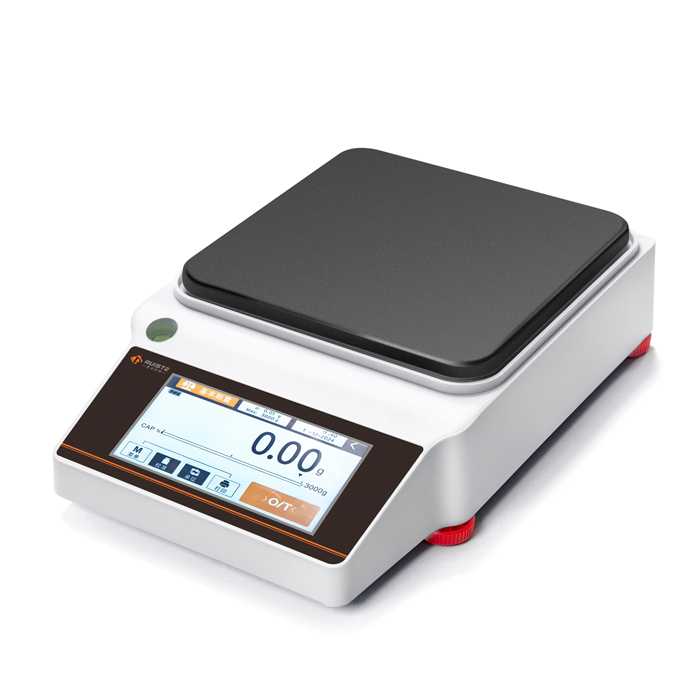
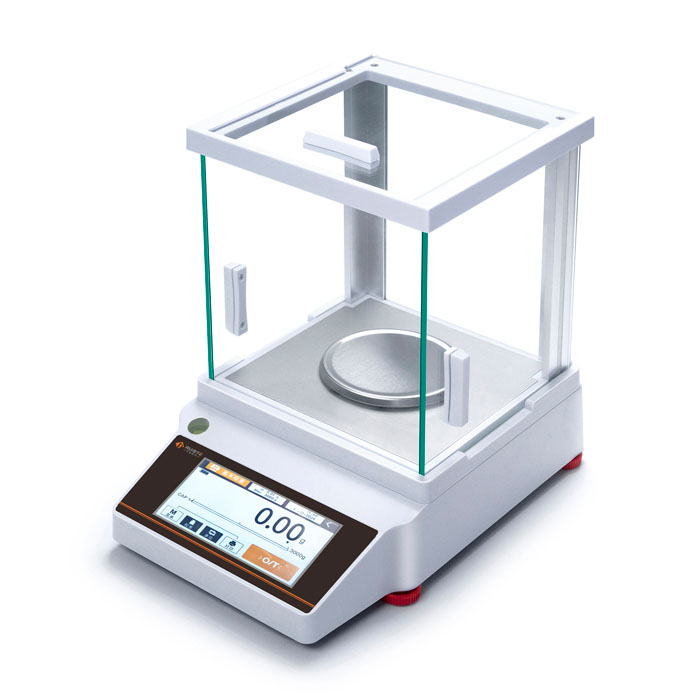
The overall structure of a precision electronic balance is reasonably layered, with each component cooperating closely to ensure measuring stability and operational safety. The external part mainly includes a weighing pan, a windproof baffle and an operation display panel. The weighing pan is usually made of corrosion-resistant and high-hardness metal materials, featuring a smooth and flat surface to ensure uniform stress on samples and reduce measurement errors caused by uneven placement. The windproof baffle is an indispensable external component for high-precision models; it isolates external air flow from the weighing cavity, effectively preventing tiny air fluctuations from interfering with suspended sensing components and avoiding data jitter during the weighing process. The operation display panel integrates digital display screens and simple control keys, enabling operators to observe real-time weighing data and trigger basic functional modes such as zero clearing and tare weighing. The internal structure consists of high-precision sensors, electromagnetic coils, signal processing circuits and shock-absorbing bases. The shock-absorbing structure at the bottom can buffer subtle vibrations from the placement platform, minimizing the impact of external mechanical vibration on internal sensing components. Sealed internal circuits also reduce the interference of dust and moisture on electronic elements, extending the service life of the instrument while maintaining stable operating performance.
Standardized operation procedures are critical to maintaining the measurement stability of precision electronic balances, and normative usage habits can effectively reduce human-induced measurement deviations. Before conducting formal weighing work, operators need to place the instrument on a horizontal and solid platform to avoid tilting or structural deformation caused by uneven stress. It is necessary to preheat the equipment for an appropriate duration after powering it on, as continuous power supply can stabilize the operating state of internal circuits and electromagnetic components and reduce data fluctuation caused by temperature changes of electronic elements. Environment inspection is also a preparatory step; it is essential to keep the ambient temperature and humidity within a suitable range, and avoid placing the instrument in spaces with direct sunlight, severe dust or corrosive gas. During the weighing process, samples should be gently placed in the center of the weighing pan to prevent lateral friction and unbalanced stress. For samples that are prone to scattering, moisture absorption or volatilization, sealed containers are required for auxiliary holding to prevent sample loss and avoid contamination of internal components. After each weighing, the tare function can be used to eliminate the mass influence of containers, and multiple repeated weighings are recommended for the same sample to record average data and enhance result credibility.
Precision electronic balances exhibit strong scene adaptability and are applied in numerous professional industries with strict mass measurement requirements. In chemical laboratories, researchers use such instruments to weigh trace reagents, powdered crystals and experimental raw materials. Accurate mass matching ensures the rational progress of chemical reaction experiments, controls the proportion of reactants, and reduces experimental errors caused by inaccurate feeding. In biological research institutions, the instrument is used for weighing biological samples such as microbial cultures, tissue particles and nutrient medium raw materials. Stable measurement data provide reliable basic parameters for biological cultivation, activity observation and sample analysis. The pharmaceutical industry also relies heavily on precision electronic balances; staff weigh medicinal raw materials, auxiliary materials and trace additives in accordance with production standards to ensure the uniform proportion of each component in medicinal preparations and maintain the inherent properties of pharmaceutical products.
In industrial manufacturing and quality control fields, precision electronic balances undertake important sample inspection tasks. Light industrial production departments use them to detect the mass uniformity of small processed parts, screen out unqualified products with excessive mass deviation, and control the consistent quality of finished products. In new material research and development, researchers measure the mass of composite materials, nano-powders and high-purity raw materials to analyze material density, component proportion and structural characteristics, providing data support for material formula optimization and performance improvement. In the jewelry and precious metal circulation link, the instrument accurately measures the mass of small precious metal products. Its low measurement deviation meets the detection requirements of high-value samples, avoiding economic losses caused by inaccurate weighing. In addition, educational and scientific research institutions equip laboratories with precision electronic balances to assist daily teaching and student experimental training, helping learners understand the basic principles of precise measurement and cultivate standardized experimental operation habits.
Daily maintenance and scientific storage determine the long-term operating performance and service life of precision electronic balances. In daily use, the surface of the weighing pan and the internal windproof cavity should be kept clean; soft dust-free cloths can be used to wipe surface dust and residual sample particles, and volatile corrosive cleaning agents are prohibited to prevent corrosion of metal components and circuit shells. The instrument should be placed in a dry and ventilated storage space when not in use, with dust covers to isolate suspended dust in the air and prevent moisture from invading internal circuits. Long-term continuous overload operation should be avoided during use; excessive load will cause irreversible fatigue deformation of internal sensing components, reduce measurement sensitivity and even lead to permanent component damage. Regular manual inspection is necessary, including checking whether the horizontal state of the instrument is offset, whether the keys and display screen work normally, and whether there is abnormal stagnation in the sensing reset process. For instruments that have been stationary for a long time, idle activation and blank weighing calibration can be carried out to maintain the sensitivity of sensing components and ensure rapid response during subsequent use.
Environmental interference suppression is a key design highlight of modern precision electronic balances, and optimized structural designs effectively reduce the impact of external uncertain factors on measurement results. In terms of temperature adaptation, internal temperature sensing elements monitor ambient temperature changes in real time, and the intelligent circuit automatically adjusts current parameters to offset measurement deviation caused by thermal expansion and contraction of metal components. For vibration interference, multi-layer shock-absorbing pads and integrated fixed structures are adopted at the bottom to weaken vibration transmission from the desktop and the surrounding environment. In terms of anti-interference of electromagnetic signals, the instrument is equipped with shielding layers inside the shell to isolate external electromagnetic radiation, preventing signal confusion between electronic equipment and ensuring the accuracy of internal current conversion data. Although the instrument has excellent environmental adaptability, operators still need to avoid placing it near air conditioners, fans and heat sources, as continuous air convection and local high temperature will break the stable balance state of internal components and affect the stability of real-time data.
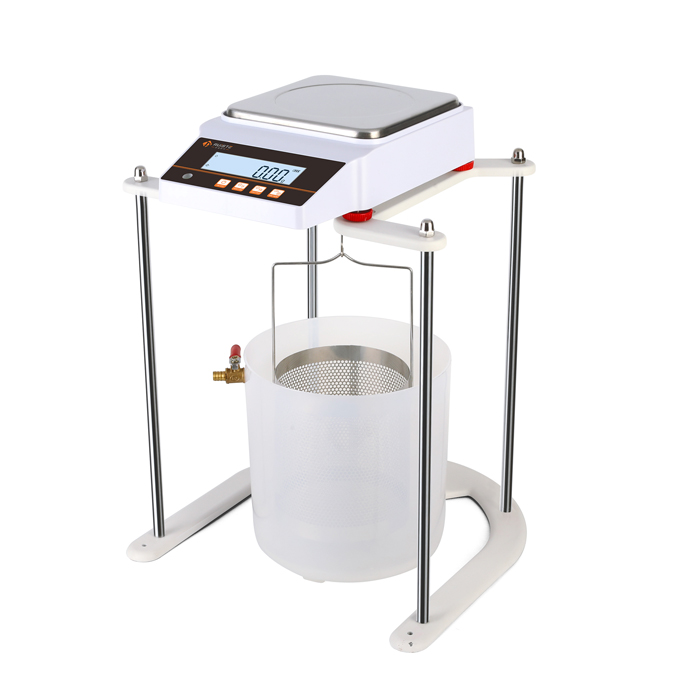
With the continuous progress of electronic information technology, the functional design of precision electronic balances is constantly optimized and upgraded to meet the increasingly diverse market demands. Traditional single weighing functions have been expanded, and many instruments are equipped with auxiliary calculation modes such as density measurement and percentage weighing. By combining auxiliary measuring tools, the density of solid and liquid samples can be calculated through mass difference data, realizing multi-dimensional detection of sample physical properties. The data transmission function is also continuously improved; reserved data interfaces can realize real-time connection with external terminal equipment, upload weighing data to computers and storage terminals, and facilitate data sorting, archiving and subsequent statistical analysis. The humanized operation design is reflected in multiple details: the high-definition display screen reduces viewing errors, the touch-sensitive keys simplify operation steps, and the low-noise running structure avoids harsh mechanical vibration sounds during work. These optimized designs lower the operation threshold for users and improve the overall efficiency of batch detection work.
Despite the outstanding performance of precision electronic balances in daily measurement work, certain objective limitations still exist in their application. The instrument is sensitive to extreme environmental changes; in high-temperature, low-temperature or high-humidity environments, the response speed of sensing components will decrease, and data fluctuation range will expand. The precision structure has strict requirements on sample placement; samples with static electricity or strong adsorption force are prone to adhesion on the weighing pan, resulting in persistent deviation of measured data. In addition, tiny magnetic substances will interfere with the internal electromagnetic field balance, affecting the current regulation accuracy of the coil. Therefore, operators need to select appropriate pretreatment methods according to sample characteristics before weighing, such as eliminating static electricity and isolating magnetic interference, to create suitable measuring conditions for the instrument.
Looking into the future, precision electronic balance technology will develop toward higher stability, intelligent integration and energy-saving optimization. With the innovation of sensor manufacturing technology, the volume of internal sensing components will be further reduced, and the anti-interference ability and repeated measurement consistency will be continuously improved. Combined with intelligent algorithm technology, the instrument will realize automatic judgment of abnormal data, automatic recording of environmental parameters and regular intelligent calibration, reducing manual intervention links. In terms of energy consumption optimization, low-power electronic components will be widely used to maintain stable long-term operation while reducing energy consumption. Meanwhile, the personalized structural design will better adapt to special experimental scenes such as vacuum environment and low-temperature storage, expanding the application boundary of precision weighing equipment. As one of the basic measuring instruments in modern scientific research and industrial production, precision electronic balances will always rely on technological iteration to provide accurate and reliable mass measurement services for various industries, and continuously assist the steady development of scientific research experiments and industrial standardized production.
Precision Electronic Balance
https://www.pruiste.com/electronic-balance.html
Post Date: May 13, 2026
https://www.supplier-manufacturer.com/electronic-balance/precision-electronic-balance.html

![What is Electronic Balance]()
What is Electronic Balance
In the fields of modern metrology detection, industrial production, scientific research experiments and daily precision processing, electronic balances have become indispe…![Hydrostatic Balance JY SERIES]()
Hydrostatic Balance JY SERIES
The entire series of JY balances uses branded sensors to ensure high accuracy and stability of weighing results. This series of precision casting ABS Environmental protect…![Digital Viscometer Exporter]()
Digital Viscometer Exporter
Viscosity stands as one of the most fundamental physical properties of fluid materials, reflecting the internal friction and flow resistance of substances during movement.…![Digital Viscometer For Sale]()
Digital Viscometer For Sale
Viscosity serves as one of the most fundamental physical properties of fluid substances, reflecting the internal friction and flow resistance of liquids during movement. I…![Industrial Digital Viscometer]()
Industrial Digital Viscometer
Viscosity stands as one of the most critical physical properties of fluid materials, reflecting the internal frictional resistance that occurs when a fluid undergoes flow …