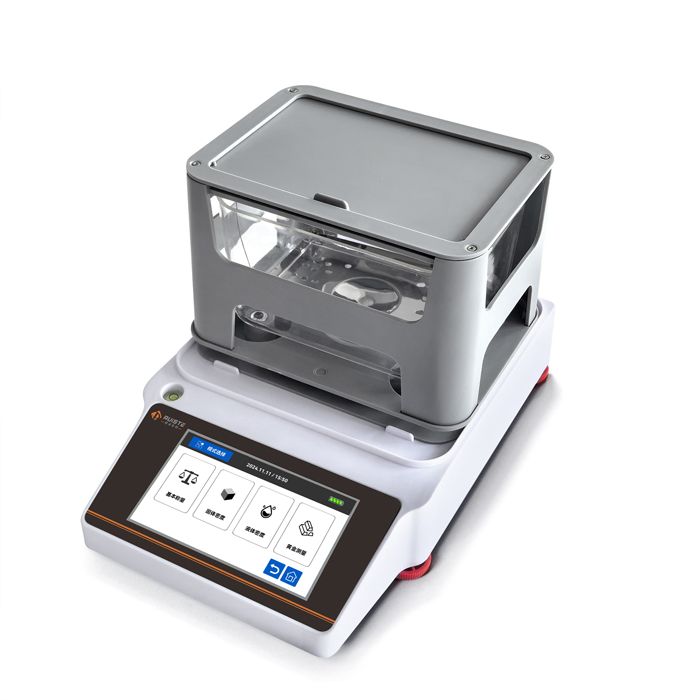
Industrial Electronic Balance
In modern industrial production and quality control systems, accurate mass measurement serves as one of the most fundamental and indispensable foundational links that run through every production processing, raw material proportioning, finished product inspection and experimental research stage. The industrial electronic balance has gradually replaced traditional mechanical weighing equipment in various industrial scenarios by virtue of its stable operating performance, sensitive signal response, intuitive data display and convenient data linkage functions, becoming a key measuring device to ensure production consistency, product qualification rate and standardized industrial operation. Different from ordinary household or commercial weighing tools designed for simple weight reading, industrial electronic balances are developed and manufactured targeting complex on-site industrial environments and high-standard metering requirements, focusing on maintaining continuous and reliable weighing output under the interference of various external uncertain factors, and supporting long-term uninterrupted operation in assembly workshops, processing workshops, chemical batching rooms, food processing production lines, pharmaceutical preparation workshops and many other industrial production scenarios. The inherent design logic and working mechanism of this kind of weighing equipment determine that it can not only complete basic weight detection of materials and parts, but also provide accurate and repeatable mass data support for industrial process parameter adjustment, production formula calibration and product quality traceability, laying a solid metering foundation for the standardized and refined development of modern industrial production.

The basic working operation of industrial electronic balances relies on mature and reliable physical sensing principles and stable electronic signal processing systems, without the need for manual weight matching and mechanical pointer adjustment required by traditional mechanical balances, realizing automatic induction, rapid calculation and real-time display of weighing data. The core sensing part of the equipment adopts advanced force-electric conversion structure, and the core component responsible for weight perception and signal conversion is a high-sensitivity sensor arranged at the bottom of the weighing tray. When the measured object is stably placed on the weighing tray, the gravity generated by the object will be transmitted to the internal elastic structure of the sensor, causing tiny and controllable elastic deformation of the elastic body inside the sensor. This subtle deformation will not cause any structural damage to the equipment, but will trigger the change of the internal resistance assembly attached to the elastic structure, and the resistance change value will be converted into a continuous and stable analog electrical signal through the professional circuit bridge structure inside the balance. The strength of this electrical signal maintains a stable positive correlation with the actual mass of the measured object, ensuring that the subsequent data processing link can accurately correspond the signal data to the real weight information. After the weak analog electrical signal is generated, it will be transmitted to the built-in signal processing circuit of the industrial electronic balance in real time, and the circuit system will complete multi-step processing including signal amplification, noise filtering and signal stabilization correction to eliminate tiny signal fluctuations caused by external environmental interference and internal circuit slight power supply changes. The processed stable analog signal will be further converted into digital signal data that can be identified and calculated by the microprocessor through the high-precision analog-to-digital conversion module inside the equipment, and the built-in microprocessor, as the core control and computing center of the balance, will carry out accurate algorithm calculation and data calibration according to the preset program parameters, and finally present the accurate weight value on the high-definition digital display screen in an intuitive and readable form for operators to view and record in real time.
The overall structural design of industrial electronic balance follows the dual core concepts of industrial durability and weighing stability, and each component is carefully configured and optimized according to the actual needs of industrial on-site use, ensuring that the equipment can adapt to long-term heavy-load use and complex environmental conditions. The external bearing part of the equipment is mainly composed of a high-strength weighing tray and a stable base structure. The weighing tray is made of corrosion-resistant, wear-resistant and impact-resistant special materials, which can adapt to the weighing work of various solid materials, granular raw materials, mechanical parts and finished industrial products, and is not easy to be deformed, corroded or worn after long-term contact with different types of industrial materials. The base part is designed with a weighted and anti-slip structure, which can effectively reduce the shaking and displacement of the equipment caused by on-site mechanical vibration and human operation collision, and maintain the overall horizontal stability of the balance during the whole weighing process. The interior of the base is equipped with all core electronic components including sensors, circuit processing modules, microprocessors and power supply modules, and the internal space is reasonably arranged and sealed and protected by professional structural technology. This sealing design can effectively block the intrusion of industrial dust, water vapor and tiny particulate impurities in the production environment, avoid dust accumulation on the surface of precision electronic components and internal circuit short circuit or signal distortion caused by moisture erosion, and greatly extend the stable service life of the internal core components of the balance. In addition, the industrial electronic balance is equipped with a sensitive horizontal adjustment auxiliary structure and a real-time level detection reminder function. Before each use, operators can fine-tune the supporting feet at the bottom of the equipment according to the level state to ensure that the balance is always kept in a horizontal working state. Keeping the horizontal state is a key prerequisite to ensure accurate weighing data, because the tilted placement of the balance will cause uneven force on the internal sensor structure, resulting in deviation of force-electric conversion effect and further affecting the accuracy and repeatability of weighing results.
In the actual operation process of industrial production, the application value of industrial electronic balances runs through the whole industrial chain from raw material incoming inspection, production and processing batching to finished product delivery inspection, and plays an irreplaceable role in different production links and different industrial fields. In the chemical industry production link, the accurate proportioning of various chemical raw materials and reagents is directly related to the chemical reaction effect, product yield and production safety. Slight deviation in the mass ratio of raw materials may lead to unqualified product performance, reaction failure and even potential safety hazards. Industrial electronic balances can complete the precise weighing and batching of various solid and liquid chemical raw materials, ensure that the feeding amount of each raw material strictly meets the production formula standards, maintain the stability of each batch of chemical production reaction conditions, and thus ensure the consistency of the quality and performance of chemical products produced in different batches. In the food and beverage processing industry, the weighing and detection of raw material ingredients, food additives and finished product net content are important links to comply with production specifications and ensure food quality and safety. Industrial electronic balances can accurately control the dosage of various raw materials and auxiliary materials in food processing, avoid product taste deviation and quality differences caused by inconsistent ingredient ratios, and at the same time complete random inspection and batch detection of finished product net content to ensure that each batch of finished products meets the unified quality specifications and market sales measurement requirements.
In the mechanical manufacturing and hardware processing industry, industrial electronic balances are mainly used for weighing and sorting precision mechanical parts, detecting the weight consistency of stamped and cast parts, and counting and weighing small hardware accessories. Many precision mechanical equipment parts have strict weight design standards, and parts with excessive weight deviation will affect the assembly accuracy and operating stability of the whole mechanical equipment. Through the accurate weighing function of industrial electronic balances, production staff can quickly screen unqualified parts with excessive weight deviation, ensure that all assembled parts meet the design weight standards, and improve the assembly qualification rate and overall operating performance of mechanical products. In the pharmaceutical production and biological preparation industry, the production of drugs and biological reagents has extremely high requirements for the accuracy of raw material weighing and sample preparation. The slight error of raw material dosage will affect the efficacy and safety of drugs. Industrial electronic balances with stable performance can meet the high-precision weighing needs of pharmaceutical raw materials and experimental samples, provide accurate data support for pharmaceutical production and biological experimental research, and ensure the safety and effectiveness of pharmaceutical products and experimental results. In addition, in the new energy material processing, electronic component production, building materials production and other industrial fields, industrial electronic balances are also widely used in raw material detection, production process monitoring and finished product quality inspection, becoming an important basic guarantee for the stable operation of various industrial production work.
The weighing accuracy and long-term stable operation of industrial electronic balances are not only determined by the inherent design quality and core component performance of the equipment itself, but also closely related to the use environment of the equipment and the standardization of daily operation. Industrial production sites usually have complex environmental factors such as mechanical vibration, air flow fluctuation, dust accumulation, temperature and humidity change, which will have a certain impact on the weighing stability and data accuracy of electronic balances if not effectively avoided and controlled. Therefore, selecting a suitable placement position for the industrial electronic balance is the primary premise to ensure its good working condition. The equipment should be placed on a solid, flat and stable operating platform, avoiding placement near production mechanical equipment with strong vibration, ventilation fans and air outlets with strong air flow, and production areas with severe dust pollution and frequent temperature and humidity drastic changes. Long-term vibration will cause continuous slight shaking of the balance and the measured object, resulting in unstable weighing data and difficult numerical stabilization; strong air flow will directly affect the stress balance state of the weighing tray and the measured object, leading to repeated fluctuation of weighing readings; excessive dust and humid environment will accelerate the aging of internal electronic components and cause signal transmission failure. In addition, the ambient temperature and humidity of the placement area should be kept within a reasonable and stable range as far as possible. Too high or too low temperature will affect the operating performance of the internal sensor and circuit components of the balance, and excessive humidity will easily cause moisture and short circuit of internal circuits, while too dry environment may generate static electricity and interfere with signal transmission.
Standardized daily operation steps are crucial to maintaining the measurement accuracy and extending the service life of industrial electronic balances, and operators need to follow unified operating specifications to complete each weighing work. Before formal weighing operation, preheating preparation must be carried out in accordance with the operating requirements. After the equipment is powered on, it needs to stand for a certain period of time to make the internal circuit system and sensor structure reach a stable working state, avoiding inaccurate initial weighing data caused by unstable circuit signal just after power on. After the preheating is completed, the horizontal state of the balance should be checked first, and the horizontal adjustment work should be done well to ensure that the equipment is placed horizontally, and then the zero-setting operation should be carried out to clear the initial weight data of the weighing tray itself and the bearing container, so as to ensure that the subsequent weighing data can accurately reflect the net weight of the measured object. In the process of placing the measured object, it is necessary to handle it gently and place it in the center of the weighing tray steadily, avoiding violent throwing and impact on the weighing tray. Violent impact will not only cause instantaneous deviation of weighing data, but also cause irreversible damage to the internal precision sensor structure and affect the long-term measurement stability of the balance. During the weighing data reading process, it is necessary to wait until the digital display data is completely stable and no longer fluctuates before recording the data, and avoid moving the measured object and touching the equipment body at will during the stabilization process. After each batch of weighing work is completed, the weighing tray should be cleaned in time to remove residual materials, dust and debris on the surface, so as to prevent the residual materials from corroding the weighing tray or affecting the accuracy of the next weighing work.
Scientific and reasonable daily maintenance and regular maintenance management are important measures to maintain the long-term stable performance of industrial electronic balances, reduce equipment failure rate and prolong the overall service life, and regular maintenance work needs to be arranged in accordance with standardized management procedures in industrial production management. Daily basic maintenance work mainly includes daily cleaning and appearance inspection. After the daily production and weighing work is completed, the surface of the weighing tray and the equipment body should be wiped with a clean and soft cleaning tool to remove surface dust and residual sundries, and a dust cover should be covered when the equipment is not in use for a long time to prevent industrial dust from accumulating into the interior of the equipment. Regular weekly inspection work needs to focus on checking the connection state of the internal circuit interface and the sensor structure of the balance, ensuring that all connecting lines are firm and free from looseness, falling off and aging damage, and checking the stability of the power supply connection to avoid weighing data fluctuation and equipment shutdown failure caused by poor power supply contact. Monthly maintenance work needs to conduct a comprehensive performance inspection and basic calibration of the balance, check whether the weighing repeatability and data stability of the equipment meet the daily use requirements, and perform professional calibration processing when slight data deviation is found to ensure that the weighing accuracy is always kept within the normal usable range.
In the process of long-term use, industrial electronic balances may have some common minor abnormal problems due to environmental influence and operational wear, and timely and standardized troubleshooting can quickly restore the normal working state of the equipment and avoid affecting the progress of industrial production work. The common abnormal situations mainly include unstable display data, inability to return to zero normally after power on, and obvious deviation of weighing data. When the display data fluctuates continuously and cannot be stabilized, it is usually caused by external vibration interference, air flow influence, unstable equipment placement or insufficient preheating time. At this time, it is necessary to reconfirm whether the equipment placement position is reasonable, readjust the horizontal state of the balance, extend the preheating time appropriately, and eliminate the surrounding vibration and air flow interference factors. When the balance cannot complete the zero-setting operation normally, it is mostly because there are residual sundries on the weighing tray or the bottom of the tray is stuck with foreign objects, resulting in unbalanced initial stress. At this time, the weighing tray should be removed carefully to clean up the residual foreign objects, and then the zero-setting operation should be carried out again after reinstallation and stabilization. When the weighing data has obvious deviation, it is necessary to check whether the equipment has been used for a long time without calibration, or whether the internal sensor is affected by moisture and dust accumulation, and professional calibration and internal dust removal and moisture-proof treatment can be carried out to restore the normal weighing performance of the balance. It should be noted that all internal disassembly and professional maintenance operations need to be completed by professional maintenance personnel, and non-professional operators should not disassemble the equipment at will, so as to avoid damage to internal precision components and affect the overall performance of the balance.
With the continuous upgrading and iterative development of modern industrial production towards refinement, intelligence and standardization, the application importance of industrial electronic balances in various industrial production links will continue to increase, and the performance requirements for such weighing equipment in the industrial field will also be continuously improved. Modern industrial production no longer only pays attention to the basic weighing function of weighing equipment, but also pays more attention to the long-term stability, anti-interference ability, data synchronization linkage performance and convenient maintenance performance of the equipment in complex industrial environments. Industrial electronic balances, with their mature working principle, reliable structural design and flexible application scenarios, can well meet the current and future industrial production metering needs, and provide accurate and consistent mass measurement data support for all links of industrial production. Through standardized equipment placement and use, scientific daily operation management and perfect regular maintenance and maintenance work, the industrial electronic balance can always maintain good working condition, give full play to its accurate weighing and quality detection functions, effectively help all industrial enterprises optimize production processes, stabilize product quality, reduce production quality risks, and promote the sustainable and standardized development of various industrial production undertakings.
Industrial Electronic Balance
https://www.pruiste.com/electronic-balance.html
Post Date: May 5, 2026
https://www.supplier-manufacturer.com/electronic-balance/industrial-electronic-balance.html

![Commercial Counting Scale]()
Commercial Counting Scale
In the daily operation of various commercial and industrial business scenarios, accurate quantity management of small parts, bulk packaged goods and standardized component…![Benchtop Laboratory Balance]()
Benchtop Laboratory Balance
In every modern laboratory setting that relies on precise quantitative measurement and accurate experimental data recording, the benchtop laboratory balance stands as an i…![Industrial Analytical Balance]()
Industrial Analytical Balance
In modern industrial production and material processing sectors, accurate mass measurement serves as the foundational cornerstone for maintaining production consistency, c…![Industrial Electronic Balance]()
Industrial Electronic Balance
In modern industrial production and quality control systems, accurate mass measurement serves as one of the most fundamental and indispensable foundational links that run …![What is Moisture Analyzer]()
What is Moisture Analyzer
Moisture is a core quality control indicator for solid, liquid, powder and paste materials. The moisture content inside materials directly determines product quality stabi…