Industrial Weighing Scale
Industrial weighing scales stand as fundamental measuring instruments embedded within the operational framework of modern industrial systems, serving as indispensable auxiliary equipment for material management, production processing, and logistics circulation across diverse industrial sectors. Unlike consumer-grade weighing devices designed for simple daily measurement scenarios, industrial weighing structures are engineered to accommodate complex working environments, variable load ranges, and continuous long-duration operation requirements, delivering steady mass measurement data to support standardized production and refined management in industrial activities. The inherent value of such equipment lies not merely in capturing weight figures, but in maintaining measurement consistency under fluctuating external conditions, optimizing material allocation workflows, and minimizing unnecessary resource consumption throughout industrial production chains. With the gradual advancement of industrial automation and digital transformation, industrial weighing scales have evolved from basic mechanical measuring tools into intelligent data collection terminals, forming interconnected links within industrial management systems and providing reliable data references for enterprise operational decision-making.
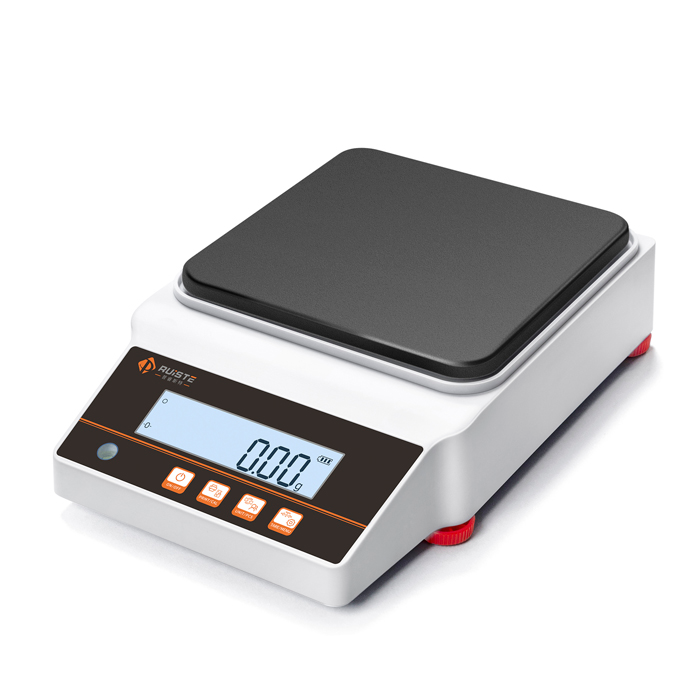
The operational principles of modern industrial weighing scale derive from classic mechanical physical laws and mature electronic sensing technologies, forming a stable and efficient measurement logic system. Traditional mechanical industrial weighing devices rely on the lever balance principle, utilizing counterweights and mechanical transmission structures to counteract the gravity of measured objects, thereby judging mass through balanced mechanical states. Such mechanical structures feature simple composition and low dependence on electronic components, granting them favorable environmental adaptability in harsh conditions with extreme temperatures or severe electromagnetic interference. Most contemporary industrial weighing equipment adopts strain gauge sensing technology, where elastic components inside sensors undergo subtle deformation under the gravity of measured materials. The strain gauges attached to elastic structures convert mechanical deformation into weak electrical signal changes, and internal circuit modules process and amplify these signals to convert gravitational parameters into intuitive digital weight data. This conversion process completes signal transmission and calculation within milliseconds, ensuring both response efficiency and data stability during continuous weighing operations. Regardless of mechanical or electronic structural designs, the core design logic focuses on eliminating external interference to guarantee that measured data accurately reflect the inherent mass of objects.
Industrial weighing scales exhibit rich diversity in structural forms and functional configurations, adapting to differentiated usage scenarios in various industrial links. Platform-type weighing structures serve as common basic equipment, featuring flat bearing surfaces suitable for measuring boxed, palletized, and bulk materials with moderate weight ranges. Their compact structural layout facilitates flexible placement in production workshops, warehousing areas, and loading spaces, meeting daily repetitive weighing demands for raw material receiving and finished product counting. Heavy-duty ground-mounted weighing structures are applied to measure large cargoes and transport vehicles, with robust load-bearing structures capable of bearing substantial pressure from integrated goods and transportation equipment. These structures are widely deployed at factory freight yards, logistics transfer stations, and bulk material processing bases to complete gross weight measurement of loaded vehicles. Suspension weighing devices are designed for overhead operation scenarios, paired with lifting machinery to weigh suspended materials such as metal raw materials and large container goods, avoiding space limitations of ground placement and suiting high-altitude material handling workflows. In addition, specialized customized weighing equipment includes pipeline weighing structures for fluid material metering and segmented counting weighing devices for small batch parts counting, covering measurement demands from micro-components to heavy bulk materials.
Different industrial sectors impose distinct performance requirements on weighing equipment, prompting targeted structural optimization and functional adjustment of industrial weighing scales to match industry characteristics. In the manufacturing and processing industry, production lines require continuous and stable measurement of raw material input and semi-finished product output. Weighing equipment in such scenarios prioritizes long-term operational stability, with dustproof and anti-vibration structural designs to resist vibration interference from mechanical operation and floating particle pollution in workshops, ensuring measurement accuracy during uninterrupted production cycles. The chemical processing industry involves corrosive raw materials, high-density liquids, and special chemical reagents, necessitating weighing scales made of corrosion-resistant and oxidation-resistant alloy materials. Sealed structural designs prevent chemical vapors and liquid residues from eroding internal precision components, extending service life while maintaining measurement safety. Food and pharmaceutical production scenarios demand high hygienic standards, with smooth, easy-to-clean surface structures that reduce residue accumulation and avoid bacterial breeding, complying with standardized hygiene management requirements in production environments. Mining and building material industries handle high-density bulk raw materials, requiring weighing equipment with strong compression resistance and impact resistance to withstand instantaneous pressure generated by material stacking and dumping.
Environmental adaptability constitutes a critical indicator for evaluating the practical performance of industrial weighing scales, as industrial operation sites consistently present more complex interference factors than daily usage environments. Temperature fluctuation serves as a common environmental variable; extreme high or low temperatures may affect the physical properties of internal sensor components and structural materials, leading to subtle deviations in measurement results. High-quality industrial weighing equipment undergoes temperature adaptation processing during production, with internal temperature compensation modules to offset data errors caused by ambient temperature changes. Humid environments such as coastal processing bases and underground warehouses easily produce condensed water, while rainy weather brings humid precipitation. Waterproof and moisture-proof structural designs effectively block water vapor from penetrating internal circuits, preventing short-circuit failures and component aging. In industrial sites with severe vibration and electromagnetic radiation, including mechanical processing workshops and power transmission stations, anti-interference circuit layouts and shock-absorbing buffer structures reduce the impact of external vibration and electromagnetic signals on data transmission, maintaining measurement stability throughout long-term operation. Additionally, dust-proof and windproof optimization designs are applied to open-air operation equipment to adapt to complex outdoor natural conditions.
The integration of digital technology has driven comprehensive functional upgrades for industrial weighing scales, breaking the single data output limitation of traditional weighing equipment. Modern industrial weighing devices are equipped with standardized data transmission interfaces to connect with on-site control terminals and enterprise management systems. Weighing data generated during each measurement is automatically recorded, sorted, and uploaded to data platforms, eliminating manual recording links and reducing human-induced data errors. Some optimized models support real-time data synchronization among multiple terminals, enabling production managers to remotely view weighing information of materials in different regions and realize integrated scheduling of industrial resources. Intelligent identification functions further enhance operational convenience; embedded sensing modules can identify material placement status and automatically trigger measurement procedures, avoiding repeated operations caused by human misjudgment. The data storage function retains historical weighing records for a long time, providing traceable data sources for production auditing, material reconciliation, and operational analysis, and laying a data foundation for enterprises to optimize production processes.
Reasonable selection and standardized application of industrial weighing scales generate tangible economic and management benefits for industrial enterprises. In raw material procurement and warehousing links, accurate weighing data effectively control the quantity of incoming materials, avoiding material losses and resource waste caused by inaccurate measurement. During production and processing, precise material proportioning relying on weighing data stabilizes product quality, reduces defective product rates caused by raw material ratio deviations, and improves overall product qualification rates. In the logistics and transportation stage, standardized weighing management prevents overloading of transportation equipment, lowers equipment wear and traffic risk costs, and optimizes cargo loading plans to improve transportation space utilization. For inventory management, regular weighing and counting of goods realizes dynamic monitoring of material reserves, avoiding production stagnation due to raw material shortages or capital occupation from excessive inventory accumulation. Although high-performance industrial weighing equipment requires moderate upfront investment, its long-term stable operation reduces maintenance frequency and replacement costs, bringing continuous economic benefits to enterprise operation.
Daily maintenance and scientific usage habits directly determine the service life and measurement stability of industrial weighing scales. During routine operation, excessive heavy objects beyond the equipment bearing range should be avoided to prevent permanent deformation of internal sensing components and irreversible accuracy loss. Placement of weighing equipment requires flat and solid bearing surfaces; inclined or soft ground causes uneven force on structures, affecting measurement rationality. Regular surface cleaning is essential to remove dust, raw material residues, and attachments accumulated during operation, preventing corrosive substances from eroding equipment surfaces and internal structures. Periodic inspection of connection components and circuit lines ensures structural firmness and smooth signal transmission, eliminating hidden dangers such as line aging and loose interfaces. After long-term continuous operation, static calibration of weighing equipment corrects minor data deviations generated by mechanical fatigue, restoring optimal measurement performance. In harsh idle environments, dust covers and moisture-proof measures protect precision components from natural environmental erosion, maintaining equipment standby performance.
The development trajectory of industrial weighing scales closely aligns with the evolution of the global industrial system, with technological iteration continuously optimizing equipment performance and application boundaries. Early industrial weighing equipment featured bulky structures, single functions, and cumbersome operation processes, relying heavily on manual auxiliary work with low measurement efficiency. With the popularization of electronic sensing technology, equipment volume has been gradually minimized, measurement response speed has been significantly improved, and data reading accuracy has been steadily enhanced. In recent years, the deep integration of internet technology and industrial machinery has promoted the intelligent upgrading of weighing equipment, realizing automatic data processing, remote monitoring, and linkage control. In the future, industrial weighing scales will further develop toward modularization and customization. Modular structural designs facilitate rapid component replacement and equipment maintenance, while customized production meets the personalized weighing demands of special industries and unique working conditions. Meanwhile, energy-saving structural optimization will reduce the energy consumption of long-term operating equipment, conforming to the sustainable development concept of modern industry.
As an essential component of industrial basic measuring equipment, industrial weighing scales undertake the important task of providing accurate mass data for all links in the industrial chain. Their technical optimization and functional upgrading continuously adapt to the changing industrial production demands, bridging the gap between raw material management, production processing, and logistics circulation. In the context of accelerating industrial intelligent transformation, the application value of industrial weighing scales extends beyond simple measurement work. They gradually evolve into core nodes of industrial data collection, providing basic data support for enterprise refined management, resource optimization allocation, and production efficiency improvement. Facing diverse and complex industrial usage scenarios, the industry needs to continuously optimize equipment environmental adaptability, intelligent interaction capabilities, and long-term operational stability. Through standardized usage, scientific maintenance, and reasonable selection, industrial weighing scales can maximize their operational value, assisting various industrial sectors in realizing stable production, cost control, and efficient development, and laying a solid foundation for the long-term progress of the modern industrial system.
Industrial Weighing Scale
https://www.pruiste.com/weighing-scale.html
Post Date: May 13, 2026
https://www.supplier-manufacturer.com/weighing-scale/industrial-weighing-scale.html

![Working Principle of Digital Viscometer]()
Working Principle of Digital Viscometer
Viscosity is an inherent physical property of fluid substances, which characterizes the internal friction and flow resistance generated when a fluid undergoes relative mot…![High-temperature Digital Viscometer]()
High-temperature Digital Viscometer
Viscosity stands as one of the most fundamental physical properties of fluid substances, reflecting the internal friction and flow resistance generated during the movement…![Rapid Moisture Analyzer]()
Rapid Moisture Analyzer
Moisture content stands as one of the most critical physical indicators that determine the quality, stability, and practical performance of various raw materials and finis…![Moisture Analyzer Vender In China]()
Moisture Analyzer Vender In China
Moisture analysis stands as a fundamental quality control and process monitoring procedure across modern industrial and laboratory operations, as moisture content directly…![Moisture Analyzer Manufacturer]()
Moisture Analyzer Manufacturer
Moisture content stands as one of the most critical physical indicators that determine the quality, stability, and usability of raw materials and finished products across …