Working Principle of Electronic Balance
As an indispensable measuring instrument in modern industrial production, laboratory research and daily precision measurement scenarios, electronic balance has gradually replaced traditional mechanical balance due to its convenient operation, stable measurement state and intuitive data display. Different from mechanical balances that rely on counterweights and lever mechanical transmission to complete mass measurement, electronic balance realizes the conversion from mechanical gravity signal to readable digital signal through electronic sensing technology and closed-loop control system. Its internal operating logic involves multidisciplinary knowledge such as electromagnetism, circuit transmission and mechanical structure coordination. A thorough understanding of its working principle can help users grasp the influencing factors of measurement accuracy, standardize operation steps and extend the service life of the instrument. The core design idea of electronic balance is to use controllable electromagnetic force, elastic deformation or capacitance change to balance the gravity of measured objects, and convert the balanced physical variables into measurable electrical signals, so as to complete the quantitative calculation of object mass through subsequent circuit processing and algorithm analysis.
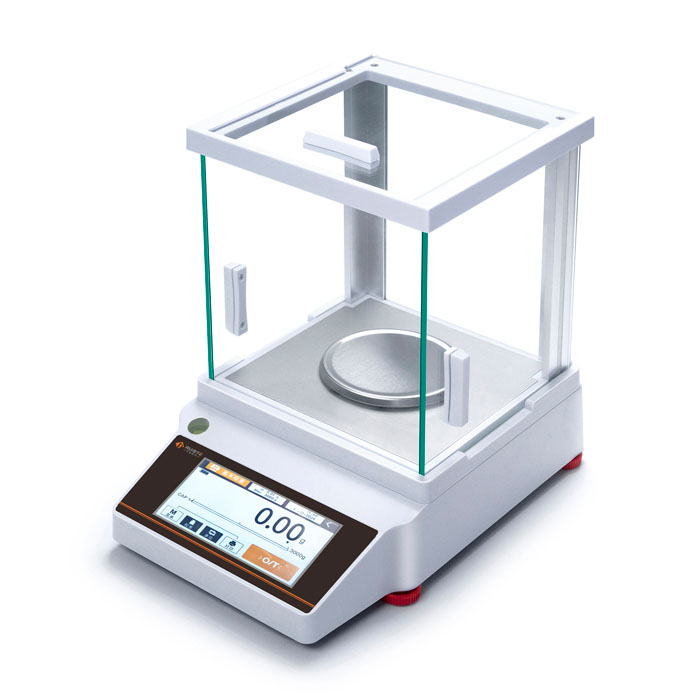
There are multiple mainstream sensing structures for electronic balances, and different sensor types determine the internal working mechanism and applicable measurement range of the equipment. Strain sensor structure is one of the basic structural forms of low and medium precision electronic balances. This kind of sensor is equipped with elastic deformation components inside the balance. When an object is placed on the weighing pan, the pressure generated by the object’s gravity acts on the elastic component, causing tiny elastic deformation. The strain gauges attached to the surface of the elastic component will change their internal resistance with the deformation degree. According to the physical characteristics of resistance strain effect, the resistance change can be converted into weak voltage signals. After being amplified by the internal amplification circuit, these voltage signals are transmitted to the data processing unit. The deformation degree of the elastic component maintains a stable linear relationship with the mass of the object within the rated bearing range, so the system can calculate the corresponding mass data based on the voltage change value. The overall structure of strain sensor electronic balance is simple with low assembly difficulty, but limited by the physical properties of elastic materials, it is easy to be affected by ambient temperature and mechanical fatigue, resulting in fluctuation of measurement data, so it is mostly used in scenarios with ordinary precision measurement requirements.
Capacitive sensor type electronic balance adopts another physical sensing logic different from strain structure. Its internal core components include two groups of parallel electrode plates with fixed spacing, which together form a capacitance induction unit. The weighing pan is connected with the movable electrode plate through a mechanical connecting rod. When no object is loaded, the distance between the two electrode plates remains constant, and the capacitance value is in a stable initial state. After the measured object is placed on the weighing pan, the gravity will push the movable electrode plate to produce tiny displacement, changing the spacing between the electrode plates. According to the capacitance calculation formula, the capacitance value will change regularly with the spacing variation of electrode plates. The internal detection circuit captures the real-time capacitance change and converts it into continuous analog electrical signals. After filtering and rectification processing, the effective signals are transmitted to the microprocessor for data conversion. This type of electronic balance has fast response speed and simple internal circuit design, and the production and assembly cost is controlled within a reasonable range. However, the capacitance signal is susceptible to external electromagnetic interference, and the linear sensing range is narrow, which makes it difficult to meet the high-precision measurement requirements of trace samples.
Electromagnetic force balance structure is the most widely used core design of high-precision electronic balance, and it is also the mainstream technical form of laboratory precision measuring instruments. The whole working process relies on the closed-loop feedback control system composed of position detector, current regulating circuit, permanent magnet group and coil assembly. Under the no-load state, the balance is powered on and the internal system completes self-inspection and zero calibration. At this time, a stable initial current is passed into the coil located in the uniform magnetic field of the permanent magnet. The electromagnetic force generated by the coil counteracts the self-gravity of internal mechanical components such as the weighing pan and connecting rod, keeping the mechanical structure at the horizontal equilibrium position. When the measured object is stably placed on the weighing pan, the external gravity breaks the original mechanical equilibrium state, causing the connecting rod and coil to shift downward slightly. The high-sensitivity position detector can instantly capture this tiny displacement signal and convert the mechanical displacement into analog electrical signal and transmit it to the central control circuit.
After receiving the displacement signal, the control circuit automatically adjusts the output current according to the built-in balance algorithm. The increased current flowing through the coil enhances the electromagnetic force generated in the magnetic field. The direction of this electromagnetic force is opposite to the gravity of the measured object, which can pull the shifted mechanical structure back to the initial horizontal equilibrium position. In the working range of electromagnetic balance system, the current intensity required to maintain structural balance presents a strict linear positive correlation with the mass of the measured object. The microprocessor records the real-time current change data, and calculates the accurate mass value of the object through the calibration parameters preset in the system. The whole balance adjustment process is completed in a very short time without manual intervention, and the displacement detection and current adjustment form a continuous closed-loop feedback mechanism, which effectively suppresses data fluctuation caused by external tiny vibration.
Regardless of the sensor type, the electronic balance needs to complete signal processing and data output through a unified electronic circuit system. The analog electrical signals generated by sensing components are usually weak and mixed with interference signals such as ambient current noise. Therefore, the filter circuit is arranged at the front end of the signal processing link to eliminate high-frequency clutter and unstable pulse signals, retaining effective measurement signals that change synchronously with mass. The amplified circuit further amplifies the weak effective signal to ensure that the signal amplitude meets the identification standard of the analog-to-digital converter. The analog-to-digital converter is responsible for converting continuous analog electrical signals into discrete digital signals that can be identified by the microprocessor. The conversion accuracy and sampling rate of this component directly affect the data resolution and response speed of the balance.
As the core data processing center of electronic balance, the microprocessor undertakes multiple functions such as data operation, parameter storage and function control. It compares the converted digital signal with the standard calibration data stored in the internal memory, corrects the deviation caused by ambient temperature fluctuation and structural mechanical error through the compensation algorithm, and finally calculates the accurate mass data. Meanwhile, the microprocessor can realize extended functional control according to user settings, including peeling processing, unit switching and data locking. The peeling function eliminates the influence of container mass on measurement results by recording the initial pressure signal of the container; the unit switching function completes the automatic conversion between different mass units based on built-in conversion constants; the data locking function can fix the unstable fluctuating data after the object is placed, which is convenient for users to read and record.
In order to ensure the stability of measurement results, electronic balance is equipped with multiple auxiliary structural designs and protection mechanisms in the working process. The internal damping structure can consume the mechanical vibration energy generated during placement, shorten the static balance time of the weighing pan, and avoid data jitter caused by continuous shaking of the structure. The temperature compensation component monitors the ambient temperature in real time, and modifies the calculation parameters according to the temperature change to reduce the measurement error caused by the thermal expansion and contraction of internal metal components. The overload protection structure can trigger the current limit mechanism when the load exceeds the rated range of the balance. It cuts off the excessive current input to prevent the sensor and circuit components from being damaged by excessive pressure, which improves the operational safety of the instrument.
In practical application, the working state of electronic balance is affected by multiple external environmental factors, which are essentially interference with its internal physical balance mechanism and signal transmission process. Air flow will generate transient pressure on the weighing pan, causing tiny displacement of the mechanical structure and interfering with the judgment of the position detector; excessive ambient humidity will cause slight oxidation of internal circuit contacts, increasing circuit resistance and distorting electrical signal transmission; uneven placement of the instrument will tilt the internal mechanical connecting rod, changing the stress direction of gravity and breaking the linear correspondence between current and mass. Therefore, to maintain the stable working performance of the electronic balance, it is necessary to place the instrument on a horizontal stable table during use, avoid direct air flow blowing, and keep the ambient temperature and humidity within a reasonable range.
Compared with traditional mechanical balance, the working principle of electronic balance has obvious technical advantages in structural logic and measurement mode. Mechanical balance relies on artificial stacking counterweights and mechanical lever torque balance to measure mass, which has slow measurement speed and high manual operation error. Electronic balance realizes automatic balance adjustment and signal reading through electronic sensing and closed-loop control system. The whole process has low human interference. The electromagnetic force balance structure adopts non-contact force transmission mode internally, which reduces mechanical wear between components and maintains long-term measurement stability. In addition, the electronic signal storage function enables the balance to record historical measurement data, which is convenient for subsequent data sorting and statistical analysis, and meets the intelligent measurement needs of modern laboratories and industrial production lines.
With the continuous progress of electronic sensing and micro-processing technology, the internal working mechanism of electronic balance is constantly optimized and upgraded. The optimized electromagnetic coil structure and high-sensitivity magnetic field materials reduce the current fluctuation in the balance process and improve the resolution of tiny mass changes. The intelligent temperature and humidity compensation algorithm can automatically identify environmental changes and complete real-time parameter correction without manual calibration. The integrated circuit design simplifies the internal wiring structure, reduces the space occupation of components, and realizes the miniaturization and portable development of the balance. These technical optimizations are all based on the basic physical principles of force balance and electrical signal conversion, continuously improving the measurement accuracy, environmental adaptability and operation convenience of electronic balance.
In conclusion, the working principle of electronic balance takes force balance as the core logic, realizes the conversion between object gravity and electrical physical quantities through different sensing structures, and completes data purification, conversion and calculation with the cooperation of circuit system and microprocessor. Each component in the internal system is interlocked and coordinated to form a complete automatic measurement system. Whether it is the basic strain sensing structure or the high-precision electromagnetic balance structure, its design essence is to quantify invisible gravity changes into readable digital signals. Mastering the working principle of electronic balance can help users rationally select instruments according to measurement scenarios, standardize daily operation and maintenance methods, reduce measurement errors caused by improper use, and give full play to the application value of electronic balance in precision measurement work in various industries.
Working Principle of Electronic Balance
https://www.pruiste.com/electronic-balance.html
Post Date: May 17, 2026

![Compact Digital Viscometer]()
Compact Digital Viscometer
Viscosity stands as one of the most fundamental physical properties of fluid materials, reflecting the internal friction and flow resistance that occur when a substance un…![Benchtop Digital Viscometer]()
Benchtop Digital Viscometer
Viscosity stands as one of the most fundamental physical properties of fluid substances, reflecting the internal friction and flow resistance generated during the movement…![Moisture Analyzer Exporter]()
Moisture Analyzer Exporter
Moisture content stands as one of the most critical physical indicators that determine the quality, stability, and usability of raw materials and finished products across …![Textile Moisture Analyzer]()
Textile Moisture Analyzer
Moisture content stands as one of the most fundamental and influential physical indicators in the entire textile industry chain, exerting a profound impact on the processi…![Industrial Moisture Analyzer]()
Industrial Moisture Analyzer
Moisture content stands as one of the most critical physical indicators that determine the quality, stability, and processing performance of industrial materials across di…