Precision Balance Ja-pro Series
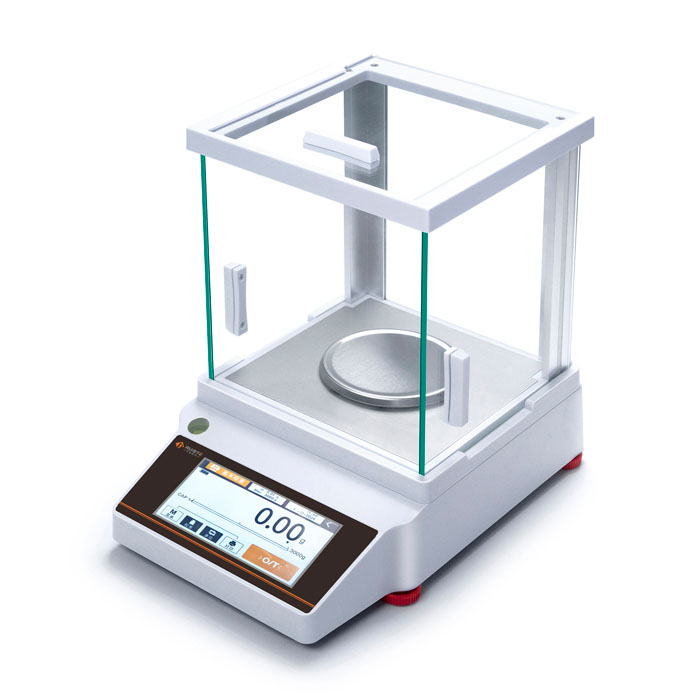
The JA-PRO series adopts the Internet of Things 5-inch color TFT control system integrated touch high-definition screen. The entire series of balances adopt Nuosheng sensors and brand sensors to ensure high accuracy and stability of weighing results. This series of precision casting ABS Environmental protection materials are designed, with one-key switching mode of Chinese and English interface, high-efficiency die-cast aluminum alloy base, stable and solid bearing base, clear and visible samples of fully transparent glass windshield, stainless steel countertop and stainless steel weighing pan, resolution as high as 1.2 million, high-speed 24bitsad, anti-interference ability, anti-radiation, anti-static and high-efficiency, and weighing, counting and weighing modes.
In the realm of quantitative measurement, the ability to determine mass with subtle precision stands as a foundational requirement across numerous professional and scientific fields. A precision balance serves as a fundamental weighing instrument engineered to detect minor variations in mass, catering to scenarios where ordinary weighing tools fail to deliver dependable and consistent data. Unlike basic weighing devices that prioritize simple mass reading for coarse objects, this type of instrument focuses on capturing tiny mass fluctuations, making it an indispensable asset in environments that demand rigorous measurement standards. The evolution of precision balancing equipment has mirrored the advancement of human understanding of physical measurement, transitioning from ancient mechanical lever structures to modern electronically optimized systems, each iteration refining stability, sensitivity, and operational convenience to meet the growing complexity of industrial and scientific tasks.
The core operational logic of contemporary precision balance predominantly relies on the electromagnetic force balance principle, a sophisticated physical mechanism that replaces the traditional mechanical weight stacking method of early balances. When a sample is placed on the weighing pan, the subtle gravitational pull generated by the sample triggers a slight displacement of the internal lever structure. High-sensitivity position detectors immediately capture this micro-displacement and convert the physical movement into electrical signals, which are then transmitted to the internal control circuit. The circuit dynamically adjusts the current flowing through the movable coil situated within a permanent magnetic field, generating an electromagnetic force that counteracts the gravitational force of the sample. This continuous adjustment process maintains the lever in its original balanced position, and the intensity of the current passing through the coil maintains a stable proportional relationship with the mass of the loaded sample. Through built-in data conversion modules, the current variation is translated into intuitive mass readings, completing the entire high-precision weighing process. Some optimized models also integrate auxiliary optical sensing components, which monitor tiny structural vibrations and positional deviations to further calibrate data output and reduce subtle measurement errors caused by mechanical inertia.
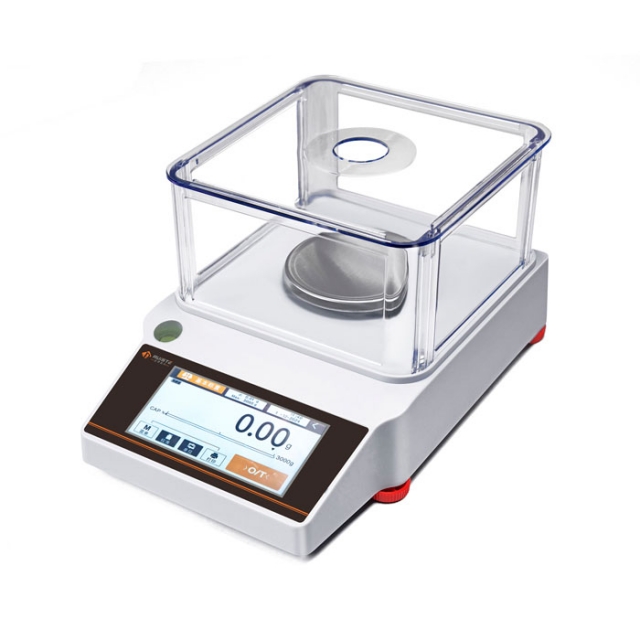
The physical structure of a precision balance is meticulously designed to minimize external interference and optimize internal measurement stability. The weighing pan, usually crafted from corrosion-resistant and high-hardness metal materials, features a smooth flat surface to ensure uniform force bearing of samples and avoid mass deviation caused by uneven contact. Beneath the pan lies a shock-absorbing connection structure, which weakens the vibration transmission from the external operating platform to the internal sensing components. The core sensing unit, composed of magnetic components and movable coils, is sealed inside a protective shell to isolate dust, moisture, and corrosive gases in the air. The external casing adopts an integrated rigid design to reduce structural deformation caused by temperature changes and subtle pressure fluctuations. Additionally, most precision balancing instruments are equipped with transparent windproof covers, a critical accessory for high-precision measurement. Even gentle air currents in the surrounding environment can generate subtle pressure on the weighing pan, interfering with the detection of tiny mass changes; the enclosed space formed by the windproof cover effectively isolates airflow interference, creating a stable internal environment for sample weighing.
Environmental factors exert profound influences on the measurement performance of precision balances, requiring strict control of ambient conditions during daily use. Temperature fluctuation ranks among the most impactful variables. Extreme or rapidly changing temperatures can cause slight thermal expansion and contraction of internal metal components, altering the magnetic field stability and structural balance of sensing units, which in turn leads to data drift. A moderate and constant ambient temperature helps maintain the physical stability of internal structures and ensures the linear correspondence between current and mass. Humidity control is equally essential. Excessively humid air may cause moisture to adhere to internal precision parts, inducing subtle oxidation or short-circuit risks for electronic components, while an overly dry environment tends to generate static electricity. Static accumulation on the weighing pan and shell can adsorb fine particulate samples and interfere with electromagnetic signal transmission, reducing measurement stability. Moreover, the placement platform must remain flat and sturdy, avoiding vibration sources such as mechanical operation and human activity nearby. Low-frequency vibration, even imperceptible to the human body, can disrupt the force balance state of internal levers and affect the accuracy of final readings.
Precision balances exhibit extensive application value covering scientific research, industrial production, and daily quality inspection industries. In chemical research laboratories, researchers depend on such instruments to configure trace reagents. The accurate mass ratio of chemical raw materials directly determines the reaction rate and final product purity of chemical experiments; slight deviations in raw material dosage may lead to failed experimental results or inaccurate data conclusions. In pharmaceutical research and production links, these balances are used for weighing medicinal raw materials and auxiliary materials. Even tiny mass changes of active ingredients can affect the efficacy and safety of pharmaceuticals, so stable and precise weighing data is an essential guarantee for pharmaceutical quality control. The new material industry also relies heavily on precision weighing. During the research and development of composite materials, nanomaterials, and high-purity raw materials, researchers need to accurately record the mass of each component to analyze the correlation between material ratio and physical properties such as hardness, toughness, and corrosion resistance.
In industrial manufacturing and processing fields, precision balances undertake critical quality control and ingredient proportioning tasks. The fine chemical industry requires accurate weighing of various chemical additives to stabilize product composition and maintain consistent product quality in batches. In the processing of precious metal materials, subtle mass differences need to be recorded in each cutting and refining link to control material utilization rate and reduce unnecessary raw material loss. The food production industry also applies this equipment for detection work, including weighing trace additives in food and detecting the mass proportion of internal components, to ensure that products comply with production standards and safety specifications. In addition, environmental monitoring laboratories use precision balances to weigh collected pollutant samples, such as tiny particulate matter in the air and residual substances in water bodies. Accurate mass data provides reliable statistical basis for environmental pollution degree analysis and treatment plan formulation.
Standardized daily operation and scientific maintenance are key to prolonging the service life of precision balances and maintaining long-term measurement stability. Before formal weighing, preheating treatment is necessary for electronic precision balance products. Continuous power operation enables internal electronic components and magnetic structures to reach a stable working state, reducing data errors caused by cold start performance fluctuations. Level calibration is another indispensable pre-operation step; operators need to adjust the supporting feet of the instrument according to the built-in level gauge to ensure the horizontal placement of the balance, avoiding eccentric load errors caused by tilting of the weighing pan. During sample placement, samples should be gently positioned at the center of the weighing pan to prevent uneven force on the pan edge from triggering mechanical positional deviation. It is necessary to avoid direct weighing of corrosive, sticky, or volatile substances on the pan; such samples may corrode the pan surface or leave volatile residues, causing persistent interference to subsequent measurements.
Daily maintenance work focuses on cleaning, storage, and regular calibration. After each use, operators need to wipe the weighing pan and the inner wall of the windproof cover with soft cleaning tools to remove residual sample particles and dust, keeping the internal environment clean. The instrument should be placed in a dry and ventilated storage space when not in use, avoiding long-term exposure to direct sunlight or humid air. Regular calibration is essential to eliminate subtle measurement deviations caused by long-term mechanical operation and component aging. Calibration can be completed through standard weight comparison; by detecting the weighing data of standard masses, operators can judge the deviation degree and complete parameter correction. In addition, severe collision and extrusion should be avoided during movement and placement. The internal sensing structure is extremely precise, and external impact may cause irreversible structural displacement, permanently damaging measurement accuracy.
With the continuous progress of manufacturing technology, the functional design of modern precision balances is becoming more humanized and intelligent. Most upgraded models are equipped with high-definition digital display screens, which present mass data in real time and support intuitive switching of multiple measurement units to meet the usage habits of different industries. Built-in data storage modules can record multiple groups of weighing data within a certain period, facilitating subsequent data sorting, comparison, and traceability. Some instruments are also embedded with temperature and humidity sensing modules, which monitor ambient environmental parameters in real time and feed back interference factors to the system. The system automatically compensates partial data deviations through algorithms to weaken the impact of environmental changes on measurement results. In terms of structural optimization, the integrated modular design simplifies the internal structure, making daily maintenance and component replacement more convenient, while effectively reducing equipment failure rates.
Despite the high stability of modern precision balances, users still need to avoid common operational misunderstandings to ensure data authenticity. It is not advisable to place overheated or ultra-cold samples directly on the weighing pan; temperature difference between samples and ambient air will generate convective airflow around the pan, forming subtle air pressure interference and causing data fluctuation. Multiple consecutive weighing operations should retain an appropriate interval to allow the internal sensing structure to return to a stable state and avoid data hysteresis caused by frequent load changes. In addition, operators should minimize physical movement during the weighing process, as body shaking and breathing airflow may interfere with the balance in a closed windproof cover. It is also necessary to keep the operating table clean and tidy to prevent sundries from touching the balance shell and affecting structural stability.
Looking into the future, the development direction of precision balances will continue to lean toward higher sensitivity, stronger anti-interference ability, and intelligent interconnected management. With the innovation of sensing materials and electromagnetic control technology, the identification ability of tiny mass will be further improved, adapting to the measurement demand of ultra-trace samples in high-end scientific research. The anti-interference design will be more refined, effectively resisting the combined interference of complex temperature, humidity, and vibration factors, enabling stable operation in harsh industrial environments. The intelligent data management system will realize seamless connection with external terminal equipment, realizing automatic uploading, sorting, and analysis of weighing data, reducing manual recording errors and improving overall work efficiency. While optimizing technical performance, the structural design will pay more attention to energy conservation and environmental protection, adopting low-power electronic components and recyclable manufacturing materials to reduce resource consumption during long-term operation.
As a basic measuring instrument connecting scientific research and industrial production, the precision balance bears the important responsibility of providing accurate mass data. Its unique electromagnetic balance mechanism, rigorous structural design, and wide application scenarios make it an indispensable tool in modern measurement systems. Every stable data reading comes from the precise coordination of internal mechanical structures, electronic circuits, and sensing components, as well as standardized operation and scientific maintenance by users. In future technological exploration and industrial upgrading processes, precision balancing instruments will continue to play a foundational role, continuously optimizing performance to adapt to evolving industry demands, and providing reliable data support for technological innovation, product quality optimization, and industrial standardized development in various fields.
PRECISION BALANCE JA-PRO SERIES
https://www.pruiste.com/cmpxl/jmtpjapro
Post Date: May 7, 2026
https://www.supplier-manufacturer.com/counting-weighing-balance/precision-balance-ja-pro-series.html

![Types of Digital Viscometer]()
Types of Digital Viscometer
Viscosity serves as a fundamental physical property that reflects a fluid’s internal resistance to flow and shear deformation, playing a vital role in quality control, pr…![Digital Viscometer Wholesale]()
Digital Viscometer Wholesale
Viscosity measurement stands as a fundamental part of industrial quality control, material research, and production process optimization across diverse global sectors. As …![Precision Digital Viscometer]()
Precision Digital Viscometer
Viscosity stands as one of the most fundamental physical properties of fluid substances, reflecting the internal friction and flow resistance generated during the movement…![Purposes of Moisture Analyzer]()
Purposes of Moisture Analyzer
Moisture content stands as one of the most fundamental and influential physical properties of nearly all raw materials, semi-finished goods, and finished products across i…![Types of Moisture Analyzer]()
Types of Moisture Analyzer
Moisture analysis stands as a fundamental testing procedure across industrial manufacturing, laboratory research, agricultural processing, and material quality inspection.…