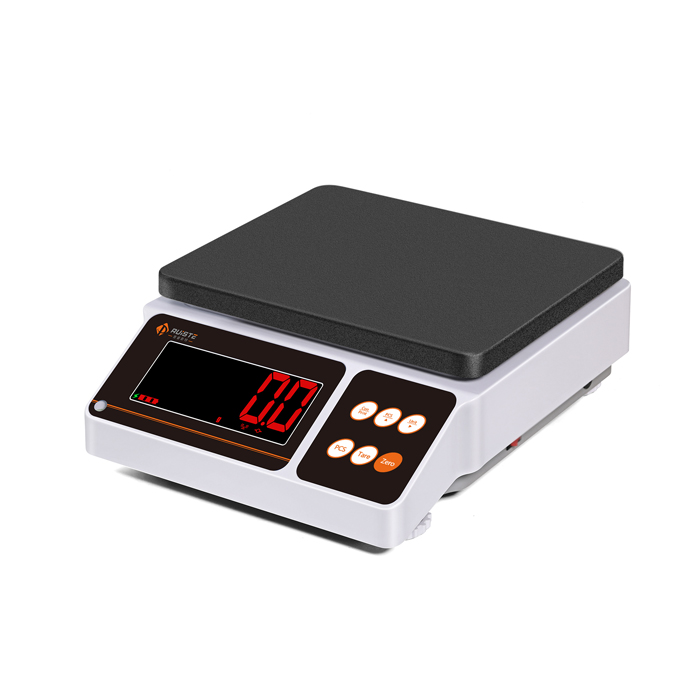
Explosion-proof Laboratory Balance
Laboratory environments that handle flammable liquids, volatile chemical vapors, combustible dust particles, and reactive gaseous mixtures demand specialized measuring equipment that can maintain stable and secure operation under complex hazardous conditions. In these operational settings, conventional laboratory weighing devices face prominent operational risks, as internal electronic components, circuit fluctuations, or mechanical friction may generate tiny sparks, static electricity, or excessive surface heat during working processes. These subtle ignition sources can easily interact with dispersed flammable substances in the ambient air, triggering combustion or chain explosion reactions that threaten laboratory facilities, experimental data integrity, and personal safety. The explosion-proof laboratory balance emerges as a professional precision weighing instrument tailored to address such potential risks, integrating accurate mass measurement capabilities with systematic safety protection designs to adapt to high-risk laboratory working conditions while sustaining reliable weighing performance for long-term experimental and industrial testing processes.
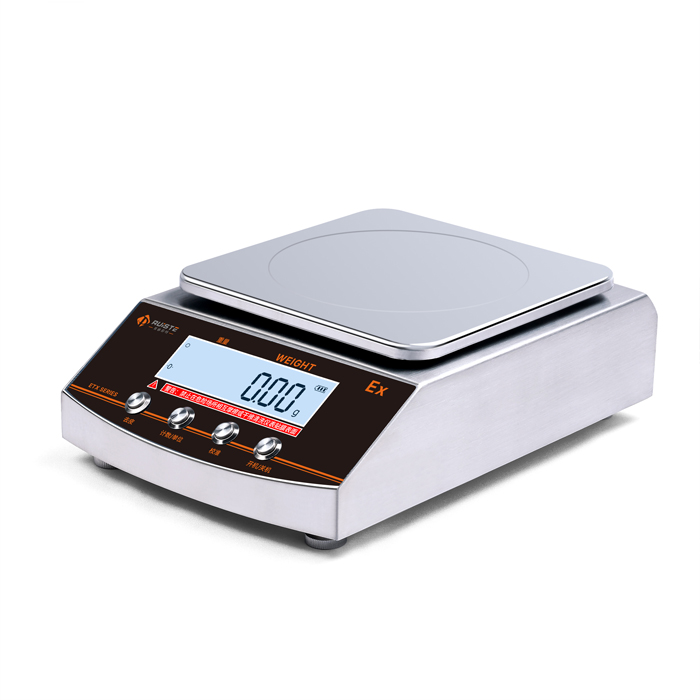
The fundamental operational logic of the explosion-proof laboratory balance inherits the mature electromagnetic force restoration principle adopted by high-precision electronic weighing equipment, retaining the core advantages of precise mass detection and stable signal processing that meet standard laboratory measurement requirements. When a sample is placed on the weighing pan, the gravitational force of the sample acts on the internal sensor structure of the balance, producing slight mechanical displacement and deformation. The built-in high-sensitivity position detector captures these microscopic changes in real time and converts physical displacement signals into weak electrical signals. These initial signals are filtered, amplified, and calibrated by professional circuit modules to eliminate interference from minor environmental fluctuations, then transmitted to the central processing unit for data calculation and conversion. The system automatically adjusts the internal electromagnetic current output to generate a reverse electromagnetic force that counteracts the sample’s gravitational pull, restoring the weighing structure to its original balanced state. The magnitude of the current required to achieve force equilibrium corresponds linearly to the sample’s mass, enabling the device to output accurate and repeatable weighing data. This stable measurement mechanism ensures that the explosion-proof design does not compromise the basic weighing accuracy, linearity, and repeatability essential for laboratory experimental work.
What distinguishes the explosion-proof laboratory balance from ordinary precision balances lies in its comprehensive safety optimization for every potential ignition link in the working system. Ordinary laboratory balances are designed for conventional ambient environments with stable air components and no flammable substances, with relatively open internal structures and unprotected circuit contacts. In hazardous laboratory spaces, even transient current fluctuations or static accumulation can create dangerous ignition sources. The explosion-proof laboratory balance solves this problem through targeted structural and electrical optimization. Its internal circuit system adopts low-power and low-heat operation configuration, limiting the working current and surface temperature of core electronic components within a safe range that cannot trigger combustion reactions. All circuit connection points, wiring interfaces, and electrical contact parts are equipped with fully enclosed protective structures to prevent electric sparks caused by poor contact, short circuits, or component aging during continuous operation.
Structural sealing and anti-static design constitute another critical part of the balance’s safety performance. The equipment shell and internal support components are made of high-strength, anti-static, and heat-resistant composite materials that inhibit static charge accumulation caused by mechanical friction or air flow friction during equipment operation. The overall sealed structural design effectively blocks external flammable gases, vapors, and fine combustible dust from entering the device’s internal cavity, avoiding contact between dangerous media and internal electrical components. Even if minor electrical abnormalities occur inside the equipment, the closed structural space can isolate internal heat and tiny sparks, preventing them from spreading to the external hazardous environment and causing safety accidents. Meanwhile, the mechanical structure of the weighing pan and transmission components is polished and optimized to reduce friction coefficients, lowering heat generation during mechanical movement and eliminating potential safety hazards caused by frictional high temperatures.
This type of precision weighing equipment is widely applicable to diverse laboratory scenarios involving flammable and explosive substances, covering multiple professional fields and industrial research links. In chemical research laboratories, it is used for accurate weighing of volatile organic solvents, flammable chemical reagents, and reactive compound samples during formulation experiments, reaction ratio testing, and sample pretreatment processes. Many conventional chemical experimental materials release volatile flammable vapors at room temperature, which can accumulate in semi-enclosed laboratory operating spaces; the safe operating characteristics of the explosion-proof balance ensure continuous and stable weighing work without inducing safety risks during prolonged experimental operations. In new energy material laboratories, the equipment supports the weighing and proportioning of flammable electrolyte materials, powdery energy storage materials, and special chemical raw materials used in battery research and development, adapting to the special safety requirements of new material synthesis and performance testing.
Pharmaceutical laboratories also rely heavily on explosion-proof laboratory balances for daily experimental and production auxiliary work. The synthesis and purification of many pharmaceutical intermediates and raw material drugs involve the use of flammable organic solvents, and the micro-weighing of trace samples requires high-precision measuring equipment. The explosion-proof balance can maintain accurate measurement results while adapting to the hazardous atmosphere of pharmaceutical experiment spaces, ensuring the standardized progress of drug component ratio testing, sample purity analysis, and experimental data recording. In addition, in environmental monitoring laboratories, the equipment is used for weighing combustible dust samples, volatile pollutant samples, and special detection reagents, providing accurate basic data for environmental hazard factor analysis and pollution assessment.
Industrial testing and production research laboratories in sectors such as fine chemical manufacturing, aerospace auxiliary material testing, and civil special material research also adopt this equipment for precision weighing operations. These scenarios often involve trace proportioning and performance testing of high-sensitivity flammable materials, where both measurement accuracy and operational safety must be guaranteed. The stable performance of the explosion-proof laboratory balance can meet the continuous and repeated weighing needs of batch experimental testing, effectively avoiding safety accidents caused by equipment factors in industrial research and development links, and improving the overall safety and standardization level of laboratory operation management.
In terms of operational performance, the explosion-proof laboratory balance retains the high-precision measurement indicators of professional laboratory balances, with delicate readability and reasonable load range matching conventional experimental weighing demands. It can complete stable measurement of trace samples and conventional experimental samples, with effective suppression of external interference signals such as slight air flow, ambient temperature changes, and minor ground vibration. The built-in data processing program can automatically calibrate zero drift, filter out accidental data fluctuations, and ensure the consistency and reproducibility of weighing results, which is crucial for experimental work requiring strict data accuracy. The equipment is also equipped with humanized operation modules, including clear digital data display, convenient zero-setting and tare functions, and stable data locking functions, which simplify the experimental weighing operation process and improve the efficiency of laboratory sample preparation and data recording.
Daily standardized operation and scientific maintenance are essential to sustain the long-term safety and measurement stability of explosion-proof laboratory balances. Before each use, operators need to place the equipment on a stable horizontal workbench to avoid tilt-induced structural stress and measurement deviation, and conduct pre-use inspection of the equipment shell sealing state, display sensitivity, and zero position accuracy. In the weighing process, operators should avoid placing overloaded samples on the weighing pan to prevent damage to internal sensing components caused by excessive load, and prevent liquid or powdery samples from spilling into the equipment gaps to avoid affecting structural sealing and circuit safety. After completing daily weighing work, the weighing pan and equipment surface should be cleaned gently to remove residual sample dust and stains, and the equipment should be placed in a dry and ventilated environment to avoid long-term humidity corrosion of internal components.
Regular professional maintenance and calibration further extend the service life and ensure stable performance of the equipment. It is necessary to conduct periodic inspection of the internal circuit sealing structure, anti-static components, and sensor working state to check for aging, loosening, or damage of protective structures. Timely calibration of weighing accuracy is required to correct minor measurement errors caused by long-term operation, ensuring that the equipment always maintains qualified measurement performance. In daily management, the equipment should be prevented from strong collision, extrusion, and long-term exposure to high-temperature and corrosive environments, which can effectively avoid structural damage and performance degradation. Standardized maintenance not only guarantees the safety performance of the explosion-proof structure but also maintains the long-term stability of measurement accuracy, reducing equipment failure rates and subsequent use costs.
With the continuous improvement of laboratory safety management standards and the gradual refinement of hazardous material experimental research, the application value of explosion-proof laboratory balances in professional experimental scenarios has become increasingly prominent. Traditional laboratory weighing equipment can no longer meet the dual requirements of safety and accuracy in high-risk experimental environments, while explosion-proof laboratory balances fill the market gap between precision measurement and hazardous environment safety operation. Through systematic safety structure design and stable precision measurement performance, the equipment effectively reduces the safety risks of weighing operations in flammable and explosive experimental environments, provides reliable data support for various scientific research experiments and industrial testing work, and creates a safe and standardized operating environment for laboratory researchers.
In future laboratory equipment development and safety upgrade processes, explosion-proof laboratory balances will continue to evolve toward more refined safety protection, higher measurement stability, and more intelligent operation experience. The continuous optimization of material technology and circuit design will further enhance the equipment’s environmental adaptability and safety redundancy, while intelligent data recording, automatic calibration, and remote monitoring functions will further improve the intelligence level of laboratory weighing operations. As essential basic precision equipment for hazardous laboratory scenarios, explosion-proof laboratory balances will always underpin the safe and efficient development of chemical research, new material development, pharmaceutical research, and environmental monitoring industries, providing solid technical support for standardized laboratory management and accurate scientific research data output.
Explosion-proof Laboratory Balance
https://www.pruiste.com/laboratory-balance.html
Post Date: May 22, 2026
https://www.supplier-manufacturer.com/laboratory-balance/explosion-proof-laboratory-balance.html

![Weighing Balance RSB-W SERIES]()
Weighing Balance RSB-W SERIES
The RSB-W series adopts high-definition keys, which is economical. The entire series of balances adopt Nuosheng sensors, brand sensors, and aluminum alloy structure to ens…![Specifications of Digital Viscometer]()
Specifications of Digital Viscometer
Digital viscometers are essential analytical instruments designed to quantify the viscosity characteristics of various liquid substances, serving as core testing equipment…![Automatic Digital Viscometer]()
Automatic Digital Viscometer
Viscosity stands as one of the most fundamental physical properties of fluid substances, reflecting the internal friction and flow resistance generated between molecular l…![Coaxial Cylinder Digital Viscometer]()
Coaxial Cylinder Digital Viscometer
The coaxial cylinder digital viscometer is a sophisticated laboratory and industrial testing instrument designed to quantify the viscous properties of various fluid materi…![Halogen Moisture Analyzer]()
Halogen Moisture Analyzer
Moisture content stands as one of the most critical physical indicators for a wide range of raw materials, semi-finished goods, and finished products across modern industr…