Purposes of Precision Balance
In the modern era of scientific exploration and industrial refinement, accurate mass measurement stands as one of the most fundamental and indispensable steps in various professional activities. A precision balance, as a sophisticated weighing instrument designed to capture subtle variations in sample mass, serves as a reliable foundational tool across numerous sectors. It differs from conventional weighing devices by virtue of its refined sensitivity and stable measuring performance, enabling operators to obtain consistent and dependable mass data for samples ranging from tiny trace substances to medium-sized bulk materials. Beyond the basic function of reading mass values, this equipment carries multiple practical purposes that underpin experimental accuracy, production standardization, material research, and quality supervision. Understanding its core purposes helps professionals make rational use of the device and recognize its irreplaceable value in systematic operational workflows.
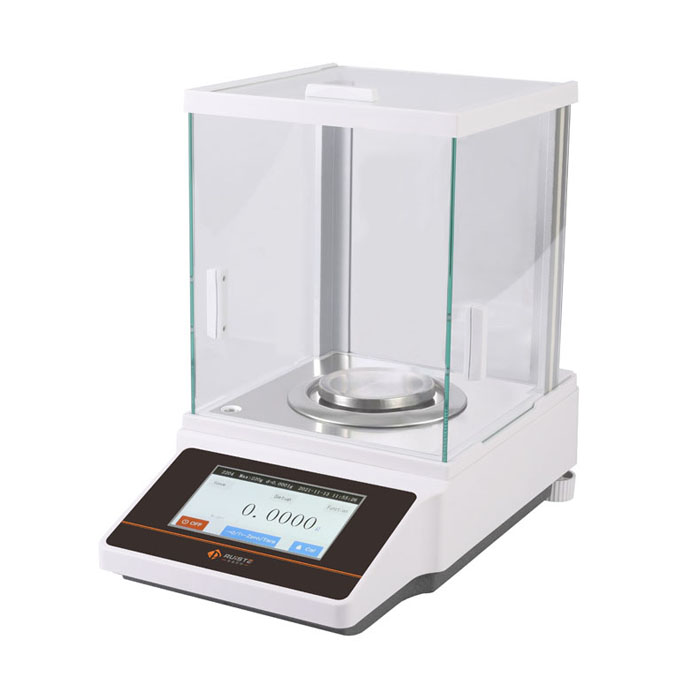
One primary purpose of a precision balance is to support rigorous qualitative and quantitative analysis in laboratory scientific research. In chemical research, countless experimental procedures rely on precise material proportioning to trigger controlled chemical reactions. Many chemical reagents are used in tiny quantities, and even minor deviations in mass can alter reaction rates, product yields, and final chemical compositions. Researchers utilize precision balances to measure solid powders, granular reagents, and small-volume solutes, ensuring that each component in a chemical mixture maintains an accurate proportional relationship. This careful measurement minimizes unnecessary experimental errors and enhances the repeatability of chemical experiments, allowing researchers to verify experimental hypotheses and summarize objective chemical laws. In biological laboratories, the instrument contributes to the preparation of culture media, biological samples, and experimental reagents. Microorganisms, cell samples, and biological extracts require highly accurate weighing to maintain stable growth environments and reliable experimental conditions. Whether preparing nutrient mixtures for microbial cultivation or measuring biological tissue samples for component analysis, the precision balance provides credible mass data to support biological observation and data recording.
Material science research also heavily depends on the functional attributes of precision balances. With the continuous development of advanced material technology, researchers focus on micro-nano materials, composite materials, and high-purity raw materials, where subtle mass changes often reflect variations in material structure and performance. During material synthesis and modification processes, researchers weigh raw materials and auxiliary additives with high precision to control material composition ratios. After material preparation, the balance assists in testing material characteristics; for instance, measuring sample mass changes before and after high-temperature heating, corrosion treatment, or pressure experiments to evaluate material durability, stability, and anti-interference capabilities. Such measured data form intuitive numerical references for analyzing material performance changes, laying a solid data foundation for optimizing material formulas and improving production techniques. In physical research involving density detection and mass calculation, the precision balance collaborates with auxiliary measuring tools to complete density calculation of solid and liquid samples. By obtaining accurate mass data and combining volume parameters, researchers derive precise density values, which are essential for distinguishing material types and analyzing physical properties.
Industrial production and manufacturing constitute another major application field where precision balances fulfill critical practical purposes. In fine chemical production, raw material ratio directly determines the purity and stability of chemical products. Improper mass proportion of raw materials may lead to impure finished products, unstable chemical properties, or excessive production waste. Production staff use precision balances to weigh raw materials in each batching link, standardizing feeding quantities and maintaining consistent product quality across different production batches. This standardized weighing mode effectively reduces raw material waste and optimizes production cost control. In electronic component manufacturing, tiny parts such as miniature connectors, metal beads, and circuit accessories feature small individual masses and strict dimensional requirements. The precision balance realizes rapid quantity statistics through average mass calculation; operators weigh a fixed number of samples to obtain unit mass, then calculate the total quantity of bulk parts based on overall mass. This efficient counting method replaces tedious manual sorting, lowers human error rates, and improves the operating efficiency of component inventory management and packaging processes.
The food and beverage industry leverages precision balances to strengthen production control and product safety management. In food research and development, developers adjust ingredient ratios to optimize product taste, nutritional composition, and shelf stability. Accurate weighing of sweeteners, additives, nutritional supplements, and raw grains ensures that each trial product has controllable component content, facilitating the screening of optimal production formulas. During formal production, the instrument monitors auxiliary material dosage to avoid excessive addition of food additives, keeping products within reasonable ingredient limits and meeting daily consumption safety requirements. Additionally, precision balances support food detection work; staff weigh food samples to detect moisture content, impurity content, and nutritional element proportions, providing intuitive data for judging food freshness and compliance. For beverage production, accurate weighing of raw materials such as fruit pulp, sugar sources, and food additives maintains stable taste and quality of bottled and brewed beverages, realizing standardized large-scale production.
Pharmaceutical and healthcare fields impose stringent requirements on measurement accuracy, making precision balances an essential piece of auxiliary equipment. In pharmaceutical research and development, the content of active ingredients in experimental drugs needs precise control to ensure the efficacy and safety of trial medicines. Researchers weigh pharmaceutical raw materials, medicinal intermediates, and auxiliary excipients to configure experimental samples, observe the pharmacological effects of different component ratios, and screen safe and effective drug formulas. In pharmaceutical production, the balance controls the dosage of raw materials for each batch of tablets, capsules, and powdered medicines, avoiding efficacy fluctuations caused by uneven ingredient distribution. In medical testing laboratories, biological samples such as blood extracts, tissue residues, and microbial specimens require accurate weighing to ensure the authenticity and validity of detection data, providing reliable diagnostic references for disease analysis. Moreover, the instrument assists in weighing medical auxiliary reagents to maintain stable reagent concentrations and guarantee the smooth progress of medical testing experiments.
Environmental monitoring and resource analysis also benefit significantly from the use of precision balances. Environmental testing personnel need to collect various natural samples, including soil particles, water sediments, and airborne particulate matter. These samples usually have tiny masses and contain trace harmful substances, requiring high-precision weighing to record sample quality accurately. By comparing mass changes of samples before and after purification, filtration, and chemical treatment, technicians calculate the content of pollutants in the environment, providing data support for environmental pollution assessment and governance plan formulation. In mineral and precious material detection, precision balances measure the mass of mineral samples and refined materials. Combined with other detection methods, they assist in analyzing mineral purity and element content, providing objective data for resource classification and utilization. Even in agricultural research, the instrument weighs crop seeds, fertilizers, and soil samples to explore the impact of different fertilizer ratios and soil environments on crop growth, accumulating experimental data for agricultural optimization and high-yield cultivation.
Beyond industrial and scientific application scenarios, precision balances undertake educational and daily detection purposes in public institutions. In university and vocational school laboratories, the instrument serves as basic teaching equipment to help students master the principles of precise measurement. During operational training, students learn standardized weighing steps, understand the impact of environmental factors such as airflow, temperature, and vibration on measurement results, and develop rigorous experimental thinking and standardized operational habits. These practical experiences lay a technical foundation for students engaged in scientific research and industrial work in the future. In commercial detection and commodity inspection institutions, staff use precision balances to sample and test daily commodities, detecting whether the component content and raw material ratios of commodities meet public use standards. This inspection mechanism effectively maintains market circulation order and protects basic consumer rights.
To sustain stable performance and fully realize diverse application purposes, precision balances require reasonable daily maintenance and standardized operational specifications. Operators need to place the equipment on flat and stable workbenches to reduce mechanical vibration interference; maintain a dry and constant-temperature working environment to prevent humid air and extreme temperature from affecting internal sensing components. Regular surface cleaning and simple calibration help eliminate accumulated dust and subtle measurement deviations, ensuring long-term weighing stability. Before formal use, operators need to preheat the equipment and check the horizontal state to avoid data fluctuations caused by placement tilt. Standardized use not only extends the service life of the instrument but also maintains consistent measurement accuracy in long-term repeated use.
From microscopic scientific research to large-scale industrial production, from public service detection to professional teaching training, precision balances deliver stable and accurate mass measurement services in diverse scenarios. Its core purposes cover experimental data acquisition, production standard control, material performance analysis, and educational skill training, forming an indispensable basic measuring tool in modern social production and scientific research. Although the operational logic of precision balances is relatively concise, every measured data point carries practical application value. With the continuous advancement of industrial technology and scientific research standards, the demand for high-precision mass measurement will keep rising, further expanding the application scope of precision balances. Continuous exploration of usage methods and maintenance techniques can maximize the functional value of such instruments, providing more reliable technical support for industrial upgrading and scientific innovation in various industries.
Purposes of Precision Balance
https://www.pruiste.com/precision-balance.html
Post Date: May 18, 2026
https://www.supplier-manufacturer.com/precision-balance/purposes-of-precision-balance.html

![Laboratory Analytical Balance]()
Laboratory Analytical Balance
Within every professional laboratory setting, whether dedicated to chemical research, biological experimentation, material development, or environmental sample analysis, r…![Counting Precision Balance]()
Counting Precision Balance
In modern industrial production, scientific research experimentation, warehouse material management, and quality inspection workflows, the need for accurate quantitative m…![What is Weighing Scale]()
What is Weighing Scale
A weighing scale is an essential basic measuring instrument widely used in daily life, commercial operations, scientific research and laboratory work. Its core function is…![Electronic Balance YP SERIES]()
Electronic Balance YP SERIES
The YP series adopts high-definition keys, which is economical. The entire series of balances adopt Nuosheng sensors, brand sensors, and aluminum alloy structure to ensure…![Digital Viscometer Factory]()
Digital Viscometer Factory
Viscosity stands as one of the most fundamental physical properties of fluid materials, reflecting the internal friction and flow resistance that occur when fluids undergo…