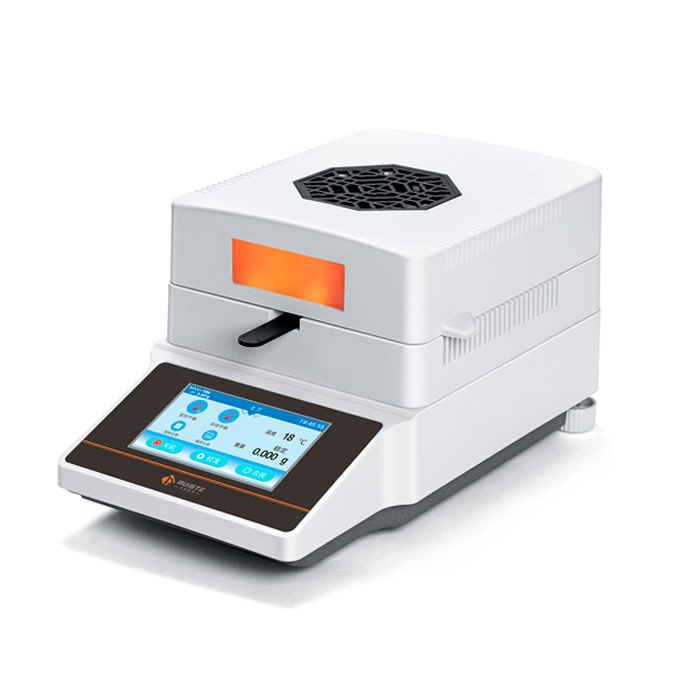
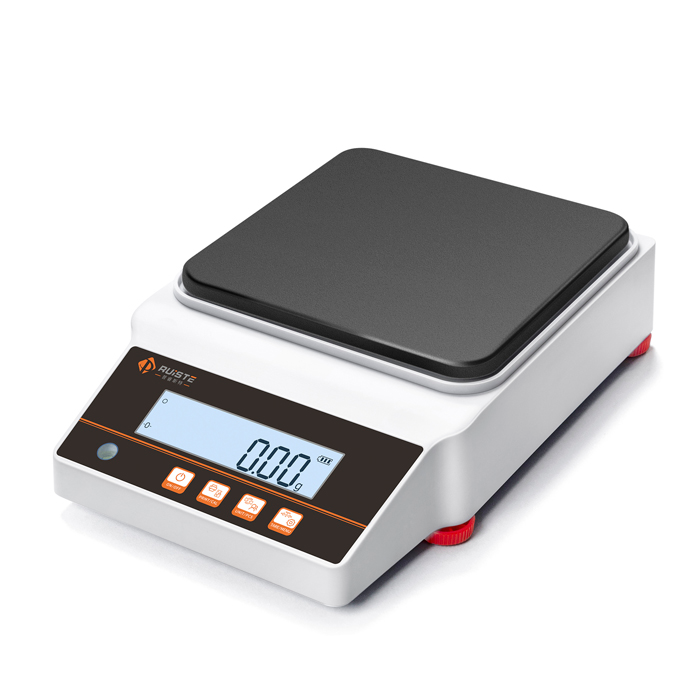
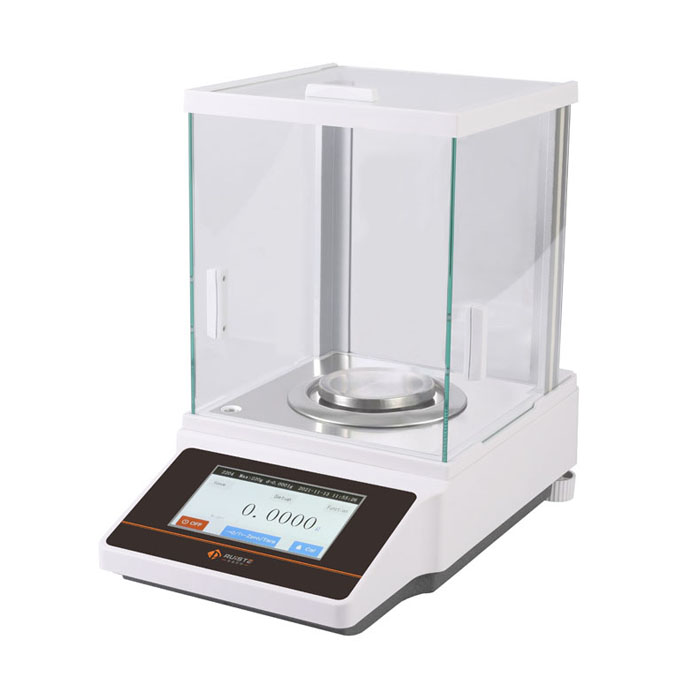
Portable Laboratory Balance
In modern scientific research, industrial production, and daily analytical testing, accurate mass measurement serves as one of the most fundamental and essential experimental foundations. A portable laboratory balance stands out as a vital precision weighing instrument that integrates high measurement accuracy and flexible mobile application, breaking the spatial limitations of traditional fixed laboratory weighing equipment. Unlike bulky bench-top balances that are designed exclusively for indoor laboratory environments, this type of balance is engineered with compact structural layout, lightweight body design, and independent power supply systems, enabling stable and reliable mass detection in diverse scenarios ranging from standard laboratory operations to on-site field testing. Its core value lies in balancing precise measurement performance with excellent environmental adaptability, making it a versatile tool for numerous industries and academic fields that require frequent mobile weighing operations.
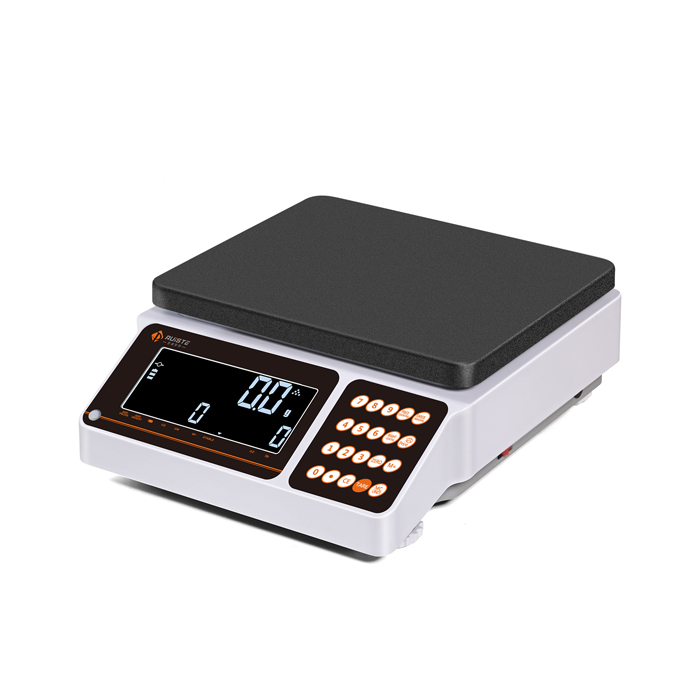
The operational mechanism of modern portable laboratory balances primarily relies on electromagnetic force compensation technology, a mature and stable measurement principle that distinguishes it from traditional mechanical weighing devices. When a sample is placed on the weighing pan, the gravitational force generated by the sample mass causes a slight displacement of the pan and the connected elastic support structure. High-sensitivity photoelectric sensors instantly capture this tiny displacement signal and transmit it to the internal control circuit. The system then adjusts the current intensity of the electromagnetic coil in real time to generate a reverse electromagnetic force that counteracts the sample’s gravitational force, restoring the weighing pan to its initial balanced position. Since the magnitude of the compensating electromagnetic current maintains a linear proportional relationship with the sample mass, the internal processing unit can convert the current signal into intuitive digital mass data and display it on the screen. This non-contact force balance mode effectively reduces mechanical friction interference, ensuring stable measurement output and consistent repeatability for long-term use.
The structural design of portable laboratory balances fully prioritizes the integration of precision, portability, and durability. The overall body adopts a streamlined compact structure with high-strength lightweight materials, which effectively reduces overall weight without compromising structural stability. The weighing pan is usually made of corrosion-resistant and wear-resistant metal materials, featuring a smooth flat surface that prevents sample residue accumulation and facilitates daily cleaning, while ensuring uniform force bearing during weighing. The internal core components, including electromagnetic sensors and signal processing modules, are equipped with sealed protective structures to isolate dust, moisture, and minor airflow interference in the external environment, laying a solid foundation for stable outdoor and on-site operation. Most models are fitted with adjustable supporting feet at the bottom, allowing users to fine-tune the level of the equipment on uneven desktop or ground surfaces, and the built-in level indicator assists in completing horizontal calibration quickly, eliminating measurement errors caused by tilted placement.
In terms of functional configuration, portable laboratory balances are equipped with practical and user-centric features that cater to diverse measurement demands. The tare weighing function is one of the most commonly used basic functions, which can automatically deduct the mass of containers such as weighing papers, beakers, and test tubes, directly displaying the net mass of samples and simplifying the operation process of reagent preparation and sample weighing. The piece counting function enables rapid quantitative counting of small regular items such as electronic components, granular reagents, and experimental accessories, improving the efficiency of batch sampling and inventory statistics. The adjustable backlight display system ensures clear data reading in environments with insufficient light, such as dimly lit field operation sites and indoor experimental corners. Additionally, the built-in temperature and humidity sensing modules can monitor ambient environmental changes in real time, and the system automatically compensates for minor measurement deviations caused by temperature drift, further optimizing the accuracy of detection results.
Power supply flexibility is a prominent advantage of portable laboratory balances, which directly supports their cross-scenario application capabilities. Different from traditional laboratory balances that rely solely on fixed AC power supply, portable models support dual power supply modes of built-in rechargeable batteries and external power access. The high-capacity rechargeable battery can maintain continuous working hours for a long time after full charging, meeting the needs of all-day on-site sampling, field investigation, and outdoor experimental testing without stable power supply. The intelligent power management system is equipped with an automatic sleep and shutdown function, which effectively reduces power consumption during standby and prolongs battery service life. When stable mains power is available, users can connect the external power supply for continuous operation and synchronous battery charging, realizing seamless switching of working modes and avoiding interruption of measurement work due to power problems.
Portable laboratory balances have a wide range of application scenarios, covering multiple professional fields and daily precision measurement work. In academic and educational laboratories, they are widely used in basic chemistry, biology, and physics experiments, helping students and researchers complete precise weighing of chemical reagents, biological samples, and experimental materials, and supporting the teaching and verification of basic experimental principles such as density calculation and solution preparation. In environmental monitoring fields, staff can carry the equipment to outdoor sampling sites to complete on-site weighing of water sediment samples, soil particles, and atmospheric dust samples, avoiding mass changes of samples caused by long-distance transportation and ensuring the authenticity and accuracy of experimental data.
In food and agricultural testing, portable laboratory balances assist front-line inspectors in rapid detection of food raw materials, agricultural products, and additive dosage, completing batch sampling and component ratio verification on production and planting sites. In electronic manufacturing and precision processing industries, the equipment is used for weighing tiny parts, micro-components, and precision accessories, providing accurate data support for product quality inspection and production process parameter adjustment. In pharmaceutical and biochemical fields, it supports the precise dispensing of experimental drugs, biological reagents, and culture medium raw materials, meeting the strict weighing requirements of biochemical experiments and drug research and development. Moreover, in geological exploration, material science research, and forensic testing fields, its mobile and high-precision measurement capabilities also provide reliable technical support for on-site data collection and preliminary analysis.
Reasonable daily operation and standardized maintenance are crucial to maintaining the measurement accuracy and service life of portable laboratory balances. Before each use, users need to place the equipment on a stable and flat working surface, complete horizontal calibration through the level indicator, and conduct zero-point calibration to eliminate residual errors from the last use. During the weighing process, samples should be placed gently in the center of the weighing pan to avoid tilting and overlapping placement, and excessive impact force should be prevented to avoid damaging internal precision sensors. It is necessary to avoid placing the equipment in environments with strong electromagnetic interference, severe vibration, high temperature, high humidity, or direct strong wind, as extreme environmental factors will affect the stability of electromagnetic force balance and cause data deviation.
In daily maintenance, users should regularly clean the weighing pan and the body surface with soft dry cloths to remove residual samples, dust, and stains, avoiding the use of corrosive cleaning liquids to prevent surface and internal component damage. When the equipment is not in use for a long time, it should be placed in a dry and ventilated storage environment, with the weighing pan protected to prevent extrusion and friction damage, and the battery should be charged regularly to avoid capacity attenuation caused by long-term power loss. Regular manual calibration is also essential; users can complete parameter correction through standard weight calibration operations to ensure that the measurement data remains consistent and effective in long-term use.
With the continuous progress of precision manufacturing and intelligent technology, portable laboratory balances are constantly evolving in performance optimization and functional upgrading. Modern models are gradually adopting more miniaturized high-precision sensor components, which further reduce equipment volume and weight while improving measurement resolution and anti-interference ability. The intelligent data processing system can automatically record, store, and sort weighing data, and support data export and remote transmission, facilitating experimental data archiving, statistical analysis, and multi-terminal sharing. Some optimized models are also equipped with anti-static and shockproof structures, which can adapt to more complex and harsh field operation environments and reduce the impact of accidental external factors on measurement work.
In practical application comparison, portable laboratory balances show unique advantages over fixed analytical balances and ordinary portable scales. Compared with fixed laboratory balances that require fixed placement and stable indoor environment, they have stronger mobility and environmental adaptability, breaking the limitation that precision weighing can only be completed in professional laboratories. Compared with ordinary portable scales for daily use, they have higher measurement resolution, better data repeatability, and more stable anti-interference performance, which can meet the precision measurement standards of professional experimental testing. Although their measurement range and ultimate accuracy cannot fully match large bench-top analytical balances in extreme professional scenarios, their comprehensive performance of balancing precision and flexibility makes them more suitable for mobile, multi-scenario, and rapid measurement work.
In summary, portable laboratory balances are indispensable basic precision instruments in modern scientific research, industrial testing, and public service fields. Through mature electromagnetic force compensation technology, optimized compact structural design, flexible power supply modes, and rich practical functions, they solve the pain points of difficult mobile precision weighing and poor adaptability of traditional laboratory equipment. With the continuous development of scientific research and industrial detection towards refinement and on-site rapidization, the application value of portable laboratory balances will be further highlighted. Continuous technological optimization and functional innovation will also enable such equipment to adapt to more diverse and complex application scenarios, providing stable, accurate, and convenient mass measurement support for various professional fields and promoting the efficient development of experimental research and detection work.
Portable Laboratory Balance
https://www.pruiste.com/laboratory-balance.html
Post Date: May 22, 2026
https://www.supplier-manufacturer.com/laboratory-balance/portable-laboratory-balance.html

![High-precision Moisture Analyzer]()
High-precision Moisture Analyzer
Moisture content stands as one of the most critical physical indicators for evaluating the quality, stability, and usability of various materials across industrial product…![Digital Moisture Analyzer]()
Digital Moisture Analyzer
Moisture content stands as one of the most critical physical indicators that determine the quality, stability, and usability of various raw materials and finished products…![Weighing Laboratory Balance]()
Weighing Laboratory Balance
A weighing laboratory balance stands as one of the most fundamental and indispensable instruments in scientific research, industrial testing, and academic laboratory envir…![Portable Laboratory Balance]()
Portable Laboratory Balance
In modern scientific research, industrial production, and daily analytical testing, accurate mass measurement serves as one of the most fundamental and essential experimen…![Types of Laboratory Balance]()
Types of Laboratory Balance
Laboratory balances are fundamental measuring instruments used across scientific research, industrial testing, pharmaceutical development, environmental analysis, and educ…