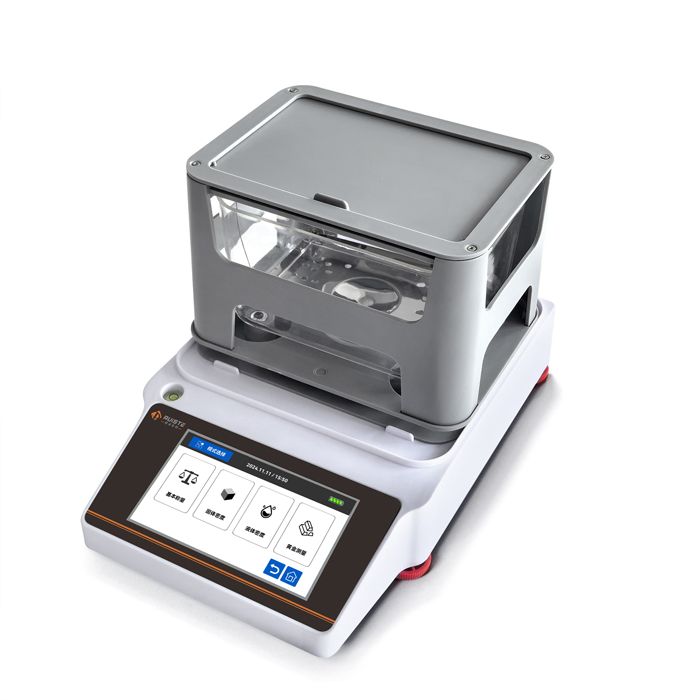
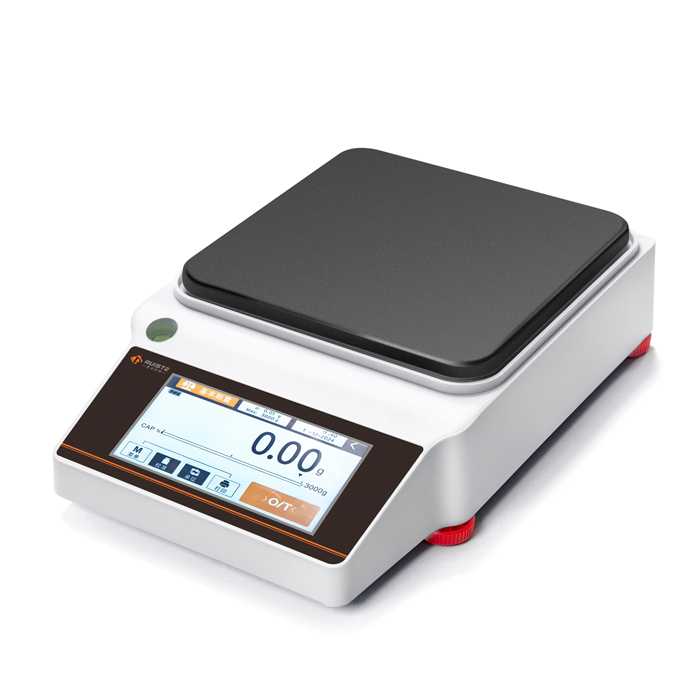
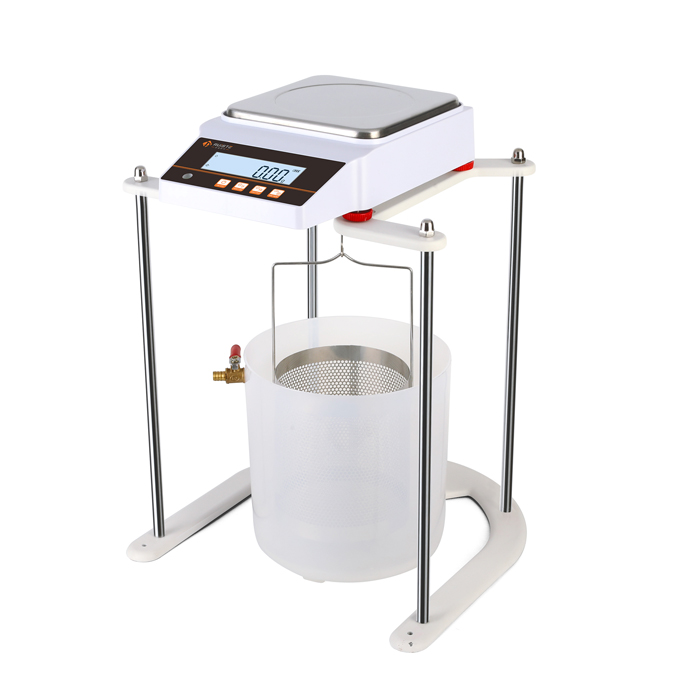
Laboratory Balance Factory
Laboratory balances stand as foundational analytical instruments across scientific research, industrial production, pharmaceutical development, environmental monitoring, and academic experimentation. These precision devices deliver accurate mass measurement data that underpins countless experimental analyses, formula calibrations, and quality verification processes. A professional laboratory balance factory focuses on the full-cycle research, development, manufacturing, and optimization of weighing equipment, dedicating to producing stable, reliable, and high-precision weighing tools that adapt to diverse laboratory and industrial application scenarios. Unlike ordinary weighing devices used in daily scenarios, laboratory-grade balances demand rigorous control over structural design, component processing, internal sensing systems, and environmental adaptability, making professional manufacturing expertise and standardized production workflows essential to ensure consistent instrument performance.
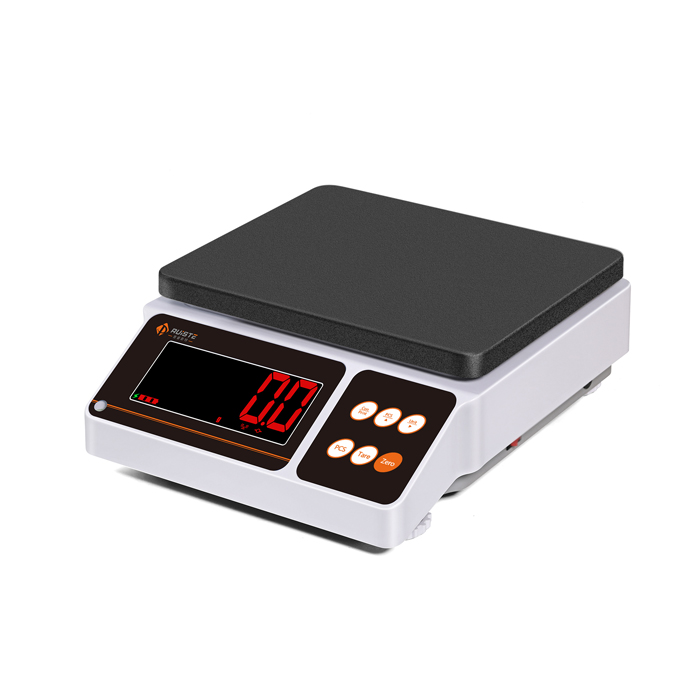
The core value of laboratory balance manufacturing lies in the integration of mechanical structural optimization, electronic sensing technology, and digital signal processing. Modern laboratory balances primarily operate on the electromagnetic force compensation principle, a sophisticated working mechanism that distinguishes them from traditional mechanical weighing tools. When a sample is placed on the weighing pan, the downward gravitational force triggers a subtle displacement of the internal sensing structure. High-sensitivity optical sensors instantly capture this tiny positional change and transmit signals to the internal control processor. The processor then adjusts the current flowing through the built-in electromagnetic coil to generate a reverse balancing force, restoring the weighing structure to its original equilibrium state. The magnitude of the current required to maintain this balance corresponds directly to the mass of the sample, and the system converts this electrical signal into intuitive digital mass readings, realizing efficient and precise mass measurement. This operating mechanism eliminates the need for manual weight stacking required by traditional beam balances, greatly simplifying weighing operations while significantly improving measurement stability and response speed.
Inside a professional laboratory balance factory, the entire production process follows standardized and systematic procedures, covering raw material selection, precision component processing, core module assembly, system debugging, performance testing, and finished product aging treatment. Raw material selection serves as the primary guarantee of instrument quality. Key structural components such as weighing pans, support frames, and instrument housings require materials with excellent anti-corrosion properties, structural stability, and deformation resistance. High-quality alloy materials and engineering plastics are widely adopted to prevent structural deformation caused by long-term use, temperature changes, or chemical contact, which could affect weighing accuracy. Sensitive core components including electromagnetic coils, position sensors, and signal processing chips are screened through multi-round performance tests to ensure high sensitivity, low drift, and strong anti-interference capability, laying a solid foundation for the long-term stable operation of the instruments.
Precision component processing is a critical link that determines the accuracy of laboratory balances. All mechanical parts need to be processed through high-precision machining equipment to ensure strict dimensional tolerances and structural coordination. Even tiny deviations in component size or assembly gaps can lead to subtle changes in force transmission, resulting in measurement errors. The factory’s processing workshop maintains a stable temperature and humidity environment to avoid material thermal expansion and contraction during processing, which might impact component precision. Each processed component undergoes dimensional inspection and surface quality testing, with unqualified parts eliminated to ensure only high-precision and high-quality components enter the assembly stage. For core sensing modules, the factory adopts micro-processing technology to optimize coil winding density and sensor installation accuracy, ensuring the uniformity and sensitivity of electromagnetic force output during operation.
The assembly process of laboratory balances requires fine manual operation and standardized modular installation. Workers in the assembly workshop receive professional technical training, mastering standardized assembly specifications for different types of balances. The assembly work follows a strict sequence, starting with the installation of internal support structures and damping modules, followed by the arrangement of electromagnetic sensing components and circuit systems, and finishing with the installation of external structural parts and display modules. Special attention is paid to the assembly of force-bearing structures and sensing components to avoid stress accumulation or positional deviation, which could affect the balance’s force balance accuracy. Meanwhile, anti-vibration and shielding treatments are conducted during assembly. Reasonable damping structures reduce the impact of external micro-vibrations on weighing results, and electromagnetic shielding designs effectively isolate external electromagnetic signal interference, ensuring the stability of internal signal transmission.
System debugging and performance testing are the core stages to verify instrument quality, and the factory has built a complete testing system covering accuracy detection, linearity verification, repeatability testing, and environmental adaptability assessment. After assembly, each balance undergoes initial parameter calibration to adjust the matching relationship between current signals and mass values, eliminating systematic errors generated during assembly. Repeatability tests are conducted through multiple weighing operations with standard mass samples to verify the consistency of measurement results under the same conditions. Linearity tests check the accuracy of instrument measurements across different load ranges to ensure stable performance from low-load to full-load weighing. In addition, professional environmental simulation tests are carried out to simulate the temperature and humidity changes that may occur in laboratory and working environments, detecting the instrument’s performance drift under different environmental conditions and optimizing internal parameters to enhance environmental adaptability.
Aging treatment is an indispensable final process before finished products leave the factory. Newly assembled precision instruments may have unstable internal circuit parameters and structural stress, which can gradually affect long-term use performance. The factory places finished balances in a constant-temperature aging workshop for continuous operation testing over a certain period. This process eliminates residual structural stress, stabilizes circuit operating parameters, and exposes potential subtle performance problems. After aging treatment, secondary calibration and comprehensive performance re-inspection are conducted to ensure all indicators meet design standards, effectively improving the service life and long-term stability of laboratory balances.
Laboratory balances produced by professional factories cover multiple precision grades and functional types to meet diverse application demands. Precision balances are suitable for conventional laboratory weighing tasks, supporting daily sample preparation and routine detection with stable and reliable performance. Analytical balances feature higher measurement resolution, capable of capturing tiny mass changes, and are widely used in precise formula configuration, trace sample detection, and scientific research experiments requiring high data accuracy. In addition, specialized balances with anti-corrosion, dust-proof, and high-load resistance properties are developed for special scenarios such as chemical laboratories, industrial quality control workshops, and environmental monitoring stations, adapting to complex working environments and special sample weighing needs. Many instruments are also equipped with expandable data transmission interfaces to support data connection with peripheral equipment and laboratory data management systems, facilitating automatic recording, statistical analysis, and traceability of experimental data.
In practical application scenarios, the stability and accuracy of laboratory balances directly affect the credibility of experimental results and detection data. In chemical laboratories, precise weighing of solid and powder samples ensures the accurate proportion of chemical reactions, guaranteeing the reproducibility and validity of experimental data. In pharmaceutical research and production, accurate weighing of raw materials and auxiliary materials provides basic data support for drug formula optimization and production process control, helping standardize production processes. In food testing and environmental monitoring, trace sample weighing and detection rely on high-precision laboratory balances to capture subtle component content changes, providing reliable data basis for safety assessment and environmental quality analysis. In material science research, the precision measurement of new material samples helps researchers analyze material structural changes and performance characteristics, promoting the innovation and iteration of new materials.
To maintain the long-term stable performance of laboratory balances, the factory also summarizes and promotes standardized use and maintenance specifications for users. Daily placement environment is crucial for instrument operation; balances need to be placed on stable horizontal workbenches, away from direct sunlight, strong airflow, corrosive gases, and strong electromagnetic interference sources. Regular cleaning of the weighing pan and internal cavity prevents residual sample dust from affecting force transmission and sensor sensitivity. Regular calibration is required after long-term use, position movement, or large environmental changes to correct subtle parameter drift and ensure continuous measurement accuracy. Reasonable storage and daily maintenance can effectively reduce instrument failure rates, extend service life, and maintain consistent weighing performance for a long time.
With the continuous development of scientific research and industrial technology, the market demand for laboratory balances is evolving toward higher precision, stronger stability, richer functions, and higher intelligence. Professional laboratory balance factories keep pace with technological development, continuously investing in technological research and product iteration. On the basis of optimizing traditional electromagnetic force compensation technology, manufacturers improve internal signal processing algorithms to enhance instrument anti-interference ability and measurement response speed. Intelligent functions such as automatic zero tracking, automatic tare removal, and fault self-detection are continuously optimized to simplify user operation and reduce human-induced errors. At the same time, lightweight and structural miniaturization designs make the instruments more adaptable to compact laboratory spaces and mobile detection scenarios, while modular structural design facilitates later maintenance and component replacement, reducing user usage costs.
The manufacturing of laboratory precision weighing instruments is a comprehensive discipline integrating machinery, electronics, sensing technology, and software algorithms. Every production link, from raw material selection and precision processing to assembly debugging and performance testing, requires rigorous technical control and standardized management. Professional laboratory balance factories rely on mature production experience, complete testing systems, and continuous technological innovation to provide high-quality weighing instruments for various industries. These precision instruments serve as basic guarantees for scientific research exploration, industrial quality improvement, and technological innovation, providing accurate and reliable data support for the progress of various disciplines and industrial fields. In the future, with the continuous upgrading of manufacturing technology and intelligent technology, laboratory balances will achieve further breakthroughs in precision control, environmental adaptability, and intelligent application, bringing more convenient and efficient weighing solutions for laboratory work and industrial production.
Laboratory Balance Factory
https://www.pruiste.com/laboratory-balance.html
Post Date: May 22, 2026
https://www.supplier-manufacturer.com/laboratory-balance/laboratory-balance-factory.html

![High-precision Balance]()
High-precision Balance
In every corner of modern scientific research, industrial production, environmental monitoring, and pharmaceutical development, the pursuit of accurate mass measurement ha…![Analytical Electronic Balance]()
Analytical Electronic Balance
In every modern scientific laboratory that relies on accurate quantitative data and rigorous experimental outcomes, the analytical electronic balance stands as an indispen…![What is Electronic Balance]()
What is Electronic Balance
In the fields of modern metrology detection, industrial production, scientific research experiments and daily precision processing, electronic balances have become indispe…![Hydrostatic Balance JY SERIES]()
Hydrostatic Balance JY SERIES
The entire series of JY balances uses branded sensors to ensure high accuracy and stability of weighing results. This series of precision casting ABS Environmental protect…![Digital Viscometer Exporter]()
Digital Viscometer Exporter
Viscosity stands as one of the most fundamental physical properties of fluid materials, reflecting the internal friction and flow resistance of substances during movement.…