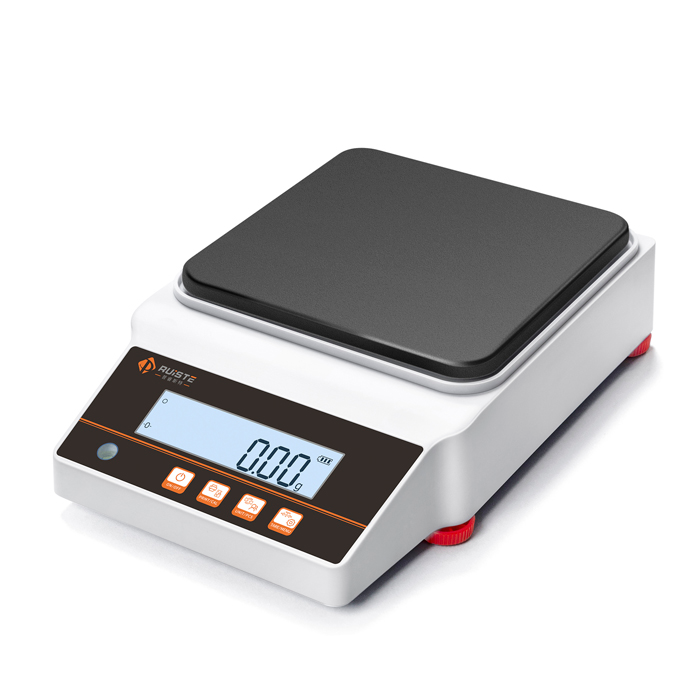
Weighing Laboratory Balance
A weighing laboratory balance stands as one of the most fundamental and indispensable instruments in scientific research, industrial testing, and academic laboratory environments. Designed to measure the mass of substances with consistent and reliable precision, this equipment serves as the foundational tool for quantitative analysis across countless disciplines, enabling researchers and technicians to obtain accurate mass data that supports experimental verification, formula preparation, quality inspection, and academic exploration. Unlike ordinary weighing tools used for daily scenarios, laboratory weighing balances are engineered to respond to subtle changes in mass, delivering stable and repeatable measurement results that meet the rigorous standards of professional laboratory work. The evolution of laboratory weighing balances has closely paralleled the advancement of scientific technology, transitioning from simple mechanical lever structures to sophisticated electronic systems integrated with precision sensors and intelligent control modules, while retaining the core pursuit of accuracy and stability that defines laboratory weighing operations.
The basic operational logic of laboratory weighing balances originates from the classical lever equilibrium principle, which has been applied in mass measurement for centuries. Early mechanical laboratory balances adopt a symmetric structural layout, with a central fulcrum supporting a horizontal beam and two identical weighing pans suspended at equal distances on both ends of the beam. During measurement, the sample of unknown mass is placed on one pan, while standard mass weights are placed on the other pan to adjust the balance state. When the gravitational torque generated by the sample and the standard weights reaches mutual balance, the beam returns to a horizontal stationary state, and the mass of the sample can be determined by calculating the total value of the standard weights. This mechanical working mode relies on physical equilibrium and structural symmetry, laying a solid theoretical foundation for modern laboratory weighing technology. Although traditional mechanical balances feature simple structural composition and stable mechanical performance, their operation process is relatively cumbersome, requiring manual adjustment and visual judgment of equilibrium status, which limits measurement efficiency and subtle precision in high-demand laboratory scenarios.
With the progress of electronic and sensor technology, modern laboratory weighing balances have gradually replaced purely mechanical structures with electromagnetic force restoration systems, becoming the mainstream configuration in current professional laboratories. This advanced working principle abandons the traditional weight comparison method and realizes mass measurement through the precise matching of electromagnetic force and object gravity. The core internal structure of electronic laboratory balances includes a precision magnetic field generator, a movable induction coil, a high-sensitivity position detector, and a microprocessor control unit. When a sample is placed on the weighing pan, the downward pressure generated by the sample’s mass causes a tiny displacement of the pan and the connected coil suspended in the magnetic field. The position detector instantly captures this subtle displacement signal and transmits it to the microprocessor, which dynamically adjusts the current intensity in the coil in real time. The electromagnetic force generated by the coil in the magnetic field counteracts the downward gravity of the sample, pushing the mechanical structure back to its initial balanced position.
Since the magnitude of electromagnetic force is positively correlated with the current passing through the coil under a fixed magnetic field environment, the microprocessor can convert the real-time current data into corresponding mass values through built-in algorithm calculation, and finally display the digital result on the instrument screen. This working mechanism effectively avoids human visual errors and mechanical friction interference existing in traditional mechanical balance measurement, greatly improving the sensitivity and response speed of weighing. The entire measurement process is completed through automatic signal collection and data operation, realizing fast and intuitive mass reading, which adapts to the efficient and accurate operational requirements of modern laboratory experiments.
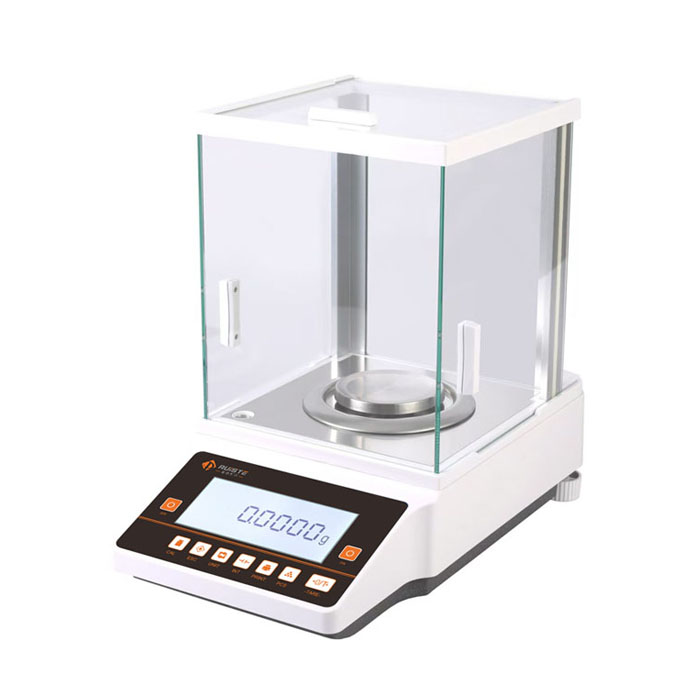
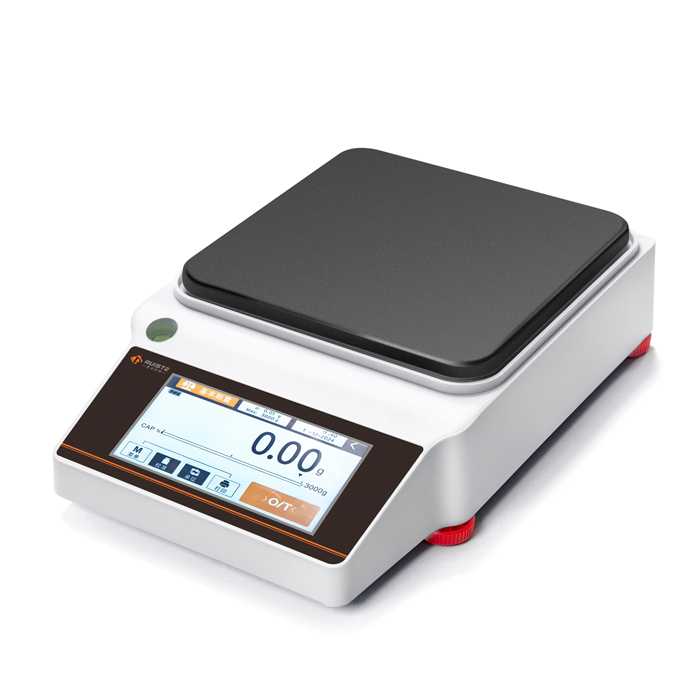
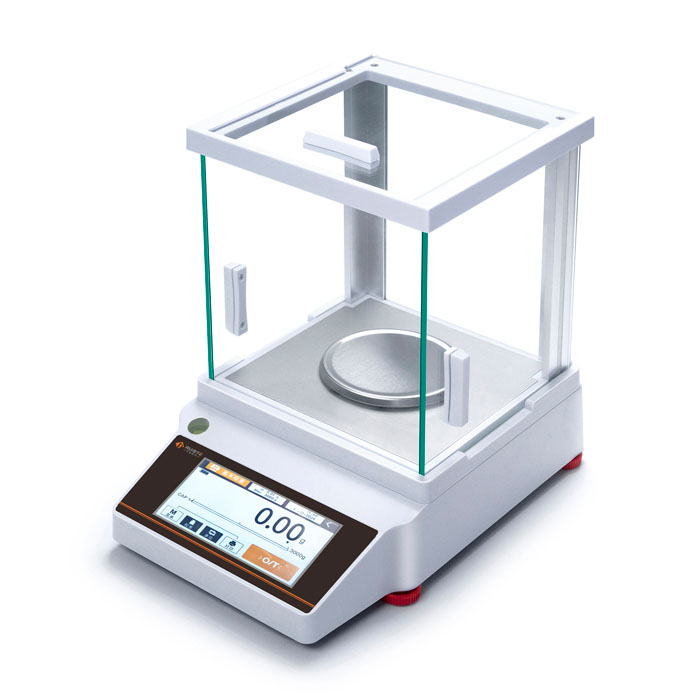
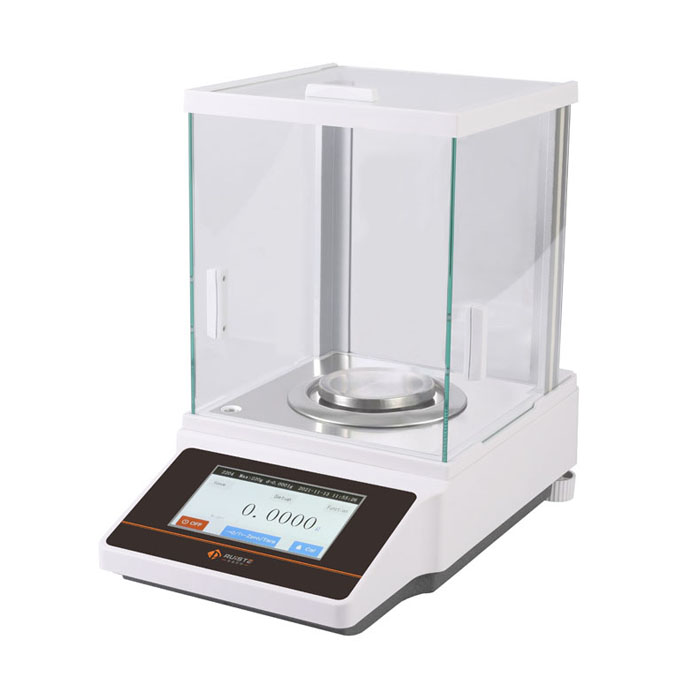
The structural design of laboratory weighing balances is fully optimized around precision, stability and anti-interference performance, with each component undertaking key functional responsibilities. The external shell is usually made of high-rigidity and anti-corrosion materials, which can effectively isolate external dust, moisture and corrosive gases from invading the internal precision components, and reduce the impact of external temperature changes on internal structural stability. The weighing pan, as the direct bearing component of the sample, adopts a smooth, flat and wear-resistant metal material with a standardized size and horizontal design to ensure uniform force bearing of the sample. A stable supporting base is installed at the bottom of the instrument, equipped with adjustable foot pads, which allow operators to fine-tune the horizontal state of the balance according to the placement environment. Keeping the instrument horizontal is a basic prerequisite for accurate weighing, as tilt placement will cause eccentric load deviation and affect the equilibrium judgment of the internal mechanical and electromagnetic system.
High-precision laboratory weighing balances are usually equipped with a wind shield structure, which is an essential configuration for micro and trace mass measurement. In laboratory environments, flowing air can generate tiny aerodynamic forces on the surface of the weighing pan and the sample, causing real-time jitter of numerical readings and reducing measurement stability. The transparent closed wind shield can isolate the interference of indoor airflow, while allowing operators to observe the weighing state in real time. The wind shield is designed with a movable switch structure, which is convenient for placing and taking samples, and the internal space is reasonably reserved to adapt to samples of different volumes and shapes. The internal precision sensor and coil components are installed in a shock-absorbing and fixed structure, which can buffer the slight vibration generated by the external tabletop and ground, preventing vibration from causing continuous fluctuation of weighing data.
Laboratory weighing balances are widely applied in multiple professional fields, covering basic scientific research, chemical analysis, biological experiments, pharmaceutical research, food detection and material testing. In chemical laboratories, the balance is used for accurately weighing solid reagents, preparing standard solutions with fixed concentrations, and measuring the mass changes of samples before and after chemical reactions, providing accurate data support for quantitative chemical analysis and reaction mechanism research. Slight deviations in reagent mass will directly affect the concentration of prepared solutions and the progress of chemical reactions, so the high precision of laboratory balances is crucial to the reproducibility and accuracy of chemical experiments.
In biological and medical research scenarios, laboratory weighing balances are applied to the weighing of biological samples, culture medium raw materials, pharmaceutical ingredients and experimental reagents. The preparation of microbial culture media requires precise matching of various nutrient substances, and accurate weighing ensures the stable growth environment of microorganisms and the validity of experimental results. In pharmaceutical development and testing processes, the balance is used for proportioning active ingredients and auxiliary materials, providing basic data for drug formula optimization and quality stability verification. In food testing laboratories, it assists in detecting the proportion of various components in food samples, weighing trace additives, and conducting nutritional component analysis, which supports food safety assessment and product quality control.
In material science and industrial testing fields, laboratory weighing balances undertake the measurement of high-purity materials, nano-materials, powder samples and tiny precision parts. Many new material experiments require trace mass measurement to analyze material density, purity and component proportion changes. The stable output data of the balance can help researchers summarize material performance rules and optimize material preparation processes. In environmental monitoring laboratories, it is used for weighing atmospheric sedimentation samples, water quality filter membrane residues and soil samples, providing accurate basic data for environmental component analysis and pollution degree evaluation. The universal applicability of laboratory weighing balances makes it a core tool connecting basic research and applied testing in various industries.
Standardized operating procedures are key to maintaining the long-term stable performance of laboratory weighing balances and ensuring accurate measurement results. Before conducting weighing operations, operators need to place the instrument on a stable horizontal workbench, adjust the foot pads to level the instrument, and check whether the weighing pan is clean and free of residual samples, dust and stains. Residual substances on the pan will cause baseline deviation and lead to inaccurate weighing data. It is also necessary to preheat the instrument according to standard requirements before formal use, so that the internal electronic components and sensor system can reach a stable working state and eliminate measurement errors caused by temperature drift of electronic components.
During the weighing process, operators should avoid placing samples on the edge of the weighing pan, and keep the samples centered to prevent eccentric load errors caused by uneven force bearing. For volatile, corrosive or hygroscopic samples, closed containers must be used for holding and weighing, which can not only prevent sample loss from volatilization and moisture absorption from affecting measurement accuracy, but also avoid corrosive substances damaging the internal precision structure of the balance. It is necessary to avoid touching the weighing pan and instrument shell with hands during operation, because hand temperature and sweat will cause local temperature changes and surface contamination, interfering with the stability of weighing results. In addition, violent placement of samples is prohibited to prevent instantaneous impact force from damaging the internal sensitive sensor components and affecting the service life of the instrument.
Daily maintenance and regular calibration are essential to maintain the working performance of laboratory weighing balances. After each use, operators need to clean the weighing pan and the inner space of the wind shield with a soft clean tool to remove residual sample powder and dust, and keep the instrument environment clean and tidy. Long-term accumulation of dirt will affect the sensitivity of the sensor and cause slow response or inaccurate readings. The instrument should be placed in a dry, constant-temperature laboratory environment, avoiding long-term exposure to humid, high-temperature or strong corrosive gas environments, to prevent internal metal components from rusting and electronic circuits from damp failure.
Regular calibration is an important means to eliminate system errors of the balance. With the increase of service time, the internal mechanical structure and electromagnetic system of the instrument may have slight performance drift due to environmental changes and mechanical wear. Timely calibration through standard mass objects can correct system deviations and restore the instrument’s accurate measurement performance. In daily use, operators should also regularly check the working state of the instrument, observe whether the display screen is normal, whether the reading is stable, and whether there is abnormal jitter or delay in response. Once abnormal conditions are found, the instrument should stop working in time for inspection and maintenance, so as to avoid continuous use of faulty equipment leading to invalid experimental data.
In addition to basic mass measurement functions, modern laboratory weighing balances are integrated with diversified practical functions to adapt to complex experimental needs. Most instruments support automatic zero tracking and tare weighing functions, which can automatically eliminate the mass influence of containers such as weighing bottles and culture dishes, directly measure the net mass of samples, and simplify the experimental operation steps. Some models are equipped with dynamic weighing mode, which can realize stable reading of samples with slight changes in mass, and are suitable for weighing volatile samples and real-time monitoring of mass changes during reaction processes. The percentage weighing and density measurement functions also expand the application scope of the instrument, enabling it to complete component proportion analysis and material density testing on the basis of basic weighing.
With the continuous development of laboratory informatization technology, many weighing balances can be connected to computer terminals and data acquisition systems through data transmission interfaces, realizing real-time transmission, automatic recording and centralized sorting of weighing data. This function avoids manual recording errors, improves the standardization and traceability of experimental data, and facilitates subsequent data analysis, experimental summary and result verification. The intelligent data management mode makes the weighing operation more standardized and efficient, and meets the higher management requirements of modern laboratories for experimental data.
As a precision measuring instrument that integrates mechanical structure, electronic sensing and intelligent control technology, the laboratory weighing balance carries the basic measurement work of various scientific experiments and industrial tests. Its performance stability and measurement accuracy directly determine the authenticity and reliability of experimental data, and play a vital role in promoting scientific research progress, optimizing production processes and ensuring experimental repeatability. In future technological development, laboratory weighing balances will continue to evolve towards higher precision, stronger anti-interference ability, more intelligent operation and more diversified functions, adapting to the increasingly stringent experimental standards and expanding application scenarios of modern laboratories. Standardized use, scientific maintenance and reasonable functional application will always be the key to giving full play to the value of laboratory weighing balances and providing stable and accurate basic measurement support for various professional laboratory work.
Weighing Laboratory Balance
https://www.pruiste.com/laboratory-balance.html
Post Date: May 22, 2026
https://www.supplier-manufacturer.com/laboratory-balance/weighing-laboratory-balance.html

![Laboratory Counting Scale]()
Laboratory Counting Scale
In modern scientific research, industrial quality control, pharmaceutical formulation development, agricultural material testing, and chemical analysis laboratories, the a…![Body Weighing Scale]()
Body Weighing Scale
In the fast-paced rhythm of modern daily life, people often focus heavily on busy work schedules, daily social engagements, and various trivial household matters, easily o…![High-capacity Analytical Balance]()
High-capacity Analytical Balance
In modern laboratory operations, industrial formulation processes, material research and quality control workflows, accurate mass measurement stands as one of the most fou…![Analytical Precision Balance]()
Analytical Precision Balance
In every modern laboratory setting where quantitative measurement forms the foundational backbone of experimental work, material research, and routine analytical procedure…![What is Digital Viscometer]()
What is Digital Viscometer
In the entire process of modern industrial production, scientific research experiments and quality control, fluid viscosity is a core key indicator for measuring the physi…