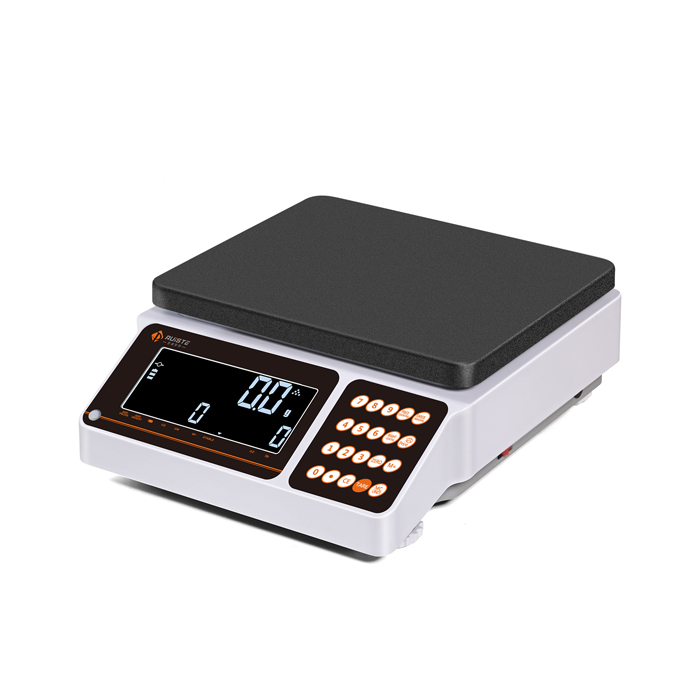
Ultra-precision Laboratory Balance
Ultra-precision laboratory balances serve as foundational measuring instruments in modern scientific research, industrial analysis, and precision material testing, designed to capture subtle mass variations that conventional weighing devices cannot detect. These instruments are engineered to deliver stable and repeatable mass readings within microgram-level resolution, supporting rigorous experimental standards and quality control protocols across diverse professional fields. Unlike ordinary weighing tools that prioritize basic usability, ultra-precision laboratory balances focus on minimizing measurement deviation, resisting external interference, and maintaining consistent operational performance during long-term continuous use, making them indispensable for scenarios requiring high-accuracy quantitative analysis.
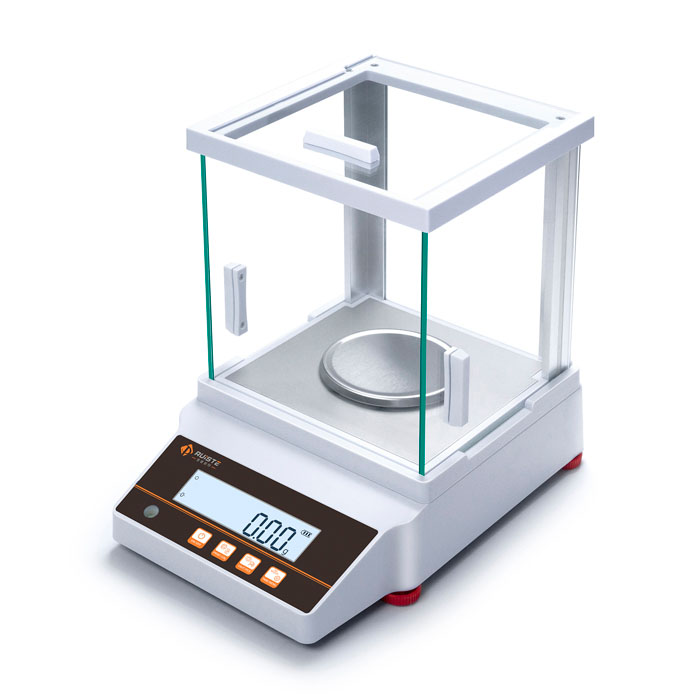
The core operational logic of ultra-precision laboratory balances relies on the mature electromagnetic force restoration principle, a closed-loop working mechanism that ensures reliable and sensitive mass detection. When a sample is placed on the weighing pan, the gravitational force exerted by the sample triggers a tiny displacement of the pan structure, which is immediately captured by high-sensitivity position detection components. The internal control system then adjusts the current flowing through the electromagnetic coil in real time, generating a reverse electromagnetic force to counteract the downward gravitational pull and restore the weighing pan to its initial balanced position. The magnitude of the current required to maintain this equilibrium state presents a stable proportional relationship with the mass of the sample, and the built-in microprocessor converts this electrical signal into intuitive digital mass data through precise algorithm calculation and signal processing. This non-contact force compensation mode effectively reduces mechanical friction and structural wear, greatly improving the stability and durability of long-term measurement work compared with traditional lever-based weighing structures.
The structural design of ultra-precision laboratory balances is fully optimized for precision measurement scenarios, with every component tailored to suppress interference and enhance accuracy. The weighing pan is usually made of high-density, corrosion-resistant metal materials with smooth and flat surfaces and uniform structural stress, ensuring that samples are placed stably without localized deformation that may affect readings. Surrounding the weighing area, a transparent protective enclosure is equipped to isolate internal measurement space from external environments. This enclosure blocks tiny air convection, floating dust, and subtle airflow fluctuations in the laboratory, all of which can cause measurable deviations in ultra-fine mass detection. The base of the instrument adopts a heavy-duty stable structure with anti-vibration foot pads, which can buffer low-frequency vibration transmitted through the ground and avoid micro-shakes from affecting the balance’s equilibrium state. Internal circuit systems are equipped with shielding structures to resist electromagnetic interference from surrounding laboratory equipment, ensuring that electrical signal collection remains accurate and free from distortion during operation.
Environmental adaptability is a key performance dimension of ultra-precision laboratory balances, as high-precision mass measurement is extremely sensitive to changes in ambient conditions. Temperature fluctuation stands as one of the main influencing factors; subtle thermal expansion and contraction of internal structural components and circuit parts will cause tiny changes in mechanical stress and electrical parameters, leading to reading drift. Most ultra-precision balance systems are equipped with temperature sensing and adaptive correction modules, which monitor real-time ambient temperature and automatically adjust calculation parameters to offset measurement errors caused by temperature changes. Humidity control is equally important—excessively high air humidity may cause slight condensation on internal precision components or surface adhesion of fine particles, while overly dry environments may generate static interference that affects the stability of tiny samples. Reasonable laboratory humidity maintenance can effectively extend the service life of internal sensors and circuit systems while ensuring reading consistency. In addition, placement of the instrument requires avoidance of direct sunlight, strong air outlets, and areas with frequent personnel movement, so as to maintain a stable microenvironment for continuous and accurate measurement.
Ultra-precision laboratory balances support a variety of professional weighing modes to meet diversified experimental and industrial detection needs, breaking the limitations of single fixed-value weighing. In routine sample testing, the basic weighing mode meets the mass detection requirements of conventional solid and stable liquid samples. The dynamic weighing mode is suitable for measuring samples with subtle mass changes, such as volatile chemical reagents, hygroscopic materials, and samples undergoing slow chemical reactions, capable of continuously capturing real-time mass variation data within a set period. Percentage weighing mode enables quantitative proportion analysis of sample components, facilitating batch comparison and component ratio calculation in material formulation experiments. The built-in density measurement function, matched with auxiliary measuring accessories, allows users to quickly obtain the density data of solid and liquid samples by measuring mass changes in different medium environments. Meanwhile, the instrument reserves data transmission interfaces to connect with external terminal equipment, supporting real-time data upload, automatic record storage, and batch data sorting and analysis, which simplifies experimental data statistics and improves the standardization of laboratory data management.
These high-precision weighing instruments are widely applied in multiple high-standard professional fields, providing reliable data support for technological progress and quality inspection. In pharmaceutical research and testing, ultra-precision balances are used for accurate batching of trace pharmaceutical raw materials, detection of micro-impurity content in finished drugs, and quantitative analysis of pharmaceutical component dissolution, ensuring the safety and uniformity of pharmaceutical products. In new material research, they assist researchers in measuring the mass of micro-nano materials, thin film coatings, and ultra-fine powder samples, supporting the development and performance verification of high-performance composite materials, conductive materials, and catalytic materials. In chemical analysis laboratories, the instruments undertake precise weighing of standard reagents, trace sample quantification, and constant weight detection of experimental vessels, laying a foundation for accurate chemical reaction experiments and quantitative analysis results.
In environmental monitoring and food safety detection fields, ultra-precision laboratory balances also play an irreplaceable role. Environmental detection work requires quantitative analysis of trace pollutants in air, water bodies, and soil sediments, and the ultra-high resolution of the balance can accurately capture the mass of tiny pollutant samples, supporting the formulation of environmental assessment data. In food testing, it is used for the detection of trace additives, harmful residues, and nutritional component content in food samples, providing accurate data basis for food safety evaluation and quality grading. In industrial precision manufacturing, the instruments are applied in the quality inspection of miniature electronic components, precision hardware parts, and coating materials, detecting tiny mass deviations of products in batch production to ensure the consistency and qualification rate of industrial products.
Standardized operation and daily maintenance are critical to maintaining the long-term precision and stable performance of ultra-precision laboratory balances. Before each use, operators need to place the instrument on a horizontal stable surface and check the horizontal calibration state of the equipment to avoid measurement errors caused by tilted placement. Preheating the instrument for an appropriate period is necessary to stabilize the operating state of internal circuits and sensors, eliminating signal drift caused by cold start of equipment. During sample placement, operators need to handle samples gently to prevent impact force from damaging internal precision structures, and avoid direct contact between corrosive samples and the weighing pan to protect the surface flatness and structural integrity of the pan. For trace sample measurement, pre-cleaning of the weighing pan and protective enclosure is required to remove residual dust and sample residues that may interfere with micro-measurement results.
Daily maintenance work focuses on environmental management and regular performance inspection. The laboratory space where the instrument is placed needs to maintain clean, dry, and stable temperature and humidity conditions for a long time, and regular dust removal treatment of the instrument’s internal and external structures is required to prevent fine dust from accumulating on sensors and moving parts to affect measurement sensitivity. Regular calibration checks are essential; through standard mass verification, the system parameters are adjusted to ensure that the measurement error is always controlled within a reasonable range. When the instrument is not in use for a long time, the weighing pan should be cleaned and dried, and the protective enclosure should be closed to isolate external dust and moisture, while cutting off the power supply to avoid long-term standby power consumption affecting circuit stability. In case of abnormal reading fluctuation or slow response during use, the equipment should be suspended in time for inspection and troubleshooting, avoiding long-term use with potential faults that may cause permanent damage to precision components.
With the continuous advancement of laboratory technology and industrial precision manufacturing standards, the performance of ultra-precision laboratory balances is also undergoing continuous optimization and upgrading. Modern ultra-precision balance designs are moving toward higher resolution, stronger anti-interference ability, and more intelligent data management functions. The optimization of sensor structures and algorithm systems further reduces measurement uncertainty and shortens the stable response time of readings. Intelligent temperature and humidity adaptive correction systems are becoming more refined, capable of capturing subtle environmental changes and implementing dynamic parameter adjustment to maintain measurement accuracy in complex laboratory environments. At the same time, the integration of automated operation functions simplifies manual operation steps, reduces human operation errors, and improves the efficiency and repeatability of batch measurement work.
In scientific research and industrial production scenarios that pursue high precision and high consistency of data, ultra-precision laboratory balances have always been core basic equipment. Their stable and reliable measurement performance provides accurate quantitative support for experimental verification, product research and development, and quality supervision. By adhering to standardized operation and scientific daily maintenance, the service life of the instrument can be effectively extended, and long-term stable and high-precision measurement output can be maintained. As the requirements for micro-quantitative analysis in various industries continue to improve, ultra-precision laboratory balances will continue to iterate in performance and function, adapting to more sophisticated experimental and industrial detection scenarios, and providing solid technical support for the development of precision science and industrial manufacturing.
Ultra-precision Laboratory Balance
https://www.pruiste.com/laboratory-balance.html
Post Date: May 22, 2026
https://www.supplier-manufacturer.com/laboratory-balance/ultra-precision-laboratory-balance.html

![Counting Balance RSB-C SERIES]()
Counting Balance RSB-C SERIES
The RSB-C series adopts high-definition keys, which is economical. The entire series of balances adopt Nuosheng sensors, brand sensors, and aluminum alloy structure to ens…![Digital Viscometer Price]()
Digital Viscometer Price
Digital viscometers have become indispensable precision testing instruments across modern industrial production, laboratory research and development, and quality inspectio…![Working Principle of Digital Viscometer]()
Working Principle of Digital Viscometer
Viscosity is an inherent physical property of fluid substances, which characterizes the internal friction and flow resistance generated when a fluid undergoes relative mot…![High-temperature Digital Viscometer]()
High-temperature Digital Viscometer
Viscosity stands as one of the most fundamental physical properties of fluid substances, reflecting the internal friction and flow resistance generated during the movement…![Rapid Moisture Analyzer]()
Rapid Moisture Analyzer
Moisture content stands as one of the most critical physical indicators that determine the quality, stability, and practical performance of various raw materials and finis…