Digital Balance Calibration Standard Laboratory Weight
In every modern laboratory setting that relies on quantitative measurement data to support experimental research, material formulation, quality verification, and scientific analysis, the digital balance stands as one of the most fundamental and widely utilized weighing instruments. Unlike traditional mechanical weighing devices that depend on manual beam adjustment and visual alignment to achieve mass equilibrium, digital balances adopt advanced electromagnetic force compensation and high-sensitivity signal conversion structures, capable of converting the gravitational force generated by measured objects into stable electrical signals and presenting intuitive digital reading results through internal microprocessor operation. The reliability and stability of all data obtained from daily weighing work conducted on such digital balances are fundamentally dependent on regular and standardized calibration processes, and standard laboratory weight serves as the core reference medium that underpins the entire calibration work, forming an indispensable link to connect instrument performance adjustment and accurate mass value tracing. Without scientific and rigorous calibration carried out with qualified standard laboratory weight, even digital balances with sophisticated internal structural design and sensitive sensing components will gradually produce subtle measurement deviations during long-term use, frequent operation, and changes in external environmental conditions. These seemingly minor deviations will not only affect the accuracy of single weighing records but also accumulate and amplify in subsequent experimental data analysis, sample proportioning, and batch product performance testing, ultimately leading to distortion of experimental conclusions, unstable product quality, and even major deviations in industrial production parameter adjustment, making the entire measurement work lose its basic scientific rigor and practical guiding significance.
The essence of digital balance calibration is essentially a precise comparison and correction process between known stable mass values and the actual response values of the weighing instrument. The core logic of this work follows the basic principle of mass measurement equivalence, where the standard laboratory weight with fixed and stable mass attributes is placed on the weighing pan of the digital balance under specified standardized environmental and operational conditions. The internal sensing system of the digital balance captures the pressure and displacement changes generated by the standard laboratory weight, converts these physical changes into measurable electrical signals, and after internal circuit processing and algorithm calculation, feeds back corresponding digital display data. Professional operators then compare the displayed digital data of the balance with the inherent known mass value of the standard laboratory weight, carefully record the subtle differences between the two sets of data, and carry out targeted parameter adjustment and performance correction on the digital balance according to the actual deviation range. Through this complete comparison and adjustment cycle, the response sensitivity, linearity, and weighing repeatability of the digital balance can be restored to a stable and reasonable state, ensuring that every subsequent weighing operation for experimental samples, raw materials, and test specimens can output data that conforms to actual mass conditions. Standard laboratory weight plays an irreplaceable core role in this whole calibration cycle, as it is the only reliable reference benchmark that can provide fixed, repeatable, and traceable mass values. All calibration adjustment work of digital balances revolves around the mass reference attribute of standard laboratory weight, and the quality stability, surface processing fineness, structural uniformity, and long-term storage stability of standard laboratory weight directly determine the effectiveness of calibration work and the long-term measurement accuracy of digital balances after calibration.
To deeply understand the coordination relationship between digital balance calibration and standard laboratory weight, it is first necessary to clarify the basic structural composition and working operation mechanism of modern digital balances, as well as the basic manufacturing characteristics and performance attributes that standard laboratory weight must possess to meet laboratory calibration needs. The internal core structure of a conventional laboratory digital balance mainly includes four key parts: a load-bearing weighing pan responsible for placing measured objects and standard laboratory weight, a high-precision displacement sensing and electromagnetic force compensation module that bears load pressure and generates signal changes, an internal data processing and operation microprocessor, and a digital display and parameter adjustment interaction interface. When any object or standard laboratory weight is stably placed on the weighing pan, the weighing pan and the rigidly connected internal support structure will produce tiny downward displacement under the action of gravity. The high-sensitivity photoelectric displacement sensor inside the balance can accurately capture these extremely subtle displacement changes that are almost imperceptible to the human eye and immediately convert the displacement physical signals into continuous electrical signal pulses. These electrical signals are quickly transmitted to the electromagnetic force compensation system, which generates corresponding reverse electromagnetic force according to the signal feedback to offset the gravity generated by the load on the weighing pan, maintaining the weighing pan and internal structure in a relatively balanced and stable position state. The microprocessor collects all real-time signal data generated during this balance maintenance process, conducts systematic calculation, amplification, and correction processing through built-in operation programs, and finally converts the processed signal data into intuitive digital mass values, which are presented on the display screen for operators to read and record directly.
Different from the complex electronic sensing and signal processing structure of digital balances, standard laboratory weight adopts a simpler and more solid physical structure design, with the core design concept focused on maintaining long-term mass stability, uniform internal material density, and smooth and wear-resistant surface state. The production and processing of standard laboratory weight select high-density, low thermal expansion coefficient, and strong corrosion-resistant base materials, ensuring that the internal density of each weight is uniform and consistent without internal pores, impurities, or structural defects that may cause mass changes. In the subsequent finishing processing link, the surface of each standard laboratory weight is finely polished and specially treated to avoid surface oxidation, corrosion, wear, and adhesion of external dust and impurities during long-term use and storage. The overall structural design of standard laboratory weight follows the principle of convenient placement, stable bearing, and easy handling, with a regular shape that can be stably placed on the weighing pan of digital balances without tilting or shaking, ensuring that the gravity generated by the weight can be evenly and vertically acted on the sensing and stress-bearing area of the balance, avoiding measurement errors caused by unbalanced force bearing. Each standard laboratory weight has a fixed mass attribute formed during production and calibration, and this mass value remains relatively stable for a long time under proper use and scientific storage conditions, providing a constant and reliable mass reference benchmark for the daily calibration work of various digital balances in the laboratory.
The necessity of regular calibration of digital balances with standard laboratory weight stems from the inevitable performance attenuation and external interference factors that all precision weighing instruments will face during long-term use. In the daily operation process of laboratory digital balances, frequent placement and removal of different weighing samples will cause continuous mechanical vibration and subtle structural fatigue loss to the internal stress-bearing structure and sensing components. Long-term continuous operation will also lead to slight aging and parameter drift of internal electronic circuits and sensing elements, making the signal conversion sensitivity and data processing accuracy of the balance gradually deviate from the initial factory state. At the same time, the laboratory's internal environmental conditions are always in dynamic change, including fluctuations in ambient temperature, changes in air humidity, subtle air flow disturbances, and even tiny ground vibration generated by surrounding experimental equipment operation and personnel activities. All these external environmental factors will have a certain impact on the weighing stability and measurement accuracy of digital balances. For example, excessive temperature changes will cause slight thermal expansion and contraction of the internal metal structure and electronic components of the balance, affecting the electromagnetic force compensation effect and signal transmission stability; high air humidity will easily cause slight moisture corrosion on the internal circuit contacts and the surface of the weighing pan, interfering with the normal induction of stress signals; unstable air flow will generate tiny air pressure differences on the surface of the weighing pan and the placed objects, resulting in real-time floating of weighing data. These internal structural aging and external environmental interference factors cannot be completely avoided by the instrument itself through internal compensation functions alone, and regular calibration with standard laboratory weight is required to regularly detect the deviation degree of the balance's weighing performance and make targeted adjustments to eliminate accumulated errors.
The complete operation process of digital balance calibration using standard laboratory weight follows strict standardized operating specifications, and every operation link needs to be carried out in accordance with scientific procedures to avoid human operation errors affecting the calibration effect. Before the official start of calibration work, the first step is to carry out pre-calibration preparation and environmental debugging work. Operators need to first clean the working area of the laboratory where the digital balance is located, wipe the weighing pan and the surrounding bearing platform of the balance with clean soft materials to remove surface dust, residual sample debris, and other attached impurities, ensuring that the weighing contact surface is clean and flat. Then, it is necessary to adjust the horizontal state of the digital balance itself through the horizontal adjustment foot pad equipped with the instrument, observing the horizontal bubble indicator of the balance to ensure that the instrument is placed in a horizontal and stable overall state, because the tilted placement of the balance will directly lead to uneven stress on the internal sensing structure, resulting in inherent deviation of weighing data. After completing the placement adjustment, the digital balance needs to be powered on and preheated for a sufficient period of time, allowing the internal electronic components and sensing system to reach a stable working temperature and operating state, avoiding unstable signal output caused by insufficient preheating and affecting the accuracy of calibration data. Meanwhile, the standard laboratory weight to be used for calibration also needs to be placed in the same laboratory environment for a period of time in advance, so that the temperature of the standard laboratory weight is consistent with the ambient temperature of the balance working area, preventing temperature differences from causing subtle air convection and surface thermal expansion changes, which interfere with the stability of the weighing process.
After finishing all the pre-calibration preparation work, the formal calibration operation link can be started step by step. The first step of formal calibration is zero-point calibration adjustment, which is the basic premise to ensure the accurate weighing of digital balances. Under the condition that no standard laboratory weight or any measured object is placed on the weighing pan of the digital balance, the operator activates the zero-setting function of the balance to make the digital display data of the balance return to the zero state and remain stable without floating up and down. This step eliminates the zero drift error of the balance caused by long-term placement and environmental changes, ensuring that the balance starts all subsequent weighing and calibration work from a unified zero reference point. After the zero point is stabilized, the standard laboratory weight of different mass specifications is selected according to the actual weighing range and accuracy level of the digital balance for segmented calibration detection. In general, calibration needs to be carried out in stages according to the low-load, medium-load, and high-load ranges of the balance's weighing capacity, selecting corresponding standard laboratory weight with small, medium, and large mass values for sequential placement and testing. This segmented calibration method can comprehensively detect the weighing accuracy and linear response performance of the digital balance in the entire effective weighing range, avoiding the problem that only single-point calibration leads to unqualified weighing performance in some local load ranges of the balance.
In each segmented calibration test, the operator needs to gently place the selected standard laboratory weight in the center position of the digital balance weighing pan, ensuring that the weight is placed stably without shaking, tilting, or contact with the balance surrounding baffle and other external structures. After the placement is completed, it is necessary to wait for a period of time for the balance data to stabilize, avoiding reading data during the real-time floating stage of the display value, so as to prevent transient signal instability from causing reading errors. After the digital display data is completely stable, the operator carefully records the display value of the digital balance and compares it with the actual fixed mass value of the placed standard laboratory weight to calculate the specific deviation value between the displayed data and the standard mass data. For each standard laboratory weight of different specifications, multiple repeated placement and reading operations are required, and multiple groups of deviation data are recorded respectively. The average value of multiple deviations is taken as the final calibration basis, which effectively avoids random errors caused by single accidental operation and ensures the objectivity and accuracy of calibration data.
After completing all segmented weighing tests and data recording with standard laboratory weight, the operator conducts comprehensive sorting and analysis of all recorded deviation data, and carries out targeted parameter correction and performance adjustment for the digital balance according to the overall deviation situation. If the deviation between the balance display value and the standard laboratory weight mass value is within a small reasonable fluctuation range, fine calibration correction can be carried out through the internal fine adjustment function of the balance to make the display value consistent with the standard mass value. If the overall deviation is large or the linear deviation of different load segments is uneven, it is necessary to carry out comprehensive reset and parameter recalibration of the balance's internal operation program, and repeat the segmented calibration test with standard laboratory weight again after adjustment until the deviation of all weighing segments meets the basic precision requirements of laboratory measurement work. After the calibration adjustment is completed, it is also necessary to carry out random recheck weighing with standard laboratory weight of different specifications again to verify the stability and durability of the calibration effect, ensuring that the digital balance can maintain accurate and stable weighing response in the full load range after calibration.
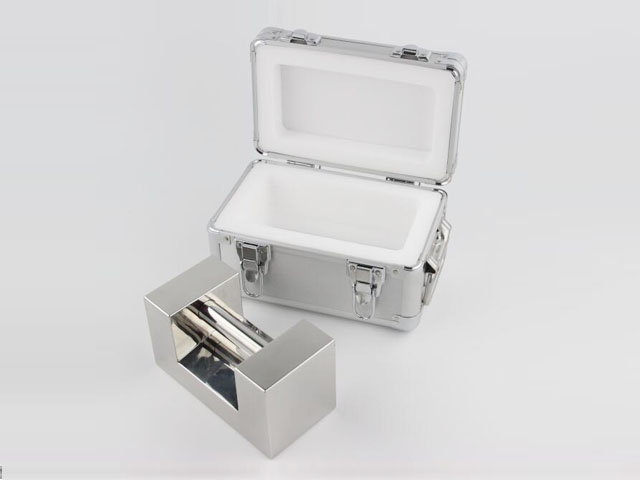
In addition to the formal calibration operation process, the daily maintenance and proper storage of standard laboratory weight are also key factors affecting the long-term effectiveness of digital balance calibration work, and good management habits can effectively extend the service life of standard laboratory weight and maintain the stability of its mass reference performance. Standard laboratory weight should be stored in a special dry, dust-proof, and corrosion-proof storage container when not in use for a long time, placed in a constant temperature and dry storage area inside the laboratory, avoiding long-term exposure to humid air, corrosive gas, and direct sunlight. Long-term exposure to harsh environments will cause surface oxidation, corrosion, and moisture adhesion of standard laboratory weight, leading to subtle changes in its own mass and affecting the accuracy of subsequent calibration work. In the daily handling and use process of standard laboratory weight, operators should use special non-slip and non-corrosive handling tools instead of direct hand contact. The sweat, oil stains, and fine impurities on the human hand surface will adhere to the surface of the weight, causing surface pollution and slight mass change, and even leaving scratches on the surface of the weight to damage the surface protective layer and affect the structural stability of the weight. After each use of standard laboratory weight for calibration work, the surface should be gently wiped with a professional clean soft wiping material to remove tiny dust and possible residual impurities on the surface, and then placed back into the special storage container for sealed storage to ensure that the mass state of each standard laboratory weight remains unchanged for a long time.
Different laboratory application scenarios have different requirements for the calibration frequency of digital balances and the selection of standard laboratory weight specifications, and targeted calibration plans need to be formulated according to the actual intensity of use and measurement accuracy requirements. For scientific research laboratories engaged in high-precision experimental analysis, sample trace detection, and precision material formulation work, digital balances are used frequently every day, and the required measurement data accuracy is high, so the calibration cycle should be relatively short, and regular calibration with standard laboratory weight is required every fixed cycle to ensure that each experimental weighing data is accurate and reliable. For teaching laboratories used for student experimental teaching and basic experimental operation training, the use frequency of digital balances is relatively low, and the measurement accuracy requirements are relatively moderate, so the calibration cycle can be appropriately extended on the premise of ensuring basic measurement stability. In terms of the selection of standard laboratory weight specifications, it is necessary to match the maximum weighing range and accuracy resolution of the digital balance. Standard laboratory weight with appropriate mass grade and matching specifications should be selected according to the actual load range of the balance, avoiding the use of overweight or underweight standard weight for calibration, which cannot achieve the best calibration effect. At the same time, for digital balances used for different professional experiments, such as chemical reagent proportioning, pharmaceutical sample testing, food ingredient detection, and material performance research, the corresponding calibration focus is also different, but all calibration work must rely on standard laboratory weight as the unified mass reference benchmark to ensure the consistency and comparability of measurement data in different experimental links.
In chemical laboratory work, for example, digital balances are often used for accurate weighing of various chemical reagents, solid samples, and experimental raw materials, and the accurate proportioning of reagent mass directly affects the smooth progress of chemical reactions and the accuracy of final experimental data. If the digital balance is not calibrated regularly with standard laboratory weight, weighing deviation will occur in the proportioning of experimental reagents, resulting in inaccurate concentration of prepared solution, insufficient or excessive reaction raw materials, which will further lead to deviations in experimental reaction results, failure to repeat experimental data, and inability to verify experimental conclusions. In pharmaceutical research and sample testing work, the mass accuracy of drug raw materials and finished product samples is directly related to the safety and efficacy of drugs, and subtle weighing errors may affect the stability of drug formula and the effectiveness of finished product testing. Only through regular calibration of digital balances with stable and reliable standard laboratory weight can the accuracy of drug sample weighing data be guaranteed, providing reliable data support for pharmaceutical research and quality testing. In food testing and industrial raw material proportioning laboratories, the accuracy of digital balance weighing data is related to product quality stability and production batch consistency, and standardized calibration with standard laboratory weight can effectively avoid product quality fluctuations caused by weighing errors.
It is also important to recognize the common subtle errors that may easily occur in the process of digital balance calibration with standard laboratory weight and the corresponding effective avoidance measures. In addition to the environmental temperature, humidity, and placement stability factors mentioned above, air flow interference in the laboratory is a common easily overlooked error source. In the calibration process, if the digital balance is placed near doors, windows, ventilation equipment, and air conditioning air outlets, the flowing air will continuously blow the weighing pan and the placed standard laboratory weight, resulting in unstable balance display data and difficult stabilization, thus affecting the accuracy of calibration reading. Therefore, during calibration work, the balance should be placed in a position avoiding direct air flow, and the external protective baffle of the balance should be closed to reduce the impact of air convection on weighing stability. In addition, the static electricity generated by friction of the balance shell and weighing pan in dry environment will also interfere with the normal signal induction of the balance, leading to data floating. Properly maintaining the laboratory air humidity within a reasonable range and carrying out static elimination treatment before calibration can effectively avoid such interference errors. Human operation subtle deviations, such as too fast placement of standard laboratory weight, slight shaking during placement, and premature data reading before data stabilization, will also affect the calibration effect. Standardizing operator operation steps and maintaining gentle and stable operation habits can effectively reduce human-induced calibration errors.
With the continuous progress of laboratory measurement technology and the continuous improvement of precision experimental research requirements, the performance of digital balances is constantly upgraded and optimized, and the structural processing accuracy and material stability of supporting standard laboratory weight are also continuously improved accordingly. The coordination and matching relationship between digital balance daily use, regular calibration, and standard laboratory weight reference will always be the core foundation of laboratory precision weighing work. No matter how advanced the electronic sensing and data processing technology of digital balances is, it cannot replace the basic reference role of standard laboratory weight in mass value calibration and traceability. Only by always adhering to standardized calibration operation procedures, selecting suitable and well-maintained standard laboratory weight, doing a good job in daily maintenance of calibration links and instruments, and regularly completing comprehensive calibration and error correction of digital balances, can the long-term stable and accurate operation of digital balances in all laboratory weighing work be ensured. This not only guarantees the authenticity, accuracy, and repeatability of all experimental data and test results, but also lays a solid foundation for the smooth development of scientific research experiments, product quality control, and industrial production research and development, providing reliable basic measurement support for all work links that rely on accurate mass data.
Digital Balance Calibration Standard Laboratory Weight
https://www.veidtweighing.com/laboratory-weights.html
Post Date: Apr 28, 2026

![25kg Test Weight]()
25kg Test Weight
In the complex and interconnected system of modern social production, commercial circulation, public infrastructure operation and daily life management, the accuracy and s…![M3 Class Test Weight]()
M3 Class Test Weight
In the entire system of industrial measurement, commercial weighing and daily metering verification work, test weights stand as one of the most fundamental and indispensab…![Stainless Steel Standard Weight]()
Stainless Steel Standard Weight
Stainless steel standard weight represents one of the most fundamental and essential physical attribute benchmarks that define the practical usability and structural perfo…![Test Weight Sets]()
Test Weight Sets
Test weight sets stand as foundational reference tools in every field that relies on reliable mass measurement, forming the essential bridge between theoretical mass stand…![Standard Calibration Weight]()
Standard Calibration Weight
In every corner of modern production, scientific research, experimental analysis, and daily industrial operation, the reliability of weighing data stands as an invisible f…