Laboratory Moisture Analyzer
Moisture content stands as one of the most critical physical indicators for evaluating the quality, stability, and usability of various materials across scientific research, industrial production, and quality inspection fields. Trace or excessive moisture in raw materials and finished products can alter material properties, trigger chemical deterioration, shorten storage cycles, and even affect the accuracy of experimental data and the safety of production processes. Laboratory moisture analyzers serve as essential analytical devices designed for precise moisture detection in diverse samples, delivering reliable and repeatable moisture measurement results through standardized physical testing methods. Unlike traditional manual drying and weighing approaches that rely on constant-temperature drying ovens and analytical balances, this integrated testing equipment combines precision weighing modules, controllable heating systems, and intelligent data processing units, realizing automated, efficient, and standardized moisture detection, which has become a fundamental tool in modern laboratory analytical work.
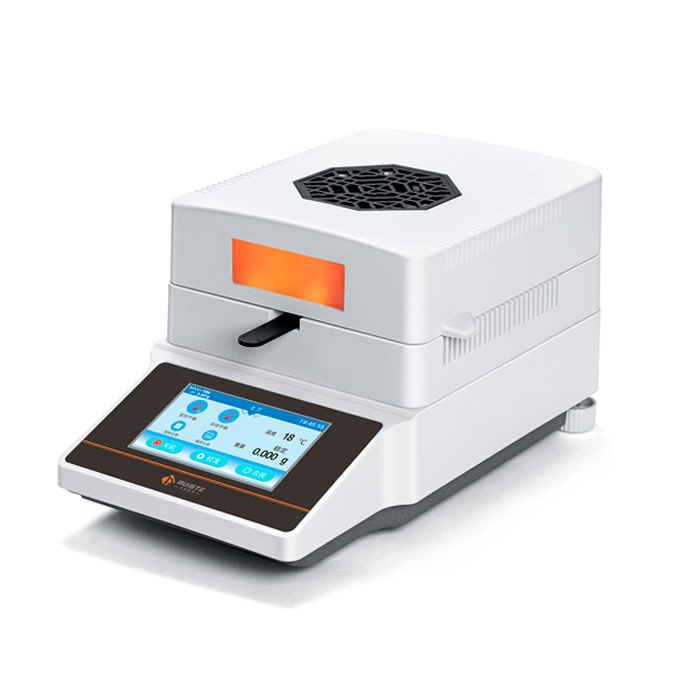
The core working mechanism of laboratory moisture analyzers is based on the thermogravimetric loss-on-drying principle, a classic and universally recognized physical detection method for moisture measurement. The basic logic of this principle is straightforward and scientific: the moisture contained in solid, powder, paste, or liquid samples will completely evaporate under specific controlled temperature conditions, and the moisture content of the sample can be calculated by recording the weight difference of the sample before and after drying. During the entire testing process, the instrument first records the initial weight of the fresh sample placed in a standard testing pan. Subsequently, the built-in heating system generates stable and uniform heat to act on the sample surface and interior, gradually evaporating free water and partial bound water inside the sample. The high-precision weighing unit continuously monitors real-time weight changes of the sample throughout the heating process, transmitting weight data to the internal microprocessor for real-time analysis and judgment. When the sample weight remains stable within a set time range with no obvious weight loss, it indicates that the moisture in the sample has been fully evaporated, and the heating process automatically stops. The system then calculates the moisture content value of the sample based on the recorded initial weight and final constant weight data, completing the entire detection cycle efficiently.
The structural design of laboratory moisture analyzers follows the principles of functional integration, operational stability, and testing accuracy, mainly consisting of three core functional modules: precision weighing system, controllable heating system, and intelligent control and data processing system. Each module coordinates and complements each other to ensure the stability and credibility of test results. The weighing system is the core component that determines the basic accuracy of detection. It adopts high-sensitivity electronic weighing sensors with stable performance, which can capture tiny weight changes of samples, effectively avoiding data errors caused by manual weighing operations. The internal weighing structure is equipped with anti-vibration and anti-interference designs, reducing the impact of external environmental vibration and air flow on weighing data, ensuring that each weight record is true and effective.
The heating system is a key component that determines the efficiency and uniformity of sample drying. Most laboratory moisture analyzers adopt mainstream heating technologies such as halogen heating and infrared heating, which differ from traditional resistance wire heating methods in terms of heating uniformity and temperature control stability. This type of heating mode can achieve rapid and uniform heat radiation, forming a stable temperature field in the internal testing cavity, enabling the sample to be heated evenly from all directions. This uniform heating effect prevents local overheating of the sample, which may cause sample decomposition, oxidation, or volatile loss of effective components, and also avoids incomplete drying caused by uneven heating. The temperature control unit of the heating system supports precise temperature adjustment within a wide range, adapting to the drying temperature requirements of different types of samples. For heat-sensitive samples that are prone to deterioration at high temperatures, low and medium temperature drying parameters can be set; for stable inorganic samples with high boiling point moisture, higher temperature heating conditions can be adopted to improve drying efficiency.
The intelligent control and data processing system is the brain of the entire instrument operation, responsible for parameter setting, process monitoring, data collection, result calculation, and equipment operation control. Through the human-machine interaction interface, users can set key test parameters including drying temperature, constant weight judgment time, and test mode according to sample characteristics. During the test operation, the system displays real-time data such as sample instantaneous weight, heating temperature, test duration, and real-time moisture ratio, allowing users to intuitively grasp the progress of the test. After the test is completed, the system automatically sorts and calculates data, and can retain test records for subsequent data query, comparison, and statistical analysis. The integrated intelligent program effectively reduces manual intervention in the test process, lowers operational errors caused by human factors, and improves the consistency and comparability of batch test results.
Standardized operating procedures are the premise to ensure accurate and stable test results of laboratory moisture analyzers. The entire testing process can be divided into sample preparation, instrument preheating and calibration, sample loading and testing, and data recording and instrument finishing. In the sample preparation stage, it is necessary to process the sample according to its physical state to ensure the uniformity and representativeness of the test sample. Solid block samples need to be crushed and ground into fine particles to increase the contact area between the sample and heat, ensuring thorough evaporation of internal moisture; viscous paste samples need to be spread evenly in the sample pan to avoid sample accumulation leading to incomplete internal drying; liquid samples need to be placed stably to prevent splashing during heating, which will cause sample loss and data deviation. In addition, the sample weight should be controlled within the reasonable range specified by the instrument parameters. Excessively small sample weight may lead to large relative test errors, while excessive sample weight will prolong the drying time and cause uneven drying of internal samples.
Instrument preheating and daily calibration are essential preparatory steps before testing. Laboratory moisture analyzers need a certain preheating time after startup to make the internal weighing system and heating system reach a stable working state, eliminating the impact of unstable instrument operation on test accuracy. Regular weight calibration and temperature verification are required during daily use. Weight calibration ensures the accuracy of the weighing module, while temperature verification guarantees that the actual heating temperature in the cavity is consistent with the set temperature, avoiding systematic errors caused by temperature deviation. After the instrument is stabilized, a clean, dry, and tare-weighted sample pan is placed in the center of the weighing platform to complete zeroing operation, eliminating the weight interference of the container itself and laying a foundation for accurate sample weight detection.
In the formal testing stage, the processed sample is evenly placed in the sample pan, the test parameters suitable for the sample are set through the control interface, and the test program is started. The instrument automatically enters the heating and drying cycle, and the internal sensor monitors weight changes in real time. During the test, the instrument’s built-in ventilation structure maintains smooth air circulation inside the cavity, timely discharging water vapor generated by sample evaporation to prevent water vapor condensation on the sample surface or internal cavity wall, which may cause secondary moisture absorption and affect test results. The intelligent constant weight judgment program will automatically identify the drying end point. When the sample weight change within the specified time is lower than the set threshold, the system judges that the sample drying is complete, automatically stops heating, and calculates and displays the final moisture content data.
Laboratory moisture analyzers have extremely wide application coverage, penetrating into multiple industries and scientific research fields that require moisture control. In the food and agricultural product industry, moisture content is a core indicator affecting product shelf life, taste, and storage stability. Grain, flour, nuts, dried fruits, spices, and various processed snack foods all need regular moisture detection. Appropriate moisture content can inhibit the reproduction of microorganisms such as bacteria and molds, reducing food deterioration and mildew risks, while maintaining the optimal taste and texture of food products. In agricultural planting and grain storage links, moisture detection of grains and seeds helps judge storage safety and seed activity, providing data support for scientific grain storage and seed preservation.
In the chemical and new material industry, moisture control is closely related to material performance and production quality. Polymer materials, resin raw materials, chemical powders, and rubber additives all have strict moisture content requirements. Excess moisture in chemical raw materials may cause chemical reactions such as hydrolysis and polymerization failure during production and processing, affecting the structural stability and performance of finished materials. In the research and development of new materials, precise moisture detection data helps researchers optimize material formulation and production processes, improving the stability and applicability of new materials. For inorganic building materials such as cement, gypsum, and mineral aggregates, moisture content affects the bonding performance and structural strength of building materials, and regular detection ensures the construction quality and service life of engineering projects.
In the pharmaceutical and biological industry, moisture detection is related to the safety and efficacy of pharmaceutical products and biological samples. Traditional Chinese medicine powders, Western medicine raw materials, pharmaceutical intermediates, and biological reagents have high requirements for moisture stability. Excessive moisture will cause pharmaceutical ingredients to deteriorate, reduce drug efficacy, and even produce harmful substances, while unstable moisture content will affect the accuracy of biological experiments and microbial culture results. Laboratory moisture analyzers provide fast and accurate detection support for pharmaceutical quality inspection and biological experimental research, meeting the strict data precision requirements of the pharmaceutical and biological fields.
In addition to industrial quality control and scientific research experiments, laboratory moisture analyzers also play an important role in environmental detection, textile testing, and daily chemical product inspection. Textile fibers, fabrics, and leather materials have different moisture absorption characteristics, and their moisture content affects the softness, toughness, and dimensional stability of textiles and leather products. Daily chemical products such as cosmetics, detergents, and skin care products need stable moisture ratios to ensure product texture and storage stability. Environmental samples such as soil and sludge also require moisture detection to provide basic data for environmental monitoring and soil quality analysis.
Although laboratory moisture analyzers have high automation and stable detection performance, the accuracy and repeatability of test results are still affected by operating specifications, environmental conditions, and daily maintenance. In terms of environmental requirements, the instrument needs to be placed in a dry, clean, and stable horizontal laboratory environment, avoiding placement in areas with direct sunlight, strong air convection, vibration interference, or corrosive gas accumulation. Drastic changes in ambient temperature and humidity will affect the stability of the weighing sensor and heating temperature field, leading to test data deviation. It is necessary to maintain a constant laboratory temperature and humidity during the test process to ensure the consistency of the test environment for each batch of samples.
Sample characteristics are also important factors affecting test accuracy. For heat-sensitive samples that are easy to decompose, oxidize, or volatilize at high temperatures, blindly adopting high-temperature drying will cause non-aqueous component loss, resulting in higher calculated moisture content than the actual value. For such samples, users need to explore and optimize low-temperature drying parameters and extend the constant weight judgment time appropriately to ensure full evaporation of moisture while avoiding sample deterioration. For samples with strong moisture absorption, the sample loading and testing process should be completed quickly to prevent the sample from absorbing ambient moisture in the air, which will affect the authenticity of test results. In addition, samples with large particle size differences need to be fully crushed and mixed to ensure sample uniformity and representativeness.
Scientific daily maintenance and regular maintenance can effectively extend the service life of laboratory moisture analyzers and maintain long-term detection accuracy. After each test, the residual sample debris in the sample pan and the inner wall of the heating cavity should be cleaned in time to prevent sample residue from carbonizing after long-term high-temperature heating, adhering to the cavity wall and affecting the heating uniformity and weighing accuracy of subsequent tests. The weighing platform and sensor components need to be kept clean and dry at all times to avoid dust accumulation and moisture erosion causing sensor sensitivity decline. The instrument should be placed in a dust-proof environment when not in use for a long time, and regular power-on preheating and functional inspection should be carried out to prevent internal circuit and mechanical components from damp aging.
Regular performance verification is an indispensable part of instrument maintenance. Users need to conduct regular weight calibration and temperature accuracy detection according to the frequency of instrument use. For instruments used for high-frequency batch testing, the calibration cycle can be appropriately shortened to ensure the stability of long-term operation data. At the same time, regular blank tests and parallel sample tests can be carried out to verify the repeatability and stability of the instrument test results. If abnormal data deviation is found during use, the instrument should be stopped in time for inspection and troubleshooting to avoid continuous use affecting the accuracy of experimental and production detection data.
Compared with traditional manual moisture detection methods, laboratory moisture analyzers show obvious advantages in detection efficiency, data accuracy, and operational convenience. The traditional constant-temperature drying oven method requires several hours of drying and cooling weighing processes, with long detection cycles and cumbersome manual operations, and is easily affected by human operation errors. The laboratory moisture analyzer integrates heating, weighing, and data calculation into one, completing the entire detection process in a short time, greatly improving detection efficiency and meeting the needs of rapid batch detection in laboratory research and industrial production. The automated operation mode reduces manual intervention links, effectively lowering human-induced errors, and the standardized test process ensures good repeatability and comparability of test data, providing reliable data support for material research, product quality control, and process optimization.
With the continuous development of laboratory analytical technology, laboratory moisture analyzers are gradually developing towards higher precision, stronger intelligence, and wider applicability. The continuous optimization of heating and temperature control technology makes the instrument more adaptable to heat-sensitive and special samples, solving the detection difficulties of special materials that are difficult to measure by traditional methods. The upgrading of intelligent data management functions realizes automatic storage, sorting, and export of test data, facilitating laboratory data statistics, experimental record archiving, and production quality traceability. As a basic and important analytical instrument, laboratory moisture analyzers will always maintain important application value in scientific research, industrial manufacturing, quality supervision, and other fields, providing stable and accurate technical support for material performance research and product quality improvement.
Laboratory Moisture Analyzer
https://www.pruiste.com/moisture-analyzer.html
Post Date: May 23, 2026
https://www.supplier-manufacturer.com/moisture-analyzer/laboratory-moisture-analyzer.html

![Analytical Balance Fa-pro Series]()
Analytical Balance Fa-pro Series
The FA-PRO series adopts the Internet of Things 5 inch color TFT control system integrated touch high definition screen. The whole series balance adopts high performance s…![Working Principle of Counting Scale]()
Working Principle of Counting Scale
A counting scale is a common weighing and counting device widely applied in industrial production, warehouse inventory management, electronic component sorting, and daily …![Waterproof Counting Scale]()
Waterproof Counting Scale
In modern industrial production, commercial circulation and daily batch material management, counting and weighing equipment has become an indispensable auxiliary tool for…![Bench Weighing Scale]()
Bench Weighing Scale
Bench weighing scales stand as one of the most essential and widely used measuring instruments across diverse commercial, industrial, and daily operational environments, s…![Precision Counting Scale]()
Precision Counting Scale
In modern production operations, small batch processing, laboratory research work, and daily material management routines, the need to quantify small items with consistent…