Analytical Laboratory Balance
Analytical laboratory balances stand as foundational precision instruments in scientific research, industrial testing, and academic laboratory environments, designed to deliver highly accurate mass measurements for small sample quantities. Unlike ordinary weighing devices used for rough mass estimation in daily scenarios, these instruments are engineered to capture subtle variations in sample mass, making them indispensable for experimental work that demands rigorous data accuracy and repeatability. The evolution of analytical balances has closely followed the progress of scientific technology, transitioning from traditional mechanical lever-based structures to modern electronic systems with intelligent sensing and data processing capabilities, significantly enhancing the stability and practicability of precision weighing operations in laboratory settings.
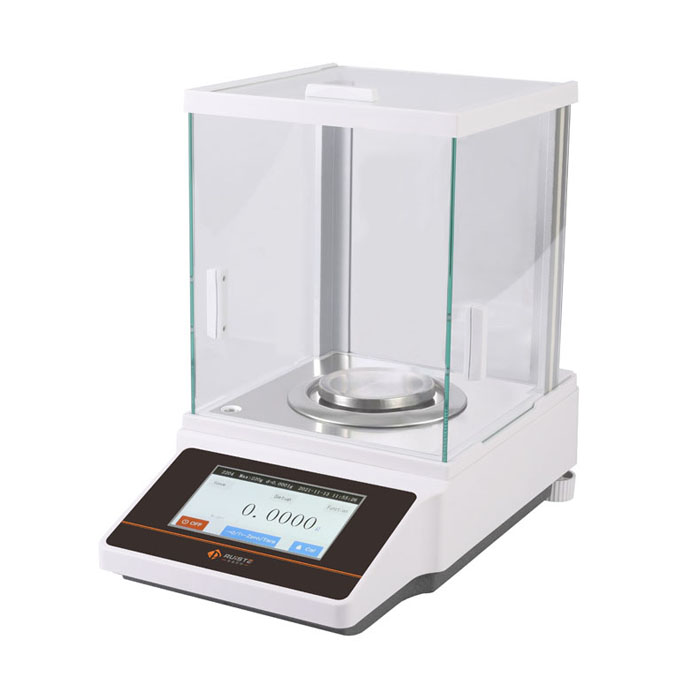
The core working mechanism of contemporary analytical laboratory balances relies on electromagnetic force compensation technology, a sophisticated physical principle that distinguishes high-precision laboratory weighing from conventional measurement methods. Traditional mechanical balances operate by comparing the mass of an unknown sample against standardized counterweights through a lever structure, a process susceptible to manual operation errors and environmental interference. In contrast, modern electronic analytical balances eliminate the need for physical counterweight matching. When a sample is placed on the weighing pan, the gravitational force exerted by the sample triggers a slight displacement of the internal weighing structure. The instrument’s built-in sensing system immediately detects this tiny positional change and adjusts the current in the internal electromagnetic coil to generate a reverse electromagnetic force. This force counteracts the gravitational pull of the sample, restoring the weighing structure to its original balanced neutral position. The magnitude of the electric current required to maintain this equilibrium maintains a stable proportional relationship with the mass of the sample, and the internal microprocessor converts this current signal into a clear digital mass reading, achieving efficient and precise weighing output.
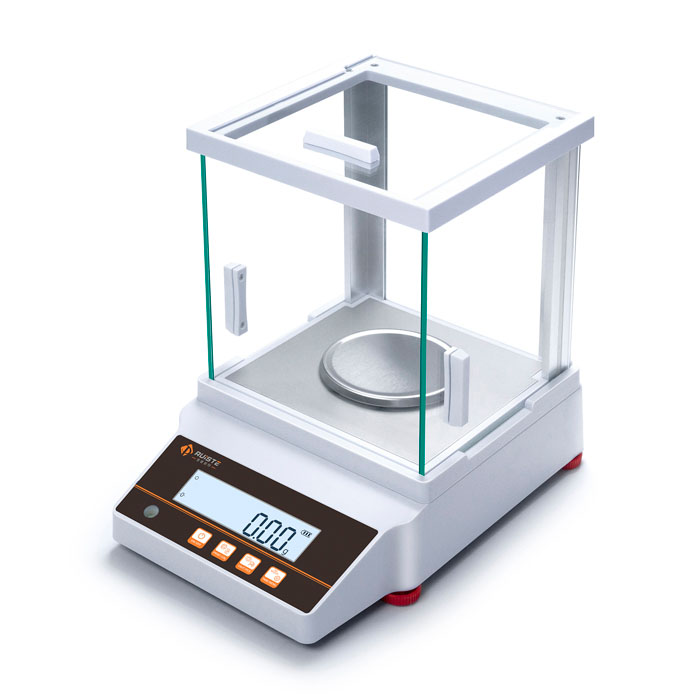
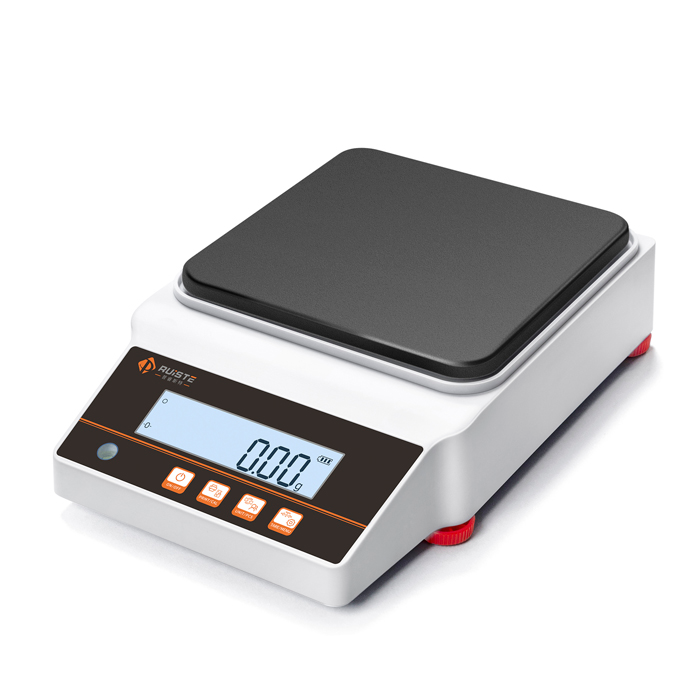
The structural design of analytical laboratory balances is fully optimized to adapt to high-precision measurement requirements, with every component serving the core goals of stability, sensitivity, and anti-interference. The weighing pan, usually crafted from corrosion-resistant and high-rigidity metal materials, provides a flat, stable bearing surface for samples of different shapes and volumes, ensuring uniform force distribution during weighing. Surrounding the weighing area is a transparent draft shield, a vital component that isolates the core weighing space from external environmental disturbances. Minor air currents, indoor temperature fluctuations, and floating dust particles in the air can all interfere with micro-scale mass measurements, and the closed protective space formed by the draft shield effectively mitigates these impacts. Inside the instrument, the high-sensitivity weighing sensor and closed-loop feedback circuit constitute the core detection unit, capable of capturing extremely subtle force changes and completing signal feedback and adjustment in real time. The external digital display module presents measurement data intuitively, while supporting functional expansion such as data transmission and parameter adjustment to meet diverse laboratory operation needs.
Environmental conditions exert a profound influence on the measurement performance of analytical laboratory balances, and standardized environmental control is a prerequisite for obtaining reliable weighing data. Temperature stability is a key factor; drastic or frequent temperature changes can cause slight thermal expansion and contraction of internal structural components, altering the stress state of the weighing system and leading to measurement deviation. Laboratory spaces equipped with analytical balances typically maintain a constant ambient temperature within a moderate range, avoiding direct exposure to sunlight or heat sources. Humidity control is equally critical. Excessively humid air may cause moisture adhesion on the weighing pan and internal components, while overly dry environments can generate static electricity, both of which interfere with sensor sensitivity and weighing accuracy. Additionally, the placement of the instrument requires strict leveling. A horizontal placement state ensures the vertical balance of the internal force system, eliminating measurement errors caused by tilting. The placement platform must possess sufficient rigidity and stability to avoid vibration transmission from surrounding equipment or personnel activities, as even tiny vibrations can disrupt the equilibrium state of the high-sensitivity weighing structure.
Standardized operating procedures are essential to maximize the performance of analytical laboratory balances and maintain long-term measurement stability. Before initiating weighing work, a series of pre-operation preparations must be completed. Operators first check the horizontal state of the instrument and adjust the supporting feet to ensure the level indicator is in the standard position. It is necessary to preheat the instrument for an appropriate duration according to operational norms, as sufficient preheating stabilizes the internal circuit and sensor working state, reducing systematic errors caused by cold start operation. The zero-tare function should be used before sample placement to eliminate the mass influence of containers, weighing papers, or other auxiliary tools, ensuring the final reading solely reflects the mass of the target sample. During the weighing process, samples should be placed gently in the center of the weighing pan to avoid eccentric force and pan collision, which may cause structural displacement or data jitter. Operators should avoid touching the weighing pan and draft shield with bare hands, as skin grease, sweat, and tiny hand vibrations can affect measurement precision. For samples with special properties such as volatile, hygroscopic, or corrosive characteristics, sealed containers must be used for holding to prevent sample mass changes or component damage during weighing.
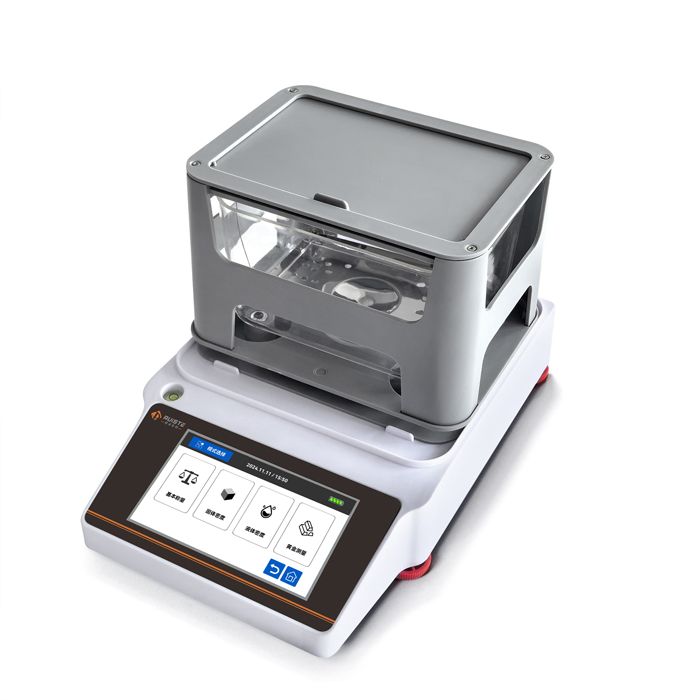
Analytical laboratory balances support multiple functional modes to adapt to complex and diverse laboratory experimental scenarios, breaking the limitations of single fixed-value weighing. Beyond basic direct mass measurement, the instrument can perform percentage weighing, a function widely applied in formulation experiments and material ratio analysis to calculate the proportional mass of different components in a mixture. Density measurement mode enables operators to obtain the density of solid or liquid samples by combining mass data with volume parameter input, providing convenient data support for material property analysis. Dynamic weighing mode is suitable for measuring samples with slight mass changes in real time, meeting the detection needs of chemical reaction processes, volatile sample changes, and other dynamic experimental processes. Meanwhile, most modern analytical balances are compatible with external data transmission equipment, enabling real-time recording, sorting, and storage of weighing data. This function avoids manual recording errors, facilitates experimental data traceability, and supports subsequent data analysis and experimental result verification, greatly improving the standardization and efficiency of laboratory experimental work.
The application scope of analytical laboratory balances covers multiple professional fields, serving as a core tool for precision experimental research and quality detection. In chemical laboratories, they are used for accurate weighing of chemical reagents, standard sample preparation, and quantitative analysis of reaction products, ensuring the accuracy of experimental ratios and the reproducibility of chemical reaction results. In biological and pharmaceutical research, the instrument assists in weighing biological samples, pharmaceutical raw materials, and experimental culture mediums, providing precise data support for drug formulation development, biological sample analysis, and medical experiment verification. In material science research, analysts rely on the high precision of these balances to measure micro-mass changes of new materials before and after physical or chemical treatment, analyzing material stability, reaction characteristics, and structural changes. In industrial quality inspection, analytical balances are used for component detection of fine chemical products, electronic materials, and high-precision accessories, providing accurate mass data basis for product quality evaluation and production process optimization. Environmental monitoring laboratories also apply the instrument to weigh trace pollutants and environmental samples, supporting accurate data analysis in water quality, air, and soil detection work.
Scientific daily maintenance and regular inspection are crucial to extend the service life of analytical laboratory balances and sustain stable measurement performance. Daily cleaning work should be carried out after each use; residual sample debris, dust, and stains on the weighing pan and inside the draft shield need to be cleaned gently with soft, non-abrasive tools to prevent residual substances from affecting subsequent measurement results or corroding instrument components. It is necessary to keep the instrument working area dry and clean, avoiding long-term accumulation of dust and moisture inside the equipment. Regular functional inspections include checking the sensitivity of the zero adjustment function, the stability of digital readings, and the flexibility of the draft shield switch to ensure all functional modules operate normally. For long-term used instruments, periodic calibration of the weighing system is required to correct subtle systematic errors generated by long-term operation, component aging, or environmental changes. During idle periods, the instrument should be covered with a dust cover to isolate dust and harmful substances, and it should be placed in a stable indoor environment avoiding high temperature, humidity, and strong electromagnetic interference, preventing component aging and performance degradation caused by adverse environmental factors.
In laboratory scientific research and precision detection work, the value of analytical laboratory balances lies in their ability to provide consistent, reliable, and high-resolution mass data. Every link from instrument placement, environmental adaptation, standardized operation to daily maintenance directly affects measurement quality. Skilled operators need to fully grasp the working characteristics and performance limits of the instrument, strictly abide by operational specifications, and formulate targeted maintenance plans according to usage frequency and experimental environment. With the continuous advancement of laboratory technology, analytical balances are gradually developing toward higher stability, stronger anti-interference ability, and more intelligent data processing functions, further adapting to the increasingly refined and diversified precision measurement needs of modern scientific research, industrial production, and technical detection fields, and providing solid basic technical support for the progress of various professional experimental research work.
Analytical Laboratory Balance
https://www.pruiste.com/laboratory-balance.html
Post Date: May 22, 2026
https://www.supplier-manufacturer.com/laboratory-balance/analytical-laboratory-balance.html

![Electronic Balance Factory]()
Electronic Balance Factory
Within the intricate framework of modern manufacturing and scientific research infrastructure, electronic balance factories occupy an irreplaceable foundational position, …![Explosion-proof Electronic Balance]()
Explosion-proof Electronic Balance
In modern industrial production and laboratory research, accurate weight measurement constitutes one of the fundamental links to ensure product quality and experimental cr…![Weighing Scale Wholesale]()
Weighing Scale Wholesale
The global weighing scale wholesale sector has maintained steady development momentum amid the continuous expansion of downstream application industries, evolving consumpt…![Axle Weighing Scale]()
Axle Weighing Scale
Axle weighing scale has become an indispensable piece of weighing equipment in modern transportation management, industrial production and logistics operation, focusing on…![Density Balance ME Series]()
Density Balance ME Series
The ME series density balance adopts the Internet of Things 5-inch color TFT control system integrated touch high-definition screen. The entire series of balances adopts G…