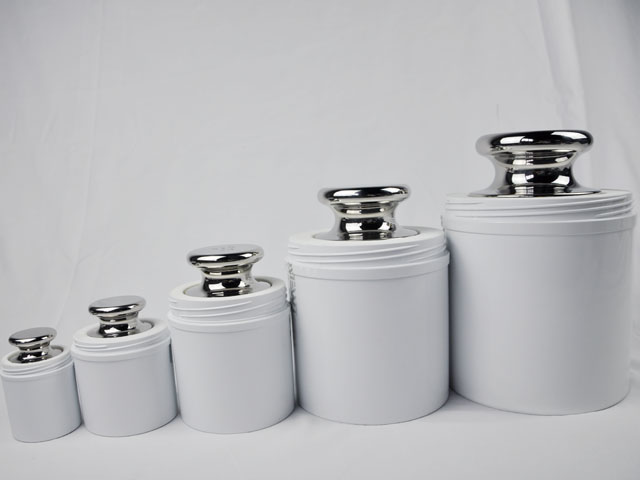
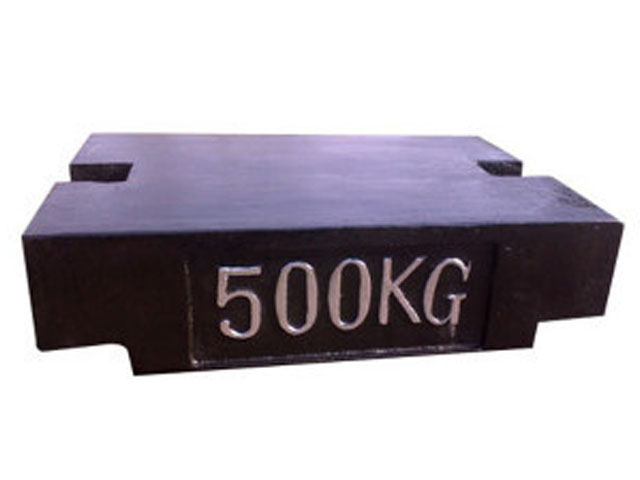
Kilogram Test Weight
In every corner of modern industrial production, scientific research experimentation, commercial transaction settlement, and daily life quality supervision, the accurate perception and reliable quantification of mass have always been an indispensable basic prerequisite for maintaining the orderly operation of all social and economic activities. Mass, as one of the most fundamental physical quantities recognized by the international measurement system, serves as the core connection linking physical scientific research, industrial manufacturing standards, and fair trade norms, and all measurement behaviors related to material quality, product specification matching, and experimental data verification cannot be separated from unified and stable mass reference standards. Among all the physical carriers used to realize the transmission and traceability of mass unit values, the kilogram test weight stands out as the most basic, most widely used, and most critical physical medium, undertaking the important mission of docking theoretical mass definition with practical measurement operations, and bridging abstract metrological concepts with specific production and life scenarios. Unlike complex precision measuring instruments that rely on electronic sensing, electromagnetic conversion, or mechanical linkage structures to complete measurement work, the kilogram test weight follows the most original and intuitive principle of mass balance comparison. Its core value lies in maintaining long-term stable mass attributes, providing a fixed and unified reference benchmark for various weighing equipment and mass measurement behaviors, and ensuring that every mass measurement result obtained in different regions, different industries, and different usage environments has consistent comparability and credibility, laying a solid foundation for the standardization and normalization of all measurement-related work.
To understand the essential role and practical value of the kilogram test weight, it is first necessary to distinguish the core difference between mass and weight, two concepts that are often easily confused in daily cognition and even some basic measurement operations. Mass refers to the inherent amount of matter contained in an object, an inherent physical property of the object itself that will not change with the difference of geographical location, environmental altitude, gravitational field strength, and external environmental conditions, maintaining a constant state all the time. Weight, on the other hand, is a kind of gravitational force exerted on the object by the planet’s gravitational field, a derived force quantity that will fluctuate subtly with changes in local gravitational acceleration, latitude, and altitude. The kilogram test weight is strictly manufactured and adjusted based on the mass standard value, and its core attribute is stable and unchanged mass rather than variable weight. This essential characteristic determines that it can be used as a universal reference standard in any region and any conventional usage environment. Whether it is used in high-altitude plateau areas with relatively weak gravitational acceleration or coastal plain areas with standard gravitational field conditions, the mass value of the kilogram test weight remains consistent, and only the tiny weight difference caused by gravitational changes will occur, which can be ignored in most conventional measurement scenarios and only needs to be accurately corrected in extremely high-precision scientific research and top-level metrological calibration work. This fundamental attribute stability is the primary reason why the kilogram test weight can become the basic carrier of global mass value transmission and maintain the long-term stability of the entire mass measurement system.
The development and evolution of the kilogram test weight have always been closely synchronized with the iterative upgrading of the international definition of the kilogram mass unit and the continuous progress of metrological technology. In the early stage of human metrological development, the definition of mass units was mostly based on intuitive and easy-to-obtain natural substances, and the early mass reference weights were mostly made of common metal materials or even stone materials, with rough production processes and large mass deviation, which could only meet the most primitive simple weighing needs in barter trade and simple handicraft production. With the continuous development of industrialization and the increasing frequency of cross-regional commodity transactions, people began to have higher requirements for the uniformity and accuracy of mass measurement, and the formulation of unified international mass unit standards and the production of standardized test weights became an inevitable demand of the times. For a long period in history, the international mass standard was defined based on a specific physical artifact, and all test weights including kilogram test weights were manufactured, calibrated, and adjusted by tracing back to this original standard artifact, realizing the hierarchical transmission of mass unit values from top to bottom. In recent years, with the advancement of fundamental physical research, the definition of the kilogram has been optimized and updated, abandoning the traditional physical artifact standard and adopting the fixed fundamental physical constant as the core definition basis, making the definition of the mass unit more stable, permanent, and not affected by the physical changes of any physical object. Although the core definition basis of the kilogram has undergone fundamental changes, the core status and usage function of the kilogram test weight in practical measurement work have not changed at all. On the contrary, with the improvement of the accuracy requirements of modern measurement work, the manufacturing precision, material performance stability, and environmental adaptability requirements of kilogram test weights have been further improved, making them more suitable for the accurate value transmission work under the new international mass definition system.
The production and manufacturing process of a qualified kilogram test weight involves multiple links such as material selection, precision processing, surface treatment, mass fine adjustment, and initial performance detection, and every link directly affects the final mass stability and service life of the test weight. In terms of material selection, the core principle is to select materials with high density uniformity, low thermal expansion coefficient, strong oxidation resistance, and weak environmental corrosion sensitivity. Such materials can ensure that the volume and mass of the test weight will not change significantly due to temperature changes, air humidity fluctuations, and long-term contact with the external air environment, avoiding mass deviation caused by material oxidation, corrosion, thermal expansion and contraction, and other external factors. Different application scenarios and measurement accuracy requirements correspond to different production materials for kilogram test weights. Test weights used for ordinary industrial production weighing calibration and daily commercial weighing verification mostly adopt high-purity iron-based alloy or common stainless steel materials, which have moderate production cost, good processing performance, and sufficient stability to meet the needs of conventional low and medium precision measurement work. Test weights used for laboratory precision experiment calibration, high-precision electronic balance detection, and professional metrological institution value transmission work will use higher-performance stainless steel alloy materials with better anti-oxidation and anti-corrosion effects and more stable material density. For the highest-level kilogram test weights used for top-level metrological research and high-precision value traceability calibration, special high-stability metal composite materials will be selected, and strict material purification and uniformity detection will be carried out before production to ensure that there is no internal density difference or material defect inside the test weight, eliminating potential mass stability risks caused by material problems from the source.
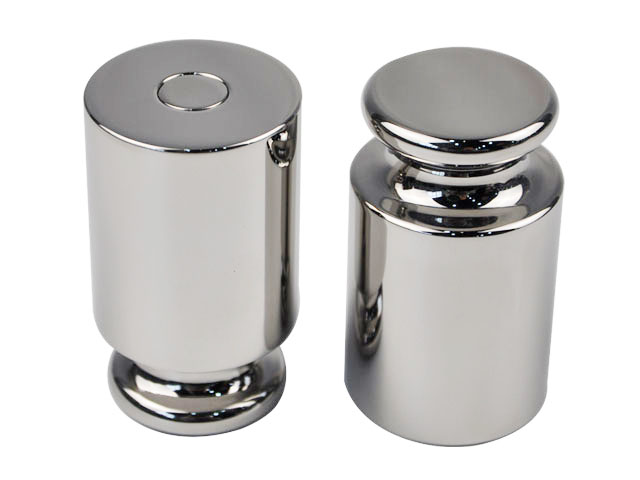
In the precision processing stage of the kilogram test weight, professional precision mechanical processing equipment is used to carry out overall cutting, grinding, polishing, and shaping of the selected raw materials, strictly controlling the overall shape, surface flatness, and dimensional consistency of the test weight. The external shape design of the kilogram test weight is not only for aesthetic purposes but also based on practical use and storage management needs. Most standard kilogram test weights adopt a regular cylindrical or rectangular structure with smooth and flat surfaces and no sharp edges and corners. This structural design can effectively reduce the contact area between the test weight and the external air and moisture, reduce the probability of surface oxidation and corrosion, and also facilitate the stable placement of the test weight on various weighing equipment and balance pans, avoiding measurement errors caused by unstable placement or tilting of the test weight. After the completion of mechanical processing, the surface of the test weight will undergo special finishing and anti-corrosion treatment to isolate the direct contact between the internal metal material and the external air and humid environment, further enhancing the long-term stability of the test weight. The most critical link in the entire production process is mass fine adjustment. After the initial processing of the test weight, there will be a tiny deviation between its actual mass and the standard kilogram mass value. Professional metrological technicians will use high-precision comparison weighing equipment to accurately measure the initial mass of the test weight, and then carry out micro removal or filling adjustment according to the deviation data, so that the final actual mass of the test weight is within the allowable deviation range of the standard value. This fine adjustment work requires extremely high operational precision and a stable working environment, and tiny adjustments will directly determine the measurement accuracy level of the finished kilogram test weight.
The application scenarios of the kilogram test weight cover almost all fields involving mass measurement and weighing work, showing extremely strong universality and practicality, and playing an irreplaceable basic role in different industries and different precision measurement links. In the industrial manufacturing field, all kinds of production enterprises need to use weighing equipment of different specifications and accuracy to detect the quality of raw materials, semi-finished products, and finished products, control the production batching ratio of raw materials, and ensure that the product quality meets the specified production specifications. Regular calibration and verification of these industrial weighing equipment are essential work to ensure the accuracy of production measurement data. The kilogram test weight is the most commonly used standard reference tool for daily calibration of industrial weighing scales, platform scales, and production line dynamic weighing equipment. Production workshop technicians regularly place the kilogram test weight on the weighing equipment, check whether the display data of the weighing equipment is consistent with the standard mass of the test weight, and timely adjust and correct the weighing equipment with data deviation to ensure that the weighing data in the production process is accurate and reliable, avoid product quality problems and production batch losses caused by inaccurate weighing, and maintain the stability of product production quality and production process standardization.
In the field of commercial trade and market supervision, fair and accurate mass measurement is the core guarantee for maintaining fair market transaction order and protecting the legitimate rights and interests of both buyers and sellers. All physical market trading places, supermarket weighing settlement equipment, bulk commodity trading weighing tools, and logistics and freight weighing instruments need regular inspection and calibration by market supervision and management departments. Law enforcement supervisors and metrological inspection personnel will carry out on-site verification of various commercial weighing equipment with standard kilogram test weights, promptly investigate and deal with weighing equipment with inaccurate measurement data and modified weighing parameters, put an end to unfair trading behaviors caused by inaccurate weighing, and maintain the fair and just market trading environment. At the same time, commercial weighing equipment used in daily business operations by merchants also needs regular self-inspection and calibration with kilogram test weights to ensure that the weighing settlement data in daily transactions is accurate, avoid transaction disputes caused by weighing deviations, and maintain the normal and orderly development of commercial trading activities.
In scientific research laboratories, educational teaching institutions, and professional metrological research institutions, the kilogram test weight undertakes more sophisticated and professional high-precision measurement and calibration work. Various scientific research experiments in the fields of chemistry, physics, biology, and material science require accurate mass measurement data as the basic support for experimental research conclusions. Tiny mass measurement deviations may lead to inaccurate experimental data, wrong experimental conclusions, and even affect the progress and research results of the entire scientific research project. Laboratory precision analytical balances, electronic precision weighing instruments, and experimental special weighing equipment need to be regularly calibrated and traced with high-precision kilogram test weights to ensure the long-term accuracy and stability of experimental weighing data. In school physics and chemistry teaching experiments, kilogram test weights are also important basic teaching aids, helping students intuitively understand the basic principles of mass measurement, balance comparison, and gravitational force, enabling students to distinguish the difference between mass and weight through practical operation experiments, and laying a solid practical foundation for students to learn physical measurement knowledge and metrological basic concepts. Professional metrological research institutions rely on kilogram test weights of different accuracy levels to carry out hierarchical transmission of mass unit values, calibrate higher-level precision metrological equipment, and ensure that the entire regional and national mass measurement system maintains unified and consistent measurement standards.
In the fields of medical and health care, pharmaceutical production, and food processing and safety testing, the application of kilogram test weight is also related to public health safety and product quality and safety. Pharmaceutical production enterprises need to accurately weigh various pharmaceutical raw materials and auxiliary materials according to the production formula ratio, and the accuracy of raw material weighing directly affects the efficacy and safety of finished drugs. Food processing enterprises need to strictly control the weighing ratio of various food raw materials, additives, and nutritional components to ensure that food products meet national food safety standards and nutritional ratio requirements. Medical institutions need to use professional weighing equipment to weigh medical supplies, pharmaceutical preparations, and patient physical examination weight data, and the accuracy of weighing data is related to the accurate implementation of medical treatment and nursing work. All weighing equipment in these related places needs regular calibration with kilogram test weights to ensure that the weighing measurement data is accurate and reliable, effectively guarding the bottom line of public health safety and food quality safety.
Although the kilogram test weight is a solid physical standard tool with simple structure and stable performance, its long-term stable use and maintenance of accurate mass values are inseparable from scientific daily maintenance, standardized storage management, and regular professional calibration and maintenance work. Many external environmental factors and improper manual operation behaviors will cause subtle mass changes and surface damage to the kilogram test weight, affecting its measurement accuracy and service life. In terms of daily storage, the kilogram test weight needs to be placed in a dry, ventilated, constant temperature, and corrosion-free special storage environment, avoiding long-term exposure to humid air, high temperature and low temperature alternating environment, and corrosive gas and liquid contact. Humid environment will easily cause surface oxidation and rust corrosion of the test weight, changing the surface quality and overall mass of the test weight; long-term high and low temperature alternating will cause repeated thermal expansion and contraction of the test weight material, resulting in tiny internal structural changes and mass deviation. Special storage boxes or storage cabinets are usually used for centralized storage of kilogram test weights, and classified placement is carried out according to different accuracy levels and different specifications to avoid mutual collision, friction, and surface wear between test weights, and prevent surface damage and mass changes caused by mechanical friction and collision.
In terms of daily use and operation, operators need to follow standardized operating procedures to use kilogram test weights, avoiding random throwing, collision, and irregular handling behaviors. Manual handling of high-precision kilogram test weights should wear clean and soft protective gloves to avoid direct contact between hands and the surface of the test weight. The sweat, oil, and dust on the hands will adhere to the surface of the test weight, causing tiny mass changes and surface pollution, affecting the measurement accuracy of the test weight. After each use of the kilogram test weight, the surface of the test weight should be cleaned in time with a clean, soft, and non-corrosive cleaning tool to remove surface dust, stains, and residual attachments, keeping the surface of the test weight clean and smooth. It is strictly forbidden to use corrosive cleaning reagents to wipe the surface of the test weight, so as to prevent chemical corrosion and damage to the surface anti-corrosion layer and internal metal material of the test weight. After cleaning, the test weight should be placed back into the special storage position in time, and it is not allowed to be placed in a random and exposed state for a long time.
In terms of regular calibration and maintenance, even if the kilogram test weight is used and maintained in strict accordance with standardized requirements, long-term use and subtle environmental impact will still cause tiny mass deviation changes. Therefore, regular professional calibration and performance testing must be carried out in accordance with the metrological management cycle. Professional metrological institutions will use higher-level standard metrological equipment and reference mass standards to compare and calibrate the kilogram test weight, accurately detect the actual mass deviation of the test weight, and record the deviation data in detail. For test weights with tiny deviation within the allowable range, deviation correction records will be made, and the deviation data will be referred to in subsequent use to ensure the accuracy of measurement and calibration work. For test weights with excessive deviation, serious surface corrosion, damage, and performance degradation, they will be judged as unqualified and stopped from use, and re-adjustment, repair or scrapping and replacement will be carried out in time to prevent unqualified test weights from continuing to be used for calibration and measurement work, resulting in inaccurate measurement data and affecting the normal operation of related production, trade and scientific research work.
With the continuous progress of modern metrological technology and the continuous upgrading of industrial intelligent manufacturing level, the development trend of kilogram test weight is also constantly evolving with the needs of the times. On the premise of maintaining the basic stable mass function, modern kilogram test weights are developing in the direction of higher material stability, higher processing precision, better environmental adaptability, and more convenient management and use. The continuous research and development and application of new high-stability metal materials further reduce the influence of external temperature, humidity and environmental changes on the mass of the test weight, making the long-term stability of the test weight better. The popularization and application of modern precision intelligent processing technology make the processing size and mass adjustment of the test weight more accurate, and the product consistency of batch-produced test weights is higher. At the same time, with the development of intelligent metrological management, some new kilogram test weights are combined with digital management technologies, which is convenient for the whole life cycle management of test weight use, calibration, maintenance and scrapping, realizing the traceability of use records and calibration data, and making the metrological management work of test weights more standardized and efficient.
Throughout the entire modern social operation system and metrological measurement system, the kilogram test weight is not a complicated high-tech equipment, but it is an indispensable basic core component. All precise measurement data, standardized production behaviors, fair trade transactions, and scientific research experimental conclusions related to mass are all based on the stable and accurate reference role of the kilogram test weight. It connects the abstract international mass unit definition with the specific practical measurement work, bridges the gap between professional metrological research and industrial and commercial practical application, and safeguards the uniformity and accuracy of mass measurement values in all walks of life. Whether it is batch production control in large-scale industrial manufacturing, daily commercial transactions for people’s livelihood, precise data support for sophisticated scientific research experiments, or safety and quality supervision in people’s livelihood-related fields, the kilogram test weight silently fulfills its basic metrological mission behind the scenes. It maintains the standardized order of mass measurement work, supports the standardized and orderly development of all industrial sectors, and serves as an invisible and solid cornerstone for the operation of the modern social economy, the advancement of scientific and technological innovation, and the protection of people’s basic living security. With the continuous development of society and the gradual improvement of measurement accuracy requirements in various fields, the fundamental status and important practical role of the kilogram test weight will never be replaced. It will continue to accompany the progress of human society and the iterative upgrading of metrological technology, providing long-term, stable and reliable basic mass reference guarantee for all types of mass measurement and calibration work in all industries and fields.
Kilogram Test Weight
https://www.veidtweighing.com/test-weight.html
Post Date: Apr 28, 2026
https://www.supplier-manufacturer.com/test-weight/kilogram-test-weight.html

![Standard Weight Wholesale]()
Standard Weight Wholesale
Standard weight wholesale stands as a foundational pillar within the broader B2B distribution ecosystem, serving as the critical connecting link between product producers,…![High Precision Weight]()
High Precision Weight
High precision weight serves as a fundamental foundational component in modern industrial manufacturing, scientific research, experimental testing, and precision mechanica…![50g Standard Weight]()
50g Standard Weight
In the intricate tapestry of human life, production, and scientific exploration, the concept of mass measurement stands as one of the most fundamental and indispensable pi…![Forklift Scale Test Weight]()
Forklift Scale Test Weight
Forklift scale test weight serves as a fundamental auxiliary medium for verifying the operational stability and measurement precision of onboard forklift weighing systems …![100kg Standard Weight]()
100kg Standard Weight
A 100kg standard weight stands as a fundamental physical mass reference that underpins the stability and credibility of all walks of modern production, measurement, and sc…