M2 Calibration Weight
Mass measurement stands as one of the most fundamental and indispensable links in all fields of modern industrial production, laboratory scientific research, commercial transaction settlement, and daily quality inspection work. Every link involving material proportioning, product quality testing, equipment parameter debugging, and data result verification cannot be separated from accurate and reliable weighing data support, and the stability and accuracy of all weighing equipment rely entirely on regular calibration and daily verification with professional calibration weights. Among the various types of calibration weights designed and manufactured according to unified metrological technical specifications, M2 calibration weight occupies a crucial and irreplaceable middle position in the entire mass measurement transmission system, balancing practical use performance, stable structural characteristics, and wide application adaptability, becoming a commonly used basic measuring tool that connects high-precision laboratory measurement links and on-site actual weighing operation scenarios. Unlike ultra-high precision calibration weights that are only suitable for strict constant-temperature and constant-humidity laboratory environments and require extremely rigorous operation and storage conditions, M2 calibration weight is designed and produced to adapt to diversified use environments and frequent daily use demands, retaining stable metrological performance while having strong environmental adaptability and mechanical durability, which can meet the routine calibration and daily inspection needs of most common weighing instruments in various industries and scenarios. The design concept, material selection standard, processing and forming technology, surface treatment process, and later use and maintenance specifications of M2 calibration weight are all formulated around the core goal of maintaining long-term mass stability and consistent metrological performance in conventional use environments, ensuring that each weighing verification and equipment calibration work can obtain consistent and repeatable measurement results, and effectively avoiding measurement data deviation caused by insufficient precision of matching weights, unstable structural quality, or poor environmental resistance of calibration tools.
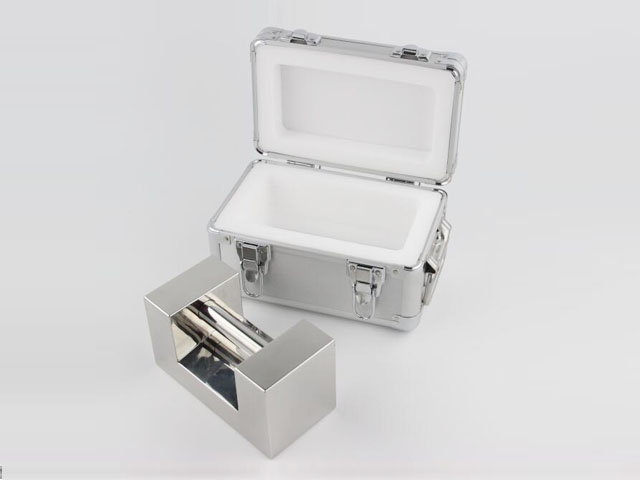
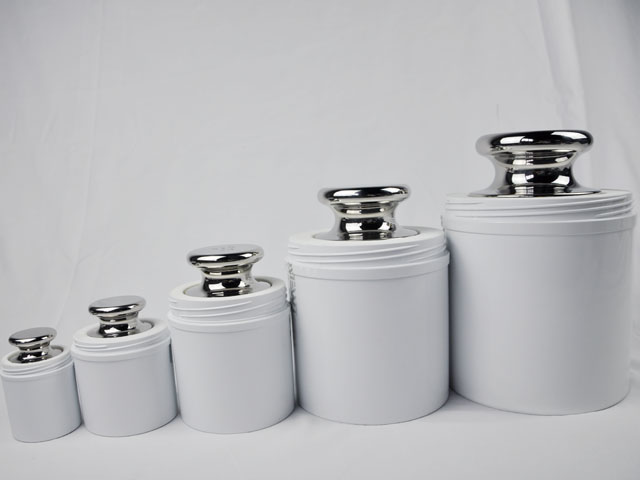
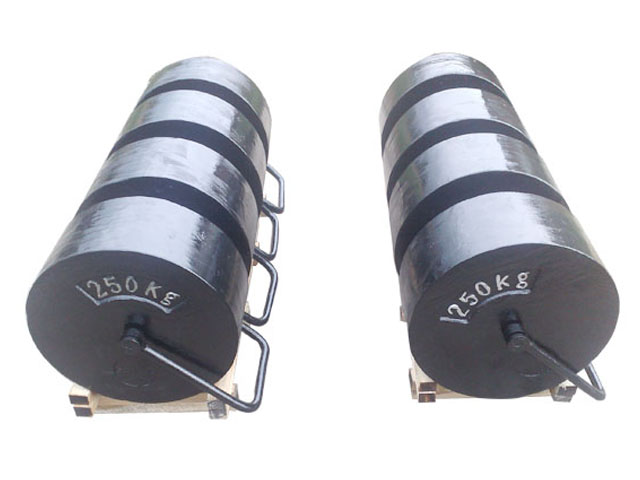
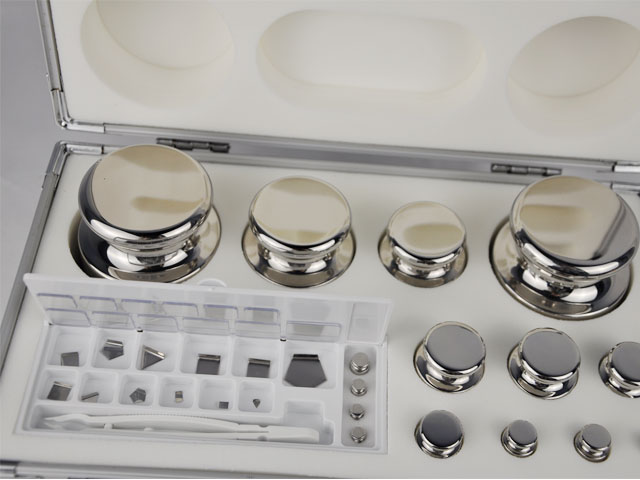
The basic structural design and core material selection of M2 calibration weight are the primary foundation for maintaining its good metrological performance and long service life, and every detail in the production and processing process is closely linked to the subsequent use effect and measurement stability. In terms of material selection, most M2 calibration weights are made of high-density metal materials with uniform internal texture, low thermal expansion coefficient, and strong oxidation resistance, and different material configurations are selected according to different nominal mass specifications and subsequent use environments to ensure the overall density uniformity and external structural stability of each weight. For small-specification M2 calibration weights commonly used in laboratory fine weighing and small-scale instrument calibration, compact and refined metal raw materials are adopted, which are processed through multiple precision turning and grinding procedures to make the internal structure of the weight dense and free of internal pores, sand holes, and other defects that may affect mass stability. For large-specification M2 calibration weights used in industrial heavy-load weighing equipment calibration and mechanical load-bearing testing, high-strength cast metal materials with good overall rigidity and strong compression resistance are selected, which can withstand frequent handling, stacking, and external slight collision and extrusion in industrial use scenarios without structural deformation or local damage. The overall density of the materials used for M2 calibration weights is kept within a reasonable and stable range, which can effectively reduce the mass change caused by environmental temperature fluctuations and air buoyancy influence during the weighing and calibration process, ensuring that the actual mass value of the weight remains stable for a long time under conventional atmospheric and temperature conditions. In the processing and forming stage, each M2 calibration weight undergoes rough processing, fine processing, dimensional correction, and mass fine adjustment in sequence, and the mass fine adjustment process is carried out through a standardized adjustment structure reserved on the weight body. This reserved adjustment structure is scientifically designed to avoid affecting the overall structural firmness and external appearance of the weight, and only professional fine tuning is carried out in the internal adjustment area during production, so that the final actual mass of each weight meets the preset metrological error range, laying a solid foundation for subsequent accurate calibration work.
Surface treatment technology is another key part of the production and manufacturing process of M2 calibration weight, which directly determines the environmental corrosion resistance, surface wear resistance, and long-term appearance retention effect of the weight in long-term use, and also indirectly affects the stability of the mass value of the weight in different use environments. After the completion of the overall processing and mass fine adjustment of the weight body, all M2 calibration weights will go through a standardized surface polishing and anti-corrosion treatment process. The surface of small-specification weights is polished to a smooth and uniform finish, removing burrs, sharp edges, and surface processing marks generated during machining, preventing surface scratches and metal oxidation caused by long-term contact with air, moisture, and dust in the use process. The surface of large-specification M2 calibration weights is treated with professional anti-rust and anti-corrosion coating, forming a uniform and dense protective film on the outer surface of the weight body. This protective layer can effectively isolate the direct contact between the metal matrix of the weight and the external humid air, chemical corrosive substances, and industrial dust, avoiding metal corrosion, rust, and surface peeling that may cause mass change and surface damage of the weight. The surface treatment process of M2 calibration weight does not add excessive coating thickness that affects the actual mass of the weight, and all surface treatment operations are completed before the final mass fine adjustment, ensuring that the protective treatment will not cause deviation to the calibrated mass value of the weight. After the surface treatment is completed, each weight will be inspected for surface uniformity, coating firmness, and overall appearance quality to ensure that there are no surface defects such as uneven coating, local peeling, and obvious scratches, so that the weight can maintain a good surface state and stable mass performance whether it is used in dry indoor laboratories, humid industrial production workshops, or open-air temporary weighing operation sites.
The metrological performance characteristics of M2 calibration weight are scientifically positioned in the middle of the entire calibration weight accuracy gradient, which is neither too high to cause unnecessary cost waste and use condition restrictions nor too low to fail to meet the basic accuracy requirements of conventional weighing calibration work. Each M2 calibration weight has a reasonable allowable mass error range formulated according to unified metrological technical requirements, and this error range is scientifically set based on the matching accuracy of most commonly used weighing equipment on the market. In actual use, the mass deviation of M2 calibration weight is controlled within a stable small range, which can fully meet the calibration and verification needs of various electronic scales, mechanical platform scales, industrial weighing instruments, and laboratory conventional weighing equipment. Compared with higher-level calibration weights that require strict constant temperature storage, professional dust-proof sealing protection, and long-term environmental adaptation before use, M2 calibration weight has lower requirements for the use and storage environment, can work normally under conventional indoor and outdoor natural temperature and humidity conditions, and does not need complex pre-use adaptation and debugging procedures. Compared with lower-level common weights used for simple weighing reference, M2 calibration weight has more stable mass repeatability and smaller measurement deviation, will not have obvious mass fluctuation due to slight environmental changes and frequent use, and can ensure the consistency and reliability of each calibration result. This moderate and accurate metrological performance positioning makes M2 calibration weight have extremely high cost performance and practicality, and become the most widely used calibration weighing tool in various industries and daily metrological work.
The application scenarios of M2 calibration weight cover almost all fields that require conventional accurate weighing and regular equipment calibration, involving industrial manufacturing, commercial circulation, educational scientific research, quality inspection and testing, mechanical engineering testing, and many other important industries and fields, playing an irreplaceable basic supporting role in the normal operation of various links. In the industrial manufacturing field, various production enterprises need to regularly calibrate various on-site weighing instruments used for raw material batching, finished product weighing, and production process quality monitoring every day. These weighing instruments are used frequently and placed in complex production environments, and are not suitable for matching with high-precision calibration weights with harsh use conditions. M2 calibration weight can adapt to the industrial production site environment with more dust, certain temperature changes, and frequent handling and use, and is used for daily calibration and regular error detection of platform scales, belt scales, electronic weighing instruments for production lines, and raw material batching scales, ensuring that the weighing data in the production and processing process is accurate and consistent, avoiding product quality problems and production batch deviations caused by inaccurate weighing data. In the mechanical equipment manufacturing and engineering testing industry, M2 calibration weight is often used for load-bearing performance testing, equipment stress debugging, and elevator load testing of various mechanical equipment. By applying stable and accurate standard mass pressure through M2 calibration weights, the load-bearing limit and operating stability of mechanical equipment are detected, ensuring that all mechanical equipment meets the safe use standards and avoiding potential safety hazards caused by unqualified equipment load-bearing performance.
In the commercial circulation and market trading field, various market trading places, shopping malls, and logistics distribution centers are equipped with a large number of weighing tools for commodity transaction settlement and goods weight checking. These commercial weighing tools need regular mandatory verification and daily self-inspection to ensure fair transaction settlement and avoid weight deviation disputes in commodity trading. M2 calibration weight is used by market management departments and commercial operators for regular calibration and daily self-check of commercial weighing scales, retail electronic scales, and logistics cargo weighing equipment. Due to its convenient carrying, simple operation, and stable performance, it can quickly complete on-site weighing equipment verification work, ensure the accuracy of commercial weighing tools, maintain the fair and orderly order of market commodity transactions, and protect the legitimate rights and interests of both merchants and consumers. In the educational and scientific research field, various schools, vocational training institutions, and basic scientific research laboratories need to carry out daily physics experiment teaching, mass measurement basic training, and conventional scientific research data measurement work. M2 calibration weight is suitable for laboratory basic teaching and conventional experimental calibration work, with moderate accuracy, simple use, and strong safety, which can meet the experimental operation and measurement teaching needs of students and scientific researchers, help learners master the basic knowledge of mass measurement and weighing calibration operation skills, and provide basic accurate data support for basic conventional scientific research experiments.
In the quality inspection and metrological supervision field, grassroots metrological inspection institutions and product quality inspection departments need to carry out regular spot checks, daily inspections, and metrological supervision and testing of weighing tools used in various industries and markets. M2 calibration weight is used as a conventional working standard measuring tool for on-site inspection and calibration work. It can adapt to mobile inspection and on-site random inspection work needs, quickly complete the accuracy detection and performance verification of various weighing equipment, timely find and rectify weighing equipment with excessive measurement errors, ensure that all weighing links in all industries meet unified metrological management requirements, and maintain the overall stability of social metrological order. In addition, in the fields of agricultural production, aquaculture, and food processing, M2 calibration weight is also used for calibration of agricultural product weighing tools, food raw material proportioning weighing equipment, and finished food weighing detection tools, ensuring the accuracy of agricultural product transaction weighing and food production batching ratio, and guaranteeing the quality of food production and the normal circulation of agricultural products.
The correct use method and standardized operation process are important prerequisites to ensure that M2 calibration weight gives full play to its metrological performance and maintains long-term mass stability. Although M2 calibration weight has strong environmental adaptability and mechanical durability, irregular use and random operation will still cause unnecessary mass deviation, surface damage, and structural deformation of the weight, affecting the calibration accuracy and service life. Before each use of M2 calibration weight, basic pre-use preparation work needs to be done first. The surface of the weight should be carefully checked to remove surface dust, sundries, and residual moisture, ensuring that there is no foreign matter attached to the surface of the weight, because even tiny dust and moisture attachments will cause small changes in the actual mass of the weight and affect the calibration accuracy. At the same time, the integrity of the weight body structure should be checked to confirm that there is no structural deformation, surface coating peeling, obvious collision damage, and other abnormal conditions of the weight. If any damage or abnormality is found, the weight should be stopped immediately and placed separately, and it can be used again only after professional inspection and correction. Before calibration work, the weighing equipment to be calibrated should be preheated and leveled according to the operating specifications, placed in a stable and horizontal working position, and kept away from strong vibration, strong air flow, and direct sunlight, so as to avoid external environmental interference affecting the weighing calibration results.
In the process of using M2 calibration weight for calibration operation, standardized handling and placement operations must be strictly followed. It is forbidden to directly grab the surface of the weight with bare hands for handling and placement, because the sweat, oil stains, and impurities on human hands will adhere to the surface of the weight, causing surface corrosion and mass change of the weight after long-term accumulation. Special non-slip gloves or professional weight handling tools should be used to take and place the weight, and the handling action should be gentle and stable, avoiding violent throwing, collision, and random stacking of the weight. When placing the weight on the weighing equipment, it should be placed gently in the center of the weighing platform to avoid tilting placement and unilateral stress, preventing the weighing equipment from being stressed unevenly and causing measurement deviation, and also avoiding local pressure damage to the weight body. When using multiple M2 calibration weights for combined calibration, the weights should be placed in order according to the specification size, with reasonable placement spacing, avoiding mutual collision and extrusion between weights. During the calibration process, continuous observation of the weighing data change state should be carried out, and the calibration operation should be carried out after the weighing data is stable, so as to ensure the accuracy and effectiveness of each calibration record. After the calibration work is completed, the M2 calibration weight should be taken down gently in sequence, and the surface should be simply cleaned again to remove possible dust and sundries generated during use, and then sorted and stored according to the specification and size.
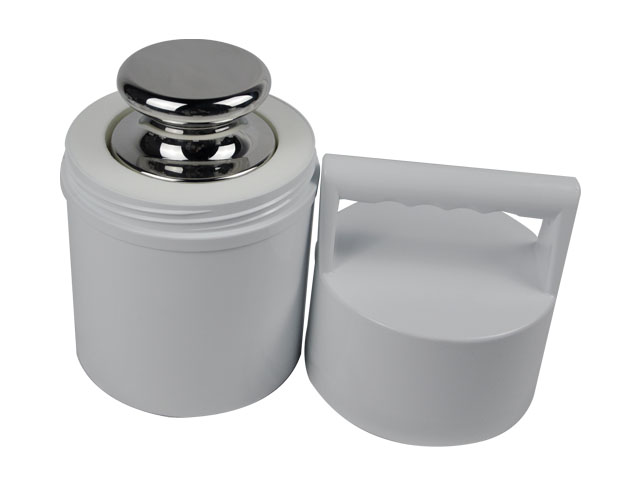
Scientific daily maintenance and standardized long-term storage management are key measures to extend the service life of M2 calibration weight and maintain long-term stable metrological performance. After each use, all M2 calibration weights need to be thoroughly cleaned and maintained according to unified maintenance requirements. For weights used in conventional indoor environments, only a clean soft dry cloth needs to be used to wipe the surface dust and residual impurities; for weights used in humid industrial sites or environments with slight corrosive substances, after use, they need to be wiped with a slightly damp soft cloth and then dried in a cool and ventilated place to ensure that there is no residual moisture on the surface, preventing long-term moisture from causing surface rust and metal corrosion of the weight. It is forbidden to use corrosive cleaning agents, sharp cleaning tools, and high-temperature water to clean M2 calibration weights, so as to avoid damaging the surface anti-corrosion protective layer and causing surface scratches and coating peeling. All M2 calibration weights need to be stored in a special dry, dust-proof, and cool storage area, placed in a special storage box or storage rack classified by specification and size, avoiding random stacking, long-term extrusion, and mutual collision between weights. The storage environment should be kept dry and ventilated, avoiding long-term exposure to direct sunlight, high temperature and humidity environment, and contact with chemical corrosive substances, so as to prevent the weight from being affected by environmental factors such as temperature and humidity for a long time, resulting in mass value change and structural aging.
Long-term regular performance inspection and periodic recheck are essential links to ensure that M2 calibration weight always maintains qualified metrological performance in long-term repeated use. After long-term use, even if the surface and structure of M2 calibration weight have no obvious abnormal changes, slight mass deviation may occur due to frequent handling, environmental influence, and surface subtle wear. Therefore, all M2 calibration weights need to be arranged for regular professional performance inspection and mass recheck according to the frequency of use and actual use environment. Weights used frequently in industrial production sites need to be inspected and rechecked at short intervals, and weights used less frequently in conventional laboratories can be inspected and rechecked at appropriate extended intervals. During the inspection and recheck process, professional metrological testing methods are used to detect the actual mass value of each M2 calibration weight, compare it with the original standard mass value, check whether the mass deviation is within the qualified allowable range, and timely carry out professional fine adjustment and correction for weights with excessive deviation. For weights with serious surface damage, structural deformation, and irreversible mass change that cannot be corrected, they should be eliminated in a timely manner and no longer used for calibration work, so as to prevent unqualified weights from being used for equipment calibration and resulting in inaccurate weighing measurement data.
In the entire modern metrological measurement system and social production and operation activities, the role of M2 calibration weight is not only reflected in the calibration and verification of various weighing equipment, but also in maintaining the uniformity and accuracy of social mass measurement values and ensuring the smooth progress of all links related to weighing measurement. All production, transaction, and testing links based on weighing data are inseparable from the basic guarantee provided by qualified and stable M2 calibration weights. Whether it is industrial product production quality control, commercial commodity transaction fairness guarantee, scientific research experiment data accuracy improvement, or engineering equipment safety performance testing, M2 calibration weight provides reliable basic measurement support with its stable performance, strong adaptability, and wide applicability. With the continuous development of modern industrial technology and the continuous improvement of social metrological management requirements, the application scope of M2 calibration weight in various fields is still expanding, and the requirements for its production and processing technology, surface treatment level, and daily maintenance management are also constantly standardized and improved. Only by strictly controlling the production and manufacturing quality of M2 calibration weight, standardizing daily use and operation procedures, and doing a good job in long-term maintenance and regular inspection work, can we ensure that M2 calibration weight always maintains good metrological performance in long-term use, continuously provides accurate and reliable calibration services for various weighing measurement work, and lays a solid and reliable foundation for the stable development of all walks of life and the accurate and orderly progress of various measurement work.
M2 Calibration Weight
https://www.veidtweighing.com/calibration-weights.html
Post Date: Apr 28, 2026
https://www.supplier-manufacturer.com/calibration-weight/m2-calibration-weight.html

![Stainless Steel Standard Weight For Weighing Instrument Verification]()
Stainless Steel Standard Weight For Weighing Instrument Verification
Stainless steel standard weights serve as fundamental precision tools for the verification and calibration of all types of weighing instruments, laying a solid foundation …![Standard Weight For Hanging Scales]()
Standard Weight For Hanging Scales
Standard weights for hanging scales are fundamental metrological reference tools that underpin the accuracy, consistency, and reliability of suspended weighing operations …![Standard Weight For Analytical Balances]()
Standard Weight For Analytical Balances
In precision laboratory measurement, analytical balances stand as foundational instruments that deliver highly accurate mass readings for chemical analysis, pharmaceutical…![Oiml F2 Calibration Standard Weight]()
Oiml F2 Calibration Standard Weight
Mass measurement forms the foundational backbone of all quantitative scientific research, industrial production, and commercial transaction activities. Every data result o…![Analytical Balance Calibration Weight]()
Analytical Balance Calibration Weight
Analytical balance calibration weights serve as fundamental reference tools in precision weighing operations, forming the core foundation for maintaining the accuracy and …