Calibrated Analytical Balance
A calibrated analytical balance stands as an essential precision measuring instrument widely utilized in scientific laboratories, industrial production sectors, and academic research environments. Designed for meticulous mass measurement of tiny substance samples, this instrument maintains stable and dependable measurement performance through systematic calibration procedures. Unlike ordinary weighing devices with low resolution, it focuses on capturing subtle mass changes of samples, laying a solid foundation for experimental data recording, ingredient proportioning, and quality inspection work in various professional fields. The inherent value of a calibrated analytical balance lies in its capability to minimize measurement deviations caused by external environmental fluctuations and internal component aging, ensuring that every recorded mass data maintains high consistency and traceability throughout repeated usage cycles.
The operational principles of modern calibrated analytical balances mainly rely on the electromagnetic force compensation mechanism, which has gradually replaced the traditional mechanical lever structure with simpler mechanical construction and more sensitive signal feedback characteristics. When a sample is placed on the weighing pan, the pressure generated by the sample’s mass triggers a tiny displacement of the internal mechanical sensing component. The built-in displacement sensor promptly captures this subtle positional variation and converts the physical displacement signal into an electrical signal. The intelligent control circuit then dynamically adjusts the current intensity of the internal electromagnetic coil, generating an electromagnetic force that counteracts the downward pressure of the sample. This force pushes the mechanical structure back to its initial balanced position, and the current intensity required to maintain balance presents a stable proportional relationship with the sample mass. Through internal algorithm conversion, the current data is finally transformed into intuitive digital mass readings displayed on the screen. Compared with mechanical balance structures dependent on weight combination, the electromagnetic force balance system features faster response speed and lower mechanical friction interference, creating favorable conditions for long-term stable measurement after regular calibration.
Calibration serves as the core link to ensure the reliable performance of analytical balances, essentially a systematic correction process for eliminating cumulative errors in the instrument. In the daily usage process, multiple factors can interfere with measurement accuracy. Natural environmental factors include subtle changes in ambient temperature, air humidity, and atmospheric pressure. Temperature fluctuations cause slight thermal expansion and contraction of internal metal components, while excessive humidity may induce minor oxidation on precision contact parts. Besides environmental impacts, gravitational acceleration varies slightly across different geographical locations, bringing persistent interference to electromagnetic force balance calculations. Slow aging of internal circuits and minor dust accumulation on mechanical structures also generate gradual cumulative errors. The calibration process effectively offsets these interferences by adopting standardized weight groups with known accurate mass values. During calibration, staff place standard weights of different mass gradients on the weighing pan, record the display data of the instrument, and compare it with the theoretical mass of standard weights to form error curves. The internal system parameters are then adjusted according to the error curves to correct systematic deviations, enabling the instrument to maintain consistent measurement accuracy within its effective weighing range.
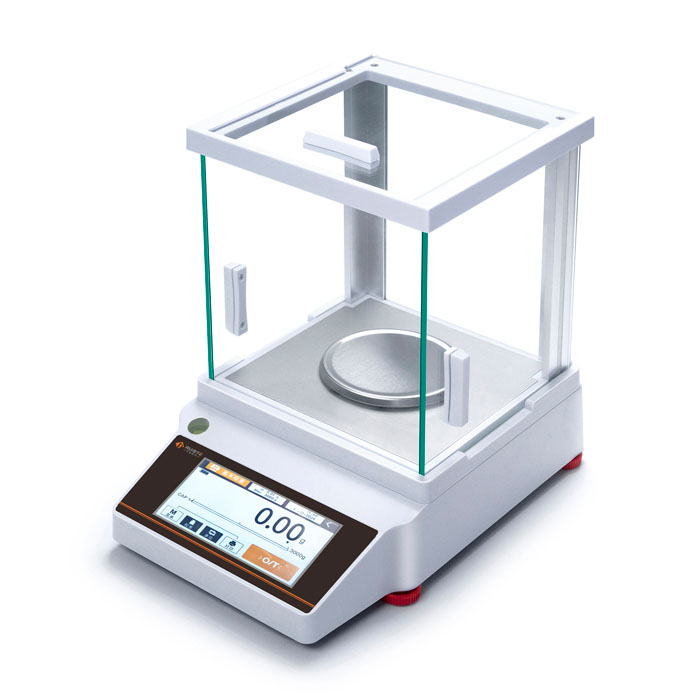
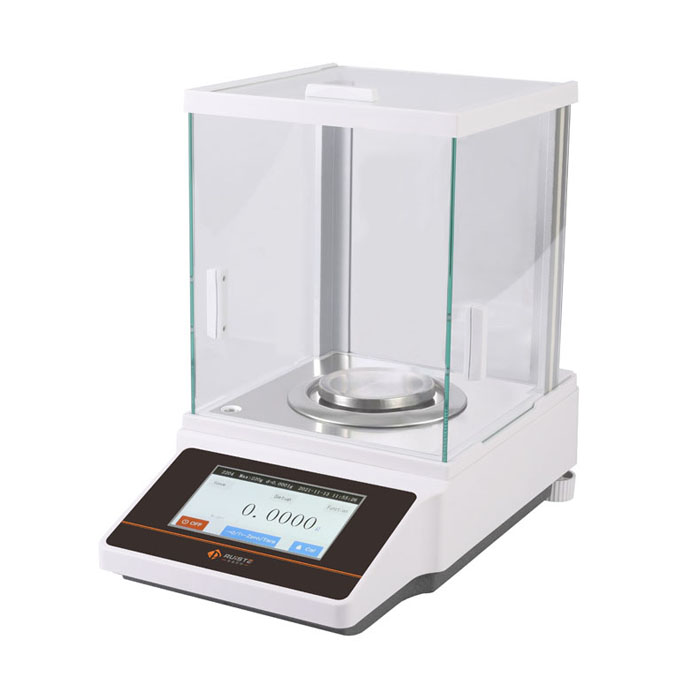
The structural composition of a calibrated analytical balance is compact and sophisticated, with every component designed to reduce external interference and improve measurement stability. The transparent windproof cover constitutes an indispensable external structure, composed of smooth and corrosion-resistant light-transmitting materials. It isolates the weighing chamber from the external air flow, effectively preventing subtle data fluctuations caused by indoor air convection and human breathing airflow. The weighing pan, usually made of polished inert metal, features a flat and smooth surface to ensure uniform stress on samples and avoid measurement errors from uneven placement. The internal sensing module is fixed on a shock-absorbing base, which can buffer tiny vibration interference transmitted by the ground. The digital display module adopts high-definition screen design to present accurate decimal data, facilitating intuitive reading and recording for users. Additionally, the instrument is equipped with simple control keys to complete calibration initialization, data reset, and parameter setting operations. The overall structure avoids redundant mechanical transmission parts, reducing friction loss and lowering the frequency of regular maintenance.
Standardized operation methods are crucial to maintaining the calibration effect and extending the service life of calibrated analytical balances. Before formal weighing, users need to place the instrument on a stable horizontal workbench and adjust the horizontal calibration foot pads to ensure the horizontal indicator is in the standard position, preventing tilting-induced eccentric load errors. It is necessary to preheat the instrument for an appropriate duration to stabilize the operating temperature of internal circuits and eliminate data drift caused by cold start of electronic components. The weighing environment should keep clean and dry, avoiding direct sunlight and strong heat source radiation. During sample placement, samples should be gently positioned at the center of the weighing pan; containers with samples are recommended for powdery, volatile, or corrosive substances to prevent direct contact contamination of the weighing pan. It is essential to keep hands clean and dry during operation, and touching the weighing pan and windproof cover with bare hands should be avoided to prevent sweat and grease from leaving residues that affect measurement accuracy. After each weighing task, the surface of the weighing chamber needs simple dust removal treatment to maintain internal cleanliness.
Reasonable maintenance and periodic calibration cycles are key to sustaining the long-term optimal performance of analytical balances. In terms of daily maintenance, the instrument should be placed in a dry and dust-free storage space when not in use, with the windproof cover closed to reduce dust accumulation. Organic solvents and corrosive cleaning agents are prohibited during cleaning; soft dust-free cloths paired with neutral cleaning solutions are used to wipe external and internal surfaces. The instrument should avoid heavy vibration and strong electromagnetic field interference, so it needs to be placed away from large mechanical equipment and high-power electrical appliances. In terms of calibration cycles, instruments used for high-frequency precision testing require regular calibration every certain period to offset component aging errors. For instruments with low usage frequency in conventional laboratories, the calibration interval can be appropriately extended. Each calibration process needs complete environmental condition records and parameter adjustment logs to provide data support for subsequent performance tracking and fault analysis. Once obvious data deviation or slow response occurs during usage, unscheduled calibration and component inspection should be conducted in a timely manner.
Calibrated analytical balances exhibit diverse application values in multiple professional fields due to their high precision and stable performance. In chemical laboratories, they are applied to the accurate weighing of chemical reagents for preparing standard solutions with fixed concentration ratios. Trace solid reagents and high-purity solutes require precise mass measurement to ensure the reproducibility and authenticity of chemical reaction experimental data. In the pharmaceutical research and production industry, such instruments assist researchers in weighing raw medicinal materials and auxiliary ingredients, controlling the dosage proportion of each component in pharmaceutical formulations, which is essential for maintaining stable drug efficacy and compliance with preparation standards. In the food processing industry, staff use them to detect trace additives and nutrient components in food samples, providing accurate data basis for food quality evaluation and ingredient labeling.
In material science research, calibrated analytical balances measure the mass changes of new materials before and after physical and chemical reactions. By recording subtle mass differences, researchers analyze material corrosion resistance, adsorption performance, and structural stability, providing reliable data support for the development and optimization of new composite materials. In environmental monitoring work, they are used for weighing tiny sediment samples and pollutant residues in water bodies and air. Trace pollutants collected by professional filtering equipment need high-precision weighing to calculate pollutant concentration and evaluate environmental pollution levels. In university teaching laboratories, such instruments serve as important teaching equipment to help students master precision weighing operation specifications, cultivate rigorous experimental thinking, and lay an operational foundation for future scientific research work.
Despite excellent measurement performance, calibrated analytical balances have inherent usage limitations that require rational attention from operators. The effective weighing range of the instrument is limited, and excessive loads will cause irreversible fatigue damage to internal sensing components, while excessively light samples may be affected by static electricity and air buoyancy to produce minor errors. The instrument is sensitive to environmental changes, and sharp fluctuations in temperature and humidity in a short time will temporarily weaken measurement stability. In addition, static electricity generated by friction of plastic containers may interfere with the electromagnetic sensing system, leading to data jitter. Therefore, in actual application, users need to select appropriate weighing containers based on sample characteristics, control environmental fluctuation ranges, and avoid overloading usage. For samples susceptible to static interference, auxiliary static elimination measures can be adopted to further optimize measurement conditions.
With the continuous progress of laboratory instrument technology, the structural design and intelligent functions of calibrated analytical balances are constantly optimized. Modern upgraded products integrate temperature and humidity sensing modules to monitor ambient conditions in real time and provide environmental data references for calibration and measurement. Some instruments are equipped with data storage and transmission functions, which can automatically record weighing data and operation time, facilitating batch data sorting and traceability management. The shock resistance and dust resistance of internal components have also been significantly improved, enabling the instrument to maintain stable working conditions in slightly complex laboratory environments. While pursuing technological optimization, the core design concept still focuses on calibration accuracy and long-term stability, always taking reliable mass measurement as the primary functional goal.
In conclusion, a calibrated analytical balance is an irreplaceable basic precision instrument in modern scientific research and industrial testing. Its perfect combination of electromagnetic sensing technology and standardized calibration procedures achieves accurate measurement of trace samples. Scientific operation specifications, reasonable daily maintenance, and periodic calibration management jointly ensure the sustainable and stable performance of the instrument. Whether in chemical analysis, pharmaceutical preparation, material research, or environmental monitoring, it provides accurate and credible mass data for various professional tasks. In future technological development and practical application processes, continuous optimization of calibration methods and usage standards will further enhance the anti-interference ability and measurement stability of such balances, offering more solid technical support for the development of experimental science and modern industrial quality control.
Calibrated Analytical Balance
https://www.pruiste.com/analytical-balance.html
Post Date: May 19, 2026
https://www.supplier-manufacturer.com/analytical-balance/calibrated-analytical-balance.html

![Analytical Precision Balance]()
Analytical Precision Balance
In every modern laboratory setting where quantitative measurement forms the foundational backbone of experimental work, material research, and routine analytical procedure…![What is Digital Viscometer]()
What is Digital Viscometer
In the entire process of modern industrial production, scientific research experiments and quality control, fluid viscosity is a core key indicator for measuring the physi…![Digital Viscometer NDJ SERIES]()
Digital Viscometer NDJ SERIES
NDJ series viscometer has 2 optional keys and touch screen. The whole series balance adopts high precision sensor, microcomputer control and one key fast measurement. The …![Electronic Balance JA SERIES]()
Electronic Balance JA SERIES
The JA series uses high-definition buttons, and the entire series of balances uses Nuosheng sensors and brand sensors to ensure high accuracy and stability of weighing res…![Online Digital Viscometer]()
Online Digital Viscometer
Viscosity stands as one of the most fundamental physical properties of fluid substances, reflecting the internal frictional resistance that occurs when a fluid flows and d…