Balance Calibration Weight
In every field that relies on precise mass determination, from basic laboratory scientific research to industrial production processing, pharmaceutical ingredient preparation to material performance testing, the reliability of weighing data stands as an irreplaceable cornerstone of all subsequent work and decision-making processes. A balance, whether it is a traditional mechanical mechanical beam structure or a modern electronic electromagnetic compensation type device, serves as the primary tool for converting physical mass into readable numerical data, yet even the most sophisticated and well-manufactured balance cannot maintain stable and consistent measurement performance indefinitely through simple daily use alone. Over time, various internal and external factors will gradually cause subtle deviations in the balance’s internal sensing components, mechanical connection structures, signal processing systems, and load-bearing parts, leading to a gradual disconnect between the displayed measurement values and the actual true mass of the objects being weighed. This gradual drift in measurement performance does not always present obvious visible abnormalities during conventional weighing operations, making it easy for operators to overlook hidden errors and ultimately resulting in inaccurate experimental conclusions, unqualified product batches, inconsistent production proportions, and even major safety risks and economic losses in rigorous industrial and scientific scenarios. It is in this critical link of maintaining measurement consistency and correcting potential deviations that balance calibration weights play an indispensable and foundational role, acting as a stable and reliable mass reference medium that bridges the gap between the theoretical measurement accuracy of balances and the actual practical application effect in real working environments. A balance calibration weight, in its most essential form, is a specially processed and precisely manufactured mass artifact with a fixed and well-defined nominal mass value, designed exclusively for the regular detection, verification, and adjustment of all types of weighing balance equipment. Unlike ordinary common weights used for rough weighing or daily auxiliary handling, these calibration-focused mass artifacts undergo strict production processing, fine surface treatment, stable internal structure molding, and careful manual finishing, with every production step tailored to meet the core demand of maintaining long-term mass stability and surface integrity under various conventional working conditions. Their core functional logic is straightforward and profound: they provide a known, stable, and trustworthy mass reference standard, allowing balance operators to compare the balance’s real-time measurement reading against the true fixed mass of the calibration weight, accurately identify any existing measurement deviation of the balance, and complete targeted adjustment and correction to restore the balance to a normal working state that meets practical weighing requirements.
To fully understand the inherent value and working logic of balance calibration weights, it is first necessary to clarify the basic working principles of different types of balances and the inherent reasons why all balances inevitably require regular calibration throughout their service life. Traditional mechanical balances rely on a rigid high-stability beam structure that oscillates around a central horizontal fulcrum, with two parallel and equidistant load-bearing points set at both ends of the beam to suspend weighing pans for placing measured objects and reference masses respectively. The core measurement principle of this mechanical structure depends on the balance of torque on both sides of the fulcrum, achieving mechanical equilibrium when the mass of the unknown object on one pan matches the mass of the reference weight on the other pan, thereby completing the mass measurement work. Although the structural design of mechanical balances is relatively simple and straightforward, the long-term use process will still lead to subtle wear on the central fulcrum and load-bearing contact points, slight deformation of the beam structure caused by long-term load bearing, dust and dirt accumulation on the contact surfaces affecting the fit accuracy, and even tiny changes in the horizontal placement state of the equipment caused by ground vibration or position movement. All these subtle changes that are difficult to detect with the naked eye will slowly affect the torque balance effect of the mechanical balance, resulting in gradual errors in weighing results that accumulate over time and affect the accuracy of subsequent measurements. Modern electronic analytical balances and precision top-loading balances, which are more widely used in current laboratories and industrial environments, adopt an electromagnetic force compensation working principle that is more precise and sensitive than traditional mechanical structures. When an object is placed on the weighing pan of an electronic balance, the pan and its connected internal load-bearing support structure will produce a tiny downward displacement under the action of gravity, and the high-sensitivity displacement sensing components inside the balance can capture this subtle position change in real time and convert it into an electrical signal for feedback processing. The internal microprocessor of the balance then adjusts the electromagnetic output force in real time to offset the gravity generated by the measured object, restoring the weighing pan to its initial balanced position, and finally converting the required electromagnetic force value into a readable mass data display through internal algorithm calculation and conversion. This electronic measurement method has the advantages of high sensitivity, fast response speed, and intuitive digital display, but it is also more susceptible to interference and performance drift from external environmental changes and internal component aging. The aging of internal circuit components, the drift of sensor sensing sensitivity, changes in ambient temperature and humidity affecting electromagnetic signal stability, and slight vibration interference in the working space will all cause the electronic balance’s measurement baseline to shift, leading to inconsistent displayed values and actual mass, and directly affecting the credibility of all weighing data obtained through the equipment.
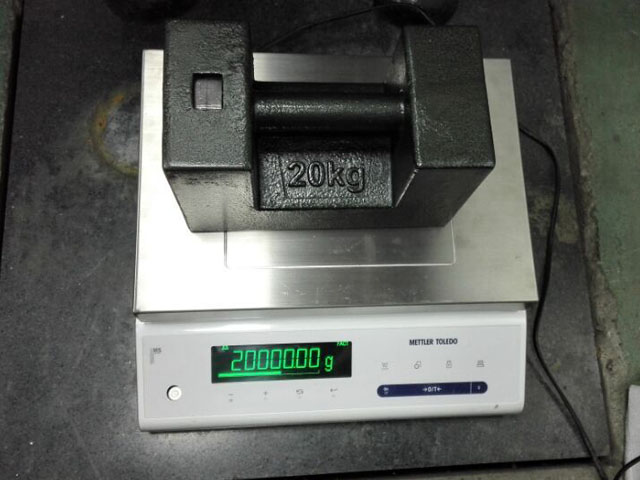
No matter whether it is a mechanical balance relying on physical torque balance or an electronic balance based on electromagnetic force compensation signal conversion, calibration with standard balance calibration weights is the only effective and direct way to judge the current measurement performance of the equipment and correct existing deviations. The essence of the calibration process is a standardized comparison work between the known fixed mass of the calibration weight and the real-time measurement feedback value of the balance, forming a clear and intuitive data comparison basis for operators. Before each calibration operation begins, operators need to place the balance in a suitable working position, adjust the equipment to a horizontal and stable placement state, remove all dust, residual samples, and sundries on the weighing pan and around the load-bearing area, and complete the zeroing initialization work of the balance to ensure that the equipment is in a standby state without any load interference. After the preparation work is completed, the balance calibration weight with a suitable nominal mass is gently and stably placed in the center of the balance’s weighing pan, avoiding any collision, sliding, or tilting placement that may cause damage to the weight or affect the weighing stability. After the balance’s reading stabilizes completely, the operator records the displayed measurement value in detail and compares it with the standard nominal mass value marked on the calibration weight. Through this simple and accurate comparison, operators can clearly judge whether the current measurement state of the balance is normal: if the displayed value is consistent with the nominal mass of the calibration weight within a reasonable allowable range, it proves that the balance maintains good measurement performance and can continue to be used for subsequent weighing work; if there is a noticeable deviation between the displayed value and the standard mass, it indicates that the balance has experienced performance drift and needs to be adjusted and corrected according to the standard operating steps until the measurement result of the calibration weight returns to the normal and accurate state. This basic calibration operation logic applies to all types of precision weighing balances, and the core premise supporting the effectiveness of the entire calibration work is the long-term mass stability and surface state stability of the balance calibration weight itself. Only when the calibration weight’s own mass does not change easily with environmental changes and use times can it serve as a reliable reference standard to ensure that each calibration result is true and effective, and truly achieve the purpose of correcting balance measurement errors.
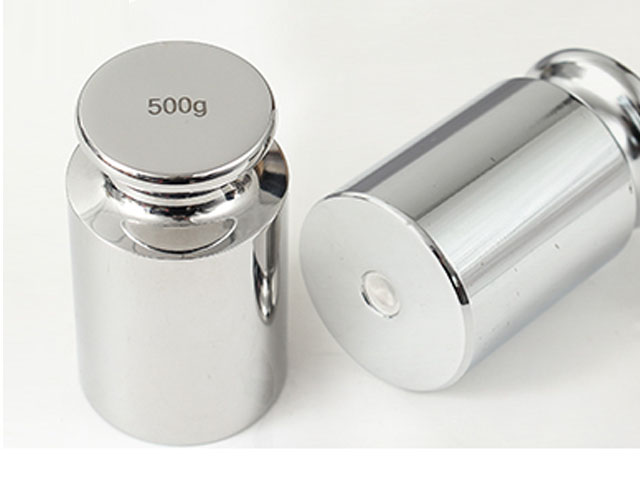
The overall manufacturing material selection and professional surface processing technology of balance calibration weight is the core key factors determining their mass stability and long-term service life, and also the fundamental guarantee for them to continuously play a reliable reference role in long-term repeated calibration work. Different from ordinary cast iron weights or simple metal blocks used for rough weighing and mechanical pressure testing, balance calibration weights need to meet the dual core requirements of high density uniformity and strong environmental corrosion resistance, so as to avoid mass changes caused by external environmental erosion, surface oxidation, or internal material structural changes during long-term storage and repeated use. Most high-quality balance calibration weights are made of dense metal alloy materials with stable chemical properties and uniform internal texture, which have the characteristics of low thermal expansion coefficient, weak chemical activity, and strong oxidation resistance. The low thermal expansion coefficient ensures that the volume and mass distribution of the calibration weight will not produce obvious subtle changes due to fluctuations in ambient temperature, avoiding measurement interference caused by thermal expansion and contraction during calibration. The stable chemical activity enables the weight to resist oxidation, moisture corrosion, and slight chemical gas erosion in conventional laboratory and industrial working environments, preventing surface rust, corrosion, or material falling off that would cause irreversible changes in the actual mass of the weight. In the production and processing process of calibration weights, the raw metal materials will first undergo strict smelting and purification treatment to remove internal impurities, bubbles, and uneven texture areas, ensuring that the internal material distribution of each weight is uniform and consistent without any internal defects that may affect mass stability. After the initial molding of the weight body through precise cutting and forging processes, multiple fine grinding and polishing procedures will be carried out on the surface of the weight to make the surface smooth and flat without burrs, pits, cracks, or rough areas. The smooth and dense surface not only effectively reduces the adhesion of dust, moisture, and sundries during use and storage, making daily cleaning and maintenance more convenient, but also avoids surface residue accumulation that may cause slow changes in the actual mass of the weight over time. In addition, the bottom and contact parts of the calibration weight that are in contact with the weighing pan are specially processed to ensure flat and stable contact, preventing tilting and shaking during placement on the balance, and ensuring that each calibration placement state is consistent and the calibration comparison data is more accurate and repeatable. Some calibration weights with smaller nominal mass and higher precision requirements will also be equipped with fine tuning structures inside the weight body, which allow operators to carry out tiny mass fine adjustment during initial production and regular re-inspection, ensuring that the actual mass of each weight is always kept within the required range of standard reference values and maintaining long-term calibration accuracy.
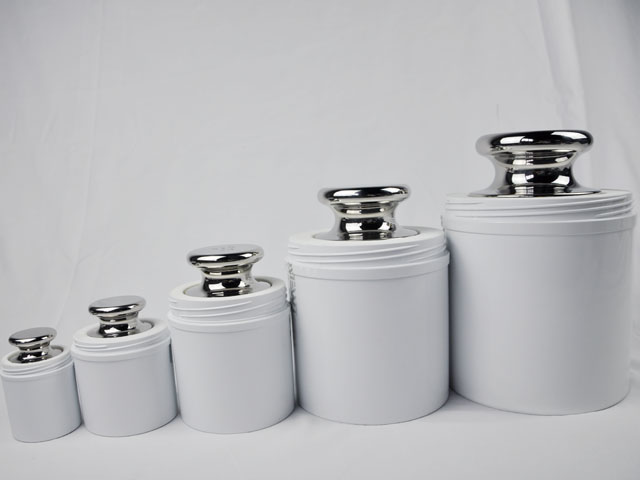
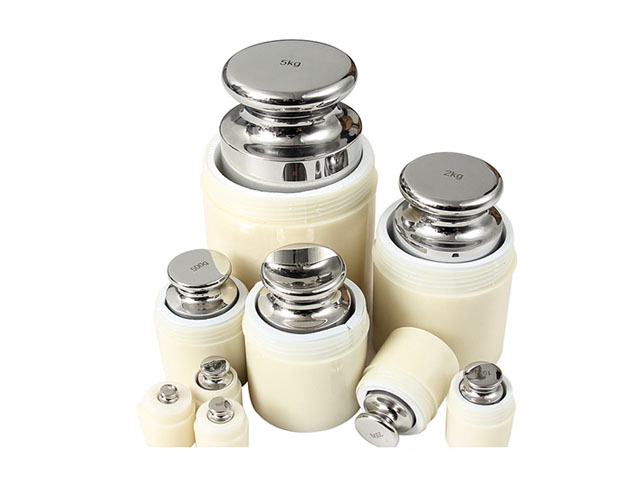
The reasonable selection of balance calibration weights needs to be closely matched with the measuring range and precision level of the balance to be calibrated, and matching the appropriate calibration weight specification is an important prerequisite to ensure that the calibration work achieves the expected effect. Each balance has a fixed rated measuring range and inherent measurement resolution, and calibration work needs to select calibration weights with nominal mass close to the commonly used weighing range or the upper limit of the balance’s measuring range, so as to fully detect the measurement performance of the balance under conventional load conditions and avoid the problem that small-mass calibration weights cannot effectively reflect the load-bearing measurement deviation of the balance in actual use. For small micro-balances and analytical balances used for trace sample weighing in chemical laboratories, biological research, and pharmaceutical testing, calibration weights with smaller nominal mass and higher matching precision need to be selected, because these balances are used for measuring tiny sample masses, and even extremely subtle measurement deviations will have a serious impact on experimental data and test results. For large-capacity top-loading balances and industrial precision balances used for raw material proportioning and finished product testing in industrial production, calibration weights with larger nominal mass and stable overall structure are required to adapt to the large-load working state of the equipment and ensure that the balance maintains accurate measurement performance under long-term heavy-load use. In addition to matching the nominal mass and precision level, the quantity combination of balance calibration weights also needs to meet the actual calibration needs. In daily routine rapid inspection and calibration work, a single calibration weight with conventional fixed mass can be used for simple deviation detection and zero-point correction; in regular comprehensive performance verification and periodic professional calibration work, a set of calibration weights with different nominal mass specifications is often required to carry out multi-point calibration at different positions of the balance’s measuring range, covering the low, medium, and high load sections of the balance’s entire working range. Multi-point calibration can comprehensively detect whether the balance has different degrees of measurement deviation under different load weights, avoid the hidden problem that single-point calibration only corrects the deviation of a single position while ignoring the performance drift of other load sections, and make the balance’s overall measurement performance more stable and reliable in all weighing ranges.
The external working environment has a very obvious impact on both balance equipment and balance calibration weights, and good environmental management is an important auxiliary condition to ensure the accuracy of calibration results and the long-term service life of calibration weights. Temperature, humidity, air flow, ground vibration, and dust concentration in the working space will all interfere with the calibration process and subsequent weighing work to varying degrees. Too high or too low ambient temperature will cause thermal expansion and contraction of both the balance’s internal components and the calibration weight body, resulting in subtle changes in volume and surface state, thus affecting the consistency of measurement and calibration data. Excessively high air humidity will easily cause moisture adhesion on the surface of calibration weights and balance weighing pans, and long-term humid environment may also cause slow oxidation and corrosion on the surface of metal calibration weights, leading to changes in the actual mass of the weights and reducing their calibration reference accuracy. Strong air flow in the working space will generate continuous wind pressure interference on the weighing pan and calibration weights placed on it, especially for high-precision analytical balances with sensitive sensing performance; even slight air flow will cause continuous fluctuation of balance readings, making it impossible to obtain stable and accurate calibration comparison data. Ground vibration and surrounding mechanical equipment operation vibration will be transmitted to the balance placement position, causing slight shaking of the balance and calibration weights during calibration placement and reading, resulting in unstable measurement data and inaccurate deviation judgment. Therefore, before each calibration operation, operators need to adjust the working environment of the balance to a stable and suitable state, maintain constant temperature and humidity in the working space, close doors and windows to avoid air flow disturbance, turn off surrounding vibrating equipment, and ensure that the balance placement table is stable and firm without shaking. After the calibration work is completed, the balance calibration weights need to be placed in a dry, dust-proof, and stable special storage space in time, avoiding random placement in humid, dusty, or corrosive gas environments. Good storage environment management can effectively avoid unnecessary mass changes and surface damage of calibration weights, reduce the frequency of performance attenuation, and ensure that each calibration weight can maintain stable performance for a long time and provide reliable reference for multiple calibration operations.
Standardized daily use and scientific long-term maintenance management are crucial to extending the service life of balance calibration weights and maintaining their stable calibration performance, and improper operation and random storage are the main human factors leading to performance degradation of calibration weights. In the process of using balance calibration weights for calibration work, operators must follow standardized operating norms and avoid any irregular handling behaviors that may damage the weights. It is forbidden to directly hold the surface of calibration weights with bare hands during use, because the sweat, oil stains, and fine dirt on human hands will adhere to the smooth surface of the weights, forming a thin invisible dirt layer. Long-term accumulation of these attachments will gradually increase the actual mass of the calibration weights, and the oil stains will also accelerate surface oxidation and corrosion, seriously affecting the calibration reference accuracy. Operators should use special non-slip tweezers or soft gloves to take and place calibration weights, ensuring that the surface of the weights is always clean and free of manual contamination. When placing the calibration weight on the balance weighing pan, the action needs to be gentle and steady, avoiding violent collision, random sliding, and repeated impact, so as to prevent surface scratches, pits, and edge deformation of the weight caused by impact and friction. Any tiny damage and deformation on the surface of the calibration weight will change its original mass distribution and overall volume state, leading to deviation between the actual mass and the nominal value and losing the basic conditions for calibration reference. After each calibration work is completed, operators need to gently wipe the surface of the calibration weight with a clean, soft, dry lint-free cloth to remove tiny dust, floating ash, and occasional fine attachments on the surface, ensuring that the surface of the weight is kept clean and dry before storage. It is not allowed to use wet cloths, chemical cleaning agents, or corrosive liquids to wipe calibration weights at will, so as to avoid moisture residue or chemical corrosion on the surface affecting mass stability. For calibration weights that have not been used for a long time, regular regular inspection and simple maintenance are required, checking whether there is surface oxidation, rust, deformation, or dirt accumulation, and timely carrying out cleaning and finishing work to ensure that the performance of the weights is always in a qualified state.
The application scenarios of balance calibration weights cover almost all professional fields that require precise mass measurement and accurate weighing control, and their hidden supporting role runs through every link of scientific research, industrial production, quality inspection, and experimental testing. In chemical laboratory research and analytical testing work, all kinds of fine chemical reagent preparation, sample concentration determination, chemical reaction proportion configuration, and component content testing rely on accurate balance weighing data. Slight weighing errors will directly lead to changes in chemical reaction effects, inaccurate experimental data, and failed research conclusions. Regular calibration of analytical balances with calibration weights ensures that all reagent and sample weighing links are accurate and reliable, providing solid basic data support for chemical experiment research and component analysis. In the pharmaceutical production and drug testing industry, the proportioning of raw materials for pharmaceutical preparations, the weighing of active pharmaceutical ingredients, and the testing of finished drug content all have extremely strict requirements on weighing accuracy. Unqualified weighing accuracy will not only affect the efficacy and stability of drugs but also involve the safety of drug use. Balance calibration weights ensure that the weighing equipment used in pharmaceutical production and testing maintains stable measurement performance at all times, avoiding product quality problems caused by weighing deviations. In new material research and industrial material production, the performance of metal materials, composite materials, and new energy materials is closely related to the accurate proportioning of raw material components. Precise weighing of various raw materials is the premise to ensure the stability of material performance and consistent product quality. Calibration weights regularly correct the deviation of production weighing balances, ensuring that the raw material proportioning in each production batch is consistent and the quality of finished materials is stable and qualified. In food testing, agricultural product quality inspection, and environmental monitoring testing, the weighing of test samples and detection reagents directly determines the accuracy of final detection data, and reliable balance calibration work is the basic guarantee for qualified detection results and credible monitoring data. Even in educational and teaching laboratory scenarios, regular calibration of teaching balances with calibration weights can ensure that students obtain accurate experimental data during physics and chemistry teaching experiments, help students establish correct measurement cognition, and lay a solid foundation for subsequent professional learning and experimental operation.
Many people tend to ignore the importance of balance calibration weights in daily work, often focusing only on the performance parameters and purchase quality of balance equipment itself while neglecting the key role of calibration weights as the reference standard for measurement accuracy. In fact, a balance with excellent initial performance cannot maintain long-term accurate measurement without regular calibration with qualified calibration weights, and the precision of the balance can only be truly reflected under the support of stable and reliable calibration reference standards. The value of balance calibration weights lies not in their simple metal physical form, but in the stable and consistent mass reference they provide for all precision weighing work, becoming the invisible benchmark for maintaining measurement unity and data accuracy in various professional fields. Every standardized calibration operation using calibration weights is a correction and protection of weighing data credibility, avoiding measurement errors from accumulating and expanding in subsequent work, and preventing small weighing deviations from evolving into major work problems and economic losses. With the continuous improvement of production technology and experimental research requirements in various industries, the requirements for weighing accuracy and data stability are constantly increasing, and the importance of balance calibration weights as the basic guarantee of precision weighing work will become more prominent. Paying attention to the reasonable selection, standardized use, scientific maintenance, and regular management of balance calibration weights, and doing a good job in every routine calibration and daily maintenance work, is not only a basic requirement for standardizing laboratory and production site management but also a key link to ensure the accuracy of experimental research data, the stability of industrial product quality, and the effectiveness of quality inspection and testing work. In all work scenarios that rely on balances for mass measurement, balance calibration weights are always the most basic, most reliable, and most indispensable core guarantee for realizing true and accurate weighing measurement, silently supporting the stable operation and high-quality development of various professional fields behind every accurate weighing data.
Balance Calibration Weight
https://www.veidtweighing.com/calibration-weights.html
Post Date: Apr 27, 2026
https://www.supplier-manufacturer.com/calibration-weight/balance-calibration-weight.html

![Stainless Steel Calibration Weight For Pharmacy Laboratory]()
Stainless Steel Calibration Weight For Pharmacy Laboratory
In pharmaceutical laboratory operations, accurate weight measurement serves as the fundamental foundation for every experimental procedure, drug formulation test, quality …![100kg Test Weight]()
100kg Test Weight
In the complex and interconnected world of industrial production, scientific experimentation, and daily operational measurement management, reliable mass reference tools f…![Stainless Steel Weight Manufacturer]()
Stainless Steel Weight Manufacturer
Stainless steel weights have become indispensable functional components across a wide spectrum of industrial and commercial sectors, owing to the unique physical and chemi…![Specifications of Test Weight]()
Specifications of Test Weight
Test weights serve as fundamental physical mass references applied across a wide spectrum of industrial production, weighing instrument verification, daily metering adjust…![Test Weight Supplier]()
Test Weight Supplier
In the modern industrial production, laboratory testing, commercial weighing and engineering calibration fields, test weights occupy an indispensable basic supporting posi…