Calibration Masses
In every corner of modern industrial production, scientific research experimentation, daily commodity circulation, and technological innovation research and development, the accuracy of weighing measurement data is an indispensable basic condition for maintaining production order, ensuring product quality, promoting technological iteration, and realizing fair transaction settlement. All kinds of weighing instruments, ranging from ultra-sensitive laboratory micro-balances that measure tiny trace substances to large-scale industrial platform scales that bear heavy load weighing tasks, rely entirely on a set of stable, reliable, and uniformly referenced material carriers to maintain their long-term measurement stability and numerical accuracy. Calibration masses, as the core physical reference standard in the entire weighing measurement system, undertake the vital task of unifying measurement values, correcting instrument deviations, and verifying weighing accuracy. They are not just simple metal objects with fixed mass values, but the fundamental physical foundation for connecting theoretical metrological standards with practical weighing operations, bridging abstract measurement concepts and specific production and experimental links, and supporting the normal operation of all links that rely on mass measurement data. Without the accurate support and regular correction provided by calibration masses, all weighing instruments will gradually produce cumulative measurement deviations during long-term use, external environmental interference, and mechanical component wear, and these seemingly subtle numerical differences will eventually evolve into hidden dangers affecting product qualification rates, experimental data authenticity, industrial production safety, and market transaction fairness, bringing unpredictable negative impacts to all walks of life related to mass measurement.
The essential working logic of calibration masses follows the most basic physical principle of mass comparison and value transmission in metrology. Mass itself is a basic physical quantity that describes the amount of matter contained in an object, and it remains relatively stable under conventional natural conditions, unaffected by changes in geographical location, ambient temperature, and atmospheric humidity to a large extent, which is the core prerequisite for calibration masses to serve as long-term measurement references. The core application process of calibration masses is based on the direct comparison method of known mass values and measured instrument display values. In specific calibration and verification work, staff place calibration masses with clear and accurate preset mass values on the bearing surface of various weighing instruments, observe the real-time display data feedback by the weighing equipment, and compare the displayed reading with the inherent standard mass value of the calibration mass itself. Through this intuitive and rigorous comparison process, staff can clearly judge whether the weighing instrument has measurement deviation, confirm the specific range of numerical error generated by the instrument during operation, and then carry out targeted debugging and correction of the weighing equipment according to the actual deviation situation, so that the measured data of the instrument can return to the consistent state with the standard mass value. It is necessary to clearly distinguish the two core links of calibration and verification in actual operation, although both processes rely heavily on calibration masses for auxiliary completion. Calibration focuses on detecting the specific error value of the weighing instrument itself, recording the current measurement performance state of the equipment, and completing the fine adjustment of the instrument to eliminate deviation; verification is based on the calibrated instrument state to carry out pass-or-fail judgment, confirming whether the measurement error of the weighing equipment is within the reasonable tolerance range required by the actual use scenario, ensuring that the equipment can meet the basic use requirements of subsequent production, experiments or transactions.
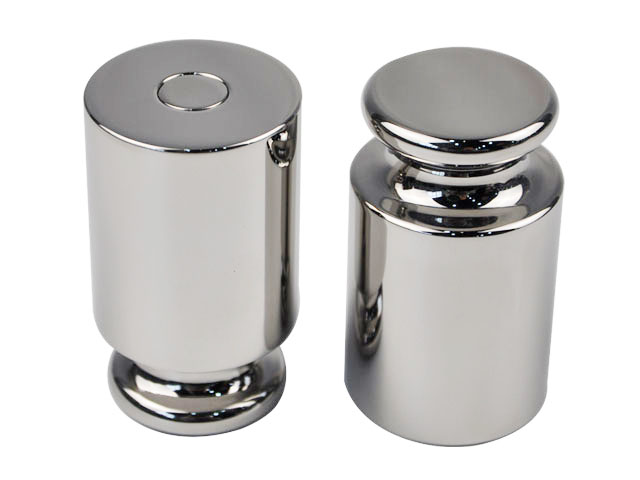
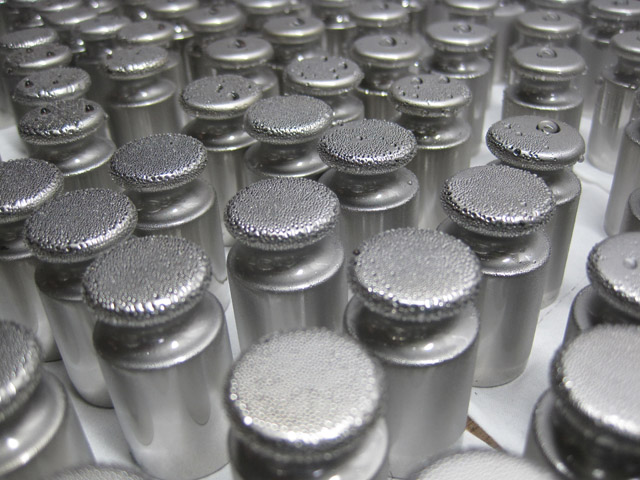
The manufacturing process and material selection of calibration masses directly determine their inherent mass stability, surface durability, and long-term service performance, and every production link is formulated around the core goal of maintaining mass constancy for a long time. In terms of material selection, high-quality metal materials with high density, low thermal expansion coefficient, strong oxidation resistance, and stable chemical properties are usually selected as the base raw materials for processing calibration masses. Materials with excellent comprehensive physical and chemical properties can effectively resist the influence of external environmental factors such as air oxidation, moisture corrosion, and temperature change, avoid the loss or increase of surface substances caused by chemical reactions or physical wear, and ensure that the actual mass value of calibration masses will not fluctuate randomly during long-term storage and repeated use. Different application scenarios and measurement accuracy requirements will correspond to different material matching schemes for calibration masses. Calibration masses used in high-precision laboratory metrology work will adopt more refined alloy materials with extremely low impurity content and more stable molecular structure, while those used in conventional industrial production and daily weighing verification will select practical and durable metal materials that balance performance and applicability, meeting the basic accuracy needs of conventional weighing calibration work. In the processing and forming stage of calibration masses, mechanical processing equipment with high precision and low error is used for integral cutting, grinding, polishing and shaping, and the overall structural design is kept compact and uniform to avoid hollow gaps or uneven stress inside the masses, preventing mass changes caused by structural deformation during long-term placement and frequent handling.
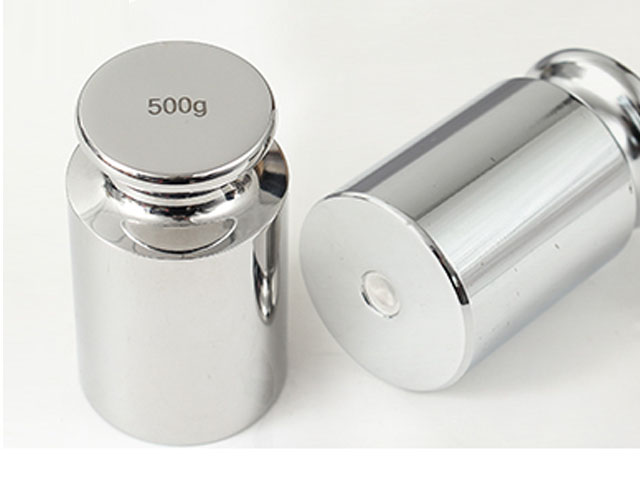
A key structural design widely adopted in the production of calibration masses is the reserved adjusting cavity, which is a professional functional structure set up to fine-tune the mass value of finished calibration masses to meet standard requirements. After the initial processing and forming of the calibration mass body, due to the tiny errors inevitably existing in mechanical processing, the actual mass of the finished product will have a slight deviation from the ideal standard mass value. The adjusting cavity provides a controllable and dedicated space for subsequent precise mass correction work. When the actual mass of the calibration mass is slightly higher than the standard required value, professional technicians can use precision drilling and milling equipment to remove a very small amount of material from the inside of the adjusting cavity, so as to reduce the overall mass of the mass to the qualified range; when the actual mass is slightly lower than the standard value, tiny auxiliary filling materials with stable mass can be added to the adjusting cavity to appropriately increase the overall mass of the calibration mass. The design of the adjusting cavity follows the principle of concealment and stability. It is usually arranged at the bottom or hidden position of the calibration mass, and after the mass fine-tuning work is completed, the cavity will be sealed and protected to avoid external dust, moisture and impurities from entering the interior, preventing the subsequent change of the internal filling state from affecting the long-term mass stability of the calibration mass. This refined adjusting structure ensures that each calibration mass can reach the preset standard mass accuracy index before leaving the factory, laying a solid foundation for subsequent reliable calibration work.
In the actual weighing calibration process, the influence of air buoyancy is a physical factor that cannot be ignored, and all professional calibration work using calibration masses needs to calculate and compensate for air buoyancy deviation to ensure the ultimate accuracy of measurement results. Any solid object placed in the air will be affected by upward air buoyancy, and the magnitude of buoyancy is closely related to the volume and density of the object. Different calibration masses have different material densities and overall volumes even with the same nominal mass value, so the air buoyancy they bear in the same atmospheric environment will also be different. This subtle buoyancy difference will produce tiny interference on the comparison results between the calibration mass standard value and the weighing instrument display value, especially in high-precision laboratory metrology calibration work, this small interference is enough to affect the authenticity and effectiveness of measurement data. Therefore, professional metrology technicians will calculate the buoyancy correction value according to the actual density of the calibration mass material, the real-time air density of the working environment, and the volume parameters of the calibration mass before each formal calibration operation. In the calibration data processing link, the conventional mass and true mass of the calibration mass are distinguished and corrected, and the final accurate calibration result is obtained after eliminating the air buoyancy interference factor. For calibration work in conventional industrial scenarios with low accuracy requirements, the influence of air buoyancy can be appropriately simplified and ignored, but for scientific research experiments, precision manufacturing and other fields that require extremely high measurement data accuracy, buoyancy correction is an essential core link in the calibration process.
Calibration masses have extremely wide application coverage, penetrating almost all production and research links that require quantitative mass measurement and data verification. In scientific research laboratories of universities, research institutions and pharmaceutical research and development enterprises, various precision analytical balances and micro-weighing instruments need frequent calibration and detection with the help of supporting calibration masses. In chemical reagent proportioning, pharmaceutical ingredient research, material performance testing, biological sample analysis and other experimental work, the accurate mass ratio of various raw materials and samples directly determines the success or failure of experimental research and the authenticity of experimental data. Only by relying on calibration masses to regularly correct the weighing instruments used in the laboratory can ensure that the weighing data of each experimental sample is accurate and reliable, avoid experimental failure and data deviation caused by inaccurate weighing, and provide solid data support for scientific research innovation and technological breakthroughs. In industrial manufacturing and processing enterprises, from the raw material batching link of food processing, chemical production and building materials processing to the finished product packaging and finished product ex-factory inspection link, weighing measurement runs through the entire production chain. The various production scales, batching scales and packaging scales used in the production process will gradually have measurement errors due to long-term load-bearing, mechanical vibration and equipment aging. Regular calibration with calibration masses can timely discover and correct these errors, ensure that the raw material batching ratio meets the production process standards, the net content of finished product packaging meets the unified specification requirements, effectively avoid product quality problems caused by inaccurate batching and unqualified packaging, and help enterprises maintain stable product quality and good market reputation.
In commodity circulation and market trading links, calibration masses are important basic tools to maintain fair trading order and protect the legitimate rights and interests of both buyers and sellers. All kinds of trading weighing equipment used in shopping malls, markets, logistics and distribution stations need to be regularly calibrated and verified with calibration masses by relevant management personnel. Some unscrupulous operators may modify the weighing equipment to adjust the measurement data to obtain improper benefits, and long-term use of weighing equipment will also produce natural aging and deviation. Regular calibration and verification with calibration masses can standardize the use of trading weighing instruments, prevent inaccurate weighing and unfair trading behaviors, ensure that the mass measurement of bulk commodities, daily consumer goods and logistics goods is true and accurate in market transactions, maintain the fair and orderly operation of the market trading environment, and safeguard the basic consumption rights and interests of the public. In addition, in the fields of aerospace equipment manufacturing, precision parts processing, new energy material production and other high-end precision manufacturing industries, the application requirements of calibration masses are more stringent. The weighing and matching of precision parts and special materials in these fields have extremely high accuracy standards, and any tiny weighing error may lead to hidden dangers of equipment operation failure and product performance degradation. High-precision calibration masses are used to calibrate professional high-precision weighing equipment to ensure that every production and processing link meets the precision manufacturing standards, and provide reliable measurement guarantees for the safety and stability of high-end equipment and high-precision products.
The selection of specifications and matching methods of calibration masses need to be reasonably determined according to the measuring range, accuracy level and actual use scenario of the calibrated weighing instruments, and blind selection of calibration masses cannot be carried out regardless of equipment parameters. In the actual calibration work, the most commonly used calibration methods include single-point span calibration and multi-point linearity calibration, and different calibration modes correspond to different selection requirements of calibration masses. Single-point span calibration usually selects a single calibration mass with a nominal value close to the full range of the weighing instrument, which is mainly used to correct the overall measurement deviation of the weighing equipment under full load operation, and is suitable for conventional weighing instruments with simple use requirements and low linear error requirements. Multi-point linearity calibration needs to select multiple calibration masses with different nominal values, covering the zero point, half range and full range of the weighing instrument respectively. This calibration method can detect and correct the measurement deviation of the weighing equipment in the entire weighing range, avoid the problem of inaccurate local measurement data of the instrument, and is suitable for high-precision weighing instruments and key weighing equipment that need to ensure accurate measurement in the full working range. When selecting calibration masses, it is also necessary to ensure that the inherent measurement uncertainty of the calibration masses themselves is far lower than the allowable error range of the calibrated weighing instruments. Only in this way can the accuracy of the calibration reference source be guaranteed, and the error of the calibration masses themselves will not interfere with the calibration effect of the weighing equipment, ensuring that the calibration work can truly reflect the actual measurement performance of the weighing instrument.
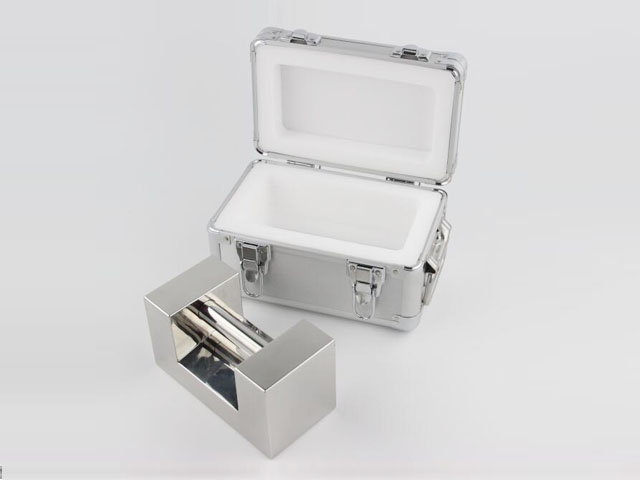
The influence of external environmental conditions on the use effect and service life of calibration masses cannot be underestimated, and good storage and use environment is an important prerequisite to maintain the long-term performance stability of calibration masses. Temperature, humidity, dust and vibration are the main environmental factors affecting the performance of calibration masses. Long-term exposure to high temperature or low temperature environment will cause slight thermal expansion and cold contraction of the calibration mass material, resulting in tiny changes in volume and surface state, and then affecting the actual mass measurement effect; excessive air humidity will cause moisture adhesion on the surface of calibration masses, and even cause slow oxidation and corrosion of metal materials, resulting in permanent mass change; long-term accumulation of surface dust and dirt will increase the attachment of impurities on the surface of calibration masses, making the actual mass higher than the standard value, affecting the accuracy of calibration work; frequent mechanical vibration and collision will cause structural wear and tiny deformation of calibration masses, and even damage the internal adjusting cavity structure, resulting in unstable mass value. Therefore, calibration masses need to be stored in a dry, constant temperature, dust-proof and vibration-proof special storage space when not in use. Professional sealed storage containers are usually used for classified storage to avoid long-term exposure to harsh external environments. In the process of use, staff need to handle calibration masses gently, avoid violent collision and friction, and do not place the masses in high humidity, high temperature or corrosive gas environment for calibration operation, so as to maintain the stable physical and chemical state of calibration masses.
Daily maintenance and regular maintenance of calibration masses are essential to extend their service life and maintain long-term measurement accuracy, and standardized maintenance management needs to be implemented throughout the whole life cycle of calibration masses. In daily use management, staff need to regularly clean the surface of calibration masses, gently wipe off surface dust, stains and moisture with soft and clean cleaning tools, and avoid using corrosive cleaning reagents and hard cleaning tools to prevent scratching the surface of the masses and causing chemical corrosion. After each calibration operation, the calibration masses need to be timely wiped clean and put back into the special storage container, and placed in a fixed storage position to avoid random placement and accidental collision. In addition to daily cleaning and storage management, calibration masses also need regular periodic re-calibration and performance detection. Even if calibration masses are not frequently used, their mass values may change slightly due to long-term natural aging and subtle environmental influence. Regular professional re-calibration can timely detect the tiny mass deviation of calibration masses, and carry out secondary fine-tuning through the adjusting cavity when necessary to ensure that their standard mass values are always within the qualified accuracy range. For calibration masses that have been used for a long time, collided and worn seriously, or have large and irreversible mass deviation after detection, they need to be eliminated in a timely manner and replaced with new qualified calibration masses to avoid using unqualified masses for calibration work, which will lead to a chain of measurement deviation problems.
In the whole metrological measurement system, calibration masses play an irreplaceable role in value transmission and measurement traceability, forming a complete and rigorous measurement guarantee system from national basic metrological standards to enterprise on-site weighing application. The accurate mass value of each calibration mass is traced back step by step to the basic metrological standard maintained by professional metrological institutions, ensuring that the mass reference values used in all regions and all walks of life are unified and consistent. This unified value transmission system avoids the problem of inconsistent measurement standards in different regions and different enterprises, ensures that the weighing measurement data of production, scientific research, transactions and other links in the whole society are comparable and consistent, and provides a basic metrological guarantee for industrial coordinated development, scientific research data sharing and market economic operation. Without the basic support of calibration masses, the metrological value transmission chain will be broken, and all weighing measurement work will lose unified and accurate reference standards, resulting in chaotic measurement data, uncoordinated production standards, and unfair market transactions, seriously affecting the stable development of the social economy and the progress of scientific and technological undertakings.
With the continuous progress of industrial modernization and scientific and technological research and development level, the demand for weighing measurement accuracy in all walks of life is constantly improving, and the performance requirements for calibration masses are also becoming more and more stringent. Emerging industries such as new energy materials, semiconductor precision manufacturing, biomedical engineering, and aerospace deep-space exploration have put forward higher standards for the accuracy level, material stability, and environmental adaptability of calibration masses, promoting the continuous upgrading and optimization of calibration mass manufacturing technology and design technology. The continuous innovation of material processing technology and precision manufacturing technology makes the production accuracy of calibration masses higher, the material stability stronger, and the adaptability to complex working environments better. At the same time, the standardized management system of calibration work is constantly improved, and the operation specifications for the use, maintenance, calibration and management of calibration masses are becoming more and more perfect, which further ensures the stability and reliability of calibration mass performance in long-term use. In the future, as the development of various high-precision manufacturing and cutting-edge scientific research industries continues to deepen, calibration masses will continue to play the core basic role of metrological reference, continuously provide accurate and unified mass measurement support for all fields related to weighing work, and become an indispensable and important basic guarantee for social and economic development and scientific and technological innovation and progress.
Calibration Masses
https://www.veidtweighing.com/calibration-weights.html
Post Date: Apr 27, 2026
https://www.supplier-manufacturer.com/calibration-weight/calibration-masses.html

![M2 Calibration Weight]()
M2 Calibration Weight
Mass measurement stands as one of the most fundamental and indispensable links in all fields of modern industrial production, laboratory scientific research, commercial tr…![Calibration Weight For Balances]()
Calibration Weight For Balances
In every sector that relies on consistent and dependable mass measurement, the role of calibration weight for balances stands as an irreplaceable foundational element that…![Astm Class 1 Calibration Weight]()
Astm Class 1 Calibration Weight
In the intricate and interconnected world of modern precision metrology, the consistency and dependability of mass measurement form the foundational backbone of countless …![10kg Calibration Weight]()
10kg Calibration Weight
In the entire system of mass measurement and weighing verification, the 10kg calibration weight stands as a fundamental and indispensable physical reference medium that br…![Small Gram Size Laboratory Standard Test Weight]()
Small Gram Size Laboratory Standard Test Weight
Small gram size laboratory standard test weights are essential precision tools designed to deliver accurate mass reference values for microscopic and fine-scale weighing o…