1kg Calibration Weight
In the intricate and interconnected world of modern measurement science and industrial production, the pursuit of consistent and reliable mass measurement forms the invisible backbone of all technological progress, manufacturing operations, and scientific research exploration. Every numerical data obtained from weighing equipment, every product quality judgment based on mass parameters, and every experimental conclusion derived from precise material proportioning relies on a fundamental and stable reference benchmark that never deviates easily. The 1kg calibration weight stands as one of the most essential and widely applied foundational measuring tools in this entire measurement system, undertaking the critical mission of unifying mass measurement standards across different scenarios, different regions, and different equipment types. Unlike ordinary daily-use weights that only meet rough weighing needs, this type of calibration weight is designed and manufactured purely for the core purpose of measurement traceability and equipment performance verification, with every physical attribute, structural detail, and surface treatment process formulated around maintaining long-term mass stability and adapting to diverse complex use environments. It does not serve as a direct weighing tool for measuring the mass of finished products or experimental samples, but acts as a reliable comparison standard to check, adjust, and correct various weighing instruments, ensuring that every weighing device in use can output accurate and consistent data within the required working range, avoiding measurement deviations that may lead to production losses, experimental failures, or quality instability. The importance of such a basic mass reference tool often goes unnoticed in daily production and laboratory work, yet its subtle influence penetrates every link involving mass measurement, from fine chemical laboratories and pharmaceutical research institutions to industrial production workshops, food processing plants, and commodity circulation detection links, becoming an indispensable basic guarantee for standardized operation in all walks of life.
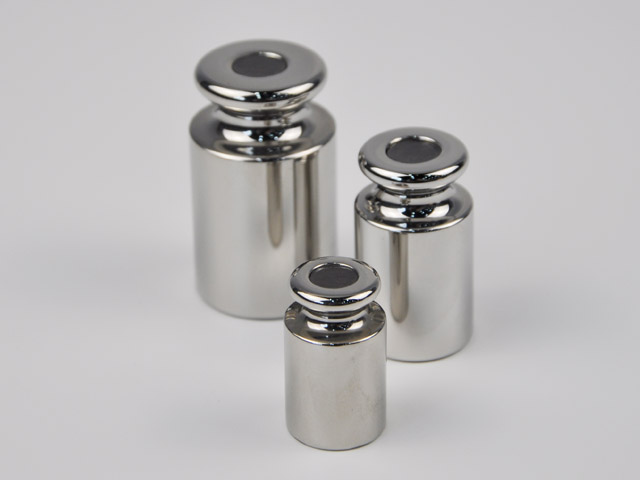
The material selection of a 1kg calibration weight is the primary factor determining its long-term performance stability and service adaptability, and the inherent physical and chemical properties of the selected material directly determine whether the weight can maintain a fixed mass state for a long time under different temperature, humidity, and contact conditions. In the mainstream production and application scenarios of calibration weights, high-quality stainless steel materials are the most common and practical choice, favored for their balanced performance in multiple key indicators such as density uniformity, chemical stability, and external environmental resistance. This type of stainless steel material is specially refined and processed for precision measurement purposes, with internal metal components proportioned accurately to ensure consistent overall density, avoiding internal structural differences that may cause subtle mass changes due to long-term placement or slight external force impact. The density of the commonly used stainless steel for making 1kg calibration weights is maintained within a stable fixed range, which lays a solid foundation for controlling the overall volume consistency and surface finish of the finished weight, and also effectively reduces the impact of environmental air buoyancy on mass comparison during the calibration process. In addition to standard stainless steel materials, some special application scenarios will choose other suitable metal alloy materials according to actual use needs and environmental conditions, all of which are screened based on the core requirements of corrosion resistance, oxidation resistance, and low magnetic susceptibility. Low magnetic susceptibility is a particularly critical material indicator for calibration weights, because many high-precision weighing instruments internally adopt magnetic-sensitive sensing components; if the calibration weight itself has obvious magnetic properties, it will produce subtle magnetic interaction with the weighing equipment during the calibration process, resulting in inaccurate calibration data and hidden dangers for subsequent normal weighing work. Regardless of the specific material chosen, the core selection logic always focuses on resisting external chemical corrosion such as air oxidation, moisture erosion, and accidental contact with trace chemical reagents, preventing the weight surface from rusting, peeling, or chemical deterioration that may cause changes in actual mass, thus ensuring that the reference value of the 1kg calibration weight remains stable for years of long-term use.
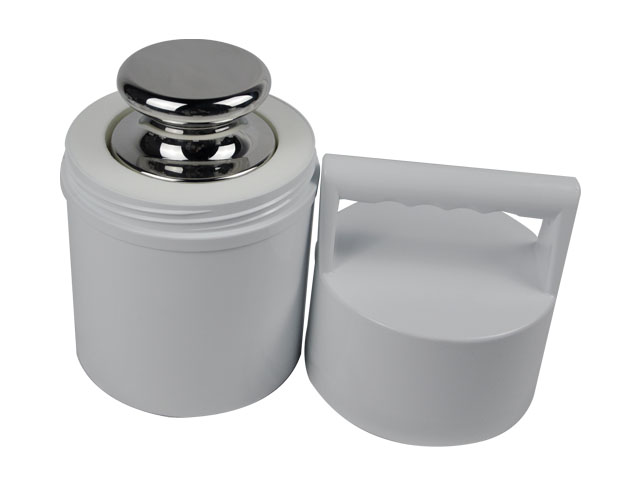
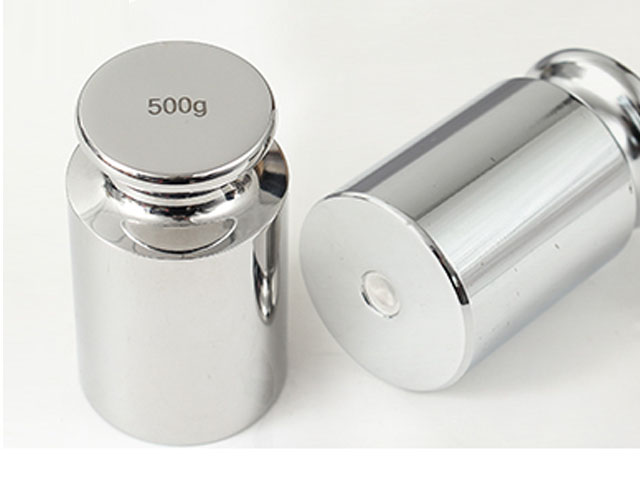
The structural design and processing technology of the 1kg calibration weight are carefully polished and optimized around the dual core goals of convenient manual operation and long-term shape stability, and every detail in the processing process will affect the final use effect and calibration accuracy of the product. The overall shape of most conventional 1kg calibration weights adopts a regular cylindrical structure with smooth transition lines, and the overall size is scientifically calculated according to the material density and standard mass requirements, ensuring that the weight has a reasonable volume proportion while meeting the standard mass specification, neither too bulky to affect handling and placement on the weighing platform nor too small to cause difficulty in manual gripping and operation. The surface of the weight undergoes multiple fine polishing and smoothing treatments, removing all sharp edges and corners, rough burrs, and surface uneven textures formed during metal processing. On the one hand, this smooth surface design can effectively reduce the adhesion of dust, fine particles, and moisture, making it difficult for external impurities to attach to the weight surface and affect the actual effective mass; on the other hand, it avoids scratches and wear on the surface of the weighing instrument contact area during the calibration operation, protecting the normal service life of both the calibration weight and the weighing equipment. Some 1kg calibration weights are designed with a recessed grip structure on the upper part, which is ergonomically optimized to facilitate operators to pick up, move, and place the weight stably without directly touching the main weighing surface of the weight with hands. Direct hand contact will transfer skin grease, sweat, and fine dirt to the weight surface, which will gradually accumulate over time and cause subtle changes in mass, so the optimized grip structure effectively isolates the adverse impact of manual contact on the weight stability and standardizes the standardized operation process of calibration work. In the processing and manufacturing stage, each finished weight will go through fine debugging and mass fine-tuning procedures, and the internal structure is treated with overall stabilization to avoid internal metal stress release caused by long-term placement, which may lead to slight volume deformation and mass deviation. All processing links are carried out in a stable processing environment with constant temperature and low dust, reducing the impact of external environmental changes on the initial mass accuracy of the weight during the production process, ensuring that each leaving factory 1kg calibration weight can meet the basic reference mass requirements of corresponding use scenarios.
The core functional role of the 1kg calibration weight is reflected in the daily calibration and regular performance verification of various weighing and measuring equipment, covering simple mechanical platform scales in industrial production and high-precision analytical balances in scientific research laboratories, forming a complete and orderly measurement accuracy maintenance cycle. All weighing instruments will inevitably produce subtle measurement deviations after long-term continuous use, frequent vibration, environmental temperature and humidity fluctuations, and repeated mechanical extrusion. The internal sensing components and mechanical transmission structures of the equipment will undergo slight aging and performance attenuation over time, resulting in inconsistent displayed weighing values and actual mass values. If these deviations are not corrected in time, they will gradually accumulate and expand, leading to inaccurate weighing data in production batching, product quality inspection, and experimental sample configuration, and even affect the overall product qualification rate and experimental data authenticity. The 1kg calibration weight plays the role of a standard reference ruler in this link. Operators only need to place the calibration weight stably on the weighing platform of the equipment to be detected, observe the weighing data displayed by the equipment, and compare it with the standard reference mass of the calibration weight itself. Through simple data comparison, they can quickly judge whether the current weighing equipment has measurement deviations and the approximate range of deviations. For equipment with slight deviations, fine debugging and parameter adjustment can be carried out according to the comparison results to restore the equipment to a normal accurate weighing state; for equipment with large deviations and serious performance attenuation, timely maintenance and component replacement can be arranged to avoid continued use affecting measurement work. This regular calibration and detection work based on 1kg calibration weight is not only a necessary measure to maintain the normal working performance of weighing equipment, but also an important basic link to ensure the uniformity and accuracy of mass measurement data in the entire working environment.
In industrial manufacturing and production quality control links, the application scenarios of 1kg calibration weights are extremely extensive, covering multiple core industries closely related to people's daily production and life, and providing reliable mass measurement guarantees for standardized production and product quality stability. In the food processing industry, various raw material batching, finished product net content detection, and packaging product weight inspection all require accurate weighing support. Food production enterprises need to regularly calibrate electronic weighing scales and batching weighing instruments used in production lines with 1kg calibration weights to ensure that the proportion of various raw materials in food formula is accurate, avoiding product taste difference, nutritional component imbalance, and unqualified net content of packaged products caused by inaccurate batching weighing. In the chemical production and fine chemical processing industry, the precise proportioning of chemical raw materials directly affects the chemical reaction effect and the purity and quality of finished chemical products. Slight deviations in raw material weighing may lead to failed chemical reactions, unqualified product purity, and even potential safety hazards in production processes. Therefore, chemical production workshops and laboratory batching rooms need to use 1kg calibration weights for frequent calibration of high-precision batching balances to ensure that the weighing data of various chemical raw materials is accurate and the production reaction process is carried out in accordance with standard process requirements. In the pharmaceutical production and pharmaceutical quality testing industry, the precision of drug raw material weighing and finished drug quality detection is related to the safety and efficacy of drugs. Every link from pharmaceutical raw material batching to finished drug weight inspection requires high-precision mass measurement, and regular calibration of weighing equipment with 1kg calibration weights has become a necessary daily management work for pharmaceutical quality control departments to ensure that every batch of drugs meets the quality standard specifications. In addition, in the daily commodity processing, hardware manufacturing, plastic product production and other industries, 1kg calibration weights are used for regular calibration of various weighing equipment to ensure that the product weight meets industry production standards and market circulation requirements, avoiding product quality disputes and market operation risks caused by inaccurate weighing.
In scientific research laboratories, analytical testing institutions, and professional calibration and testing institutions, the application requirements for 1kg calibration weights are more stringent, and the role of maintaining high-precision measurement traceability is more prominent, becoming an important basic tool for ensuring the accuracy and authority of experimental data and testing results. Scientific research experiments in many fields such as material science, chemical analysis, biological research, and environmental monitoring require accurate weighing and configuration of experimental samples and reagents, and the accuracy of experimental weighing data directly determines the authenticity and repeatability of experimental research conclusions. High-precision analytical balances and precision weighing instruments used in laboratories need to be calibrated regularly with 1kg calibration weights before each batch of experiments to eliminate measurement deviations caused by environmental changes and equipment slight aging, ensuring that the mass data of experimental samples measured by the instruments is true and reliable, and that experimental research can be carried out on the basis of accurate measurement data. In professional analytical testing and third-party testing institutions, various product quality testing, environmental sample testing, and material performance testing work need to issue authoritative and accurate testing reports, and all testing data based on mass measurement must have reliable measurement traceability support. The 1kg calibration weight acts as a secondary transfer standard for mass measurement, connecting higher-level measurement reference standards and daily testing weighing equipment, realizing the gradual transmission of measurement accuracy level, ensuring that all testing data has unified and accurate mass measurement basis, and the issued testing reports have credibility and enforceability. In university teaching laboratories and vocational skill training institutions, 1kg calibration weights are also used for teaching and practical training of measurement science and weighing operation skills, helping students and operators understand the basic principles of mass measurement calibration, master standardized weighing equipment operation and calibration methods, and lay a solid foundation for subsequent professional measurement work and industrial production operation.
The adaptability of the 1kg calibration weight to different working environments is an important part of its practical use performance, and excellent environmental stability ensures that it can maintain stable mass performance and reliable calibration effect whether in constant-temperature laboratory environments or complex industrial workshop environments. In laboratory environments with stable temperature, low humidity, and low dust, the calibration weight can exert the most ideal use effect, and the long-term placement state will not be affected by external interference factors, maintaining long-term mass stability. In industrial production workshops with large temperature changes, high air humidity, more dust, and even slight vibration and mechanical impact, the excellent material performance and structural stability of the 1kg calibration weight can still resist the adverse effects of the external environment. The corrosion-resistant and oxidation-resistant properties of the material prevent the weight from chemical changes and mass changes due to humid air and industrial dust erosion; the stable internal structural design avoids slight deformation and mass deviation of the weight caused by equipment vibration and accidental slight impact. For some special working environments such as low-temperature cold storage, high-temperature drying workshops, and humid processing workshops, the 1kg calibration weight can still maintain basic performance stability after long-term use, only needing to strengthen daily maintenance and environmental cleaning to meet normal calibration work needs. In different seasonal conversion cycles, with the change of ambient temperature and air humidity, the surface and internal structure of the calibration weight will not produce obvious thermal expansion and contraction or moisture absorption and moisture release phenomena, and the mass change caused by environmental changes is controlled within a very small negligible range, ensuring that the calibration work in different seasons and different environmental states can maintain consistent accuracy standards.
Daily maintenance, standardized storage and scientific handling management are key links to prolong the service life of the 1kg calibration weight and maintain its long-term mass accuracy, and good use management habits can effectively avoid unnecessary mass deviations and performance attenuation caused by human operation and improper storage. In the daily use process, operators should avoid direct contact between the skin and the main working surface of the calibration weight as much as possible. It is advisable to use special gloves or supporting gripping tools to pick up and move the weight, preventing sweat, grease, and fine dirt on the hands from adhering to the weight surface, forming long-term dirt accumulation and affecting the actual mass of the weight. During the calibration operation, the placement of the calibration weight should be gentle and steady, avoiding violent collision, falling, and friction with hard objects such as the weighing platform and the ground, so as to prevent surface wear, edge damage, and internal structural deformation of the weight caused by impact and friction, which may lead to mass changes. After each use of the 1kg calibration weight, the surface should be cleaned in time according to the actual use environment and surface contamination degree. For surface dust and fine particles, a clean soft dry cloth can be used for gentle wiping; for slight stains and trace moisture on the surface, a professional non-corrosive cleaning agent can be used for mild cleaning, and the weight should be placed in a ventilated and dry place to dry naturally after cleaning, ensuring that there is no residual moisture and cleaning agent on the surface. After cleaning and drying, the calibration weight should be placed in a special supporting storage container in a centralized manner. The storage container is usually designed with a shockproof, dustproof, and moisture-proof inner lining, which can isolate the weight from the external air and dust environment, avoid long-term exposure to the air leading to surface oxidation and dust accumulation, and prevent accidental collision and damage during storage and handling.
Regular inspection and periodic performance recheck of the 1kg calibration weight are essential work to ensure its long-term and effective use, forming a complete closed-loop management system with daily maintenance and standardized use. Even if the calibration weight is used and stored in accordance with standardized procedures, long-term use and placement will inevitably lead to subtle changes in the external environment and use state, and regular professional inspection is required to timely discover potential hidden dangers affecting mass accuracy. The content of regular inspection includes surface integrity check, checking whether there are scratches, wear, corrosion, peeling, and other damage phenomena on the weight surface; structural stability check, confirming whether the overall shape and structure of the weight are deformed and whether the grip part is loose and damaged; surface cleanliness check, cleaning the accumulated dirt that cannot be removed by daily simple cleaning. On the basis of regular appearance inspection, periodic mass recheck should be carried out regularly, and the actual mass of the calibration weight should be compared with the higher-level reference standard to confirm whether the mass deviation of the weight is within the allowable normal range. If the recheck finds that the mass deviation is slightly exceeded, fine mass debugging and correction can be carried out to restore the weight to the standard mass state; if the weight has serious surface damage, structural deformation, and excessive mass deviation that cannot be corrected, it should be stopped in time and replaced with a new calibration weight to avoid continued use affecting the accuracy of equipment calibration and measurement work. This regular inspection and recheck mechanism can effectively ensure that each 1kg calibration weight in use is always in a qualified and usable state, avoiding long-term use of unqualified weights leading to large-scale measurement deviation and subsequent production and experimental losses.
With the continuous upgrading of modern manufacturing technology and the continuous improvement of measurement standardization requirements in various industries, the application value and management importance of 1kg calibration weights are constantly improving, and they have become an irreplaceable basic supporting part of the modern measurement system and industrial quality control system. In the context of increasingly refined industrial production and increasingly rigorous scientific research experiments, the requirements for measurement accuracy and data consistency in all links are constantly rising, and the dependence on basic calibration tools such as 1kg calibration weights is also increasing. It is no longer just a simple auxiliary measuring tool, but an important guarantee for enterprises to stabilize product quality, scientific research institutions to ensure experimental authenticity, and testing institutions to maintain testing authority. Every production enterprise, laboratory, and testing institution needs to attach importance to the standardized use, scientific storage, daily maintenance, and regular inspection management of 1kg calibration weights, establish a complete use and management system, and ensure that the calibration weight always maintains stable performance and accurate reference value in the long-term use process. Through the accurate calibration of weighing equipment by qualified 1kg calibration weights, the uniformity and accuracy of mass measurement data in all links are guaranteed, the stable operation of industrial production and the smooth development of scientific research testing work are promoted, and solid and reliable basic measurement support is provided for the continuous progress of various industries and the continuous improvement of product quality levels. The seemingly small and ordinary 1kg calibration weight carries the big responsibility of measurement standard unification and quality foundation guarantee, and plays an irreplaceable important role in every field related to mass measurement silently and steadily.
1kg Calibration Weight
https://www.veidtweighing.com/calibration-weights.html
Post Date: Apr 27, 2026
https://www.supplier-manufacturer.com/calibration-weight/1kg-calibration-weight.html

![Stainless Steel Calibration Weight For School Laboratory Teaching]()
Stainless Steel Calibration Weight For School Laboratory Teaching
Stainless steel calibration weights are fundamental teaching tools tailored for school laboratory science courses, covering physics, chemistry, and general science experim…![Standard Weight For Counting Scales]()
Standard Weight For Counting Scales
In modern industrial production, inventory management, and precision manufacturing, counting scales have become indispensable tools for quantifying bulk small parts, compo…![Standard Weight For Laboratory Balances]()
Standard Weight For Laboratory Balances
In modern laboratory scientific research, industrial detection, and analytical testing, the accuracy and reliability of weighing data serve as the fundamental guarantee fo…![Forklift Scale Calibration Standard Weight]()
Forklift Scale Calibration Standard Weight
Forklift scale calibration with standard weights serves as a core operational practice in industrial logistics, manufacturing, and warehouse management, ensuring that onbo…![500g Calibration Weight For Balance Scale]()
500g Calibration Weight For Balance Scale
In every industry and research field that relies on accurate mass measurement, maintaining the reliability of balance scales is a fundamental prerequisite for consistent a…