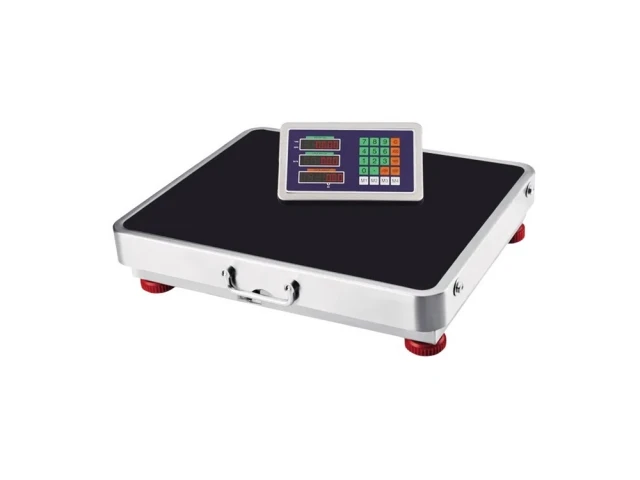
Calibration Weight For Laboratory Balance
In every modern laboratory that relies on quantitative measurement, consistent and reliable weighing data forms the foundation of credible experimental results, industrial testing, and academic research. Laboratory balances, whether precision analytical balances or general-purpose top-loading balances, serve as core weighing equipment, yet their measurement accuracy cannot remain stable indefinitely during long-term use. Mechanical component wear, subtle electronic parameter drift, fluctuations in ambient temperature and humidity, and minor external vibration interference can all cause gradual deviations in weighing readings. Calibration weights for laboratory balances act as standardized mass references that eliminate such deviations, correct instrument errors, and unify the benchmark of mass measurement in all experimental and testing processes. As an indispensable auxiliary tool for laboratory weighing systems, these precision weights underpin the authenticity, repeatability, and traceability of all mass-related measurement data, making them fundamental to standardized laboratory operations across diverse scientific and industrial fields.
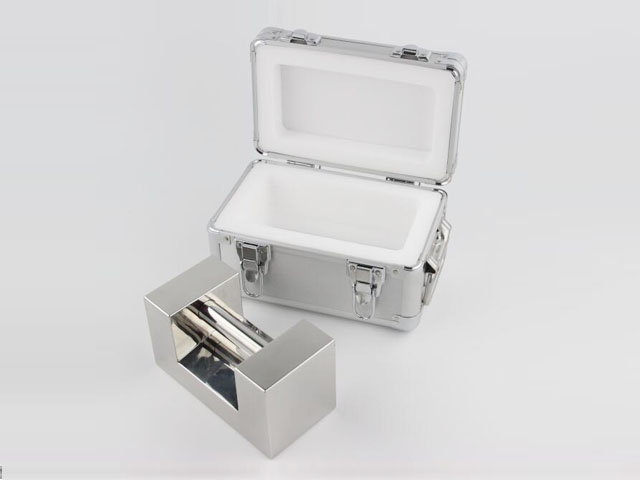
The essential value of laboratory balance calibration weights lies in their ability to provide fixed, stable, and uniform mass reference points. Unlike ordinary weights used for rough weighing, laboratory calibration weights are produced with strict dimensional precision and mass consistency, with every batch of finished pieces maintaining uniform physical properties and mass deviation ranges. In daily laboratory work, balances are frequently used to weigh chemical reagents, biological samples, experimental materials, and finished test products. Each weighing operation generates data that guides experimental formula configuration, product quality evaluation, and scientific data analysis. Even tiny deviations in balance readings can accumulate into significant errors in final experimental conclusions or product testing results. Regular calibration using professional calibration weights can effectively detect offset errors, linear errors, and repeatability errors of laboratory balances, adjust instrument parameters to restore optimal working status, and ensure that every weighing result is within the allowable error range of experimental and industrial standards.
Material selection is a core factor that determines the service performance and long-term stability of laboratory calibration weights. Suitable manufacturing materials need to meet multiple comprehensive requirements, including low density variability, strong environmental adaptability, excellent corrosion resistance, and stable physical properties, to prevent mass changes caused by external environmental factors during long-term storage and use. Common materials used for laboratory calibration weights include high-grade stainless steel, brass alloy, and cast iron, with different materials adapting to different laboratory precision levels and usage scenarios. High-purity stainless steel materials are widely applied in high-precision calibration scenarios due to their low magnetic susceptibility, strong oxidation resistance, and minimal surface adsorption. This type of material does not easily react with air, moisture, or trace chemical vapors in the laboratory environment, avoiding surface rust, corrosion, or material loss that may cause mass drift. Brass alloy calibration weights feature smooth surface finish and good wear resistance, suitable for routine calibration of medium-precision laboratory balances, with stable overall performance and strong adaptability to conventional laboratory environments. Cast iron materials are mostly used for large-specification calibration weights in general laboratories, offering good structural stability and pressure resistance, capable of meeting daily calibration needs of low and medium-precision weighing equipment while maintaining stable overall mass performance.
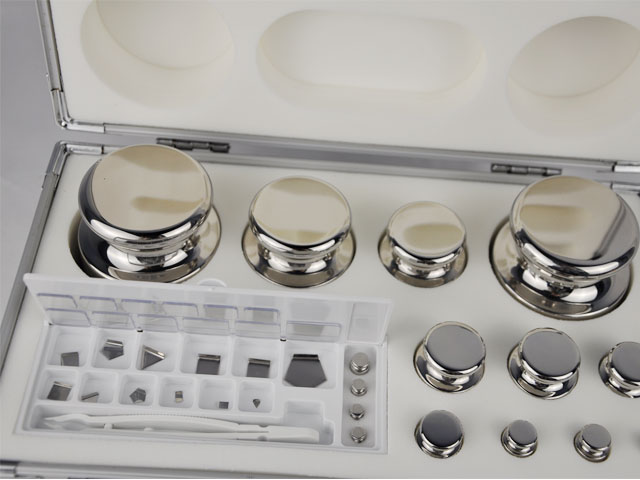
The structural design of laboratory balance calibration weights is scientifically optimized to adapt to standardized laboratory operation specifications. Most precision calibration weights adopt a monobloc integrated molding structure, which avoids mass errors caused by loose assembly gaps or accessory detachment. Some medium and small-specification weights are designed with adjustable internal cavities, allowing fine mass trimming during production and subsequent long-term use to compensate for tiny mass changes caused by long-term wear and environmental erosion, effectively extending the service cycle of the weights. The surface of all formal laboratory calibration weights undergoes fine polishing and passivation treatment, forming a smooth, dense protective layer. This surface treatment not only reduces surface roughness to minimize dust adhesion and material adsorption but also facilitates daily cleaning and maintenance, ensuring that the surface state of the weights remains stable and does not affect mass accuracy. In terms of shape design, conventional cylindrical and rectangular structures are adopted, which are convenient for stable placement on balance weighing pans, avoiding tilting or sliding during calibration operations and ensuring the uniformity of force bearing during the weighing process.
Reasonable selection of calibration weights is crucial to ensure the effectiveness of laboratory balance calibration work. Laboratory staff need to select weights with appropriate specifications and accuracy levels according to the measuring range and precision parameters of different balances. For high-precision analytical balances used in trace analysis, pharmaceutical testing, and biochemical research, it is necessary to match calibration weights with low tolerance values, as these balances are sensitive to subtle mass changes and require reference weights with extremely stable mass and minimal deviation to complete accurate calibration. For general-purpose balances used for conventional reagent weighing and bulk sample testing in teaching laboratories and basic industrial laboratories, calibration weights with moderate tolerance ranges can meet daily calibration requirements, balancing operational practicability and cost efficiency. In addition to accuracy matching, the selection of weight specifications should cover the common measuring range of the balance. Calibration tests should be carried out at multiple points including no-load, half-load, and full-load to comprehensively detect the linear error of the balance in the entire measuring range, avoiding incomplete calibration caused by single-point detection and ensuring that the balance maintains accurate readings in all conventional weighing intervals.
Standardized operation procedures are key to giving full play to the calibration effect of laboratory weights. Before conducting balance calibration, it is essential to prepare a stable laboratory environment, keeping the temperature and humidity within a stable range, avoiding direct sunlight, air convection, and ground vibration interference, as unstable environmental conditions are important causes of temporary weighing errors. The calibration weights and the laboratory balance should be placed in the same environment for a period of constant temperature adaptation to eliminate subtle mass changes caused by temperature differences between the weights and the instrument. During the calibration process, staff need to use professional tweezers or special weight-taking tools to handle the weights, and direct contact with hands is strictly prohibited. Sweat, grease, and fine dust on human skin will adhere to the weight surface, causing temporary mass increase and affecting calibration accuracy, and long-term direct contact will also cause surface corrosion and wear of the weights, damaging long-term stability. When placing weights, movements should be gentle and steady to prevent collision and friction between weights or between weights and the balance pan, avoiding structural damage and mass loss caused by mechanical impact.
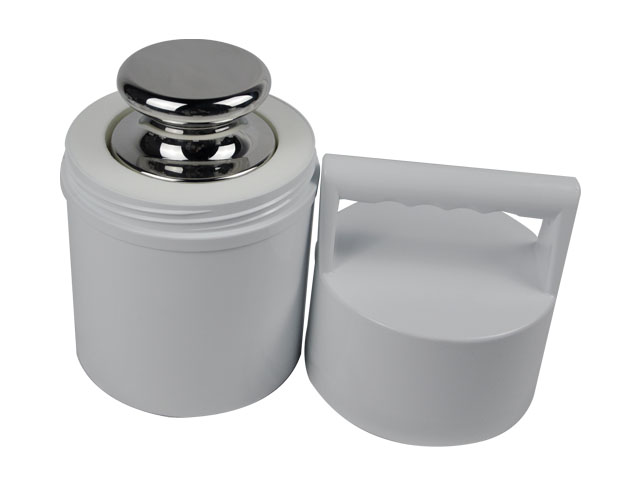
Daily maintenance and scientific storage directly determine the service life and long-term accuracy stability of laboratory calibration weights. After each use, the weights need to be carefully cleaned with clean, soft dust-free cloths or special cleaning tools to remove surface dust, residual particles, and trace contaminants, then placed in a matched sealed storage container. Professional storage containers are designed with shock-absorbing and moisture-proof structures, which can isolate external moisture, dust, and mechanical vibration, prevent oxidation and corrosion of weight surfaces, and avoid mass changes caused by external interference. The storage environment should be kept dry, clean, and well-ventilated, away from volatile chemical reagents, corrosive gases, and high-temperature heat sources to prevent chemical and physical damage to the weights. It is necessary to establish a regular inspection mechanism for calibration weights in daily laboratory management. Regularly check the surface integrity of the weights for scratches, rust, deformation, and other defects, and verify their mass stability regularly. Weights with surface damage or excessive mass deviation should be stopped from use in a timely manner and repaired or replaced to ensure that all reference tools used for balance calibration are in qualified working condition.
Laboratory balance calibration weights are widely used in multiple professional fields that rely on precise mass measurement. In chemical laboratories, accurate weighing of reagents is the premise of accurate experimental reaction ratio control, and regular calibration of analytical balances with standard weights ensures the repeatability of chemical synthesis, titration analysis, and component detection experiments. In pharmaceutical research and testing laboratories, the precision of drug ingredient proportioning and content detection directly affects drug safety and efficacy, and stable calibration of weighing equipment provides reliable data support for drug research, sample testing, and production quality control. In food testing and agricultural research fields, balance calibration ensures accurate detection of nutrient content, additive dosage, and pollutant residues in food and agricultural products, supporting food safety testing and agricultural product quality evaluation. In addition, these calibration tools are also indispensable in material science research, environmental monitoring, precision manufacturing testing, and university teaching laboratories, providing unified and standardized measurement benchmarks for various experimental and testing work.
The importance of laboratory balance calibration weights is also reflected in the standardization and traceability of laboratory data. All formal laboratory testing and experimental data need to meet the requirements of standardized management, and accurate weighing data is an important part of laboratory quality control. Uncalibrated balances are prone to random errors and systematic errors, leading to inconsistent experimental data, poor repeatability of test results, and even invalid experimental conclusions. By using standard calibration weights for periodic instrument calibration, laboratory weighing data can maintain long-term consistency and traceability, facilitating data comparison, result verification, and academic communication in different experimental stages and different laboratory environments. For industrial testing laboratories, standardized calibration operations also help optimize production process parameters, control product quality errors, and reduce product quality fluctuations caused by inaccurate weighing data, providing basic guarantees for stable production and quality improvement.
In the long-term use of laboratory calibration weights, attention should also be paid to avoiding various improper use behaviors that affect accuracy. Overload use of weights should be avoided; each weight has a fixed nominal mass and applicable calibration range, and long-term overload placement and use will cause irreversible structural deformation and mass deviation. Mixing weights of different accuracy levels for calibration operations is not allowed, as it will cause confusion in measurement benchmarks and reduce the accuracy of calibration results. In addition, calibration work needs to be carried out periodically according to the frequency of balance use. Balances used frequently for high-precision testing require shorter calibration cycles, while balances used occasionally for conventional experiments can adopt appropriate extended calibration cycles, forming a scientific and reasonable calibration management system. This hierarchical management mode can not only ensure the accuracy of weighing equipment but also improve laboratory operation efficiency and realize reasonable utilization of experimental resources.
With the continuous improvement of laboratory precision measurement standards and the upgrading of weighing equipment, the performance requirements for laboratory balance calibration weights are also constantly optimized. Modern laboratory calibration weight manufacturing processes pay more attention to material stability, processing precision, and surface protection performance, effectively reducing the impact of environmental factors and human operation on mass accuracy. At the same time, the matching use of calibration weights and intelligent laboratory balance systems has further improved the automation and precision of calibration work, realizing more accurate detection and correction of instrument errors. As the basic measuring standard of laboratory mass measurement, calibration weights will always run through the entire process of laboratory scientific research, testing, and production, providing stable, accurate, and reliable basic support for the development of various precision measurement fields.
Calibration Weight For Laboratory Balance
https://www.veidtweighing.com/calibration-weights.html
Post Date: Jun 19, 2026

![Cast Iron Weight For Bench Scales]()
Cast Iron Weight For Bench Scales
Cast iron weights serve as fundamental auxiliary components for bench scale operation, playing an indispensable role in daily weighing verification, scale debugging, and m…![M3 Class Standard Weight]()
M3 Class Standard Weight
Within the entire framework of industrial weighing and daily commercial measurement operations, standard weights serve as the foundational cornerstone that maintains the u…![Cattle Scales]()
Cattle Scales
The development of modern animal husbandry has shifted extensively from traditional extensive breeding to refined and scientific management, and the standardized breeding …![M1 Class Standard Weight]()
M1 Class Standard Weight
Mass measurement forms the foundational backbone of all industrial production, laboratory testing, commercial transaction, and quality control activities across every sect…![Industrial Scales]()
Industrial Scales
Industrial scale represents the fundamental transformation of human manufacturing and production activities, marking the shift from scattered, manual, small-batch handicra…