What Is Calibration Weight
A calibration weight is a precisely fabricated standard mass designed to act as a stable and reliable reference for all kinds of weighing equipment. Unlike ordinary common weights used for simple daily weighing purposes, it is produced with strict craftsmanship to maintain consistent and steady mass under regular ambient conditions, avoiding slight changes that may affect measurement effects. Its core purpose is to check and adjust the working status of scales and balances, making sure every weighing reading taken by these devices stays accurate and consistent in long-term use. All weighing instruments will gradually develop minor measurement deviations after frequent use, long-time placement or regular external environmental interference, which can lead to unreliable data and affect follow-up work smoothly. People use calibration weights in many daily and professional scenarios, from fine laboratory testing and industrial production processing to daily commodity quality checking. Workers and operators place these standard masses on weighing equipment, compare the actual displayed data with the known standard mass value, and correct any existing measurement gaps in time. Regular use of calibration weights for routine checking effectively prevents inaccurate weighing results, avoids unnecessary errors and losses in production and testing work, and keeps all weight-based measurement work fair, stable and trustworthy all the time.
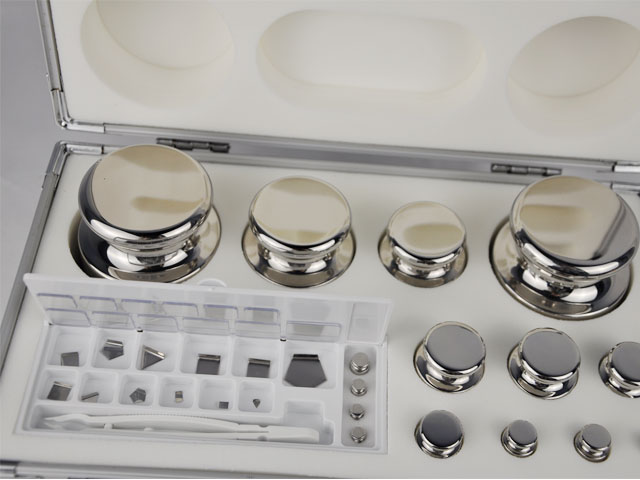
Key Points for Accurate Control of Core Specification Attributes of Calibration Weights
Calibration weights are core standard instruments in the field of metrological weighing, undertaking the key functions of value transmission, instrument calibration and weighing verification. Their various specification attributes directly determine the accuracy and reliability of weighing detection data. Strict control of specification parameters is the basic prerequisite for ensuring the compliant operation of industrial production, laboratory testing and commercial metrology.
Accuracy grade is the most core specification attribute of calibration weights and the primary basis for selection. The mainstream industry is divided into three series of E, F and M with multiple grades, with accuracy decreasing step by step. E1 and E2 grades are benchmark high-precision weights with minimal allowable error, specially used for value traceability in national metrological laboratories; F1 and F2 grades are precision working weights, suitable for calibrating precision analytical balances in scientific research laboratories and quality inspection institutions; M1 and M2 grades are industrial and commercial grades, applicable to the daily calibration of ordinary electronic scales and platform scales. The error limits of different grades are strictly divided, and cross-grade calibration is not allowed.
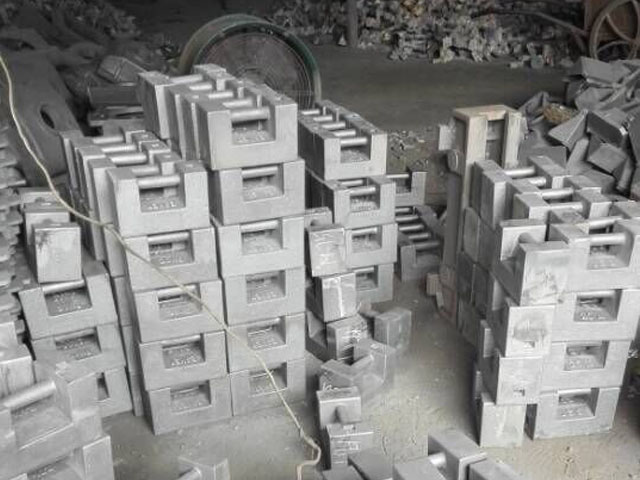
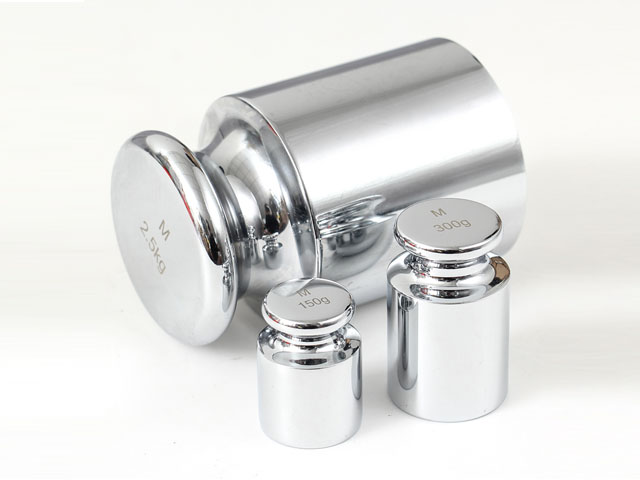
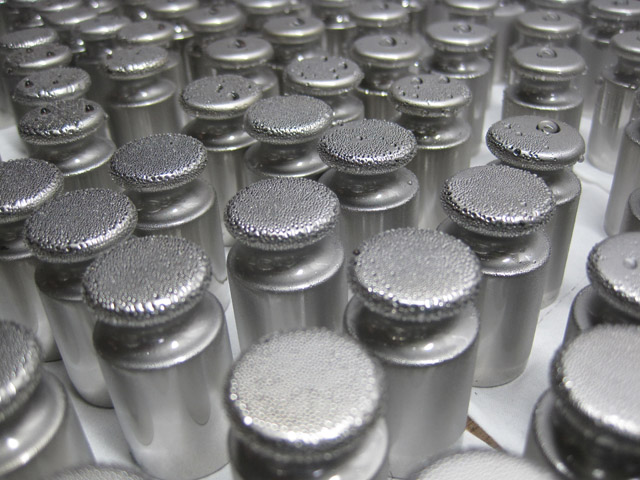
Material and surface treatment attributes determine the stability and service life of weights. High-grade weights are made of 316 non-magnetic stainless steel, featuring low magnetic susceptibility, corrosion resistance and oxidation resistance, eliminating magnetic interference to weighing accuracy; industrial low-precision large-specification weights are mostly made of high-quality cast iron with high cost performance and qualified hardness. The surface is treated with mirror polishing and matte anti-rust processes. Precision weights adopt mirror polishing for dirt resistance and easy cleaning, while industrial weights adopt matte treatment for wear and collision resistance, adapting to different operating environments.
Structural form and metrological adaptation attributes are also indispensable. Small-specification weights adopt a solid integrated design with constant mass and no deviation; large-specification weights are equipped with sealed adjustment cavities for fine calibration and trimming. The locked design with handles is convenient for handling and stacking, suitable for batch verification operations. Compliant calibration weights shall be clearly marked with nominal mass, accuracy grade and verification number to ensure traceable measurement values. Only when the specification attributes are accurately matched with the calibrated equipment and scenarios can the accurate defense line of weighing metrology be consolidated.
Full Specification List of Standard Nominal Weights for Calibration Weights
Calibration weights weight specifications are standardized and graded in decimal system, suitable for the calibration of various weighing equipment including laboratory precision analytical balances, commercial electronic scales, and industrial large-scale weighing instruments. The weights are divided into four major categories: milligram micro group, gram precision regular group, kilogram general industrial group, and large-tonnage heavy-duty group, covering conventional standard single-piece specifications and complete set combination specifications. Weights of all accuracy classes (E1, E2, F1, F2, M1, etc.) all adopt this unified standard weight system.
I. Milligram Micro Group Weights (Dedicated for Precision Analytical Balances)
This group of weights is specially used for calibrating analytical balances with an accuracy of one ten-thousandth and above and micro weighing equipment. They are small-sized precision calibration weights in sheet or wire structure, suitable for laboratory micro detection and measurement scenarios, and serve as the core supporting weights for chemical testing and precision scientific research weighing calibration.
Standard nominal weights: 1mg, 2mg, 5mg, 10mg, 20mg, 50mg, 100mg, 200mg, 500mg.
II. Gram Group Weights (Dedicated for Precision Electronic Balances and Small Electronic Scale Calibration)
As the main specifications for routine laboratory calibration, this group is applicable to the calibration of one-thousandth precision balances, jewelry scales, small bench electronic scales and other equipment. It meets the needs of both precision measurement and daily verification, widely used in quality inspection, pharmaceutical, chemical, jewelry processing and other refined weighing industries, and is also a necessary weight for basic measurement and calibration in all laboratories.
Standard nominal weights: 1g, 2g, 5g, 10g, 20g, 50g, 100g, 200g, 500g.
III. Kilogram Group Weights (Dedicated for General Electronic Scales, Platform Scales and ordinary Floor Scale Calibration)
This group is the most commonly used calibration weight specification for industry and commercial purposes. It covers the calibration of mainstream weighing appliances such as supermarket pricing scales, workshop platform scales, small floor scales and warehousing weighing equipment. It is suitable for daily production and operation, commercial transactions, general industrial measurement and calibration scenarios, with high cost performance and strong compatibility. It is the core commonly used weight for daily inspection and calibration by measurement and testing institutions.
Standard nominal weights: 1kg, 2kg, 5kg, 10kg, 20kg, 25kg, 50kg. Among them, 25kg and 50kg are high-frequency and commonly used specifications for industrial weighing instrument calibration, meeting the core calibration requirements of small and medium-sized floor scales and forklift scales.
IV. Large-Tonnage Heavy-Duty Weights (Dedicated for Large Floor Scales, Truck Scales and Rail Scale Calibration)
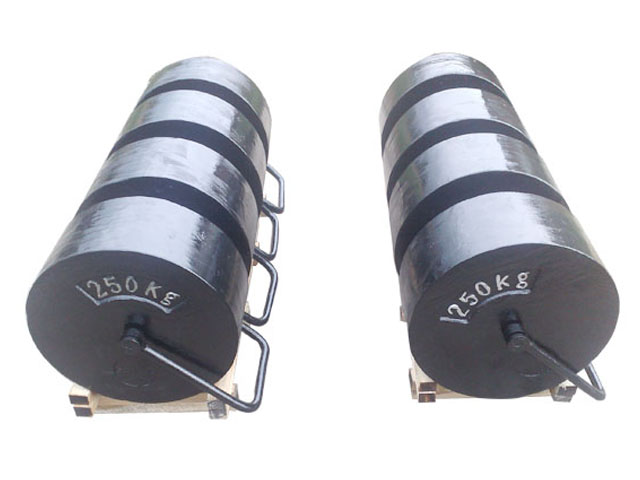
This group is special calibration weights for heavy-duty industrial weighing equipment. It is used for the calibration of large truck scales, heavy-duty floor scales, rail scales, large weighing belt conveyors and other large-range weighing instruments in ports, logistics parks, mines, traffic management testing stations and other places. Most of them are lock-type and block-type heavy-duty structures with strong bearing stability, meeting the requirements of accurate large-tonnage measurement and calibration.
Standard nominal weights: 100kg, 200kg, 500kg, 1000kg (1 ton), 2 tons, 5 tons, 10 tons, 20 tons and above customized large-tonnage specifications, which can be customized according to the range of large weighing instruments.
Grade Classification and Usage Specifications of Calibration Weights
Calibration weights are core measuring instruments for the value traceability transmission of various weighing scales and weighing instruments. In accordance with relevant national verification regulations, weights are classified into fixed grades according to accuracy from high to low. Each grade corresponds to exclusive calibration scenarios, error standards and usage requirements, serving as the basic prerequisite to ensure accurate and reliable measurement data and unified measurement values. The core gradient of weight grades includes E1, E2, F1, F2, M1, M2 and secondary derived grades. The lower the numerical value of the grade, the higher the accuracy, the smaller the maximum permissible error, and the stricter the management and control standards.
Class E1 is the highest reference grade, belonging to the national measurement reference weight. It is made of high-stability non-magnetic stainless steel with extremely small error limits. It is only used for measurement value traceability in national metrology research institutions, specially for verifying Class E2 weights and ultra-high precision scientific research balances. It must be stored and used in a professional laboratory with constant temperature, constant humidity and dust-free environment, and contact in conventional working conditions is strictly prohibited. Class E2 is a special grade for precision laboratories, second only to Class E1 in accuracy. It is suitable for the calibration of one ten-thousandth high-precision analytical balances in pharmaceutical, chemical, quality inspection and other fields, and is also used for verifying the lower-level Class F1 weights. Its material is corrosion-resistant and anti-magnetic to avoid environmental interference affecting weighing accuracy.
Class F1 and F2 are the core grades for industrial precision calibration. Featuring outstanding cost performance, Class F1 is mostly used for the daily calibration of precision balances in conventional laboratories. Class F2 is mainly used for verifying Class M1 weights and suitable for the calibration of ordinary precision weighing scales in industrial and mining enterprises and testing institutions. Class M1 and M2 are general grades for commercial and industrial use with moderate accuracy. Class M1 is commonly used for the calibration of electronic platform scales and pricing scales, while Class M2 is applicable to the routine verification of weighbridges and large weighing equipment. Made of durable and wear-resistant materials, they adapt to complex on-site operating environments.
The selection of calibration weights shall follow the matching principle, and the error of the weights used for instrument calibration shall not exceed one-third of the maximum permissible error of the instruments. It is strictly prohibited to use high-precision grade weights in extensive and rough working conditions, nor to use low-grade weights to calibrate high-precision equipment. Meanwhile, all grades of weights shall be verified periodically on a regular basis with proper maintenance and protection to avoid collision and corrosion. This ensures accurate transmission of measurement values and guarantees the compliant and accurate development of all types of weighing work.
Structure of Calibration Weight
Calibration weights are physical benchmarks for the value transfer of various weighing instruments. Their scientifically reasonable structural design serves as the core prerequisite for ensuring the accuracy of measurement calibration and the long-term stability of numerical values. Whether for the calibration of precision laboratory balances or the verification of large-scale industrial weighing equipment, the structure of calibration weights must take three core aspects into account: material characteristics, shape configuration and adaptive design, and every detail directly determines the compliance and reliability of calibration work.
Calibration weights are divided into two core structural forms according to accuracy grades to adapt to different measurement scenarios. High-precision weights such as E1 and E2 grades adopt a solid integrated monolithic structure, which is forged and processed from a single piece of high-quality and high-density materials such as non-magnetic stainless steel without any adjustment cavities or splicing gaps. This structure features uniform density and strong anti-magnetic properties, which can effectively resist environmental interferences such as temperature and humidity, prevent mass deviation during long-term use, and meet the requirements of micro-precision calibration in laboratories. Industrial weights of ordinary F1 and M1 grades mostly adopt a combined structure with an adjustment cavity. The main body is a solid base with a sealed adjustment cavity reserved at the top, which can be filled with appropriate fine-tuning materials to accurately correct the mass, balancing calibration accuracy and daily operation and maintenance costs.
The external shape and structure design of calibration weights meets the dual needs of practical operation and protection. Standard weights are mostly designed in regular cylindrical or cuboid shapes, with polished and anti-rust spray-treated surfaces, which are wear-resistant, corrosion-resistant and not easy to accumulate dust and dirt. Large and medium-sized weights are equipped with special lifting holes and connecting bayonets for mechanical hoisting and stacked calibration of multiple weights, ensuring stable handling and avoiding damage caused by collision; small gram weights have passivated corners to prevent scratches and structural deformation that affects the mass benchmark. The sealing and protection structure is particularly crucial. All adjustment cavities are equipped with special sealing plugs to prevent moisture and impurities from entering the interior and avoid measurement deviation caused by deterioration of the filling materials inside the cavities.
The stable service of calibration weight structures relies on standardized use and regular maintenance. Structural integrity is the foundation of calibration work, and weights with deformation, corrosion or seal failure shall be inspected and repaired in a timely manner. Only by adhering to structural design standards and strictly controlling structural integrity can calibration weights maintain the bottom line of measurement value transfer and lay a solid foundation for various measurement works in commercial transactions, industrial production and scientific research experiments.
What Is Calibration Weight
https://www.veidtweighing.com/calibration-weights.html
Post Date: Apr 30, 2026
https://www.supplier-manufacturer.com/calibration-weight/what-is-calibration-weight.html

![250kg Test Weight]()
250kg Test Weight
In the vast and intricate landscape of industrial production, mechanical operation, and metrological verification, the 250kg test weight stands as an indispensable foundat…![E1 Class Test Weight]()
E1 Class Test Weight
In the intricate and interconnected world of modern metrology, the pursuit of reliable and consistent mass measurement forms the foundational backbone of countless profess…![M1 Class Cast Iron Weight]()
M1 Class Cast Iron Weight
In the intricate and interconnected ecosystem of industrial measurement and metrological calibration, M1 class cast iron weight stands as an indispensable foundational com…![Gram Test Weight]()
Gram Test Weight
In the intricate and interconnected world of mass measurement, few tools hold as much quiet significance and foundational importance as the gram test weight. Often overloo…![M1 Calibration Weight]()
M1 Calibration Weight
In every sector that relies on consistent and dependable mass measurement, the role of standardized calibration hardware remains irreplaceable, and M1 calibration weight s…